Electricity Consumption In Iran Breaks All-Time Records
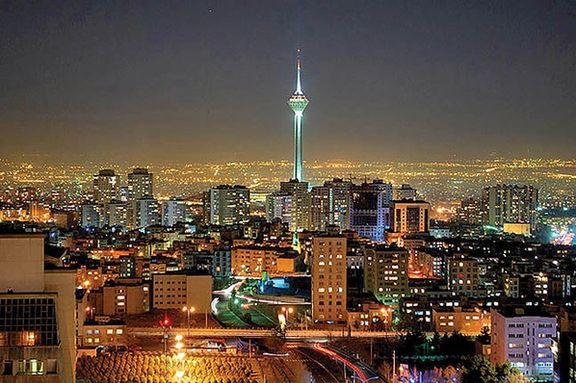
Iran’s electricity usage has broken a record to hit 72,500 megawatts – increasing strain on power grids that were already struggling to meet demand.

Iran’s electricity usage has broken a record to hit 72,500 megawatts – increasing strain on power grids that were already struggling to meet demand.
The constant rise in temperatures and decrease in rainfall across Iran in the last decade have made electricity supply a challenge during peak consumption periods.
According to the IRNA state news agency, the new heatwave began on Saturday, forcing people to use cooling systems which increased the consumption.
On Saturday, Ali Akbar Mehrabian, the Minister of Energy, said: "According to the predictions, we may see a historical record of electricity consumption in the country this week."
Power plant capacity and fuel supply are both inadequate to meet demand, and blackouts regularly happen in summer. Even so, Iran exports electricity to Iraq.
Iran's electricity sector is in dire need of significant investment, and the country has been struggling to attract foreign investment in recent years.
Iran has failed to realize its annual electricity growth plan for several years in a row, while consumption continues to grow, in part driven by extremely low prices. Government funding to the energy sector of up to $60 billion a year effectively provides an indirect subsidy to consumers and businesses fueling this demand.
The country needs at least 5 to 7 percent electricity generation growth annually to address the increase in domestic demand. It has been an ongoing problem for the country which has one of the biggest natural oil and gas reserves in the world. In 2021, mass protests erupted after nationwide blackouts. With current tensions and an ongoing economic crisis, another mass breakdown could revive the unrest which has swept the country since September.
Suspicions of leaked classified information are reaching crisis point as an Iranian media outlet reveals more details about the investigation of US Iran envoy.
CBS News has also confirmed that the Federal Bureau of Investigation (FBI) is investigating Robert Malley, but the issue is not deemed a criminal matter.
However, a detailed report in Tehran Times about Malley's suspension and investigation has raised questions among former American officials and Iran watchers.
As presidential envoy for Iran, Malley was based at the State Department, his portfolio including both the attempts to resurrect a nuclear agreement with Iran (under the JCPOA), as well as negotiations over at least three American citizens who remain wrongfully detained by Tehran.
His suspension was first reported by Iran International June 29 and formally announced the following day by Matthew Miller, the spokesperson for the US State Department, calling it "a leave of absence”, adding that his duties would be temporarily assumed by his deputy, Abram Paley. However, it is believed he had been suspended as early as April.
According to the Tehran Times, a pro-regime publication, the exact date of Malley's suspension was April 21, when Malley was informed by the Diplomatic Security Department that due to his not having maintained classified documents, his security clearance was suspended.

The regime publication wrote: “His work-related accesses were cut off at this time. However, to prevent the matter from becoming public, some of his limited and non-critical accesses were maintained, such as his communication with the families of American prisoners in Iran.”
How a pro-regime outlet had such details, of which even Congress had not be informed, is raising serious questions. Frustrated by the lack of information sharing with the congressional committees overseeing the State Department, House Foreign Affairs Committee Chair Mike McCaul, Republican of Texas, sent a letter setting a July 11 deadline for the department to provide an update.
His letter claimed Congress had been misled about the reason for Malley's absence, which had been attributed to a family health matter. State Department spokesman Miller said in response: “We obviously got the letter from the Chairman; we've been reviewing it and we will be engaging with his office on the matter.”
The Tehran Times went into further detail, claiming that during the first few weeks of Malley’s unpaid leave, when Iran and the US held confidential negotiations in Oman, the US sent Brett McGurk, a member of the National Security Council who is close to Jake Sullivan. “The noteworthy point is that the Americans are trying to present the replacement of McGurk as a positive change and an effort to advance negotiations with Iran, hiding the Malley affair,” they wrote.
Ex-Iran envoy Gabriel Noronha pointed to the article as a worrying sign that sources in Tehran know more about the scandalous affair than Congress itself. Like many other Iran watchers, he highlights the closeness Malley has with key members of the regime. “His family's ties to notorious Iranian propagandists like Trita Parsi should be disqualifying in themselves,” he wrote.
Malley’s suspension has been of grave concern to the Biden administration, risking a controversy at a time which is critical to nuclear negotiations as Iran's uranium enrichment proceeds unhindered.
Alireza Nader from the National Union for Democracy in Iran said the matter risks becoming “a huge national scandal”, the Iran lobby possibly jeopardizing talks moving forward.
The Tehran Times article suggests the future of Malley’s career is bleak, revealing the depth of his connections to the regime: “Malley’s overly close proximity to his non-official Iranian assistants and advisers created the ground for the fall of this experienced diplomat.”

Ali Khamenei's Chief of Staff says Iran’s Supreme Leader is in perfect health despite being in his 80s.
Mohammad Mohammadi Golpayegani said Tuesday that “every now and then it is said that the leader is sick", playing down rumors of his deteriorating health - speculation which is causing questions of who would step into his shoes in his absence.
It is unclear who his successor would be at this stage and it is a taboo to discuss such matters though there have been several names mentioned speculating who would take over in his wake.
Most prominent is Khamenei’s son, Mojtaba, believed to be being groomed for the role. He runs the beit-e rahbari (House of Leadership), as a cleric with “ayatollah” status — a prerequisite for the supreme leadership, though experts say this appointment would cause chaos in the regime, where powerful figures such as President Raisi are also vying for the title.
Last year, the New York Times claimed Iran’s Supreme Leader's health situation was grave, the 84-year-old having had emergency surgery at a clinic set up at his home and office complex for bowel obstruction.
He had been suffering extreme stomach pains and high fever, one of the people told the New York Times, explaining that he was on bed rest under observation by a team of doctors.
It was claimed that all his meetings were cancelled amid numerous rumors about his death on social media, before he reappeared shortly after in two televised speeches and attended a religious event in a bid to quash the rumors.
Khamenei has been Iran's supreme leader since 1989, and has been battling ill health for almost a decade. In 2014, he underwent a successful prostate cancer operation which also triggered fears for what would come next.

Azerbaijan's security agencies thwarted a terrorist attack on the Israeli embassy in Baku, the latest in a wave of Iranian plots against Israeli targets abroad.
According to media reports, an Afghan citizen, Fawzan Mosa Khan, has been arrested. In a video released by Azerbaijan's State Security Service, Khan discussed how he would monitor the target of the attack. Photographs suggested Musa Khan had been surveilling the Hyatt Regency hotel complex in Baku, where the Israeli embassy is located.
Israel's intelligence agency, Mossad, recently revealed new details about a terrorist cell directed by Iran which intended to harm Israeli businessmen in Cyprus.
Israel later said its agents in Iran succeeded in capturing the suspect behind the IRGC-planned attack on its nationals.
The Mossad published a video of the captured agent, identified as Yousef Shahabazi Abbasalilo, sharing details of his entry to Cyprus through the Turkish occupied north and how he had scoped out the location of the first target for assassination, prepared the weapon and concealed it on word that he must flee just days ago. Iran rejected the veracity of the video.
The latest plot comes amidst simmering tensions between Iran and its archrival Israel, and with its neighbor, Azerbaijan. A series of events has led to diplomatic crises this year, including an assassination attempt on an Azerbaijani MP and an attack on Azerbaijan's embassy in Tehran. Things worsened with the opening of the Azerbaijan embassy in Tel Aviv, which angered Tehran. Iran has conducted military drills on Azerbaijan's border as a show of force.

In an effort to reduce Iran's isolation, Iranian President Ebrahim Raisi will embark on a rare African tour on Tuesday.
The three-day trip -- including stops in Kenya, Uganda, and Zimbabwe -- will be the first by an Iranian president in 11 years.
As reported by the official IRNA news agency, Raisi is leading a delegation consisting of senior businesspeople and Iran's foreign minister.
Foreign ministry spokesman Nasser Kanaani on Monday described the trip as "an important turning point" for economic and trade cooperation with Africa.
Despite the United States withdrawing from the nuclear deal in 2018, Iran has beefed up its diplomacy in recent months to reduce its isolation through making new alliances.
The Algerian Foreign Minister Ahmed Attaf was welcomed by Raisi on Saturday as part of an effort to improve relations between the two countries.
It was announced last week that the Islamic republic had been admitted to the Shanghai Cooperation Organization.
After a Latin American tour that included Venezuela, Nicaragua and Cuba, Raisi visited Indonesia in July.
Under a China-mediated deal, Iran restored ties with its regional rival Saudi Arabia in March. After pro-regime protesters attacked Saudi Arabia's embassy in Tehran and consulate in Mashhad in 2016, Saudi Arabia severed ties with Iran.
It is now seeking to reestablish ties with Egypt and Morocco.

Saudi Arabia has barred Iranian regime propagandist Ali-Akbar Raefipour from leaving the country as he tried to return to Iran after Hajj pilgrimage.
Iran’s Foreign Ministry Spokesman Nasser Kanaani confirmed the report on Monday, adding that he was not arrested, and Iran's embassy is trying to settle the problem.
Unconfirmed reports say Raefipour was arrested at Jeddah airport because of using a fake passport; however, Masaf Institute, founded and directed by Raefipour, denied all "rumors" about the reason for the travel ban, saying he had entered Saudi Arabia legally, and is currently staying at Iran's consulate in Jeddah.
It also claimed that Raefipour was prevented from leaving Jeddah “without any explanations.”
Hardliner Raefipour who promotes apocalyptic views based on Shiite eschatology and the coming of promised savior Mahdi is known for his conspiracy theories.
He was among the hardliners who launched a propaganda campaign to convince the public that the Coronavirus crisis was caused by a specific strain of the virus used by the United States against Iran as a "bioterror attack".
Raefipour has consistently supported the bloody crackdown on protests in Iran which began with the death in custody of Mahsa Amini in mid-September, inciting violence and hatred online.
In late 2022, the IRGC-affiliated media activist's Twitter account was blocked after he threatened anti-government protesters on the social media platform.
Raefipour wrote in a tweet on December 6 that "If you want to lose your life, join the street protests, especially if you have a beautiful face".
He further claimed that the calls for nationwide protests and strikes were aimed at “creating deaths”.