UANI Exposes Another Illicit Iranian Oil Shipment

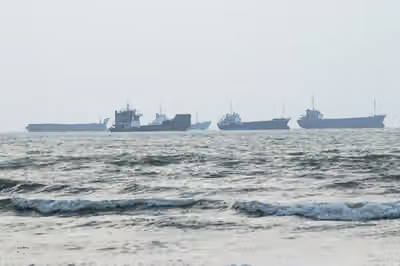
Advocacy group United Against Nuclear Iran (UANI) has released a satellite photo presumably showing an Iranian oil shipment heading to Europe.

Advocacy group United Against Nuclear Iran (UANI) has released a satellite photo presumably showing an Iranian oil shipment heading to Europe.
In a tweet, UANI Chief of Staff Claire Jungman said Vietnam-flagged tanker Gracy is suspected of engaging in a ship-to-ship transfer of Iranian oil in Omani waters on June 7, adding that . “But where will she go next?” she said.
Last week, UANI said two Iranian tankers were unloading their cargoes at the Baniyas Single Buoy Mooring (SBM) and a third is on its way to the port in Syria. year.
In order to avoid detection of the destination of its cargo, Iran usually uses ship-to-ship transfers, in which the vessels turn off their transponders at sea and secretly transfer oil cargos.
Iran’s oil shipments in May reportedly dropped by 50 percent, in a sign that Moscow is selling more oil to China -- which happens to be Iran’s main oil customer -- and taking Tehran’s market share. Iran’s illicit shipments of crude mainly to Asian markets dropped to around 400,000 barrels per day (bpd) in May.
Following a drop from 2 million barrels a day to around 250,000 due to the US sanctions in 2019, Iran’s oil exports were slowly recuperating in 2021 thanks to nuclear talks in Vienna – now on its last breaths -- but sanctions on Moscow over the invasion of Ukraine made Russia enter the competition for a bigger share in China’s imports.

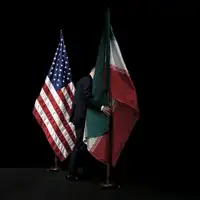
Indirect talks between Tehran and Washington in Qatar to resolve remaining issues in negotiations to restore the landmark 2015 nuclear pact ended without progress.
Calling the proximity talks “two intense days” of negotiations, EU's envoy Enrique Mora tweeted Wednesday evening that “Unfortunately, not yet the progress the EU team as coordinator had hoped-for. We will keep working with even greater urgency to bring back on track a key deal for non-proliferation and regional stability.”
It is not clear whether there might be a further round, while Tehran and Washington have yet to comment on how the talks have progressed, or what they expect next.
Moreover, Axios quoted an unnamed US official as saying that "The Iranians have not demonstrated any sense of urgency, raised old issues that have been settled for months, and even raised new issues that are unrelated to the 2015 nuclear agreement.”
According to the source, “A deal has been available for some time. If there is a side that needs to take a decision, it’s them — and it’s been them for months."
Earlier in the day, Tasnim news agency, with links to the Revolutionary Guards, reported that the Tehran-Washington nuclear talks in Qatar had ended without agreement, a claim quickly rebutted by the foreign ministry.
Tasnim said the American side refused to give "guarantees for Iran's economic benefits” from the deal.

An Iranian-American dual citizen pleaded guilty Tuesday to conspiring to illegally provide the Islamic Republic with US goods, technology and services.
According to documents by a federal court in Brooklyn, Kambiz Attar Kashani and his co-conspirators, who were first charged in January, used two United Arab Emirates’ companies to evade US export laws between February 2019 and June 2021.
Kashani acted at the direction of an arm of the Central Bank of Iran, which according to the US Department of the Treasury’s Office of Foreign Assets Control (OFAC) materially assisted, sponsored or provided financial, material or technological support to Iran-backed Lebanese group Hezbollah and to the Qods Force of Iran’s Revolutionary Guards (IRGC).
The United States designated Hezbollah as a Foreign Terrorist Organization on October 8, 1997, and as a Specially Designated Global Terrorist (SDGT) on October 31, 2001, and listed the IRGC as a Foreign Terrorist Organizations in 2019 as part of the “maximum pressure” campaign that then-President Donald Trump imposed on Iran after pulling out of the 2015 nuclear deal.
Kashani faces a maximum penalty of 20 years in prison, and he has agreed to pay a $50,000 fine, in addition to any forfeiture owed.
The 44-year-old, who was arrested in January, provided products such as subscriptions to proprietary software, fixed attenuators, power supplies and storage systems to the government of Iran.
To procure the items, he allegedly used two United Arab Emirates companies as fronts to deceive multiple US technology companies.

Iranian and United States lead negotiators were in Doha Tuesday as Qatar expressed hope that talks would “culminate in positive results that contribute to revival of JCPOA.”
In a statement, the Qatari Foreign Ministry said the talks to revive the 2015 nuclear deal – the JCPOA, Joint Comprehensive Plan of Action – would be coordinated by the European Union.
Ali Bagheri-Kani, leading the Iranian delegation, arrived in Doha Tuesday morning. Welcoming him, Tehran’s ambassador Hamidreza Dehghani, tweeted, "Without any prejudice and expression of unrealistic pessimism or optimism, I wish them success in carrying out their important mission.”
United States special envoy Robert Malley met Tuesday with Qatar's Foreign Minister Mohammed bin Abdulrahman Al Thani. The US embassy said they discussed “the strong partnership and our joint diplomatic efforts to address issues with Iran.”
US National Security Advisor Jake Sullivan reiterated Monday that restoring the JCPOA was the best way to preclude any possible Iranian path to a nuclear weapon, and reiterated that Washington put the onus on Tehran to make the necessary moves. “There is a deal available on the table to Iran, and it’s up to Iran to decide whether or not it wants to take it,” Sullivan said.
Some analysts portray the talks – which, although US and Iran still talk indirectly, are separate to stalled Vienna talks between Iran and six world powers – as the last chance for Washington and Tehran to revive the JCPOA.

Iran is the tenth producer of crude steel in the world, but the industry with a high demand for water is seriously threatening the country’s scarce resources.
Most of Iran's largest steel factories are located in arid regions such as Esfahan, Yazd, and Kerman provinces despite the very high water use in steel production. 97 percent of Iran’s land is arid or semi-arid.
To produce every metric ton of steel, the industry in Iran uses 230,000 liters of water. According to official figures, the steel industry uses around 70 percent of water reserves of dams, leaving only 30 percent for other industries, agriculture, and urban use.
According to the head of Iran’s National Standards Organization, the industry uses 60 percent more electricity to produce one metric ton of crude steel in comparison with developed countries. The annual wastage of electricity in the industry is around 24 billion KW/H.
At the height of cold and hot months, steel mills have to cope with electricity outages, as usage in Iran is far more than what it can produce. This month, there are reports of industrial plants including steel production shutting down intermittently due to electricity shortages.
The rapid growth in demand for water in Iran – resulting from the growth of population, agriculture, and industries -- has led to severe depletion of available water. The annual renewable water availability per capita reached a crisis level in 2021. Studies by the United Nations Development Program (UNDP) indicate that by 2040 Iran is likely to face a severe water stress level.

According to official figures, in December 2021, the volume of water stored behind the country's dams had dropped by 44% in comparison with the same month in the previous year.
Iran is also among the ten countries in the world that extract most groundwater and a hotspot of land subsidence induced by groundwater withdrawal. Ground subsidence has become a serious threat in 18 out of the 31 provinces of Iran and has become a threat to around a quarter of Iran’s urban population.
Hydro-electric electricity production amounts to 15 percent of Iran’s total electricity production which also dropped by around 40 percent in the previous calendar year (ended March 20, 2022) in comparison with the previous year mostly due to drought.
According to the World Steel Association (WSA), Iran produced over 28 million metric tons of steel in 2021, putting it just behind Brazil. The country, however, ranked 15th in net exports.
Iran is planning to produce 32 million metric tons of steel in the current Iranian calendar year (ending March 20, 2022) and authorities hope to climb to the seventh place among the world’s top steel producers by the 2025.
Production of all the top ten suppliers, including top steelmaker China, declined in the first 5 months of 2022, except India that had an increase of 6.5 percent. But Iran had the highest drop.
The steel industry has highly contributed to the drying of Zayandeh Roud river in Esfahan Province and seriously damaged agriculture in the region, giving rise to water protests in the past year.
Amid United States' sanctions on Iran's oil exports, steel is one of the main exports earning foreign currency for the government, which faces a serious financial crunch.

France has called for the return of sanctions-hit Iranian and Venezuelan crude to world markets to reduce the impact of declining Russian supplies on rising energy prices.
As Group of Seven (G7) leaders are discussing the viability of a price limit on Russian oil on the second day of their meeting at Schloss Elmau in the Bavarian Alps on Monday, a French presidency official said that France wants a planned mechanism to cap the price of oil to be as broad as possible and not be limited to Russian output.
While the leaders adopted a declaration pledging to support Ukrainian President Volodymyr Zelenskiy and his government “for as long as it takes,” Zelenskiy told G7 leaders that the conditions were not right to negotiate with Russia and wanted to be in a position of strength before began any negotiations.
On Sunday, France announced that G7 leaders will discuss the prospect of reviving the Iran nuclear talks after the European Union's foreign policy chief met senior officials in Tehran.
Discussions took place on Sunday at a dinner between the G7 leaders with more detailed talks scheduled for Tuesday morning between France, Britain, Germany and the United States.
The three European powers are parties to the nuclear deal, which then-US President Donald Trump pulled out of in 2018.
The pact appeared close to being revived in March after 11 months of talks, when the process came to a halt. Tehran insisted that Washington remove the Revolutionary Guard (IRGC) from the US Foreign Terrorist Organization list. Iran's indirect talks with the United States will resume soon in Qatar.