Iran’s President Raisi Arrives In Oman To Meet Sultan Bin Tariq

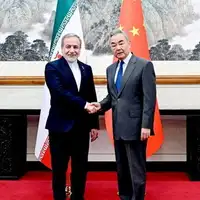
Iranian President Ebrahim Raisi arrived in Oman on Monday for a one-day visit to meet Omani sultan and senior officials to discuss ways to bolster bilateral cooperation.
Iranian President Ebrahim Raisi arrived in Oman on Monday for a one-day visit to meet Omani sultan and senior officials to discuss ways to bolster bilateral cooperation.
Upon arrival at the Royal Special Airport in Muscat, Raisi was welcomed by Sultan Haitham bin Tariq Al Said. His official reception is expected to be held in Al-Alam Palace.
He is also scheduled to hold meetings with Oman’s prime minister and foreign minister, Iranians residing in Oman, and Omani businesspeople.
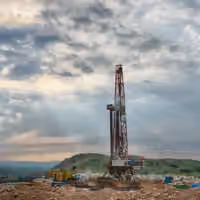
Before Raisi’s visit, Iranian Oil Minister Javad Owji visited Muscat and held a meeting with his counterpart Mohammed Al Rumhi, where the two agreed to revive an offshore gas pipeline project that dates back to about two decades ago.
Iran and Oman signed a memorandum of understanding (MoU) in 2003 to construct a 200-km pipeline from Iran’s Kuh-e Mobarak to Oman’s Sohar port, estimated at the time to cost about $1.2 billion. Based on the deal, Iran was expected to start delivering 10 billion cubic meters per year (bcm/yr) to Oman in 2008 for 25 years. But the deal never materialized due to increasing tensions between Iran and the West, resulting in international sanctions imposed gradually around 2010 to restrict Tehran’s nuclear program.
Neither Iran nor Oman has the technology to lay a pipeline in the deep waters of the Sea of Oman that in some spots reach the depth of one kilometer. Iran has capacity only to construct offshore pipelines in less than 150-meter depth.
As long as American sanctions against Iran remain, no major global company will be willing to get involved in the pipeline project.
Muscat has traditionally played a mediating role between Tehran and Washington.