UN Appeals To Iran Over Looming Execution Of Swedish-Iranian Doctor

The United Nations human rights office urged Iran Tuesday to halt the execution of Swedish-Iranian academic Ahmadreza Djalali and rescind his death sentence.

The United Nations human rights office urged Iran Tuesday to halt the execution of Swedish-Iranian academic Ahmadreza Djalali and rescind his death sentence.
The semi-official ISNA news agency had reported that Djalali (Jalali), a specialist in emergency medicine, would be executed by May 21 following his conviction for espionage in 2017. Human rights groups said his trial – by a Revolutionary Court, following his arrest in 2016 while visiting Iran on an invitation from a university – was unfair.
On Monday, Iranian Foreign Ministry Spokesman Saeed Khatibzadeh told a press conference that a request to postpone Djalali’s execution was under consideration and that the judiciary was “following up on this." Enrique Mora, the senior European Union official coordinating talks to revive the 2015 Iran nuclear agreement, said he had raised the case on his Tehran visit last week, requesting a stay of execution and Djalali’s release on humanitarian grounds.
There have been reports in recent weeks and months of Iran being in contact with both the United States and European states over potential prisoner swaps. Nazanin Zeghari-Ratcliffe, a British-Iranian citizen, was released last month after the British agreed to pay a long-standing £400-million (around $500 million) debt to Iran.
There has been speculation that the announcement of Djalali’s execution was intended to influence the trial in Sweden of Hamid Nouri, a former Iranian official, over his alleged role in a wave of prison executions in Iran in 1988. Tehran has said Djalali’s arrest and detention, a rare example of universal jurisdiction, are illegal.
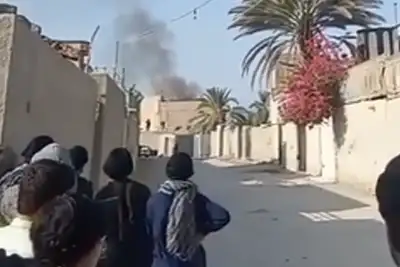

Iran's state television on Tuesday showed a 3-minute report on the recent arrest of two French citizens, saying they were spies who had tried to stir up unrest.
Iran's intelligence ministry had said on May 11 it had arrested two Europeans for allegedly fomenting "insecurity" in Iran, but had not revealed their nationalities.
The arrest took place as the European Union chief nuclear negotiator Enrique Mora was visiting Tehran to revive the Vienna negotiations stalled since mid-March. Earlier Iran had threatened to execute a Sweidsh Iranian dual national arrested since 2016 and condemned to death on unproven charges of espionage for Israel.
Security detainees in Iran do not receive fair and open trials, with defense attorneys chosen by the government, and often left without pertinent information relating to their clients’cases.
France has condemned their detention as baseless and demanded the immediate release of the French couple, in an incident likely to complicate ties between Iran and Europe as the nuclear talks remain dormant. France, along with Germanu and the United Kingdom are participants in the nuclear talks.
On Tuesday, state television named the two as Cecile Kohler, 37, and her partner Jacques Paris, 69, adding that "the two spies intended to foment unrest in Iran by organising trade union protests". Iran's judiciary has yet to comment on the matter.
In Paris, there was no immediate response from the French Foreign Ministry to a request for comment on Iranian television's assertions, Reuters said.
In recent months, Iranian teachers across the country have staged protests demanding better wages and working conditions, as 40-percent inflation. Dozens of them have been arrested.
"They traveled to Iran as tourists ... But they took part in anti-government protests and met members of the so-called Teachers' Association," it said, showing Kohler and Paris apparently talking in a meeting with what it said were protesting Iranian teachers. An audio recording was released that seemed to be bits and pieces from undetermined conversation.
The TV footage showed what it said was their arrival at Tehran's International Imam Khomeini Airport on April 28 with Turkish Airlines from Turkey, as well as their arrest on their way to the airport on May 7.
Christophe Lalande, federal secretary of France's FNEC FP-FO education union, told Reuters on May 12 he suspected that one of his staffers and her husband were missing on a holiday in Iran.
Two other French nationals are held in Iran on national security charges their lawyers say are politically motivated.
Apparently, Mora intended to discuss the issue of foreigners held by Iran during his visit last week, but he did not mention the topic after his return.
Rights groups have accused Iran of trying to extract concessions from other countries through such arrests. Iran has repeatedly dismissed the chargé, but recently released two British Iranian detainees after London paid a $520million old debt.
Western powers have long demanded that Tehran free their citizens, who they say are political prisoners. The United States has acknowledged that the issue of de-facto hostages held by Iran has been discussed on the sidelines of the nuclear negotiations.

A French-Venezuelan cardiologist has been accused by the US of selling ransomware to cybercriminals, including malicious actors associated with the government of Iran.
The Brooklyn district attorney's office said Monday that Moises Luis Zagala, 55, not only created and sold ransomware products to hackers, but also trained them on how to extort victims, and then boasted about successful attacks by an Iranian state-sponsored hacking group.
In early 2019, Zagala began advertising his new tool on the web as a "Private Ransomware Builder" which he named "Thanos" after the Marvel Comics villain responsible for destroying the half of life in the universe, as well as Thanatos, the personification of death in Greek mythology.
Zagala publicly bragged about a news story about an Iranian state-sponsored hacking group’s use of Thanos to commit ransomware attacks on Israeli companies.
The Islamic Republic is very active in various malign cyber activities and is also providing cyber technology to its proxies, including the Lebanese Hezbollah, to build their own cyber units.
The National Interest reported in mid-April that Iran has helped Hezbollah become “the most sophisticated and influential Middle Eastern terrorist organization in cyberspace after the collapse of the Islamic State caliphate”.
Earlier in April, Meta, formerly the Facebook company, removed two Iranian cyberespionage groups that were targeting academics, activists, journalists and other victims to collect intelligence, manipulate them into revealing information, and compromise their devices and accounts.
The groups, possibly sponsored by Revolutionary Guard (IRGC), targeted Iranian diaspora, dissidents and human rights activists from Israel and Iran, Iran-focused academics, politicians in the US, people in the Middle East including the Saudi military, and journalists around the world.

US Secretary of State Antony Blinken has spoken with Qatari foreign minister Mohammed bin Abdulrahman Al Thani about Iran and other issues of mutual interest.
During the Monday phone call, Blinken thanked his counterpart for “Qatar’s constructive role in efforts to resolve issues with Iran” as well as its diplomatic assistance with Afghanistan.
The two also discussed the United States’ strong and growing partnership with Qatar, including opportunities for greater cooperation on regional issues.
Qatar’s ruler, Emir Sheikh Tamim bin Hamad al-Thani, visited Tehran last week and held meetings with President Ebrahim Raisi and Supreme Leader Ali Khamenei.
On the sidelines of the NATO Foreign Ministerial summit in Berlin on Sunday, Blinken also held a meeting with German Foreign Minister Annalena Baerbock, UK Foreign Secretary Elizabeth Truss, and French Director General for Political and Security Affairs Philippe Errera to discuss the ongoing negotiations with Iran to revive the 2015 nuclear deal.
Talks in Vienna since April 2021 had reached a critical stage by mid-March, when diplomats announced a pause and returned to their capitals.
A major disagreement reportedly remains the US listing Iran’s Revolutionary Guards (IRGC) as a ‘foreign terrorist organization’ while Iran has also refused to drop calls for retribution for the US killing IRGC general Qasem Soleimani in Baghdad in 2020.

Iran has opened a factory in Tajikistan’s capital Dushanbe for manufacturing its Ababil-II drones in the Central Asian country.
The plant was inaugurated in a ceremony attended by chief of staff of the Islamic Republic's armed forces Major General Mohammad Bagheri and Tajik defense minister Colonel General Sherali Mirzo.
Describing the opening of the drone factory in Dushanbe as a turning point in military collaboration between the Islamic Republic and Tajikistan, Bagheri said at the opening ceremony that Iran is now able “to export military equipment to allied and friendly countries in addition to meeting domestic needs in order to increase security and lasting peace”.
Before the opening ceremony, Bagheri and Mirzo also held a meeting to discuss plans to cooperate in the fight against terrorism, drug trafficking, and organized crime.
During his stay in Dushanbe, the Iranian top general is also set to meet with President of Tajikistan Emomali Rahmon.
Late in April, the United States House of Representatives passed legislation – dubbed the Stop Iranian Drones Act (SIDA) -- requiring the president to sanction persons and entities over Iran's drone program.
Iran's drone technology has already been transferred to some of its proxies, including to the Houthis in Yemen.
Iran’s military drone program has expanded in recent years and UAV’s have been more frequently used in attacks in both on land and at sea. Several attacks in Iraq and at least one attack in Syria have targeted US forces.

President Joe Biden sent a high-powered US delegation to the United Arab Emirates to offer condolences after the death of its ruler, in an apparent bid to repair frayed ties.
Washington's desire to improve ties has gained renewed urgency following Russia's invasion of Ukraine, which highlighted the relevance of Arab oil producers as Europe looks to cut its energy dependence on Russia.
OPEC heavyweights Saudi Arabia and the UAE have resisted calls to hike output to help tame crude prices that have aggravated inflation worldwide.
World leaders have visited Abu Dhabi to pay respects to new leader Sheikh Mohammed bin Zayed on the death of his half-brother.
US Vice President Kamala Harris landed in the Emirati capital for a short stay. She heads a delegation that includes nearly all of Biden's top national security aides, from the secretaries of state and defense and the head of the Central Intelligence Agency to high-ranking White House officials.
The make-up of the delegation reflects Washington's desire to show its commitment to the region, senior US officials say.
Harris will emphasize the intent to deepen ties across areas ranging from security and climate to space, energy and commerce, they added.
The UAE and Saudi Arabia both hold grudges against the Biden administration.
Biden has so far refused to deal directly with Saudi Crown Prince Mohammed as de facto ruler of the kingdom.
The Emiratis were frustrated by what they saw as lack of strong US support in the aftermath of missile attacks in January by Yemen's Iran-backed Houthis on Abu Dhabi.
Persian Gulf states have chafed at perceived declining US commitment to their security in the face of Iran's missile program and network of regional proxies.