Prices for goods are displayed at a shop in Iran in this file photo.
Iran faces a stark choice to address a cost of living crisis: preserve subsidized exchange rates that have failed to protect purchasing power and fueled corruption or remove it and risk triggering another wave of uncontrolled inflation.
Former Central Bank of Iran governor Mohammad-Hossein Adeli summed up the core dilemma in an editorial for Donya-ye-Eghtesad last week.
“The gap between subsidized and free-market exchange rates produces severe distortions, instability, and unjust rents—while simultaneously serving certain political and distributive goals,” he wrote.
Iran’s “preferential” currency system began in April 2018 under President Hassan Rouhani, when the exchange rate was fixed at 42,000 rials per dollar.
The rial plumbed new record lows of over 1.31 million to the dollar on Monday.
Designed to curb price shocks, protect low-income households, and guarantee access to essential goods and medicine, the subsidy was funded through oil and petroleum revenues.
But as the gap between the official and free-market rates continued to widen—and maintaining the system strained the budget—the administration of Ebrahim Raisi scrapped it as part of its so-called “economic surgery.”
Officials defended the move by pointing to massive arbitrage opportunities, rent-seeking among importers of essential goods, waste of foreign-exchange reserves, and the failure of subsidies to reach consumers.
The system, they argued, had become a costly burden on the state.
The “economic surgery” triggered Iran’s highest annual inflation since World War II and sparked widespread protests.
After several months, the government reintroduced subsidized foreign exchange at 285,000 rials—about half the free-market rate at the time.
The subsidized currency initially covered 25 categories of goods, though several items were later removed from the list.
In recent months, the government has also eliminated preferential currency from the import chain for several key commodities such as rice, vegetable oil, red meat, animal feed and medicine.
The state provided importers with roughly $18 billion at the 285,000-rial rate in 2023 and about $15 billion in 2024, and allocations are expected to fall to around $12 billion this year.
An economy distorted
Supporters of the multi-rate structure contend that it keeps essential goods and industrial inputs affordable, curbs inflation, and preserves some purchasing power.
Critics argue that while cheap currency slowed price increases temporarily at first, the widening gap with the market rate ultimately entrenched systematic corruption and prevented subsidies from reaching consumers.
Adeli, the former Central Bank governor, wrote that keeping prices artificially low through “subsidized, rent-laden exchange rates has only marginally contained prices while generating huge rents for importers who gain access to cheap currency.”
“Allocating subsidized currency in the name of supporting the final consumer ends up serving special-interest groups, diverting resources, and fueling informal markets.” Importers, he warned, often manipulate invoices to amplify profits.
Still too risky to end?
One of the starkest illustrations of the system’s failure was the Debsh Tea corruption scandal. Between 2019 and 2022, the company received an estimated $3.4–$3.7 billion in subsidized foreign currency.
Large portions were never used to import high-quality tea. Instead, part of the allocation was sold on the open market for profit, while some was used to import low-quality tea, later repackaged and marketed as premium.
The scandal became emblematic of how subsidized currency rewarded manipulation over genuine import needs, further eroding public trust.
Despite the failures, Adeli argued that Iran is not prepared for a unified exchange rate. Geopolitical tensions, intensifying sanctions, weak economic growth, the risk of inflation rising above 50%, and the possibility of a budget deficit exceeding 50% together create a fragile environment.
He therefore advises maintaining a cautious two-tier system, with essential goods and medicines supplied at a controlled rate.
Former economy Minister Ehsan Khandoozi has similarly echoed this caution, warning that abrupt unification could ignite fresh inflation and insisting on a gradual approach.
Economist Morteza Afghah told ILNA that some advocates of free-market policies act “as if they do not realize that we are in an extremely critical situation, and we cannot apply formulas designed for advanced economies under normal conditions to Iran’s current crisis.”
An annual cultural celebration of women and mothers in Iran falling on the birthday of the Prophet Muhammad's daughter Fatimah has galvanized critics of the theocracy's rights record for women even as supporters come to its defense.
After the 1979 revolution, the holiday replaced the pre-revolution tradition of observing Mother’s Day on December 15 as well as March 8, International Women’s Day.
The official website of Iran’s Supreme Leader published a message praising Fatimah as a model of “piety, justice-seeking, jihad, guidance, wifehood and motherhood.”
Across the country this year, state schools and government offices held ceremonies honoring Fatimah’s virtues and celebrating mothers and women, complete with religious speeches. The Social Security Organization also distributed a small cash gift—worth roughly $10—to women covered by retirement support programs.
But many women — and some men — responded to the government’s pageantry with sharp criticism.
'Absurd without rights'
A woman named Homa Dokht challenged the very premise of the day, pointing to Fatimah’s childhood marriage in a video posted on X.
Congratulating Mother’s Day on Fatimah’s birthday is absurd, she argued, because it is tantamount to endorsing child marriage, referring to accounts that place Fatimah’s marriage at age nine and childbirth around age ten.
“For the smallest things — like enrolling children in school, opening a bank account for them, or even getting their exam results — only the father is qualified (legally),” she said. “And if a child needs surgery, only the father’s or paternal grandfather’s signature is valid.”
For activists, the contrast between state-sanctioned celebrations and daily lived realities encapsulates a central grievance: symbolic reverence for motherhood does not translate into legal equality.
Iran mandates women wear the Islamic face veil, even as enforcement had slackened in recent year. A young woman named Mahsa Amini whose death in morality police custody stoked mass protests in 2022. The unrest was quashed with deadly force.
Iranian law, which Islamic authorities say is based on religious precepts, systematically prioritizes men in criminal, family and financial cases.
Gender equality activist Leila Forough Mohammadi wrote on X: “On a day named for women, a single woman, a divorced woman, a woman without children simply does not exist — as if she is incomplete.
"Here, the system defines the woman only as spouses, and bestows the highest status on a woman whose reproductive role serves the population policy,” she added.
Iran ranks 143 out of 146 countries in the latest World Economic Forum Global Gender Gap Report.
Amnesty International has documented systemic gender discrimination in Iran in its 2024 report, including up to 74 lashes for defying hijab rules and frequent impunity for honor killings.
Mansoureh Hosseini Yeganeh, a women’s rights activist based in the UK, wrote: “We want not just Mother’s Day, but child custody rights, the right to obtain a birth certificate for our children, the right to leave the country, government support, citizenship respect, and all the things mothers enjoy in other civilized countries. And we want gifts too!”
“What Mother’s Day?” journalist Maryam Shokrani asked: “when mothers and women in this country are deprived of their most basic rights, when you don’t even include their names on their children’s birth certificates, when they have no custody … You should be ashamed!”
Men in solidarity
A post on X by Khamenei this month highlighting income inequality between women and men in the West stoked criticism by users who pointed to the Islamic theocracy's record on women's rights.
The nearly 50-year-old system over which Khamenei presides views the veil as an emblem of Islamic identity and chastity.
Some Iranian men voiced support for the current holiday amid the criticism.
Mehrshad Ahmadian, CEO of a steel company, wrote: “Go sit with your father after you’re done congratulating Mother’s Day, ask him why your mother has no right to divorce? Why doesn’t she have custody of the child she gave birth to? Why does she need permission to obtain a passport?”
Supporters of the government’s agenda defend the official celebrations and the religious framing.
“Whenever we speak of women in the Islamic view, we speak of dignity, not a show," a user on X asserted.
"Islam defines women by the Fatimah model, not by the standards of capitalist markets. Today’s Iranian woman is an example of this great truth.”
Iran’s currency hit a fresh low on Monday of 1.312 million rials to the US dollar on the open market according to currency-tracking websites, reflecting deep economic woes in the country.
The dollar later eased slightly but continued to trade with wide volatility around 1.31 million rials. The euro was traded at about 1.54 million rials and the pound sterling at roughly 1.750 million rials.
The rial’s decline surpassed a previous record of 1.28 million rials per US dollar on Saturday, as Iran introduced a three-tier gasoline pricing system, including sales at 50,000 rials per liter which took effect nationwide in the early hours of the day.
It also surpassed an earlier record of 1.17 million rials per US dollar on September 30, after European countries moved to reimpose UN sanctions on Iran over its disputed nuclear program, tightening external constraints on the Iranian economy.
The latest slide comes amid soaring inflation, renewed volatility in Iran’s unofficial markets and continued uncertainty over stalled nuclear talks with the United States.
The rial, which traded at about 140,000 per US dollar in 2018, has lost just over eight times its value since Donald Trump restored US sanctions on Iran during his first term.
US talks with Tehran over its disputed nuclear program began earlier this year with a 60-day ultimatum. On the 61st day, June 13, Israel launched a surprise military campaign which was capped with US strikes on June 22 targeting key nuclear sites in Esfahan, Natanz and Fordow.
Iran denies seeking nuclear weapons and has called the attacks illegal.
The United States has demanded Iran renounce domestic uranium enrichment while Tehran maintains its nuclear program is an international right.
Iran’s latest gasoline price hike is weighing on daily life well beyond fuel costs, pushing up food prices, transport fares and medical expenses and adding strain to already stretched household budgets, citizens said in messages to Iran International.
A three-tier gasoline pricing system, including sales at 50,000 rials per liter, took effect nationwide from the early hours of Saturday.
The move was followed by further devaluation of Iran’s rial, with the US dollar trading at a record high of 1.3 million rials on Sunday.
Iran International asked its audience how the change was affecting living costs and received a wave of responses describing what many called a new economic shock.
A retired bank employee said that the impact was immediate. “Before gasoline became more expensive, my pension might last half the month. Now it probably won’t even cover 10 days. Living expenses no longer match a retiree’s income."
Others pointed to parallel increases in unrelated costs. One citizen said a natural gas bill jumped from 520,000 rials (40 cents) to 32 million rials ($25), while another complained that some basic goods had already vanished from shops.
“Because of the gasoline price hike, Pakistani and Indian rice couldn’t be found in stores today,” one message read.
Inflation fears and shrinking food baskets
Many respondents said higher fuel prices were feeding directly into inflation, particularly for food and medicine. “It affects everything. Tables get smaller and medicine becomes several times more expensive,” one citizen wrote.
The warnings come as pressure on patients has already intensified following the removal of preferential currency rates for some imported medicines.
On Saturday, Hadi Ahmadi, a board member of Iran’s Pharmacists Association, said many patients were buying only parts of their prescriptions or abandoning purchases altogether due to rising prices.
Several messages also pointed to increases in staple foods, including rice, bread, eggs and dairy products, even before the gasoline hike was formally announced.
Drivers and fuel-dependent workers hit hardest
Drivers and those whose livelihoods depend on fuel said they were among the hardest hit. A ride-hailing company driver wrote that higher gasoline prices had made it impossible to keep working because income no longer covered expenses. Others reported sharp rises in taxi and freight fares.
Some respondents framed the issue as a broader structural crisis. “When gasoline becomes more expensive, everything automatically follows,” one reader wrote. “Wages are paid in rials, but expenses are in dollars,” reads another message.
The hike has revived memories of November 2019, when a sudden fuel price increase triggered nationwide protests and a deadly crackdown.
Since then, fuel pricing has remained one of Iran’s most sensitive economic issues, with many citizens now warning that the latest changes are shrinking household budgets further and pushing more families closer to the poverty line.
Iran’s medicine and infant-formula stocks average less than two months, with as many as 800 drug lines at risk of shortage within three months, industry representatives said, citing four-to-five-month delays in foreign-exchange allocation.
Babak Mesbahi, a presidium member of the Iranian Pharmacists Association, said sanctions are indirectly choking payment channels and logistics.
“Based on recent officials’ statements, the country’s medicine reserves on average are less than two months,” he said. “Infant formula faces a similar situation, and about 800 items will face shortages over the next three months.”
Mesbahi told Didban Iran that “Sanctions do not directly target medicine and infant formula, but their side effects are entirely palpable. Currency transfers have become difficult and allocation faces problems, and these issues are directly caused by sanctions.”
Asked whether the government has eased FX transfers, Mesbahi said: “As far as I know, nothing specific has been done. Right now there are pro forma invoices that have remained four to five months in the allocation and transfer queue,” he added.
The end of preferential exchange rates on many imported inputs has accelerated price rises for finished medicines and raw materials, according to pharmacists’ associations.
Hadi Ahmadi, a board member of the Iranian Pharmacists Association, said daily currency volatility and rising input costs are pushing up prices, even for common medicines.
“About 70% of production costs – packaging, auxiliaries and other inputs – follow the free-market exchange rate, and only roughly 30% relates to active ingredients, so price increases are unavoidable,” Ahmadi told ILNA.
“When prices rise and insurance does not keep pace, patients either take incomplete regimens or walk away, and the treatment path is disrupted.”
He added that only two to three million doses of influenza vaccine were imported versus a need of six to seven million for a population near 90 million, and distribution was late, which contributed to wider spread of flu.
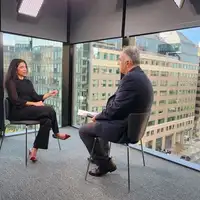
Iranians are increasingly discontented with how their country is run but the Islamic Republic persists because of its ability and willingness to crush dissent by force, ex-CIA analyst and National Security Council director Ken Pollack told Eye for Iran.
Pollack’s assessment comes as Iran faces overlapping crises at home and abroad.
The country is under intense economic strain, social dissent has become more visible and the Islamic Republic is recalibrating after military setbacks suffered by the June war with Israel.
Yet despite the pressure, Pollack said the system remains intact for a simple reason.
“Revolutions only succeed when regimes lose either the capacity or the willingness to use force,” he said. “The Islamic Republic learned from 1979. It is determined not to repeat the Shah’s mistake.”
“There is no question this country is in a pre-revolutionary state,” Pollack added. “They’re trying to have a revolution.”
Pollack pointed to Iran’s long cycle of unrest, tracing repeated efforts to challenge the Islamic Republic back to the 1999 student uprising.
Since then, protest waves have erupted every few years, including nationwide demonstrations and the women-led revolt that followed the death of Mahsa Amini in morality police custody.
Each time, he said, the population pushed harder, experimented with new tactics and widened the social base of dissent.
What stopped those efforts, Pollack said, was not a lack of public anger but the clerical establishment's consistent readiness to deploy force.
Pollack said episodes of unrest, such as at a public memorial service on Friday for a lawyer who died under mysterious circumstances, highlight the paradox defining Iran today: visible cracks in social control paired with an unflinching security response.
Looking ahead, Pollack identified the eventual death of Supreme Leader Ali Khamenei as the most serious potential inflection point.
At 86, the health of the veteran theocrat has become a subject of quiet speculation even inside Iran. Succession, Pollack warned, can destabilize authoritarian systems by exposing elite rivalries or paralyzing decision-making.
“Succession can just as easily lead to chaos, fragmentation or something worse,” he warned. “These systems often survive by becoming more repressive, not less.”
Pollack also criticized US policy for focusing too narrowly on Iran’s nuclear program while sidelining Iran's regional behavior and domestic repression. He warned that treating nuclear negotiations as the central problem risks missing broader forces shaping Iran’s future.
“The nuclear program is an irritant,” he said. “The real issue is the regime’s drive to dominate the region and its willingness to repress its own population to survive.”
For now, Pollack said, Iran remains suspended in a dangerous middle ground: a society actively trying to change its political fate and a state still capable of stopping it.
“These regimes can endure for a long time,” he said. “But when they finally break, it usually happens faster than anyone expects.”