Rubio says Trump’s Iran policy is ‘a head for an eye’
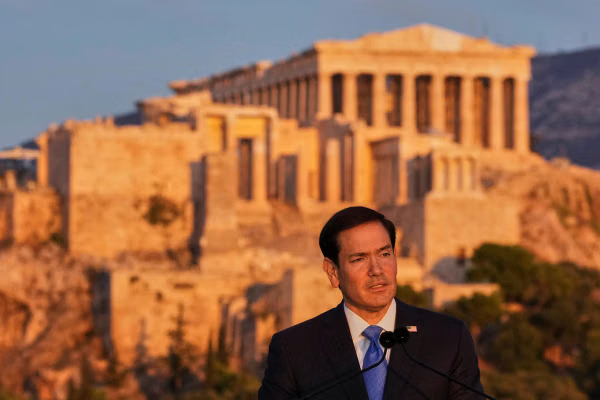
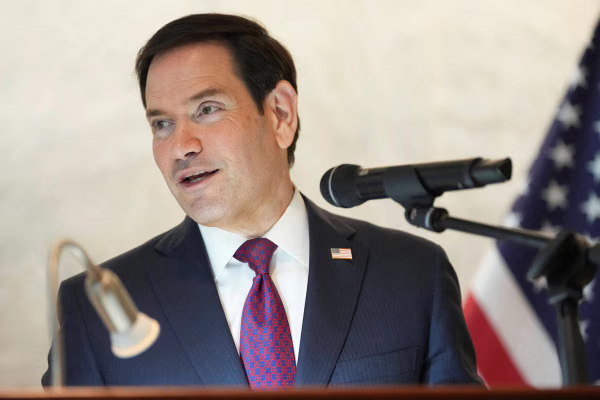
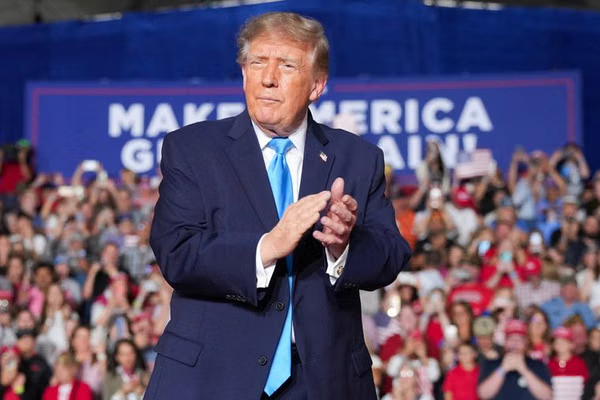
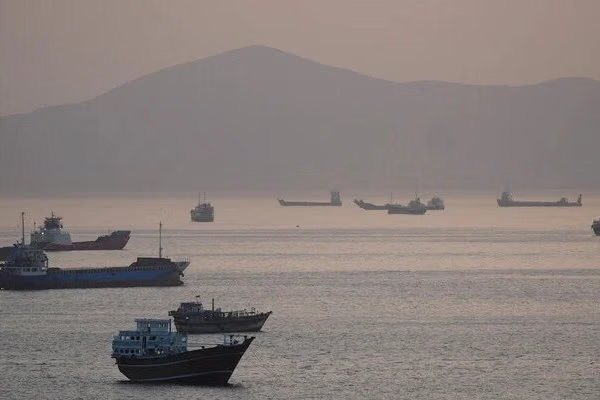
US Secretary of State Marco Rubio said President Donald Trump’s policy toward Iran was “a head for an eye,” warning Tehran it would pay a heavy price for attacks on Americans and US interests.

US Secretary of State Marco Rubio said President Donald Trump’s policy toward Iran was “a head for an eye,” warning Tehran it would pay a heavy price for attacks on Americans and US interests.

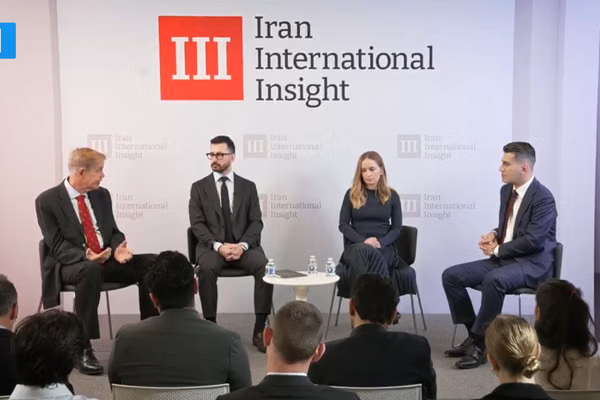
The US may be peeling away layers of Iran's leadership, but without a plan for what comes next, bombing the coast and seizing islands cannot reach the problem in Tehran, and risk delivering an IRGC takeover rather than real change, experts said at an Iran International town hall.
US Secretary of State Marco Rubio said on Wednesday that Iran was under severe economic and military pressure but the United States would continue targeting its ability to attack commercial shipping while remaining open to a negotiated solution.
President Donald Trump vowed Tuesday to strike Iran’s Pickaxe Mountain, but experts say the deeply buried nuclear facility, potentially central to Tehran’s efforts to restore enrichment, may be far harder to disable than his warning suggests.

The latest US strikes on southern Iran may offer the clearest indication yet of how Washington's campaign around the Strait of Hormuz is evolving from retaliation to the systematic degradation of Iran's military infrastructure.

The sixth day of fighting since the collapse of the Iran-US ceasefire ended with five bridges hit in southern Iran, US forces turning back three commercial vessels near the Strait of Hormuz, and President Donald Trump declaring that Washington was “winning big in Iran.”

A senior Iranian cleric said on Wednesday that Iranian officials should not continue negotiations with the United States by citing concerns over damage to the country's infrastructure, after President Donald Trump threatened to strike Iran's power plants and bridges.

US President Donald Trump said he would expand military strikes on Iran to power plants and bridges unless Tehran returned to negotiations, warning in a Fox News interview broadcast on Tuesday that attacks would intensify next week.

President Donald Trump on Monday reinstated a naval blockade against Iran after notifying Congress that US military action against the Islamic Republic had resumed, amid fresh blasts in southern Iran and continued ship attacks near Hormuz.

Iran’s Supreme Leader Mojtaba Khamenei renewed his vow Saturday to avenge his father’s killing after US President Donald Trump said he had ordered the US military to “decimate and destroy” Iran if Tehran attempted to assassinate him.

Less than three weeks after Washington and Tehran began implementing a 60-day memorandum, the ceasefire is broken, commercial ships have again come under attack in the Strait of Hormuz, and US forces have struck Iran. Yet the two sides are still talking.

Friday prayers across Iran became a synchronized campaign for revenge on Friday, with clerics rejecting further negotiations with Washington, defending Tehran’s control of the Strait of Hormuz and demanding visible retaliation for the killing of Ali Khamenei.

The United States and Iran expanded their military confrontation over the past 24 hours with fresh strikes, missile and drone attacks across the Persian Gulf and growing disruption to shipping through the Strait of Hormuz despite diplomatic efforts to preserve a ceasefire.

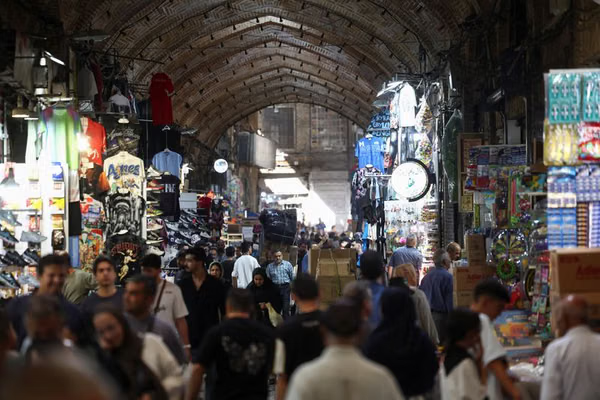
President Donald Trump’s tougher rhetoric toward Iran and renewed US strikes have stirred mixed reactions among Iranians, from hopes for political change to fears of another long and unresolved conflict after months of living between war and peace.

US President Donald Trump said on Wednesday a memorandum of understanding with Iran aimed at ending the conflict was over, describing Iran's leaders as "liars and scums" and saying he no longer wanted to negotiate with them.

Commercial vessels were hit by missiles near the Strait of Hormuz early Tuesday as stalled negotiations between Iran and the United States over security in the strategic waterway came under renewed strain, with Tehran and Washington offering different accounts of the attacks.

Calls for revenge and threats targeting US President Donald Trump and other American public figures featured prominently during Ali Khamenei’s funeral procession in Tehran on Monday, as mourners demanded retaliation for the slain Supreme Leader’s killing.

The United States and Iran clashed at the UN Security Council on Thursday as US Ambassador Michael Waltz warned that President Donald Trump’s patience was “not unlimited” in the face of Iranian attacks on its Arab neighbors and commercial shipping.

US President Donald Trump was still pursuing a nuclear deal with Iran even as military plans for an attack were falling into place, according to a new book that offers a detailed account of how diplomacy gave way to strikes on the Islamic Republic.
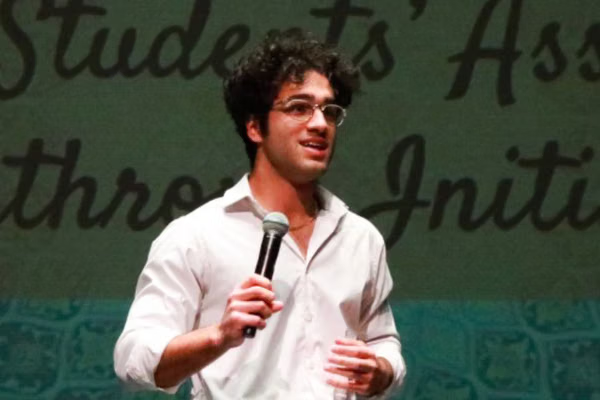
The new US-Iran memorandum of understanding marks a fundamental shift in Washington's approach to Tehran, replacing years of "maximum pressure" with an effort to use economic incentives to secure nuclear concessions, experts told Iran International.

Montenegrin police and the FBI have arrested an Iranian national wanted by the United States over a major hacking campaign that allegedly targeted US universities and benefited Iran’s Revolutionary Guards, Reuters reported.

Qatar’s prime minister said a hotline between the US and Iran was essential to stop rogue actors from disrupting the reopening of the Strait of Hormuz, the Financial Times reported on Wednesday.