Swedish MPs push to sanction Iranian officials' families and expel Iran's spies
A general view shows the exterior of Sweden’s parliament in Stockholm, Sweden, October 15, 2026.
Lawmakers from the Sweden Democrats have asked Sweden's parliament to back sanctions on Iranian officials and their close relatives, expel people spying for Tehran and cut ties between Swedish and Iranian universities, in a motion submitted on Thursday.
The motion, led by Aron Emilsson of the nationalist party, calls on the government to work for joint EU and US sanctions on Iran and its officials. Where the two cannot agree, it says, Sweden should take a tougher line on its own and press other countries to follow.
Sanctions should not stop at officials, the motion says, but reach their relatives, who "in many cases live well on blood money in the Western world." If adopted and enforced, such measures could include asset freezes, banking restrictions and entry bans.
It also asks the government to review whether people carrying out illegal intelligence work in Sweden can be identified and expelled.
Iran threatens and pressures dissidents abroad and their families inside Iran, the motion says, and because Tehran does not recognize dual nationality or renounced citizenship, Swedish citizens of Iranian origin are especially exposed. More than 100,000 Swedish-Iranians live in Sweden.
Seminaries and universities
The motion asks the government to consider sanctioning Al-Mustafa International University in full, as Canada has done, including any branches or partners in Sweden.
The Iranian-run network, founded in 2007, trains foreign Shiite clerics and missionaries, and the United States has sanctioned it as a recruiting ground for the Revolutionary Guards' Quds Force.
The motion links it to the Imam Ali Center in Järfälla, north of Stockholm, which it describes as an arm of the Islamic Republic in Sweden, with an imam sent by Tehran and close ties to the Iranian embassy.
The center is the leading member of the Islamic Shia Council of Sweden, which received nearly 4 million kronor (about $380,000) in state grants in 2021. Swedish taxpayers should not fund such organizations, the motion says.
It also calls for cooperation between Swedish and Iranian universities to end, arguing that Iranian universities are controlled by the state, lack academic freedom and pose a risk of espionage.
Accountability for abuses
On human rights, the motion asks the government to push for an independent inquiry to document torture and other cruel, inhuman or degrading treatment by Iran's authorities, and to work for those responsible for crimes against humanity to be tried in national or international courts. It also asks the government to look at ways to support peaceful Iranian protesters directly.
Lawmakers from the Christian Democrats, which is in the governing coalition, filed a separate motion calling for tougher EU sanctions on Iran, more support for its democracy movement and a review of diplomatic relations with Tehran. It says further measures should be considered against Iranian diplomats who use their status to threaten dissidents, run influence operations or act against European security.
A target for Tehran
Sweden's security service, Säpo, has named Iran as one of the three countries most active in spying in Sweden, and has said Tehran has moved from gathering intelligence to trying to silence its critics.
In 2024, it said Iran was using Swedish criminal gangs to carry out attacks on Israeli and Jewish targets in the country.
Sweden accounted for 9 percent of the roughly 80 Iran-linked operations in Europe since 2022 identified in a report published on Thursday by the International Institute for Strategic Studies. Tehran has also used detained Swedes and Swedish-Iranians as leverage.
In 2024, Sweden released Hamid Nouri, a former Iranian prison official serving a life sentence for his role in the 1988 mass executions of political prisoners, in exchange for two Swedes held in Iran.
In 2023, Iran executed Habib Chaab, a Swedish-Iranian dissident abducted in Turkey. Ahmadreza Djalali, a Swedish-Iranian doctor, remains on death row in Iran.
The motions have been sent to parliament's Foreign Affairs Committee, which will consider them in December. Such motions are requests to the government rather than laws, and take effect only if parliament adopts them. Neither proposes stripping residency or citizenship from relatives or supporters of Iran's officials, despite claims to that effect on social media.
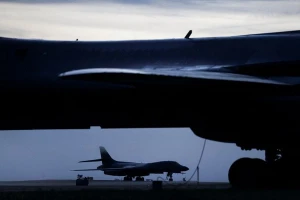
A B‑1B Lancer bomber arrives at RAF Fairford airbase, after police declared a major incident at the base and arrested several men on suspicion of offences under the Explosives Act, who have since been released on bail, in Fairford, Gloucestershire, Britain, September 29, 2026.
Iran has kept up operations in Europe despite arrests in more than half the cases, and can sharply step them up when it chooses, the London-based International Institute for Strategic Studies said, with incidents rising to 12 a month after the war began.
The IISS examined about 80 operations in Europe since 2022 in which it judged Iranian involvement at least a realistic possibility, including arson, bombings, threats, kidnapping and assassination.
Arrests followed 58 percent of them. Yet activity never stopped: about one or two incidents a month from October 2023 until the US-Israeli strikes on February 28, then 12 a month in March and April, before falling back.
"Iran has sustained activity and has shown that it can surge that activity sharply when it chooses," the institute said in a report published on Thursday.
Britain accounted for the largest share since 2022, 35 percent, followed by Germany, France, Sweden and the Netherlands. Since the war began, Britain and the Netherlands have accounted for more than two-thirds of the 32 incidents recorded.
The figures may partly reflect how well each country detects and publicizes such cases, the institute said.
New targets
The war changed whom Iran targeted, the report found. Operations against Jewish communities rose from 21 percent of the total to 57 percent, as Iran's networks turned to targets seen as easier to reach.
In London, they included the arson of Hatzola volunteer ambulances in March and the stabbing of two Jewish men in April.
Attacks on Iranian dissidents and journalists continued alongside them. On November 12, two men were convicted in London of spying on Iran International journalists for Iranian intelligence.
Iran has also moved against US commercial and military interests, including suspected bomb attacks on American financial institutions in Paris and Amsterdam, and incidents at RAF Fairford in September and RAF Mildenhall this month.
After five men were arrested near Fairford, which hosted US bombers used against Iran, Washington pulled its B-1 bombers out of the base. It later moved tankers and aircraft out of Mildenhall over a threat from Iran.
"Iranian officials will almost certainly note their disproportionate impact," the report said: low-cost operations by recruited proxies had been followed by the withdrawal of significant US military assets from Europe.
'Harder to disrupt'
The institute found no case of Iran and Russia working together, but said the opportunities were growing, through shared tradecraft, shared support networks or joint attacks on European targets.
It warned of other trends that would make Iran's operations harder to stop: more reliance on lone actors and small cells, as Russia does, and a move toward less protected targets as security improves around Jewish and Israeli sites.
In one of three scenarios for 2027, Iran stops directly tasking operations in Europe, but proxies it has already empowered carry on independently.
A pattern of arrests
The findings match what European governments have described. MI5 Director General Ken McCallum said in October that Iran-linked operations had led to more than 50 arrests in Britain in a year.
A US indictment and an ITV News investigation this month tied the Fairford plot to a network run from Baghdad for Iranian intelligence, which Western officials blame for about 18 attacks across Europe.
Iran's operations reach beyond violence. France blamed a Revolutionary Guards cyber unit for hacking refrigeration systems at about 700 supermarkets in October. On November 20, the European Union and Britain demanded in a joint statement that Iran stop its "hybrid attacks on European soil."
A former IRGC member, Saied Reza Ameli has been announced as one of the keynote speakers at the Islamic Human Rights Commission's (IHRC) thirteenth annual conference.
A London gallery canceled its booking for an Islamophobia conference featuring a senior Iranian hijab and internet censorship policymaker and former IRGC commander, organizers said, adding that the event would still go ahead with him delivering a keynote by video from Iran.
The Islamic Human Rights Commission (IHRC) said P21 Gallery cited a meeting with Britain’s Charity Commission about Saied Reza Ameli’s participation when it explained its decision.
The IHRC accused the regulator of pressuring the gallery to withdraw and said it would announce a new venue for the December 13 conference on artificial intelligence and Islamophobia.
Ameli served as secretary of Iran’s Supreme Council of the Cultural Revolution from 2019 to 2023 and remains a member. In 2019, the council approved tougher guidelines setting out how state agencies should enforce compulsory hijab.
Ameli defended the stricter rules at the time, saying they were needed for “social health, protection of the family”.
The IHRC said in a statement to the Daily Mail that Ameli had publicly opposed compulsory veiling and defended his invitation on the strength of what it called his academic work on Islamophobia and artificial intelligence.
Ameli was still council secretary in September 2022 when Mahsa Amini, 22, died in custody after Iran’s morality police detained her over her hijab. Her death sparked nationwide protests.
Canada sanctioned Ameli in February 2023 as part of measures targeting Iranian officials over human rights violations. Britain sanctioned the cultural council that July for its role in setting and enforcing mandatory dress codes for women, citing the use of unreasonable force. The IHRC said Ameli himself faces no British sanctions.
Ameli served as deputy commander of the Imam Sadeq Brigade in the Revolutionary Guards’ Seyyed al-Shohada Division, according to the human rights database Faces of Crime. In 2015, then-Supreme Leader Ali Khamenei appointed him to the Supreme Council of Cyberspace, which oversees Iran’s internet policy and strict censorship of social media.
A University of Tehran professor, Ameli helped establish the London-based IHRC in 1997. British company records show he served as one of its directors from 2006 until December 2022.
Australian broadcaster Erin Molan says she was targeted in an Iran-linked cyber-espionage operation after someone posing as a US think tank expert sent her an online meeting invitation.
Australian broadcaster Erin Molan said she was targeted by Iran-linked hackers posing as a US think tank expert, and that the head of Australia’s domestic intelligence agency told her she was one of three Australians targeted.
The other two were journalist Sharri Markson and political commentator Michael Kroger, she said. Molan, host of The Erin Molan Show, told Iran International’s Eye for Iran podcast that she found a security alert she had missed only after reading about a similar approach to Markson.
She contacted police and the head of the Australian Security Intelligence Organization, ASIO, who told her the operation had been linked to Iran.
The case adds to a list of suspected Iranian hacking operations aimed at journalists and public figures who speak out against Tehran, and comes a year after Australia expelled Iran’s ambassador over arson attacks that ASIO linked to Iran.
A message about her father
The first message arrived on X. The sender praised Molan’s work, cited specific things she had said in support of the Iranian people and brought up her late father, Jim Molan, a retired major general and senator.
“Anyone knows the way to my heart is talking to me about my dad,” Molan said. “It’s my favorite subject.”
The name on the message belonged to a real think tank expert. Molan found her profile on the organization’s website and saw she had appeared on CNN. About a month after the first approach, Molan clicked a link to join a meeting.
The screen behaved oddly and she heard strange noises, she said. Nobody joined. When she emailed to ask what had happened, the sender said the expert had been called away and would reschedule. Molan said she was annoyed at having set aside the time, and moved on.
Months later, Markson’s account prompted her to search her inbox, where she found an alert showing a security breach. She sent the material to police.
“The person inside her account was not her,” Molan said of the expert.
A borrowed account
Markson told NewsNation that she had received messages that appeared to come from a former Trump administration official she had known for years. The senders used his X account without his knowledge and repeatedly tried to set up an online meeting. She grew suspicious and contacted him directly. He knew nothing about it.
Markson said Australian intelligence officials linked the operation to Charming Kitten, a hacking group tied to Iran’s Revolutionary Guards that has long impersonated journalists and think tank experts to win targets’ trust.
She said she believed she was singled out for her coverage of antisemitism, her support for Israel and her criticism of the Islamic Republic.
Molan said the messages to her referred to her public statements distinguishing between Iran’s rulers and its people. “They were referencing specific things that I had said in defense of the Iranian people,” she said.
An FBI call
Jonathan Harounoff, a journalist and former Israeli spokesperson to the United Nations, told Eye for Iran that he received an Instagram message from someone posing as a reporter for Britain’s Telegraph.
The sender said they had read his book, Unveiled, and cited specific points they wanted to discuss in an interview.
He was ready to agree, he said, until the sender grew impatient and began sending more links. He contacted the reporter through her work email. She had not sent the messages, and the account was later disabled.
About six months later, he said, the FBI called to tell him he had been targeted in a hacking attempt it attributed to the Iranian state.
From hacking to sabotage
Iran’s cyber operations in the West have gone beyond espionage. On November 10, France blamed a Guards-affiliated unit for an October sabotage campaign against refrigeration controls at more than 700 stores, which French officials said caused fires and spoiled food worth tens of millions of euros (tens of millions of dollars).
Paris summoned Iran’s ambassador. Tehran rejected the accusation.
Molan said the experience made her question even routine encounters. When she arranged to hand her laptop to police in Sydney, she said, she wondered how she could be sure the people she was meeting were really officers.
She has faced threats before. After bomb threats following the October 7 attacks in Israel, she needed police escorts, and people close to her urged her to step away from the subject. She was back on air the following week.
“I cannot be silenced,” she said. “I will never be silenced.”
B‑1B Lancer bomber at the RAF Fairford airbase, which hosts US Air Force personnel, in Fairford, Gloucestershire, Britain, September 27, 2026.
Two men charged over an alleged plot against Britain’s RAF Fairford airbase on behalf of Iran are likely to plead not guilty, their lawyers indicated at a hearing in London on Friday, where the judge set the trial for November 22, 2027.
Mohmed Abdulkarim, 24, and Nouman Essghir, 25, appeared via video link at a preliminary hearing at the Old Bailey over a plot that prosecutors say involved driving three vans containing petrol to the airbase used by the United States to carry out strikes on Iran.
Abdulkarim is charged under Britain’s National Security Act with engaging in conduct that was likely to materially assist a foreign intelligence service between August 31 and September 28.
His co-defendant, Essghir, a British national, is the only one of the five men arrested outside RAF Fairford to be charged, though his charge relates to alleged reconnaissance of the base on August 22.
Following the arrest of five British men outside the base in southwest England in the early hours of September 27, US B-1 bombers were withdrawn from RAF Fairford on security grounds.
Prosecutors told the court that Britain had authorized the use of its bases in March for what it described as defensive strikes to stop Iran firing missiles across the region. In July, Iran’s Revolutionary Guards warned that any base used to launch attacks on Iran was a legitimate target.
Prosecutors say Abdulkarim and Essghir were in contact with a person abroad named “Ali”, who is alleged to have been “acting in the interests of the Islamic Republic of Iran”. Iran’s ambassador to Britain has denied Tehran was involved.
Prosecutors cited a message in which Abdulkarim described Ali as a spy working for Iran against Israel. Abdulkarim told police he believed he was helping to shoot a promotional video for a new business.
In a US indictment made public on November 10, prosecutors allege that Mohammed Ali al-Hassani, an Iraqi national, directed preparations for the Fairford plot from Iran and paid contacts in Britain to obtain vehicles and materials. The indictment says his contacts also gave him information on the base’s layout.
According to the US Justice Department, al-Hassani directed preparations from Iran, paying contacts in Britain to conduct surveillance and obtain vehicles and materials for the September operation.
US prosecutors have charged al-Hassani and two others. Separately, the US removed aircraft from RAF Mildenhall, a second airbase in Britain, last week over a reported threat from Iran, the Wall Street Journal reported.
Mrs Justice Cheema-Grubb set aside four weeks for the trial at Woolwich Crown Court. Asked by the judge whether there would be further defendants, prosecutors said they could not say.
Six other people, including the four other men arrested outside RAF Fairford on September 27, remained on police bail, police said last month.
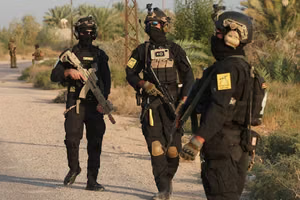
Members of the Iraqi police take part in a security deployment on the outskirts of Jurf al-Sakhar, Babil province, Iraq, November 20, 2026.
Iraqi forces began deploying on Friday in Jurf al-Sakhar, a town south of Baghdad held for more than a decade by Iran’s most powerful militia ally in Iraq, under a deal brokered by Shiite leaders days after the head of Iran’s Quds Force arrived in Baghdad.
A convoy flying Iraqi flags drove toward Jurf al-Sakhar on Friday, and hundreds of soldiers took up positions on the outskirts.
The yellow flags of Kataib Hezbollah were still flying farther inside the town, and none of the group’s fighters were visible. A security headquarters is due to open on Saturday to oversee the handover, with a unit assigned to protect energy facilities.
Under the deal, Kataib Hezbollah fighters are to withdraw to other parts of Iraq, Reuters reported, citing security officials. Al Arabiya, citing sources, said the withdrawal would be phased over a month. A joint command of the army, federal police, energy police and units of the Popular Mobilization Forces is taking over the town.
The standoff began on Monday, when Prime Minister Ali al-Zaidi ordered troops to prepare to enter Jurf al-Sakhar after an investigation accused Kataib Hezbollah of running a network that siphoned off hundreds of millions of dollars’ worth of state oil through tampered pipelines.
Nine senior security and oil officials were dismissed, and arrests linked to the case raised fears of an armed confrontation. The group denies the accusations and had warned it would resist any attempt to enter the town.
The same day, Esmail Qaani, commander of the Revolutionary Guards’ Quds Force, which runs Iran’s network of allied armed groups abroad, arrived in Baghdad to help defuse the crisis, Iraqi Shiite political sources told Reuters. Kataib Hezbollah said its leader, Abu Hussein al-Hamidawi, met Qaani and Hadi al-Amiri, head of the Iran-backed Badr Organization, in the talks that led to the deal.
A town nobody could enter
Jurf al-Sakhar, a Sunni farming town on the Euphrates about 50 kilometers south of Baghdad, was retaken from Islamic State in 2014 by the army and Shiite militias, Kataib Hezbollah among them. Its residents were never allowed back. More than 100,000 people from the town and surrounding villages remain displaced, Shafaq News reported, and even government officials have rarely been let in.
The town sits near the roads linking Baghdad with Karbala and Anbar province, and has served as a financial hub for evading sanctions on Iran, said Omar Mohammed, an Iraqi historian known for documenting life under Islamic State as Mosul Eye. He called the move “a theatrical show.”
“I think maybe the Iranian-backed militias will allow them some cosmetic gains, but there’s no way that Iran is going to allow its footprint in Iraq to disappear,” David Patrikarakos, a journalist and author of a book on Iran’s nuclear program, told Iran International earlier this week.
Iran’s strongest arm in Iraq
Kataib Hezbollah was founded after the 2003 US-led invasion of Iraq by Abu Mahdi al-Muhandis, who was killed alongside Quds Force commander Qassem Soleimani in a US drone strike at Baghdad airport in January 2020. Washington designated it a terrorist organization in 2009 and blamed it for a January 2024 drone attack that killed three US soldiers at a base in Jordan.
It is among the most influential members of the Islamic Resistance in Iraq, an umbrella of Iran-backed factions that has claimed more than 150 attacks on US forces since the Gaza war began in 2023, and more recently on US troops in the Persian Gulf states.
The militias report directly to Iran’s Revolutionary Guards. Their arsenals include anti-tank guided missiles, precision-guided rockets, armed drones and some short-range ballistic and cruise missiles, according to Iraqi security officials.
Kataib Hezbollah has thousands of fighters and no announced leadership structure. It forms several battalions of the Popular Mobilization Forces, an umbrella of mostly Shiite armed factions set up in 2014 to fight Islamic State and later made an official state force.
Its fighters draw state salaries, and some of its members designated as terrorists by the United States hold senior posts in the PMF. It also has a political party, Huquq, with five lawmakers, and business interests in construction, housing, trade and currency exchange, according to an Iraqi official report. The group denies these.
Since the United States and Israel went to war with Iran on February 28, Iraqi militias have struck US troops and facilities in Saudi Arabia and the United Arab Emirates. President Donald Trump has pressed Zaidi to disarm them, and the factions have refused to hand over their weapons.
Members of the Iraqi police take part in a security deployment on the outskirts of Jurf al-Sakhar, Babil province, Iraq, November 20, 2026.
A risky test for Baghdad
Moving against the militias carries a price. In November 2021, after then-Prime Minister Mustafa al-Kadhimi ordered a crackdown, his Baghdad home was hit by an armed drone in what officials called an assassination attempt.
In August, Iraqi special forces arrested the intelligence chief of another Iran-aligned faction, Harakat al-Nujaba, over drone attacks on US targets. He was released 48 hours later after threats of retaliation and the intervention of senior Shiite politicians.
Iraq is also tied to Iran in ways that a single town cannot change. It imports Iranian gas and electricity, and the militias’ access to dollars and to trade has made Iraq one of Iran’s main routes around sanctions. The US Treasury barred 14 Iraqi banks from dollar transactions in 2023 over suspected links to Iran, and in 2025 it sanctioned a businessman accused of smuggling Iranian oil disguised as Iraqi crude.
John Craig, a former US ambassador, called Baghdad’s move “about 10 years overdue.” Whether Zaidi can do more, he said, would show how serious he is.