UK running offensive cyber operations against Iran, Russia and China - Sky News
Britain is carrying out offensive cyber operations against Iran, Russia, China and North Korea, the commander in charge of its military cyber force told Sky News, a rare public admission that comes as Iran-linked plots and hacks hit Britain and its allies.
Asked whether the National Cyber Force was conducting offensive operations, General Sir Rob Magowan said, “Absolutely, and we’ve been clear about that.” Russia, China, Iran and North Korea “are a threat to our way of life and they are conducting operations in the cyber domain,” he said.
“And they need to be really clear that there’s going to be a cost to them conducting operations in the cyber domain and that’s what our cyber force is about.”
British officials almost never discuss the force’s offensive missions in public. Set up in 2020, it brings together the signals intelligence agency GCHQ, the Ministry of Defense, the foreign intelligence service MI6 and the Defense Science and Technology Laboratory. King Charles opened its new headquarters in Samlesbury, in northwest England, on Monday.
‘Threat with threat’
Magowan, a Royal Marines officer who heads the military’s Cyber and Specialist Operations Command, said the force could map an adversary’s networks “and ensure that we can achieve effect inside that network.” Its operations were succeeding, he said, though he gave no details.
“I wouldn’t say we’re at war, but we’re not at peace either,” he said. “We’re in this hybrid zone, this grey zone, below the threshold of conflict.”
His message to adversaries was blunt. “If you’re going to try to operate in the cyber domain, then you’re going to meet us. You’re going to meet that threat with threat,” he said.
Britain’s National Cyber Security Centre, part of GCHQ, tracked 1,831 reported cyber attacks in the past year, 80 of them nationally significant.
From Fairford to Mildenhall
The admission comes after a run of Iran-linked threats against British soil, several of them aimed at the US military presence there.
In September, police arrested five men near RAF Fairford in western England, which US bombers had used to strike Iran. Washington pulled all 12 of its B-1B bombers from the base in early October, and two men were charged in October under the National Security Act, one accused of assisting Iranian intelligence. Prime Minister Andy Burnham said the plot was “almost certainly” directed by the Revolutionary Guards.
Earlier in November, a US indictment and an ITV News investigation tied the Fairford plot to a network run from Baghdad on behalf of Iranian intelligence, which Western officials blame for about 18 attacks across Europe, seven of them in Britain, many aimed at Jewish targets.
The same week, the US military moved tankers and aircraft out of RAF Mildenhall in eastern England over a threat from Iran, and raised the alert level there and at nearby RAF Lakenheath to the second-highest.
Iran’s top security official, Mohsen Rezaei, has since warned that Iran would strike US bases in Europe if attacked again. Last week, two men were convicted in London of spying on Iran International journalists for Iranian intelligence. Iran-linked operations have led to more than 50 arrests in Britain in the past year, according to MI5.
Iran’s hackers across Europe
Iranian hackers have also gone after civilian infrastructure.
In July, Iran-linked hackers took over the controls of a small gas power plant in Britain and forced it offline for about four days, the Telegraph and Guardian reported. British officials confirmed a cyber incident but have not publicly attributed it.
In October, hackers took control of refrigeration systems at about 700 supermarkets in France, letting fridges and freezers warm up. France blamed Shahid Kaveh, an offensive cyber unit of the Revolutionary Guards working behind front groups including one calling itself CyberAveng3rs.
On the night of November 1, supermarkets in at least nine European countries reported similar attacks, and hackers tampered with freezers storing blood for patients at France’s national blood service, which is now under judicial investigation.
The CyberAveng3rs name echoes a group that US authorities linked to the Guards after it hacked control systems at American water utilities in 2023. Iran-linked hackers were also blamed for attacks on US water systems in July.
Iran International is among the military targets of the Islamic Republic's armed forces, IRGC spokesman Hossein Mohebbi said Thursday, renewing an earlier threat against the London-based broadcaster amid a series of plots and attacks targeting its journalists.
Speaking at the University of Tehran, Mohebbi referred to an August 26 warning by senior armed forces spokesman Abolfazl Shekarchi, who threatened to designate Iran International, BBC Persian, Radio Farda and their employees as military targets.
“We have announced that some media outlets are our targets, such as Iran International,” Mohebbi said, referring to the earlier announcement by Iran's military leadership.
“They are our targets because they are acting with hostility. They are not impartial media outlets,” he added.
Shekarchi had accused the broadcasters of links to US and Israeli intelligence services without presenting evidence.
The renewed threat comes a week after two Iranian men were convicted in London of assisting a foreign intelligence service in a case involving surveillance of Iran International journalists and preparations for violence in Britain.
Mostafa Sepahvand, 41, and Farhad Javadi Manesh, 46, were convicted at Woolwich Crown Court on November 12. The court heard that the men had monitored journalists Mojtaba Pourmohsen and Kambiz Hosseini, as well as British lawyer Jonathan Turner, on behalf of Iranian intelligence.
Sepahvand was also convicted of preparing to commit serious violence against a person in Britain. Prosecutors said he had been promised up to £150,000, approximately $200,000, to carry out an attack.
Both men are due to be sentenced on December 17. A third defendant was acquitted.
British Prime Minister Andy Burnham warned Monday that Britain would respond to Iranian-sponsored attacks on journalists, Jewish communities and military airbases.
“We cannot allow Iran to have a nuclear weapon, nor to massacre their own people and threaten the region unchecked. Nor will we allow them to sponsor attacks on journalists, our Jewish communities here in Britain and airbases without response. Nor will we allow them to sponsor attacks on journalists, our Jewish communities here in Britain and airbases without response,” Burnham said at the Lord Mayor's Banquet in London.
Months of threats against Iran International
Mohebbi's remarks follow a series of threats against Iran International, its journalists and broadcasting infrastructure during the war.
In March, the government-aligned Tabnak website called for attacks on the broadcaster and people associated with it, including offices and homes of some employees and analysts in Israel.
Later that month, Iran's Khatam al-Anbiya Central Headquarters threatened facilities supporting Iran International's broadcasts, accusing the network of psychological warfare.
The Committee to Protect Journalists reported that Iranian authorities had warned Turkmenistan and Monaco over satellite services carrying the broadcaster's programming. Interference with its satellite signals was also reported.
In April, Iran International said Iranian state television had repeatedly aired calls for missile strikes against the broadcaster.
The network also reported financial and judicial measures affecting more than 100 people, including 63 of its journalists, as well as pressure on employees' families.
Three people were charged with arson with intent to endanger life following an April 15 incident in which an incendiary device was thrown towards a building near Iran International's London studios, landing in a car park.
Their trial was scheduled to begin on January 25, 2027, at London's Central Criminal Court. The Committee to Protect Journalists confirmed on November 13 that proceedings in the case remained ongoing.
Promotional displays for the upcoming video game "Grand Theft Auto VI" (GTA 6) ahead of its scheduled release on November 19 inside a Saturn electronics store in Berlin, Germany, November 17, 2026
The release of Grand Theft Auto VI has sparked excitement, frustration and political satire among Iranian gamers, who face soaring prices, slow internet speeds and barriers to international payments.
For many Iranian gamers, the challenge goes beyond affording the game, with slow internet connections making downloading its roughly 200 gigabytes another obstacle.
"I really want to buy and download GTA, but when I think about having to download 200 gigabytes with this miserable internet speed and all the frustration that comes with it, I give up for now," one user wrote on X.
Another joked about the time required to download the game.
"With Iran's internet speed, I think my 200-gigabyte GTA download will finish by the time the next GTA comes out," the user wrote.
A game priced beyond many gamers' reach
GTA 6 costs an estimated 210 million rials in Iran, compared with 1.9 million rials for GTA 5 in 2013 and just 400,000 rials for GTA 3 in 2001.
That makes the latest installment more than 110 times as expensive as GTA 5 was 13 years ago and over 500 times the price of GTA 3 in 2001.
The increase largely reflects the rial's depreciation against the dollar. The US currency has risen from around 8,000 rials to 2.66 million rials on Iran's free market, an increase of more than 33,000%, while the game's international price has risen by just 60%, from $50 to $80.
For some gamers, purchasing the game is only part of the financial challenge.
"I want to play GTA, but I don't have the console. I'm just 1.9 billion rials short," one user joked, posting a bank account number alongside the message.
Another described the difficulties of buying the game legally through a gift card because Iranian consumers lack ordinary access to international credit cards and payment networks.
"I really went through hell to buy it. I wish we could use credit cards and the global financial system as easily as everyone else," the user wrote.
Promotional displays for the upcoming video game "Grand Theft Auto VI" (GTA 6) ahead of its scheduled release on November 19 inside a Saturn electronics store in Berlin, Germany, November 17, 2026
The gamer said the purchase had eventually succeeded after a complicated process, adding that alternatives existed but they wanted to experience buying a game the way people with international credit cards do.
Download speeds expose digital divide
The game's large download size has also highlighted the difference between internet access inside Iran and abroad.
One Iranian user living outside the country posted that downloading approximately 210 gigabytes had taken just 32 minutes.
The post prompted a wave of responses from gamers inside Iran comparing their much longer download times.
"My download speed is great too," one user joked, sharing a screen showing 15 hours remaining.
Another user said downloading the game over an ADSL connection would take 72 hours, while a third reported an estimated 27 hours.
Gamers turn frustration into political satire
The excitement surrounding GTA 6 has also inspired digitally created images combining the game's release with jokes about Iran's political leadership and internet restrictions.
One satirical image shows Mojtaba Khamenei, Iran's supreme leader, reflected in a television displaying a PlayStation download screen for GTA 6.
Another manipulated screenshot replaces the game's estimated download time with the words "Until Mojtaba shows up," referring to new supreme leader’s continued absence from public view since the death of his father, Ali Khamenei, and his subsequent rise to power.
Other posts focused on the country's internet speeds, including a fabricated download screen estimating that the game would take 86 years and 22 days to download.
"I think the timing is perfect. By then, I'll have saved enough money to buy it, and we can play together," one commenter responded.
"Maybe in the next life, God willing," another wrote.
Excitement meets frustration
Despite the financial and technical barriers, anticipation for the game has remained high among Iranian social media users.
Some celebrated finally purchasing it, while others expressed disappointment at being unable to afford the necessary hardware or even watch gameplay videos online.
"The whole world is playing GTA 6 and having fun," one user wrote, describing their frustration with internet access in Iran.
"I don't even have enough internet to watch it in 240p," the user added.
An empty classroom in an Iranian school, with a radiator alongside rows of desks.
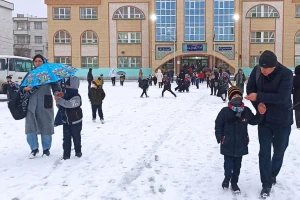
Students in Iran have reported restrictions on heating in schools despite cold weather, forcing some to bring electric heaters into classrooms, according to messages sent to Iran International.
One student said education authorities had issued a directive prohibiting schools from switching on heating systems until mid-December.
“The weather is very cold, and nobody is responding. The principal and deputy principal just tell us to wear more clothes,” the student said.
“We had to bring an electric heater into the classroom to keep ourselves a little warmer, although it barely makes a difference,” the student added.
The complaints come as Iran faces renewed pressure on its energy supplies ahead of winter, with natural gas shortages affecting industrial production and raising concerns about heating and fuel availability.
Gas shortages affect schools and industries
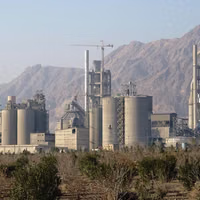
Iran International has recently reported on gas supply problems affecting the steel and cement industries, where restrictions have disrupted production.
Authorities have also warned of possible gas cuts during the winter if consumption rises sharply, with officials estimating a potential daily supply deficit of up to 430 million cubic meters.
The country's heavy reliance on natural gas for residential heating, electricity generation and industrial production means that shortages can affect several sectors simultaneously as temperatures fall.
Gasoline shortages have also disrupted road transport, with truck drivers forced to wait overnight at fuel stations for their next fuel allocation, a citizen told Iran International in a message.
The person said truck drivers were parking overnight near roadside fuel stations because they could not obtain enough diesel to continue their journeys.
The account comes after recent reports of long queues at gasoline stations across Iran, including in Shiraz, Asaluyeh, Genaveh, Gerash and Jam.
Food prices and bread restrictions add to household pressures
Messages from residents across Iran also described rising food prices and restrictions on bread purchases.
A resident of Malard near Tehran said the price of a cream cheese product had increased from 1.6 million rials ($0.60) to 2.5 million rials ($0.94) within a week, an increase of more than 56 percent.
The increases come as Iran's statutory minimum monthly base wage stands at approximately 166 million rials ($62), excluding allowances, leaving low-paid workers particularly exposed to rising food prices.
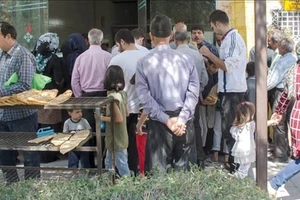
Bread shortages have added to the financial pressure on households, with residents in Ghiamdasht, southeast of Tehran, Qazvin, parts of the northern province of Mazandaran, and Khorramabad, the capital of western Lorestan province, reporting flour shortages and restrictions on bread purchases.
A resident of Ghiamdasht said a bakery was limiting customers to two loaves of sangak traditional bread because of flour shortages. In Mazandaran, another resident said purchases of subsidized bread were restricted to six loaves per national identification number.
In Qazvin, a resident described flour rationing at bakeries, while a resident of Khorramabad said bread was being distributed according to household size and that flour purchased for home baking was of poor quality.
Peyman Farahavar, an Iranian poet sentenced to death on charges of armed rebellion and waging war against God.
Hundreds of poets and prominent literary figures worldwide have joined an international campaign calling on Iran to halt the execution of imprisoned poet Peyman Farahavar, whose death sentence has been upheld and referred for enforcement.
“Nowhere in the world should words and poetry be punishable by hanging,” the signatories said in a joint statement urging international action to save his life.
Among those backing the campaign are Goncourt Prize winners Leila Slimani and Marie NDiaye, International Booker Prize winner David Diop, American poet Charles Bernstein and French writer Daniel Pennac.
Iranian poets and writers, including Hafez Mousavi, Fatemeh Ekhtesari, Fatemeh Shams, Mehdi Moosavi and Ziba Karbassi, also signed the appeal.
Death sentence upheld
The Writers' Association of Iran announced on November 15 that Farahavar's death sentence on charges of baghi (armed rebellion) and moharebeh (waging war against God) had been finalized.
Nobel Peace Prize laureate Narges Mohammadi said the same day that his case had been referred to the sentence enforcement department.
Human rights news agency HRANA reported on November 11, citing a source close to Farahavar's family, that he had informed relatives by telephone on November 9 that he had received official notification that his death sentence had been referred for enforcement.
Peyman Farahavar, an Iranian poet sentenced to death on charges of armed rebellion and waging war against God.
Farahavar was sentenced to death in May 2025 by Branch One of the Revolutionary Court in Rasht. The Supreme Court upheld the sentence later that year and rejected his request for a retrial in April 2026.
Writers denounce forced confessions
Farahavar was arrested in 2022 over protest poetry, videos of poetry readings shared online and a solitary street demonstration, according to the campaign statement.
“His initial trial was conducted without a lawyer, and confessions extracted under duress formed the basis of his death sentence,” the signatories said.
The writers described the sentence as “manifestly unjust and contrary to recognized human rights standards and the principles of a fair trial.”
The statement also highlighted broader concerns about executions in Iran, particularly those involving protesters and people prosecuted for exercising freedom of expression.
“We, the poets signing this letter, call on the Iranian public, the media and international organizations, in the name of freedom and justice, to use every means at their disposal to compel the authorities of the Islamic Republic to immediately halt Peyman Farahavar's execution,” the statement said.
The Writers' Association of Iran also said at least 20 writers and poets were serving prison sentences or being held in prolonged detention, with several facing serious charges.
The campaign called for an end to death sentences imposed for peaceful expression, warning that Farahavar's case reflected wider concerns over the treatment of writers and dissenting voices in Iran.
US Treasury Secretary Scott Bessent speaks during the National Committee on US-China Relations 60th Anniversary Gala Dinner in New York City, US, November 10, 2026. REUTERS
US Treasury Secretary Scott Bessent's relocation to a military base was linked to Israeli intelligence about an alleged Iranian plot to use chemical agents against senior American officials, The New York Times reported Wednesday, citing a person briefed on the intelligence.
Bessent relocated from his Washington-area home to a military base earlier this month following threats attributed to Iran. In a Friday interview with CNBC, he said he had followed Secret Service instructions and would not be intimidated by the threats.
The Treasury secretary has spearheaded Washington's economic pressure campaign against Iran, including Operation Economic Outcast, launched in August to tighten sanctions and financial restrictions and pressure Tehran to reopen the Strait of Hormuz.
The reported threat comes amid broader US intelligence concerns about possible Iranian attacks against senior American officials.
CNN reported Monday, citing seven US officials, that intelligence indicated Iran was developing plans to potentially target senior Trump administration officials in Washington with a radioactive dirty bomb or chemical weapon.
US officials differed over whether Iran had the capability or intention to carry out such an attack.
President Donald Trump said Tuesday that Washington was examining the intelligence and warned Iran of severe consequences if it carried out an attack.
“Well, if there is, they will pay a price the likes of which no country has ever paid before,” Trump told reporters in Manila when asked whether an attack was imminent.
Secretary of State Marco Rubio said Wednesday that he did not believe Washington faced an imminent threat.
“I don't think there is any imminent threat,” Rubio told reporters, adding that US authorities remained alert to potential dangers.
Iran's Foreign Ministry rejected the allegations as baseless. The White House said it was monitoring potential threats but had identified no credible threat to the US homeland at that time.
Israeli officials have also warned that Iran could equip drones with chemical or biological weapons to attack Israel or neighboring countries, according to the Times.
US intelligence officials have identified indications of Iranian efforts to strengthen chemical and biological weapons capabilities, the newspaper reported. However, the Times said US intelligence officials largely assessed that Iran was developing those capabilities as a deterrent against major US or Israeli attacks, rather than for preemptive use.
US Director of National Intelligence Jay Clayton told a congressional hearing Wednesday that threats from Iran against Americans at home and abroad had increased substantially, although he declined to discuss specific intelligence about the reported Washington attack plot.