• العربية
  • فارسی
BrandBrand
  • Iran Insight
  • Politics
  • Economy
  • Analysis
  • Special Report
  • Opinion
  • Podcast
  • Live TV
  • Iran Insight
  • Politics
  • Economy
  • Analysis
  • Special Report
  • Opinion
  • Podcast
  • Live TV
  • Theme
  • Language
    • العربية
    • فارسی
  • Iran Insight
  • Politics
  • Economy
  • Analysis
  • Special Report
  • Opinion
  • Podcast
  • Live TV
All rights reserved for Volant Media UK Limited
volant media logo

Kuwait summons Iranian ambassador after drone attack kills two Italians

Nov 27, 2026, 14:45 GMT+0

Kuwait summoned Iran’s ambassador on Friday over a drone attack it blamed on Tehran that killed two Italian nationals and wounded a Kuwaiti citizen and a Pakistani national. Thursday’s attack caused extensive damage at what Kuwait’s Foreign Ministry described as a “vital site.”

Deputy Foreign Minister Hamad Suleiman Al-Mashaan handed Iranian Ambassador Mohammad Toutounchi a formal note protesting “continuing Iranian attacks” on Kuwait. He said Tehran bore full responsibility for the attacks and their consequences.

Al-Mashaan said the attacks violated Kuwait’s sovereignty and territorial integrity, international law, the UN Charter and UN Security Council Resolution 2817. He said Kuwait reserved its right to self-defense under Article 51 of the charter and would take any measures needed to protect its citizens and residents.

Iranian Foreign Minister Abbas Araghchi denied that Iran was responsible and proposed a joint investigation with Kuwait and Italy.

Most Viewed

Iran’s efforts to offset US naval blockade fall short, economists warn
1
INSIGHT

Iran’s efforts to offset US naval blockade fall short, economists warn

2

Iran rapidly builds underground complex near nuclear sites – US institute

3

Trump deploys extra aircraft carrier, says Iran is making ‘big mistakes’

4

Iran-backed Iraqi militia prepares for renewed US-Iran war, report says

5

Iran dismisses US blockade, warns of broader confrontation

Banner

Spotlight

  • Iran’s ‘self-sanctions’ compound pressure from US blockade, critics say

    Iran’s ‘self-sanctions’ compound pressure from US blockade, critics say

  • Iranian women break silence on a lifetime of violence
    VOICES FROM IRAN

    Iranian women break silence on a lifetime of violence

  • Too poor to marry, young Iranians are offered religious workarounds
    INSIGHT

    Too poor to marry, young Iranians are offered religious workarounds

  • Persian Gulf oil exports near prewar levels despite Hormuz attacks
    INSIGHT

    Persian Gulf oil exports near prewar levels despite Hormuz attacks

  • Iran faces year-end cash squeeze if US blockade holds
    INSIGHT

    Iran faces year-end cash squeeze if US blockade holds

  • A broken leg and broken trust: Violence in Iran’s schools
    VOICES FROM IRAN

    A broken leg and broken trust: Violence in Iran’s schools

Banner
Banner
Banner
Banner
Banner
Banner
•
•
•

More Stories

Swedish MPs push to sanction Iranian officials' families and expel Iran's spies

Nov 27, 2026, 14:01 GMT+0
100%
A general view shows the exterior of Sweden’s parliament in Stockholm, Sweden, October 15, 2026.

Lawmakers from the Sweden Democrats have asked Sweden's parliament to back sanctions on Iranian officials and their close relatives, expel people spying for Tehran and cut ties between Swedish and Iranian universities, in a motion submitted on Thursday.

The motion, led by Aron Emilsson of the nationalist party, calls on the government to work for joint EU and US sanctions on Iran and its officials. Where the two cannot agree, it says, Sweden should take a tougher line on its own and press other countries to follow.

Sanctions should not stop at officials, the motion says, but reach their relatives, who "in many cases live well on blood money in the Western world." If adopted and enforced, such measures could include asset freezes, banking restrictions and entry bans.

It also asks the government to review whether people carrying out illegal intelligence work in Sweden can be identified and expelled.

Iran threatens and pressures dissidents abroad and their families inside Iran, the motion says, and because Tehran does not recognize dual nationality or renounced citizenship, Swedish citizens of Iranian origin are especially exposed. More than 100,000 Swedish-Iranians live in Sweden.

Seminaries and universities

The motion asks the government to consider sanctioning Al-Mustafa International University in full, as Canada has done, including any branches or partners in Sweden.

  • Arrests have not stopped Iran's operations in Europe, IISS report finds

    Arrests have not stopped Iran's operations in Europe, IISS report finds

  • Free prisoners first: Jalali's wife challenges Tehran's call for expats to return

    Free prisoners first: Jalali's wife challenges Tehran's call for expats to return

The Iranian-run network, founded in 2007, trains foreign Shiite clerics and missionaries, and the United States has sanctioned it as a recruiting ground for the Revolutionary Guards' Quds Force.

The motion links it to the Imam Ali Center in Järfälla, north of Stockholm, which it describes as an arm of the Islamic Republic in Sweden, with an imam sent by Tehran and close ties to the Iranian embassy.

The center is the leading member of the Islamic Shia Council of Sweden, which received nearly 4 million kronor (about $380,000) in state grants in 2021. Swedish taxpayers should not fund such organizations, the motion says.

It also calls for cooperation between Swedish and Iranian universities to end, arguing that Iranian universities are controlled by the state, lack academic freedom and pose a risk of espionage.

Accountability for abuses

On human rights, the motion asks the government to push for an independent inquiry to document torture and other cruel, inhuman or degrading treatment by Iran's authorities, and to work for those responsible for crimes against humanity to be tried in national or international courts. It also asks the government to look at ways to support peaceful Iranian protesters directly.

Lawmakers from the Christian Democrats, which is in the governing coalition, filed a separate motion calling for tougher EU sanctions on Iran, more support for its democracy movement and a review of diplomatic relations with Tehran. It says further measures should be considered against Iranian diplomats who use their status to threaten dissidents, run influence operations or act against European security.

A target for Tehran

Sweden's security service, Säpo, has named Iran as one of the three countries most active in spying in Sweden, and has said Tehran has moved from gathering intelligence to trying to silence its critics.

In 2024, it said Iran was using Swedish criminal gangs to carry out attacks on Israeli and Jewish targets in the country.

Sweden accounted for 9 percent of the roughly 80 Iran-linked operations in Europe since 2022 identified in a report published on Thursday by the International Institute for Strategic Studies. Tehran has also used detained Swedes and Swedish-Iranians as leverage.

  • Court documents reveal Iranian intelligence contacts in Sweden

    Court documents reveal Iranian intelligence contacts in Sweden

In 2024, Sweden released Hamid Nouri, a former Iranian prison official serving a life sentence for his role in the 1988 mass executions of political prisoners, in exchange for two Swedes held in Iran.

In 2023, Iran executed Habib Chaab, a Swedish-Iranian dissident abducted in Turkey. Ahmadreza Djalali, a Swedish-Iranian doctor, remains on death row in Iran.

The motions have been sent to parliament's Foreign Affairs Committee, which will consider them in December. Such motions are requests to the government rather than laws, and take effect only if parliament adopts them. Neither proposes stripping residency or citizenship from relatives or supporters of Iran's officials, despite claims to that effect on social media.

Arrests have not stopped Iran's operations in Europe, IISS report finds

Nov 27, 2026, 12:43 GMT+0
100%
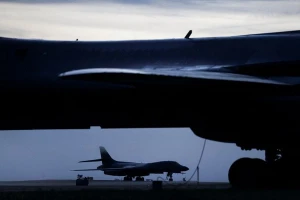
A B‑1B Lancer bomber arrives at RAF Fairford airbase, after police declared a major incident at the base and arrested several men on suspicion of offences under the Explosives Act, who have since been released on bail, in Fairford, Gloucestershire, Britain, September 29, 2026.

Iran has kept up operations in Europe despite arrests in more than half the cases, and can sharply step them up when it chooses, the London-based International Institute for Strategic Studies said, with incidents rising to 12 a month after the war began.

The IISS examined about 80 operations in Europe since 2022 in which it judged Iranian involvement at least a realistic possibility, including arson, bombings, threats, kidnapping and assassination.

Arrests followed 58 percent of them. Yet activity never stopped: about one or two incidents a month from October 2023 until the US-Israeli strikes on February 28, then 12 a month in March and April, before falling back.

"Iran has sustained activity and has shown that it can surge that activity sharply when it chooses," the institute said in a report published on Thursday.

Britain accounted for the largest share since 2022, 35 percent, followed by Germany, France, Sweden and the Netherlands. Since the war began, Britain and the Netherlands have accounted for more than two-thirds of the 32 incidents recorded.

The figures may partly reflect how well each country detects and publicizes such cases, the institute said.

New targets

The war changed whom Iran targeted, the report found. Operations against Jewish communities rose from 21 percent of the total to 57 percent, as Iran's networks turned to targets seen as easier to reach.

In London, they included the arson of Hatzola volunteer ambulances in March and the stabbing of two Jewish men in April.

Attacks on Iranian dissidents and journalists continued alongside them. On November 12, two men were convicted in London of spying on Iran International journalists for Iranian intelligence.

Iran has also moved against US commercial and military interests, including suspected bomb attacks on American financial institutions in Paris and Amsterdam, and incidents at RAF Fairford in September and RAF Mildenhall this month.

  • UK shelters warplanes amid drone threats, suspected Iran-linked plots

    UK shelters warplanes amid drone threats, suspected Iran-linked plots

  • Germany arrests two members of pro-Iranian group over synagogue plot

    Germany arrests two members of pro-Iranian group over synagogue plot

After five men were arrested near Fairford, which hosted US bombers used against Iran, Washington pulled its B-1 bombers out of the base. It later moved tankers and aircraft out of Mildenhall over a threat from Iran.

"Iranian officials will almost certainly note their disproportionate impact," the report said: low-cost operations by recruited proxies had been followed by the withdrawal of significant US military assets from Europe.

'Harder to disrupt'

The institute found no case of Iran and Russia working together, but said the opportunities were growing, through shared tradecraft, shared support networks or joint attacks on European targets.

It warned of other trends that would make Iran's operations harder to stop: more reliance on lone actors and small cells, as Russia does, and a move toward less protected targets as security improves around Jewish and Israeli sites.

In one of three scenarios for 2027, Iran stops directly tasking operations in Europe, but proxies it has already empowered carry on independently.

A pattern of arrests

The findings match what European governments have described. MI5 Director General Ken McCallum said in October that Iran-linked operations had led to more than 50 arrests in Britain in a year.

A US indictment and an ITV News investigation this month tied the Fairford plot to a network run from Baghdad for Iranian intelligence, which Western officials blame for about 18 attacks across Europe.

Iran's operations reach beyond violence. France blamed a Revolutionary Guards cyber unit for hacking refrigeration systems at about 700 supermarkets in October. On November 20, the European Union and Britain demanded in a joint statement that Iran stop its "hybrid attacks on European soil."

Some bootleg alcohol in Iran is poisoned on purpose, top psychiatrist warns

Nov 27, 2026, 11:39 GMT+0
100%

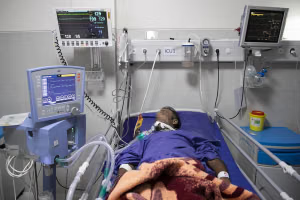
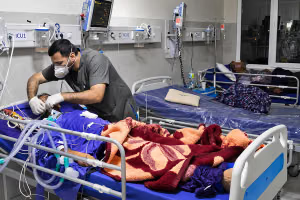
The head of Iran's psychiatric association has warned that some bootleg alcohol is being poisoned deliberately, as a wave of poisonings that has killed at least 26 people and sickened more than 550 spreads to a dozen regions, from Neyshabur to Bandar Abbas.

In large waves of alcohol poisoning, "people deliberately, and for various reasons such as profit, poison alcohol," Vahid Shariat, head of the Iranian Psychiatric Association, told the ISNA news agency on Friday. He did not say who they were or how they profited.

Drinkers have no way of telling whether what they buy is toxic, he said, and most of the harm could be prevented. He criticized what he called an "eliminationist" approach to alcohol and urged the state to put harm reduction first.

"There is widespread sloganeering at some levels of management, and those who make harsher slogans and bigger claims get more attention," he said.

'Which dealer can supply the whole country?'

The spread of the poisonings, from the northeast to the Persian Gulf coast and from Khoy in the northwest to Zabol in the southeast, has fed suspicion online that they are organized.

  • Bootleg alcohol kills 20, poisons 356 across Iran, health ministry says

    Bootleg alcohol kills 20, poisons 356 across Iran, health ministry says

  • Bootleg alcohol poisons 120 in northeastern Iran, four dead

    Bootleg alcohol poisons 120 in northeastern Iran, four dead

  • Deadly poisonings fuel anger over Iran's alcohol ban

    Deadly poisonings fuel anger over Iran's alcohol ban

"It's obviously the state's doing, otherwise the whole country wouldn't be poisoned," one Iranian wrote to Iran International. "Which dealer or bootlegger can distribute across the whole country?"

Earlier this month, the London-based channel Manoto aired an audio message from a man in Iran who said people linked to the security services and the Revolutionary Guards were involved in distributing alcohol and deliberately contaminating some shipments, without many producers knowing. He offered no evidence, and the claim could not be verified.

Others who wrote to Iran International blamed the ban itself. "The one responsible is whoever won't let quality, standard products in," one said.

543 cases, 23 deaths in the national count

The Health Ministry recorded 543 poisonings and 23 deaths across 12 medical university regions between October 31 and Wednesday evening, and eight people declared brain dead, ministry spokesman Hossein Kermanpour said.

  • Bootleg alcohol identified as top cause of deaths from poisoning in Iran

    Bootleg alcohol identified as top cause of deaths from poisoning in Iran

  • Who is behind the sale of lethal bootleg alcohol in Iran?

    Who is behind the sale of lethal bootleg alcohol in Iran?

Neyshabur had the most cases, 214, followed by Hormozgan with 93, Shiraz with 81 and Tehran province with 69. Kordestan, Khoy, Alborz, Mashhad, Isfahan, Zanjan, Khalkhal and Zabol also recorded cases.

Of those poisoned, 205 needed dialysis, 33 were in intensive care and 38 had blurred vision. The average age was 31, and 92 were under 20, according to ministry figures.

The toll has risen since. In Hormozgan, 126 people had been poisoned and 10 had died by Friday morning, nine in Bandar Abbas and one on Qeshm Island, the provincial health spokeswoman said, up from seven deaths in the ministry's count. The youngest was 12. In Neyshabur, 238 people had been treated by Thursday, with five dead and five declared brain dead. In Khoy, in West Azarbaijan, 20 people were poisoned and three died.

"No alcoholic drink can be considered safe," Kermanpour wrote on X, adding that the figures were published "not to frighten or blame people" but to prevent more deaths.

'Even a small amount'

Methanol, an industrial alcohol, cannot be detected by smell, taste or appearance, and even a small amount can be dangerous, said Shervin Tabrizi, a spokesman for Tehran's emergency services.

Symptoms, which can appear hours after drinking, include blurred vision, headache, nausea, vomiting, abdominal pain and drowsiness. He urged anyone with symptoms to call the 115 emergency line at once.

A deadly market

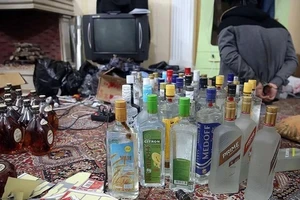
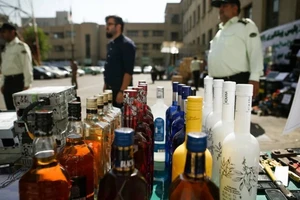
Alcohol is banned in Iran for Muslims, who face flogging if caught drinking, and only recognized religious minorities may make it for private use. Bootleggers often stretch drinks with cheap industrial methanol, and mass poisonings recur.

The worst came in early 2020, when 796 people died after drinking methanol in the false belief that it protected against COVID-19, according to Iran's Legal Medicine Organization.

In 2023, methanol-laced drinks killed 17 people and blinded 191 in Alborz province, near Tehran. Four people were later sentenced to death for "corruption on earth" for distributing them.

Iraq shuts more border crossings with Iran under US pressure to seal land routes

Nov 27, 2026, 10:37 GMT+0
•
Arash Sohrabi
100%
An Iranian traveler walks at the Shalamcheh border crossing between Iraq and Iran, Iraq, March 2, 2026.

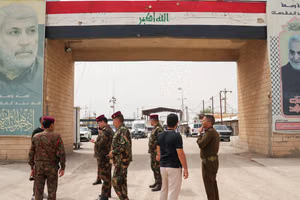
Iraq closed two more border crossings with Iran this week, including one run by the Kurdistan region, extending weeks of closures that followed a US request that Baghdad keep only two crossings open, and squeezing one of Tehran's main remaining trade routes.

On Thursday, Iraqi forces closed Sheikh Saleh, a crossing in Iran's western Kermanshah province, the Mehr news agency reported, citing the governor of Salas-e Babajani county. He said Baghdad had acted on a central government order to shut "unofficial" crossings with neighboring countries.

About 300 trucks loaded with goods and building materials were stranded, Kermanshah's customs chief said, and would be rerouted through other crossings.

The same day, Iraq's border forces closed the Bashta crossing with Iran and the al-Waleed crossing with Syria, both run until now by the Kurdistan Regional Government, Reuters reported, citing Iraqi state media.

There were unconfirmed reports that a third crossing, Shoushmi, in Kermanshah's Paveh county, had also been shut. Kermanshah's customs chief said he had received no official notice of it.

'Only two'

Washington asked for this. On November 8, Iraqi Foreign Minister Fuad Hussein said the US Treasury had formally asked Baghdad to close all its crossings with Iran except two, one in the Kurdistan region and one elsewhere in Iraq.

"There are many official and unofficial crossings with Iran, and closing them all is difficult and affects our economy," he told Al Jazeera.

Trade between the two countries is worth $15 billion to $18 billion a year, he said, including about $4 billion in Iranian gas.

  • Iran-backed Iraqi militia prepares for renewed US-Iran war, report says

    Iran-backed Iraqi militia prepares for renewed US-Iran war, report says

The day before, US Central Command had set up Task Force Iron Gate, a unit of about 20 military and civilian staff in Florida, to disrupt the movement of weapons, dual-use technology, sanctioned goods and illicit revenue across Iran's land borders and the Caspian Sea.

Without US personnel at the crossings, it relies on neighboring governments, chiefly Iraq, Turkey and Pakistan, to do the closing.

Open, shut, open again

Iraq and Iran share a border of about 1,600 kilometers, with nine official crossings and many unofficial ones. Over the past six weeks, Baghdad has closed and reopened them one by one, usually citing technical reasons.

On October 21, Iraq closed Chazabeh, known in Iraq as Sheeb, between Iran's Khuzestan province and Iraq's Maysan, citing inadequate preparations.

An adviser to Prime Minister Ali al-Zaidi said Iran had "deliberately undermined Iraq's security," with people linked to it crossing without permits.

  • Iraq plays down Iran border disruption as more closures reported

    Iraq plays down Iran border disruption as more closures reported

Truckers and traders in Maysan protested over rising prices, and the provincial council chairman, who threatened civil disobedience, was briefly detained. Chazabeh reopened on November 10.

On November 13, Iraq closed Somar, known in Iraq as Mandali, between Kermanshah and Iraq's Diyala province, for what it called maintenance before the rainy season. It is still closed.

On November 26, Sheikh Saleh and Bashta followed.

Major crossings such as Mehran, which carries millions of Iranian pilgrims to Karbala each year, remain open.

Why the border matters to Tehran

With its ports under US naval blockade since July and seaborne oil exports all but stopped, Iran depends more than ever on land routes for imports, exports and cash.

Iraq is one of Iran's largest export markets, its biggest buyer of gas and electricity, and a long-standing route around sanctions, through fuel smuggling, currency trading and companies fronting for Iranian interests.

Pro-Iran factions in Baghdad have pushed back. The Badr Organization's bloc in parliament condemned what it called American interference in Iraq's border policy and demanded the crossings reopen, and the Asaib Ahl al-Haq bloc asked why the government's technical explanations differed from the foreign minister's account.

The Revolutionary Guards dismissed Iron Gate, saying Tehran had made arrangements to keep trading with its neighbors.

  • Iraqi forces enter Iran-backed militia stronghold, but who holds power?

    Iraqi forces enter Iran-backed militia stronghold, but who holds power?

  • Iraq begins taking back town held for a decade by Iran’s strongest militia ally

    Iraq begins taking back town held for a decade by Iran’s strongest militia ally

The pressure comes from more than one direction. Iraq's oil revenues still pass through an account at the Federal Reserve Bank of New York, an arrangement dating from the 2003 US-led invasion, and Washington warned Baghdad this year that it could cut off access to them if Iraq did not reduce Tehran's influence in its government, Reuters reported.

US officials also discussed with Zaidi the idea of Iraq leaving OPEC, Reuters reported. The prime minister raised it with his cabinet, but the oil ministry opposed it and proposed seeking a higher production quota instead. The US government said the issue had not been raised in high-level talks.

A standoff with Erbil

The closures in the Kurdistan region are also part of a separate fight. On Tuesday, Zaidi ordered federal authorities to take over all crossings run by the Kurdistan Regional Government, and the federal oil ministry to take over oil fields held by Kurdish security forces in Diyala, Kirkuk, Salahuddin and Nineveh provinces.

After the Kurdistan Regional Government objected, Iraq's Federal Supreme Court ruled on Wednesday that Baghdad could deploy federal forces along all international borders, including in the region.

  • Iran says US land blockade would be nearly impossible, denies supply shortages

    Iran says US land blockade would be nearly impossible, denies supply shortages

Thousands of people protested in the Kurdistan region on Thursday, while supporters of the prime minister rallied in Mosul.

The moves came a week after Zaidi sent troops into Jurf al-Sakhar, a stronghold of the Iran-backed militia Kataib Hezbollah, over an oil smuggling network.

Not all of Baghdad's moves answer to Washington. The operations against smuggling, the push into Jurf al-Sakhar and the takeover of the Kurdistan region's crossings and oil fields also concentrate power in the central government, a goal that overlaps with US demands but is not the same thing.

Both standoffs turn on control of oil, borders and the money that flows across them, and both put Zaidi, who came to power after Washington opposed the return of Nouri al-Maliki, a longtime ally of Tehran, at odds with powerful forces at home.

How far Baghdad can go

Iraq cannot easily cut its ties with Iran. It depends on Iranian gas and electricity, particularly in summer, and Iran-aligned factions sit in parliament, in the governing coalition and in the Popular Mobilization Forces, the state-funded umbrella of armed groups. Moving against them too fast risks unrest at home.

Even Iranian media now describe a shift. Baghdad "appears to be redefining its relations with Tehran," the Iranian news site Rouydad24 wrote on Thursday, in a course that is "less a separation than an effort to increase Iraq's bargaining power with both sides."

Tehran says it can ride out the squeeze. Iran's diplomats, especially in neighboring countries, were working "around the clock" to meet the country's needs and keep trade routes open, Foreign Minister Abbas Araghchi said in the northeastern city of Mashhad.

"The goal is for the enemies to know that besieging Iran is not possible, and that they cannot besiege our country," he said.
Trump deploys extra aircraft carrier, says Iran is making ‘big mistakes’

Nov 27, 2026, 01:47 GMT+0
100%
First lady Melania Trump makes Thanksgiving calls to US service members next to US President Donald Trump from Mar-a-Lago in Palm Beach, Florida, US, November 26, 2026. REUTERS/Kevin Lamarque

US President Donald Trump said on Thursday that Washington was strengthening its military presence in the Middle East and warned that an Iranian nuclear facility would be targeted if strikes resumed, expressing doubt that Tehran would agree to a deal.

Speaking during Thanksgiving calls with American service members from his Mar-a-Lago estate in Florida, Trump portrayed Washington as being in a position to dictate the timing of any further military action.

“We have victory at hand. It will happen whenever I want it to happen. We are trying to be nice. We are giving them every chance to make a deal and save a lot of lives, but I am not sure if they are going to take advantage of that,” Trump said.

The president said the United States had deployed an additional aircraft carrier to the region.

“We’re getting stronger. We sent an extra aircraft carrier there. We’re loaded up,” he said, accusing Iran of making “big mistakes.”

Trump later told reporters that he had spoken with Israeli Prime Minister Benjamin Netanyahu in recent days and that the United States would target Pickaxe Mountain, an underground facility near Iran’s Natanz uranium enrichment complex, if military action resumed.

The International Atomic Energy Agency has never inspected the underground facility, and its contents remain unknown.

He said Washington had not observed significant activity at the facility but again questioned whether Tehran would agree to a deal.

“It would be nice if they made a deal. Personally, I don’t think [they will],” he said.

Trump’s doubts about an agreement come despite continued diplomatic efforts to end the military standoff, with Washington and Tehran still divided over which side should make concessions first.

Iranian Foreign Minister Abbas Araghchi said on Thursday that Qatari and Pakistani mediators continued to exchange proposals between Tehran and Washington, but that Iran had not changed its conditions for reopening the waterway.

“I think paths can be opened,” Araghchi said, adding that proposals were under review but Tehran’s demands remained unchanged.

His remarks followed a visit to Washington on Monday by Qatar’s prime minister, Sheikh Mohammed bin Abdulrahman Al Thani, who held talks with US Secretary of State Marco Rubio and Vice President JD Vance in an effort to revive negotiations.

Iran has sought the lifting of the US naval blockade, the release of frozen assets and an end to hostilities before substantive nuclear negotiations, while Washington has sought reciprocal steps that include nuclear commitments from Tehran at the outset.

The disagreement has made the Strait of Hormuz both a central point of contention in diplomatic efforts and a continuing source of military tensions.

Trump on Thursday described the US naval blockade as the largest ever and said American forces had fired 150 missiles to prevent missiles and drones from striking commercial vessels in the waterway.

“I think it’s the greatest naval blockade that there’s ever been,” he said.

Trump also said a US Army unit operating Patriot missile defense batteries had intercepted 560 missiles and drones since deploying in March in support of Operation Epic Fury.

He said a Marine Corps squadron stationed in the United Arab Emirates had logged more than 4,000 flight hours in support of the operation this year.

Iranian officials and state-linked media had raised the prospect of directly challenging the blockade in recent days. On Saturday, Vahid Ahmadi, a member of parliament’s National Security Committee, said Iran was preparing 14 oil tankers to challenge the blockade, threatening retaliation against regional oil facilities if the vessels came under attack.

Trump warned on Sunday that Iranian vessels attempting to breach the blockade would be sunk.

Iranian state media subsequently backed away from reports of an imminent tanker operation, with Foreign Ministry spokesman Esmail Baghaei dismissing the reports on Monday as media speculation. Tehran, however, has maintained that it will not tolerate the blockade indefinitely.

Even as Qatar pursued diplomacy, Iranian military and political leaders warned this week that Tehran was prepared to intensify its restrictions on shipping and use military means to break the US blockade.

Iranian army chief Amir Hatami on Monday ordered tighter restrictions on passage through Hormuz until Washington met Tehran’s demands, warning that renewed US strikes would trigger a more severe response.

Beyond the standoff over the Strait of Hormuz, disagreements over Iran’s nuclear program remain an obstacle to a broader agreement.

Araghchi told the state-owned Iran newspaper last week that keeping the country’s highly enriched uranium stockpile inside Iran was a red line, although he said a “fair solution” remained possible.

Trump told American troops on Thursday that preventing Iran from acquiring a nuclear weapon remained a central objective of the US military campaign.

“They will never have a nuclear weapon. That I can tell you,” he said.

Trump also said NATO was now involved in US operations against Iran, a day after meeting the alliance’s secretary-general, Mark Rutte, in Florida.

“NATO are now involved with us, as you know. They’re actually in various parts of Iran, and they’ve been great,” Trump said, without elaborating on the nature or scope of the alliance’s involvement.

A joint statement issued after Wednesday’s meeting confirmed that the two leaders had discussed the war with Iran but provided no details of those discussions.

Even as Trump has left open the prospect of renewed military action, he has drawn a distinction between Washington’s war objectives and those of Israel.

Asked in an interview with the New York Post on Tuesday whether his window for ordering further strikes was narrowing, Trump said funding for the war effort would last until roughly the end of January.

He also said Israel’s objective of toppling the Islamic Republic was “probably doable,” but made clear that it was not his own goal.

“I just don’t want them to have a nuclear weapon,” Trump said. “I was never for or against regime change, that was never a criteria for me.”