• العربية
  • فارسی
BrandBrand
  • Iran Insight
  • Politics
  • Economy
  • Analysis
  • Special Report
  • Opinion
  • Podcast
  • Live TV
  • Iran Insight
  • Politics
  • Economy
  • Analysis
  • Special Report
  • Opinion
  • Podcast
  • Live TV
  • Theme
  • Language
    • العربية
    • فارسی
  • Iran Insight
  • Politics
  • Economy
  • Analysis
  • Special Report
  • Opinion
  • Podcast
  • Live TV
All rights reserved for Volant Media UK Limited
volant media logo

Iran’s rial falls past 2.85 million to the dollar

Nov 24, 2026, 08:37 GMT+0Updated: 12:38 GMT+0
A currency dealer and a customer count Iranian rial and US dollar banknotes at an exchange shop.

The US dollar broke through 2.85 million rials on Iran’s open market on Tuesday, deepening a currency crisis driven by soaring inflation, a US naval blockade that has choked oil exports and mounting US financial pressure.

The dollar traded at a record 2,830,000 rials, up around 6% from 2,642,000 on November 12. The euro climbed to 3,110,000 rials, while the British pound reached 3,730,000 rials.

The latest plunge in Iran’s currency came a day after Washington imposed sanctions on 22 entities and eight individuals involved in the Islamic Republic’s overseas financial networks.

“Iran’s economy is underwater, and its leaders are panicking,” US Treasury Secretary Scott Bessent said. “Iran’s shadow banking system is the last financial lifeline of a bankrupt regime.”

The measures targeted the Iran Center for Exchange of Currency and Gold, which facilitates tens of billions of dollars in annual trade by connecting exporters earning foreign currency with importers.

A separate Treasury report identified $14.7 billion in transactions potentially linked to Iranian shadow banking networks between January 2025 and August 2026.

Accelerating currency depreciation

The dollar now trades at more than 3.4 times its value in June 2025, when it stood at around 820,000 rials following the outbreak of the 12-day war.

The depreciation has coincided with Washington’s tightening naval blockade and efforts to restrict Iranian oil sales and disrupt the transfer of export revenues.

100%
Bundles of Iranian rial and US dollar banknotes lie on the counter of a currency exchange shop.

Several economists have warned in recent months of the risk of hyperinflation as Iran grapples with declining production, foreign currency shortages and mounting trade restrictions.

Iranian officials have meanwhile blamed currency market participants for exchange rate instability.

The weakening currency is driving up the cost of imported raw materials, medicines, medical equipment and consumer goods.

For Iranian households already struggling with stagnant or overdue wages and rising housing, food and healthcare costs, the dollar’s continued rise threatens to further erode purchasing power.

  • US targets Iran’s shadow banking ‘lifeline’ with new sanctions

    US targets Iran’s shadow banking ‘lifeline’ with new sanctions

  • Euro tops 3 million rials as Iran's currency hits fresh record lows

    Euro tops 3 million rials as Iran's currency hits fresh record lows

Most Viewed

Tehran's subsidence zone expands 20% in two years
1

Tehran's subsidence zone expands 20% in two years

2
VOICES FROM IRAN

Deadly poisonings fuel anger over Iran's alcohol ban

3

Trump threatens Iran strikes in new year, says blockade runners will be sunk

4

Flogging of Iranian singer Parastoo Ahmadi sparks outrage on social media

5

Iran threatens European bases with missiles it says can reach 4,500 km

Banner
Banner
Banner
Banner
Banner
Banner
Banner

Spotlight

  • Iranian media walk back tanker convoy claims after days of blockade-breaking hype

    Iranian media walk back tanker convoy claims after days of blockade-breaking hype

  • Iraqi forces enter Iran-backed militia stronghold, but who holds power?
    ANALYSIS

    Iraqi forces enter Iran-backed militia stronghold, but who holds power?

  • Tehran claims its missiles can reach Europe. What has it shown?
    ANALYSIS

    Tehran claims its missiles can reach Europe. What has it shown?

  • New video reveals where Iran clerics chose Mojtaba Khamenei as supreme leader
    INSIGHT

    New video reveals where Iran clerics chose Mojtaba Khamenei as supreme leader

  • Iran's housing crisis keeps divorced couples under one roof

    Iran's housing crisis keeps divorced couples under one roof

  • 'Happy Ending' pushes the limits of Iran's underground cinema

    'Happy Ending' pushes the limits of Iran's underground cinema

  • Power cuts return across Iran, threatening over one million jobs
    VOICES FROM IRAN

    Power cuts return across Iran, threatening over one million jobs

  • Inside Iran's online gun market, where a few messages can start a deal

    Inside Iran's online gun market, where a few messages can start a deal

  • ‘The city smelled of blood’: Witness recalls Iran protest crackdown

    ‘The city smelled of blood’: Witness recalls Iran protest crackdown

•
•
•

More Stories

Flogging of Iranian singer Parastoo Ahmadi sparks outrage on social media

Nov 24, 2026, 03:47 GMT+0
100%
Iranian singer Parastoo Ahmadi performs alongside her band at the historic Deir-e Gachin Caravanserai near Qom, Iran, in December 2024.

The flogging of Iranian singer Parastoo Ahmadi and four members of her concert team on Monday sparked outrage on social media, with artists, activists and other users condemning the punishment and denouncing restrictions on women’s artistic expression in Iran.

Ahmadi, concert organizer Mohsen Lashkari and musicians Soheil Faghih-Nasiri, Amin Taheri and Amirali Pirnia each received 74 lashes at the prosecutor’s office in Qom, their lawyer Mostafa Nili said.

Women have been banned from singing solo in public in Iran since the 1979 Islamic Revolution.

Singer Mehdi Yarrahi, who himself received 74 lashes in March 2025 over a protest song challenging compulsory hijab, shared footage of Ahmadi’s performance on Instagram, expressing solidarity with her and her concert team.

Musician Hana Kamkar also condemned the punishment in an Instagram video, asking Islamic Republic officials what the artists had offered other than humanity, joy and beauty.

Ahmadi’s December 2024 concert was filmed at the historic Deir-e Gachin Caravanserai near Qom, a Shiite holy city and a center of religious conservatism in Iran.

Wearing a long, sleeveless black dress with her hair uncovered, Ahmadi sang alongside male musicians in a performance staged without a live audience. The virtual concert, which defied both mandatory hijab rules and restrictions on women singing publicly, has drawn more than 3.2 million views on YouTube.

Activist Zeinab Zaman highlighted the contrast between the virtual performance and the physical punishment inflicted on the singer.

“Her concert was virtual, but the lash on her body was real,” Zaman wrote on X. “We are recording act after act of courage and shame upon shame in this history. Bodies are eyewitnesses.”

The flogging also reignited accusations of double standards in the Islamic Republic’s treatment of female singers.

In April, as Iran was at war with the United States and Israel, footage of Lebanese singer Julia Boutros was screened at nighttime gatherings of government supporters in Tehran’s Ferdows Garden. Boutros is known for her songs in support of the Lebanese resistance.

Translator Emily Amraee recalled the gatherings in a post on X, noting that the authorities had “enthusiastically” broadcast the Lebanese singer’s performances over several consecutive nights, only to flog an Iranian woman for singing months later.

Others questioned the government’s priorities amid a conflict it has portrayed as a threat to its very existence.

“If possible, in the midst of what you yourselves call an ‘existential’ war, refrain from flogging the daughters of this country. Is that so difficult for you?” Mojtaba Najafi wrote on X.

Mahmood Amiry-Moghaddam, director of Norway-based Iran Human Rights, pointed to the government’s failure to address the country’s economic and infrastructure crises while continuing to punish women for defying its restrictions.

“She sang; the Islamic Republic responded with the lash,” he wrote on X.

“A government that is incapable of resolving the crises of livelihoods, water and electricity, yet does not hesitate to flog a woman for her voice, has reached the end of its life.”

The communications office of Iran’s exiled Crown Prince Reza Pahlavi condemned the flogging in a statement on X, describing it as an attempt to humiliate and suppress the artists and accusing the Islamic Republic of fearing women’s voices.

“The virtual concert staged by Parastoo Ahmadi, a young artist, two years ago and livestreamed on social media remains a lasting symbol of the voices of Iranian women who cannot be silenced,” the statement said.

“Before 1979, Iran was a cradle of art and music and women were pioneers in these fields. Today, however, the regime flogs courage and beauty,” it added.

The statement said the Islamic Republic would soon fall and that women would once again play a prominent role in Iran’s artistic, social, economic and political life.

Ahmadi and the four members of her concert team were convicted of offending public decency by producing and publishing what the court deemed vulgar and immoral content online.

An appeals court upheld their sentences in September, including two-year bans on artistic and musical activities and foreign travel.

Amnesty International had previously called on Iranian authorities to halt the flogging sentences, describing flogging as torture and urging an end to compulsory hijab and corporal punishment.

Tehran claims its missiles can reach Europe. What has it shown?

Nov 24, 2026, 00:59 GMT+0
•
Negar Mojtahedi
100%
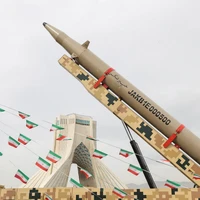
Iranian flags hang next to a missile on display during the forty-seventh anniversary of the Islamic Revolution in Tehran, Iran, February 11, 2026. Majid Asgaripour/WANA/Reuters

An Iranian lawmaker’s claim that Tehran’s missiles can now travel 4,500 kilometers and a front-page boast by Tehran daily Hamshahri that all of Europe is within reach have renewed questions about Iran’s ability to strike the continent.

Experts told Iran International the threat should be taken seriously, though Iran has yet to demonstrate that it can reliably hit targets at that distance.

Ahmad Bakhshayesh Ardestani, a member of Iran’s parliamentary National Security and Foreign Policy Committee, made the 4,500-kilometer claim on Monday without offering technical evidence.

Hamshahri, a newspaper run by Tehran’s municipality, touted a range of roughly 5,000 kilometers. The Islamic Revolutionary Guard Corps (IRGC) has said it lifted its self-imposed 2,000-kilometer limit but has given no details about whether longer-range missiles have been deployed.

100%

What the Diego Garcia launches showed

The clearest indication that Iran may have exceeded its old 2,000-kilometer limit came in March, when it reportedly fired two missiles toward Diego Garcia, a joint US-British military base in the Indian Ocean. One was intercepted and the other failed in flight.

Jim Lamson, a senior research associate at the James Martin Center for Nonproliferation Studies at Middlebury College, assessed that both were intermediate-range ballistic missiles, or IRBMs, capable of traveling at least 4,000 kilometers.

“It does show that Iran had developed at least prototypes of IRBMs, but their design and production status remain unclear,” Lamson said.

He said US and Israeli strikes damaged Iran’s missile development and production facilities, leaving it unclear whether Tehran could build more of those missiles in the near term.

Farzin Nadimi, a senior fellow at the Washington Institute for Near East Policy who specializes in Iran’s military capabilities and Persian Gulf security, said Iran could build on its existing missile technology to extend its reach.

He suspects the two missiles fired toward Diego Garcia may have been modified versions of the Khorramshahr-4, a medium-range missile with a declared range of about 2,000 kilometers. Their identity remains unconfirmed.

“So they were technically capable of reaching Diego Garcia,” Nadimi said, citing the flight paths of both missiles.

The reported launches suggest Tehran was willing to attempt a strike well beyond its old limit.

Nadimi said some parts of southeastern Europe are already within reach of Iran’s existing missiles. He estimated that a range of 4,000 to 4,500 kilometers could put much more of Europe within reach, potentially including Britain.

What Europe should prepare for

Simone Ledeen, who oversaw US defense policy for the Middle East as a deputy assistant secretary at the Pentagon, said the threat to Britain and Western Europe is emerging and called on European governments to invest in missile defense now.

“European governments should plan for the capability arriving rather than wait for proof of it,” Ledeen said.

She said the most immediate danger comes from missiles that can already reach US forces and allies in the Middle East.

Reaching the continental United States would require a missile with substantially greater range. Ledeen and Nadimi said Iran’s space program provides some of the technology relevant to developing an intercontinental ballistic missile, a capability that would require further development and testing.

Why Tehran is making the threat now

Tehran’s latest missile claims came a day after US President Donald Trump told Fox News he was inclined to resume strikes on Iran after the new year if no deal was reached.

Kerri Bitsoff, a former senior US Treasury official who helped impose sanctions on networks supplying Iran’s missile and drone programs, said Tehran is using its longer-range missile claims to pressure Washington and its allies to back away from further military action and to turn public opinion against the war.

Bitsoff said Iran’s ability to rebuild and resupply its missile program is under strain. In her view, publicizing a longer range gives Tehran a way to exert pressure while its ability to field those missiles remains uncertain.

“I read it as once again, the regime looking for leverage,” Bitsoff said.

US targets Iran’s shadow banking ‘lifeline’ with new sanctions

Nov 23, 2026, 20:24 GMT+0
100%

The United States imposed sanctions on 22 entities and eight people on Monday to disrupt the shadow banking networks Iran uses to move money abroad. A separate US Treasury report identified $14.7 billion in transactions potentially linked to those networks.

“Iran’s economy is underwater, and its leaders are panicking,” Treasury Secretary Scott Bessent said. “Iran’s shadow banking system is the last financial lifeline of a bankrupt regime.”

The sanctions, part of Washington’s Operation Economic Outcast, targeted Iranian exchange houses and overseas trading companies that Treasury said handled payments for Iranian oil, petrochemical and metals exporters. Most of the overseas companies named were based in Dubai, with others in Hong Kong and Turkey.

Treasury also sanctioned the Iran Center for Exchange of Currency and Gold, which matches Iranian exporters earning foreign currency with importers who need it to buy goods abroad. The center serves tens of billions of dollars in trade each year, Treasury said.

100%

According to Treasury, Iran’s central bank oversees a system in which exchange houses and bank affiliates known as rahbar companies use overseas fronts to make and receive payments for Iranian clients. One Dubai company, Recaz Star General Trading, sent and received more than $170 million in hundreds of payments involving people or entities associated with an Iranian exchange house, Treasury said. Another, OGA Global General Trading, handled millions of dollars in payments for the National Iranian Tanker Company.

The United Arab Emirates was also the leading destination for funds in the analysis released Monday by Treasury’s Financial Crimes Enforcement Network, or FinCEN. Recipients registered in the UAE accounted for $7.6 billion, or 52% of the total. The largest flow between banking systems was from mainland China to the UAE, at about $2.6 billion.

FinCEN reviewed reports from US financial institutions and identified 4,983 transactions of at least $500,000 each between January 2025 and August 2026. The agency said suspicious activity reports provide leads for investigators and can include lawful transactions. It said the volume of suspected activity appeared to decline over the period, a possible sign that Iran’s ability to move money through the networks had been partly disrupted.

Deadly poisonings fuel anger over Iran's alcohol ban

Nov 23, 2026, 12:30 GMT+0
100%
A healthcare worker tends to a patient receiving respiratory support in an intensive care unit at a hospital in Iran.

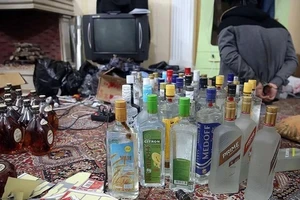
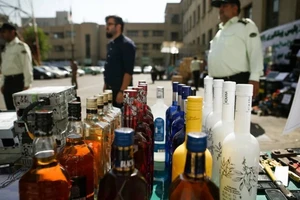
The poisoning of around 150 people and deaths of at least five from adulterated drinks have sparked widespread criticism of Iran's alcohol ban, with citizens blaming the policy for unsafe products and some accusing state institutions of distributing them.

At least five people have died after consuming counterfeit alcoholic drinks in Neyshabur, Shiraz and Marvdasht in recent days, according to official figures.

The number of people poisoned in Neyshabur reached 120, with four deaths, Milad Taqdisi Heydarian, acting deputy for treatment at Neyshabur University of Medical Sciences, said on November 22.

One patient was declared brain-dead and 11 others required intubation, according to the official figures.

Health officials in Shiraz also reported around 30 methanol poisoning cases in Shiraz and Marvdasht, leaving one person dead and four in intensive care.

Citizens blame prohibition for unsafe drinks

The poisonings prompted widespread reactions from Iran International's audience, with many arguing that the Islamic Republic's ban on alcohol production, sales and consumption has fueled an unregulated market.

  • Bootleg alcohol identified as top cause of deaths from poisoning in Iran

    Bootleg alcohol identified as top cause of deaths from poisoning in Iran

"Look at the result of prohibition. This is how they end up giving people poison," one citizen wrote.

Another criticized those who blamed the victims for drinking alcohol, questioning why Iran does not permit the sale of alcoholic drinks that meet international safety standards.

Several respondents argued that prohibition had failed to stop consumption while removing safeguards against dangerous products.

"People in our country drink alcohol. At least legalize it and regulate it. That would be better than the current situation," one citizen wrote.

"I don't drink, but its import and sale should be legalized," another said.

Fatal alcohol poisonings have repeatedly occurred in Iran. In December 2025, eight people died and one lost their sight after consuming contaminated drinks in separate cases in Iranshahr and Bampur.

Alcohol poisoning accounted for around five percent of 4,232 poisoning-related deaths during the first five months of the Iranian calendar year, according to a forensic medicine report published in October 2025.

Homemade and counterfeit alcoholic drinks were identified as major causes.

Revolutionary Guards accused of involvement

Some respondents accused institutions linked to the Islamic Republic, including the Revolutionary Guards, of distributing contaminated drinks.

"The Revolutionary Guards themselves distribute these counterfeit products," one citizen wrote.

Another described those supplying adulterated drinks as "system-affiliated sellers."

One respondent said methanol was advertised on Instagram as "90 percent corn alcohol" for 3000,000 rials per liter and accused the Revolutionary Guards of supplying it.

The actual number of alcohol poisoning cases could be [up to 10 times higher than emergency admission figures https, Deputy Health Minister Alireza Raisi said in October 2025, explaining that some victims avoid treatment because of fear or other reasons.

  • Who is behind the sale of lethal bootleg alcohol in Iran?

    Who is behind the sale of lethal bootleg alcohol in Iran?

Methanol poisoning can cause blindness, severe organ damage and death. Health officials in Neyshabur have yet to identify the substance responsible for the latest poisonings.

The deaths have renewed criticism of restrictions that citizens say leave consumers dependent on an unregulated market, with some demanding legalization and quality controls to prevent further fatalities.

Tehran's subsidence zone expands 20% in two years

Nov 23, 2026, 08:55 GMT+0
100%
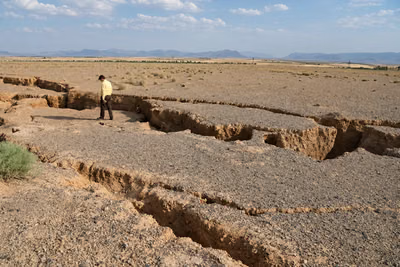
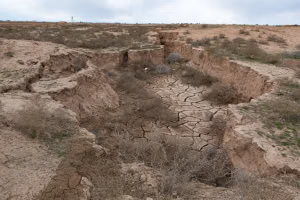
Deep cracks cut through dry ground in Iran, illustrating the impact of land subsidence.

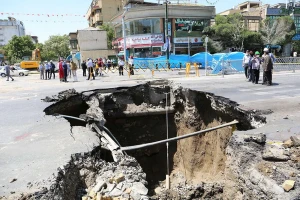
The area affected by land subsidence in southwestern Tehran has expanded by around 20% over the past two years, driven by continuous groundwater extraction to supply drinking water to the capital, a senior Iranian official said on Monday.

Around 650 million cubic meters of groundwater are extracted annually from approximately 1,200 wells to supply Tehran and its surrounding areas, Ali Beitollahi, head of the earthquake and risk assessment department at Iran's Road, Housing and Urban Development Research Center, said.

Unlike agricultural wells, which may operate for only a few hours a day depending on seasonal demand, urban water supplies require year-round extraction, he said.

The continued pumping of groundwater in areas already affected by subsidence is lowering water tables and degrading water quality, Beitollahi said.

  • Land subsidence threatens villages and farms in southeast Iran

    Land subsidence threatens villages and farms in southeast Iran

Buildings, gas pipelines, water networks and sewage systems could suffer structural damage as the ground sinks, he warned, adding that population density and earthquake risks must also be considered when assessing the danger.

Subsidence spreads across Iran

Iran's largest subsidence zones overlap with its most densely populated metropolitan areas, particularly Tehran and neighboring Karaj, followed by Isfahan, Beitollahi said.

The entire Isfahan metropolitan area is exposed to subsidence risks, he added.

The scale of the problem has expanded nationwide. Land affected by subsidence increased tenfold over eight years, from approximately 10,000 to 100,000 square kilometers, Reza Shahbazi, deputy head of Iran's Geological Survey, said in September.

A parliamentary research report cited by Shargh newspaper in June warned that subsidence had reached a critical stage, with around half of Iran's population living in affected areas.

Population concentration strains water supplies

Around 40% of Iran's population lives within 100 kilometers of 10 major population centers, including Tehran and Mashhad, according to Beitollahi.

The concentration of jobs, infrastructure and services in these areas has increased demand for water, energy and food, placing further pressure on groundwater reserves.

  • Nearly half of Iranians live in land subsidence zones, report warns

    Nearly half of Iranians live in land subsidence zones, report warns

Water conservation alone cannot resolve the problem because of the scale of population concentration, Beitollahi said.

He called for creating employment opportunities and improving living conditions elsewhere in Iran to reduce pressure on Tehran and Karaj, warning that continued population concentration would make future water supplies unsustainable.