• العربية
  • فارسی
BrandBrand
  • Iran Insight
  • Politics
  • Economy
  • Analysis
  • Special Report
  • Opinion
  • Podcast
  • Live TV
  • Iran Insight
  • Politics
  • Economy
  • Analysis
  • Special Report
  • Opinion
  • Podcast
  • Live TV
  • Theme
  • Language
    • العربية
    • فارسی
  • Iran Insight
  • Politics
  • Economy
  • Analysis
  • Special Report
  • Opinion
  • Podcast
  • Live TV
All rights reserved for Volant Media UK Limited
volant media logo

US targets Iran’s shadow banking ‘lifeline’ with new sanctions

Nov 23, 2026, 20:24 GMT+0

The United States imposed sanctions on 22 entities and eight people on Monday to disrupt the shadow banking networks Iran uses to move money abroad. A separate US Treasury report identified $14.7 billion in transactions potentially linked to those networks.

“Iran’s economy is underwater, and its leaders are panicking,” Treasury Secretary Scott Bessent said. “Iran’s shadow banking system is the last financial lifeline of a bankrupt regime.”

The sanctions, part of Washington’s Operation Economic Outcast, targeted Iranian exchange houses and overseas trading companies that Treasury said handled payments for Iranian oil, petrochemical and metals exporters. Most of the overseas companies named were based in Dubai, with others in Hong Kong and Turkey.

Treasury also sanctioned the Iran Center for Exchange of Currency and Gold, which matches Iranian exporters earning foreign currency with importers who need it to buy goods abroad. The center serves tens of billions of dollars in trade each year, Treasury said.

100%

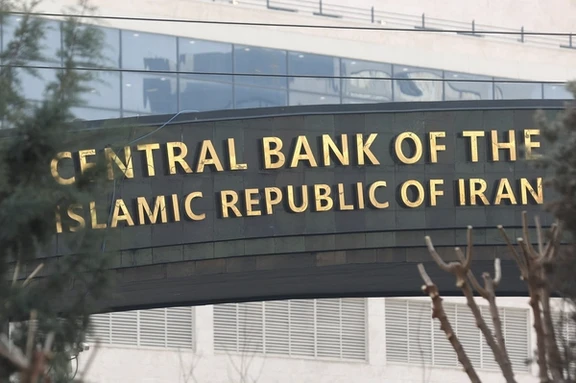
According to Treasury, Iran’s central bank oversees a system in which exchange houses and bank affiliates known as rahbar companies use overseas fronts to make and receive payments for Iranian clients. One Dubai company, Recaz Star General Trading, sent and received more than $170 million in hundreds of payments involving people or entities associated with an Iranian exchange house, Treasury said. Another, OGA Global General Trading, handled millions of dollars in payments for the National Iranian Tanker Company.

The United Arab Emirates was also the leading destination for funds in the analysis released Monday by Treasury’s Financial Crimes Enforcement Network, or FinCEN. Recipients registered in the UAE accounted for $7.6 billion, or 52% of the total. The largest flow between banking systems was from mainland China to the UAE, at about $2.6 billion.

FinCEN reviewed reports from US financial institutions and identified 4,983 transactions of at least $500,000 each between January 2025 and August 2026. The agency said suspicious activity reports provide leads for investigators and can include lawful transactions. It said the volume of suspected activity appeared to decline over the period, a possible sign that Iran’s ability to move money through the networks had been partly disrupted.

Most Viewed

Truck drivers strike across Iran over economic hardship
1

Truck drivers strike across Iran over economic hardship

2

Trump threatens Iran strikes in new year, says blockade runners will be sunk

3

Inside Iran's online gun market, where a few messages can start a deal

4

Tehran's subsidence zone expands 20% in two years

5
EXCLUSIVE

Family source recounts Iranian girl's alleged killing by father

Banner

Spotlight

  • ‘The city smelled of blood’: Witness recalls Iran protest crackdown

    ‘The city smelled of blood’: Witness recalls Iran protest crackdown

  • Iran-linked hackers posed as US expert to target Australian broadcaster
    PODCAST

    Iran-linked hackers posed as US expert to target Australian broadcaster

  • Who gets to be a journalist? Iran seeks greater control over press
    INSIGHT

    Who gets to be a journalist? Iran seeks greater control over press

  • Iran hardliners push tanker convoy to defy US blockade

    Iran hardliners push tanker convoy to defy US blockade

  • War damage leaves Iran with few options to avert winter gas crunch
    ANALYSIS

    War damage leaves Iran with few options to avert winter gas crunch

Banner
Banner
Banner
Banner
Banner
Banner
•
•
•

More Stories

Bessent says Iran’s rulers will turn on each other, Pezeshkian warns of hard winter

Nov 21, 2026, 09:21 GMT+0
100%
US Treasury Secretary Scott Bessent leaves after a press conference in the James S. Brady Press Briefing Room at the White House in Washington, DC, US, November 20, 2026.

US Treasury Secretary Scott Bessent said Iran’s rulers were “wounded cornered animals” who would soon turn on each other, as President Masoud Pezeshkian told business leaders on Saturday that Iran was in a silent economic war harder than the missile war.

  • Shroud-wearing hardliners accuse Revolutionary Guards of defying Khamenei

    Shroud-wearing hardliners accuse Revolutionary Guards of defying Khamenei

  • War damage leaves Iran with few options to avert winter gas crunch

    War damage leaves Iran with few options to avert winter gas crunch

  • Iran readies tankers to run US blockade, threatens Persian Gulf oil if fired on

    Iran readies tankers to run US blockade, threatens Persian Gulf oil if fired on

  • Iran hardliners push tanker convoy to defy US blockade

    Iran hardliners push tanker convoy to defy US blockade

“We are two and a half months into Operation Economic Outcast, and it is the greatest program in the history of the world to isolate a single country. And it is working,” Bessent said in a Newsmax interview on Friday.

“The Iranians thanks to our great Navy have no oil in the water for the first time since they have begun producing oil.”

“The regime is starting to turn on itself, and they are starting to warn the Iranian people that it’s going to be a tough winter,” he said.

Members of the Revolutionary Guards might turn on each other, he said, adding: “We’re starting to see signs of that from public statements.”

Bessent, who moved with his family to a military base this month over threats US officials attribute to Iran, said he regarded “the bounty that they have on my head as a sign of success.”

Tehran might lash out with “indiscriminate shooting in the Middle East,” he said. “But they are wounded cornered animals.

Asked whether it would count as a failure if the Islamic Republic outlived the Trump administration, he said it would depend on whether Tehran chose “to do what’s best for the Iranian people” or kept its “fanatical and fantastical determination to get a nuclear weapon.”

  • Iran's wartime rallies turn against officials, fuel political feuds

    Iran's wartime rallies turn against officials, fuel political feuds

  • Hardline daily accuses government of scaring Iranians, says there is no crisis

    Hardline daily accuses government of scaring Iranians, says there is no crisis

Chinese President Xi Jinping and Russian President Vladimir Putin had both agreed at their summit with Trump in Shenzhen that Iran could never have a nuclear weapon and that the Strait of Hormuz should be open, he said.

“We’ve seen them kill tens of thousands of innocent Iranian people,” Bessent said. “I’m not going to be cowed.”

‘A silent war’

In Tehran on Saturday, Pezeshkian told an annual capital markets conference that Iran faced a war “much harder than a war in which missiles are fired and destruction happens.”

“It is an economic war, and not a simple one,” he said. The enemy had expected famine and empty shelves, he said, but production had kept going.

He acknowledged that the coming winter would be hard. Iran already faced energy shortfalls before the war, he said, and attacks on its gas production capacity had made them worse. “The expectation is that we will face problems in winter,” he said.

  • Iran could launch dirty-bomb attack, but risks make it unlikely

    Iran could launch dirty-bomb attack, but risks make it unlikely

  • Iran says the US must ‘surrender’ to seven conditions. What are they?

    Iran says the US must ‘surrender’ to seven conditions. What are they?

If gas or power ran short, industry would be the last to be cut, Pezeshkian said, and government offices would lose electricity before factories. In the past, he said, factories had been the first to be cut “so that people would not protest.”

He also criticized loss-making state companies, one of which he said held 2,100 trillion rials (about $770 million) in assets and another 1,900 trillion rials (about $700 million), and questioned why their managers still received bonuses. “We cannot keep doing this forever,” he said.

Araghchi mocks threats behind Bessent’s move

Foreign Minister Abbas Araghchi, in an interview with the government daily Iran published on Saturday, mocked the threats that led Bessent to move to a military base.

US officials, he said, had accepted “ridiculous” claims that Iran planned to attack Washington with a chemical bomb, assassinate American leaders or hide missiles under dams. “Mr. Bessent goes to a military base and changes where he lives,” he said.

  • Iran's top clerical governing body calls for nuclear doctrine review

    Iran's top clerical governing body calls for nuclear doctrine review

  • Debate continues in Tehran over prospects for US deal after midterms

    Debate continues in Tehran over prospects for US deal after midterms

Araghchi said Iran had sent Washington a seven-day plan through Qatar in late September, under which the United States would carry out its commitments first, Iran would reopen the Strait of Hormuz and talks on a final deal would begin.

About 10 days before the US midterm elections, at the mediators’ suggestion, Tehran shortened it to two days, he said, but Washington never replied. The plan was still on the table, he said, if President Donald Trump stated clearly that he wanted a deal and took confidence-building steps.

“If Iran’s demands are met, the Strait of Hormuz will be opened,” he said, adding that the two-day timeline could even be cut to “two hours.”

On Iran’s roughly 400 kilograms of uranium enriched to 60 percent, close to weapons grade, Araghchi set out two red lines: it would not leave the country, and it would be used for Iran’s needs “with whatever definition we have of those needs.”

He also gave unusual space to calls inside Iran to change the country’s nuclear doctrine, a debate in which some officials and clerics have urged leaving the Nuclear Non-Proliferation Treaty.

Those who want a change argue that staying in the treaty and under UN inspections had not protected Iran’s nuclear sites from being bombed, he said.

“We should not imagine that those who want to change the doctrine have weak logic,” he said. “They too have strong logic.”

The official doctrine had not changed, he said, and Russia and China opposed a change.

Iran hardliners push tanker convoy to defy US blockade

Nov 21, 2026, 02:29 GMT+0
•
Maryam Sinaiee
100%
An illustration published by the Revolutionary Guards-affiliated Fars News Agency depicts the mythical Persian hero Fereydoun leading a convoy of Iranian oil tankers escorted by warships

Iranian hardliners are calling for a convoy of oil tankers to challenge the US naval blockade, threatening military retaliation against regional energy infrastructure if Washington attempts to stop the vessels.

The proposal, published Thursday by the Revolutionary Guards-affiliated Fars News Agency, calls for tankers to sail to China and threatens strikes on oil facilities in the United Arab Emirates, Saudi Arabia and Qatar if the US intervenes. It emerged shortly after reports that an unsanctioned tanker had been loaded at Iran's Kharg Island oil terminal.

Fars dubbed the plan “Operation Fereydoun,” after a legendary hero in the Persian epic Shahnameh.

No official plans for a convoy have been announced, although Foreign Minister Abbas Araghchi said Friday that Iran would break the blockade.

“A blockade is a military action. A military action also has a military response,” political and military analyst Nima Akbarkhani said during a Thursday night discussion on Iranian state television.

Akbarkhani described a previously discussed scenario in which Iranian tankers would sail individually with their Automatic Identification System (AIS) signals switched on and Iranian flags displayed, while Tehran announced in advance which regional facilities it would target if any vessel were attacked.

During the Be Vaght-e Iran program, host Ruhollah Razavi suggested placing media teams, members of the public and international anti-war activists aboard the tankers to increase the political and media costs of any US intervention.

Akbarkhani endorsed the idea, arguing that unlike vessels sent to Gaza, which Israel prevented from reaching their destination despite extensive media coverage, Iran could deter attacks on blockade-breaking tankers by threatening military retaliation.

Support for confrontation grows

Political analyst Mostafa Najafi, recently described in Iranian media as an adviser to Supreme National Security Council Secretary Mohsen Rezaei, wrote on X that Supreme Leader Mojtaba Khamenei had ordered an end to the “neither war nor peace” situation some time ago.

Najafi suggested that the effort extended beyond diplomacy, with military options also under consideration.

“Apparently, Tehran no longer wants to sit back and watch the blockade and threats,” he wrote.

Majid-Reza Hariri, president of the Iran-China Chamber of Commerce, called on Iranians across the political spectrum to support efforts to break the blockade.

“After months of pursuing negotiations in various ways, every Iranian patriot, regardless of political outlook, should support the government in breaking the naval blockade imposed by the aggressive United States by any means possible,” he wrote Friday.

Media analyst Alireza Shiva argued that Iran was signaling that energy security in the Persian Gulf could not be defined unilaterally.

“You cannot target Iran's oil exports while expecting the energy exports of others to continue in complete security,” he wrote on X.

A high-risk strategy

Hardline journalist Parisa Nasr argued that Iran had made a strategic mistake by treating the blockade as a negotiating issue rather than a wartime measure intended to weaken the country and force its surrender.

She advocated a strategy of “bringing the crisis to the brink” to pressure Washington into easing the blockade while strengthening Iran's deterrence against attacks on its tankers.

Energy analyst Abdullah Babakhani offered a more cautious assessment, suggesting that US forces might initially allow some Iranian tankers through before pursuing and potentially seizing them in international waters.

He compared the scenario to operations involving the pursuit and seizure of tankers linked to Venezuela last year, saying Iran's response to such an eventuality remained unpredictable.

China, Iran's largest oil buyer before the blockade, has been identified as the intended destination for the proposed convoy. Whether Beijing would accept the shipments remains unclear.

The proposal therefore presents Tehran with a potentially consequential choice: continue seeking a negotiated end to the blockade or test Washington's willingness to enforce it at the risk of a wider military confrontation.

Who is Mohammad Javad Bavand, the ex-IRGC official sanctioned by US?

Nov 21, 2026, 00:10 GMT+0
100%

Mohammad Javad Bavand, a former IRGC intelligence official sanctioned by the United States on Friday, has played a key role in Iran's sanctioned oil trade, working through a network of intermediaries to sell crude and recover revenues held abroad.

The US Treasury sanctioned Bavand alongside three other Iranians — Majid Taj, Mojtaba Arabnejad and Mohammadhossein Servati — over their roles in networks supporting Iran's oil trade and sanctions evasion.

The Treasury said Bavand worked with intermediaries, including Taj, the brother of Iranian Football Federation president Mehdi Taj, to recover proceeds from Iranian oil sales held abroad, despite members of the network owing billions of dollars from previous transactions.

Iran International investigations have documented Bavand's rise from the Revolutionary Guards Intelligence Organization to senior positions overseeing oil sales, including the allocation of millions of barrels of crude to intermediaries with billions of dollars in outstanding debts.

From intelligence officer to oil trader

Bavand previously served as deputy head of the economic directorate of the Revolutionary Guards Intelligence Organization under Mostafa Ahadi.

Following the US withdrawal from the nuclear agreement in 2018, he represented Guards intelligence on a Supreme National Security Council committee responsible for overseeing sanctioned oil sales.

He later became a special assistant to the oil minister under former President Ebrahim Raisi. After leaving the position under President Masoud Pezeshkian, Bavand returned to the Oil Ministry in June 2026 to oversee oil trading.

Millions of barrels entrusted to indebted traders

In September, Iran International published confidential documents raising questions about the allocation of sanctioned crude to four intermediaries who had failed to return billions of dollars from earlier sales.

The documents showed that the traders were offered unusually steep discounts despite their outstanding debts.

A subsequent investigation found that Bavand and oil-trading official Ali Akbar Pour-Ebrahim had assigned 86 million barrels of Iranian crude to four intermediaries, including Hossein Shamkhani and Mohammad Hadi Momenin.

The findings formed part of Iran International's reporting on a struggle between networks linked to the Revolutionary Guards Intelligence Organization and the Intelligence Ministry for control of Iran's sanctioned oil trade.

A November 9 investigation revealed further details of Iran's efforts to use oil terminals and storage facilities in China to circumvent US sanctions.

It cited an earlier document showing that Bavand had instructed Momenin, an oil intermediary who owed $2 billion in outstanding proceeds, to use a vessel linked to Hossein Shamkhani to deliver oil for storage at a Chinese port.

Treasury names Bavand's associates

The Treasury said Bavand had worked with the Revolutionary Guards and Sepehr Energy Jahan Nama Pars, a previously sanctioned company tasked with selling oil for Iran's Armed Forces General Staff.

Its designation of Majid Taj also brought renewed attention to a relationship documented in Iran International's earlier investigations into the oil-trading network.

Bavand and Taj were sanctioned under Executive Order 13902, which targets designated sectors of Iran's economy. Arabnejad, who was linked to Mahan Air, and Servati, who was linked to Sepehr Energy Jahan Nama Pars, were sanctioned under counterterrorism-related authorities.

The measures block any assets the four hold under US jurisdiction and generally prohibit Americans from conducting transactions with them.

War damage leaves Iran with few options to avert winter gas crunch

Nov 20, 2026, 20:14 GMT+0
•
Dalga Khatinoglu
100%
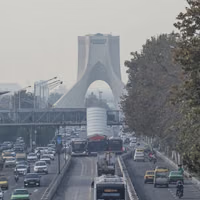
Traffic moves along a smog-covered highway near Tehran's Azadi Tower, as air pollution blankets the Iranian capital, November 18, 2026

Iran faces a worsening winter energy crisis after wartime damage to its gas infrastructure cut production capacity, with officials warning of shortages in 11 provinces and limited options to make up the shortfall.

The country's daily gas deficit, estimated at around 300 million cubic metres last winter, is expected to reach 430 million cubic metres this winter.

Mohammad Sadegh Azimifar, head of the National Iranian Oil Products Distribution Company (NIOPDC), has announced that 60 million litres of kerosene have been stockpiled in some provinces facing severe gas shortages.

He said LPG reserves for household consumption would also be increased.

Azimifar also reported that 3.2 billion litres of diesel and mazut (fuel oil) have been stockpiled to compensate for gas shortages at power plants.

Production below prewar levels

Iranian officials say gas processing facilities in Asaluyeh were targeted during the recent war, reducing the country's daily gas production capacity by 230 million cubic metres.

Some facilities have returned to operation in recent weeks, bringing the daily production shortfall down to 130 million cubic metres.

The latest figures released by Iranian gas officials indicate that the country is currently producing around 690 million cubic metres of gas per day (mcm/d), compared with 793 mcm/d during the same period last year.

During the peak winter consumption period, Iran normally raises daily gas production to more than 830 mcm/d.

It remains unclear whether all production facilities are operating at their full technical capacity. Nevertheless, the available figures suggest that Iran's gas production capacity has declined by at least 100 mcm/d.

These figures refer to raw gas extracted from fields, rather than processed gas delivered to the national network. Non-methane components are removed during processing, while some gas is consumed by production and transmission facilities.

Last winter, for example, Iran extracted around 837 mcm/d of raw gas but delivered approximately 750 mcm/d of processed gas to the national network.

Of that amount, just under 700 mcm/d reached domestic consumers, with around 40 mcm/d exported and the remainder lost through the country's ageing transmission and distribution network.

Winter demand forces cuts to industry

According to Statistical Center data, Iran's daily household gas consumption in winter is more than 2.5 times its average level during other seasons. A similar seasonal pattern applies to the commercial, public and agricultural sectors.

To meet this demand, the government sharply curtails gas supplies to industries, petrochemical plants and power stations.

Last winter, combined gas consumption by households and the agricultural, commercial and public sectors reached 388 mcm/d, compared with an average of 154 mcm/d during other seasons.

By contrast, daily gas deliveries to power plants, petrochemical facilities, industries and the transport sector fell to 311 million cubic metres, down from an average of 493 mcm/d during other seasons.

With little scope to restrict household consumption during winter, the government has to absorb the seasonal surge by reducing supplies to other sectors.

Limited alternatives to natural gas

Iran already made extensive use of alternative fuels in power plants and industrial facilities last winter, leaving limited room to compensate for further gas shortages.

Only 15% of the country's thermal power generation capacity can operate on liquid fuels, namely mazut and diesel, according to the report's figures.

These power plants already switch to alternative fuels during peak winter demand, leaving little additional scope to increase their use.

Meanwhile, half of the industrial sector's winter gas consumption comes from small-scale industries, many operating within urban areas and unable to switch to alternative fuels.

According to Kpler data, Iran exported an average of approximately 256,000 barrels per day of mazut and 378,000 barrels per day of propane and butane (LPG) by sea last year.

These exports have been halted by the US naval blockade. The combined energy content of the fuels is equivalent to around 85 million cubic metres of natural gas per day.

In theory, retaining these fuels for domestic use could help offset part of the winter gas deficit. But doing so would require industries and power plants to substitute mazut and LPG for natural gas wherever possible, alongside a suspension of natural gas exports.

Both scenarios face significant obstacles.

Many industries lack the technical capacity to switch fuels, while Iran urgently needs gas export revenues, particularly given the severe disruption to its oil revenues.

With alternative fuels already widely used last winter, power plants and industrial facilities are unlikely to have much additional capacity to absorb them this year.

Greater reliance on liquid fuels would also come against the backdrop of Iran's winter air pollution crisis. Last winter, government offices and schools were closed for approximately four weeks because of air pollution and energy shortages.

Eleven provinces face gas supply stress

Iranian officials say 11 provinces will face gas supply stress this winter, with the situation expected to be particularly severe in the northern provinces of Mazandaran, Gilan and North Khorasan.

An examination of Ministry of Energy data shows that these three provinces consumed an average of around 50 mcm/d of gas in 2023, including 21 mcm/d used by households and the commercial, public and agricultural sectors.

Azimifar's announcement that 60 million litres of kerosene have been stockpiled in some provinces facing severe shortages underscores the government's preparations for possible supply disruptions.

The stockpile has an energy content equivalent to approximately 59 million cubic metres of natural gas, although the extent to which it can replace gas consumption depends on the availability of suitable equipment and the sectors receiving the fuel.

Eight other provinces are also expected to face supply stress.

Together, the 11 provinces consumed around 240 million cubic metres of gas per day in 2023, accounting for 37% of the country's total consumption that year.

Tanker loads Iranian crude in Persian Gulf as Tehran weighs resuming exports

Nov 19, 2026, 18:21 GMT+0
100%
A photo of two commercial vessels near the Strait of Hormuz released by Iran's semi-official ISNA on Nov. 16, 2026.

Iran is considering resuming oil exports in defiance of the US naval blockade, a Revolutionary Guards-affiliated outlet reported Thursday, hours after a ship-tracking service said Iran appeared to be preparing to ship crude again for the first time in four months.

In a post labeled “unofficial,” the IRGC-affiliated Sabereen News said dozens of Iranian tankers were preparing to set sail for China.

TankerTrackers co-founder Samir Madani told Reuters that one tanker was taking on Iranian crude from another vessel in the Persian Gulf on Thursday. If it cleared the blockade, he said, it would be the first successful seaborne export of Iranian crude since mid-July.

Madani declined to name the tanker but said it was not under US Treasury sanctions and had entered the region without drawing scrutiny. The Reuters report gave no destination for the cargo or indication that other tankers were preparing to sail.

In a commentary on Thursday, the Revolutionary Guards-affiliated Fars news agency urged Tehran to send a tanker convoy to China, arguing that the prospect of Iranian retaliation against oil terminals in the UAE, Saudi Arabia and Qatar could deter Washington from firing on the tankers.

Sabereen News said Tehran had warned governments across the region that it would go to war if the United States attacked Iranian tankers sailing to China.

Energy analyst Abdollah Babakhani wrote on social media that Iran could retaliate against ports and oil terminals in the region if the United States attacked or seized Iranian tankers attempting to cross the blockade.

He said the region appeared to be on the verge of a period of intense but possibly short-lived tension.

How the blockade cut oil flows to China

The United States reimposed its naval blockade on July 14. Iran continued to load tankers for several weeks, but Kpler data reviewed by Iran International showed that no new Iranian cargo had crossed the blockade and sailed toward China, Iran’s main oil buyer.

Iran loaded about 2 million barrels of crude and condensate a day in March, Reuters reported, citing estimates from Kpler and Vortexa. That fell to roughly 740,000 barrels a day in July and between 220,000 and 255,000 in August. Kpler recorded no crude or condensate loadings in September, the first full month without any since the 1979 Islamic Revolution.

Chinese refiners continued to receive Iranian oil from tankers that were already outside the blockade when it took effect. Those vessels held nearly 90 million barrels in mid-July. By October 10, only 8 million remained, according to Kpler. The stockpile was exhausted by mid-October, the Wall Street Journal later reported, citing the firm’s analysts.

The loss of its main export market also forced Iran to cut production to about 1.8 million barrels a day, roughly half its prewar output and close to what it consumes at home, Homayoun Falakshahi, Kpler’s head of crude oil analysis, told Iran International in October.

Oil payments could dry up in December

Chinese refiners typically take one to two months to pay for deliveries, allowing Tehran to keep earning foreign currency after shipments stop, Falakshahi told Iran International’s Eye for Iran podcast. He estimated that payments for the last cargoes could reach Iran by mid-December. If the blockade held, he said, Tehran stood to lose between $3 billion and $6 billion a month in oil income.

US Treasury Secretary Scott Bessent told Iran International on October 26 that Iran was running short of foreign currency under Operation Economic Outcast, Washington’s campaign to cut Tehran off from its remaining sources of revenue.

“There have been no loadings at Kharg Island. Production is starting to falter,” Bessent said. He predicted Iran’s economy would shrink by more than 25% in the year ending March 2027.

Washington has since set up Task Force Iron Gate to restrict trade through Iran’s land borders and the Caspian Sea. Tehran has made lifting the naval blockade one of its demands for talks with Washington.

On November 16, US Central Command said its forces had redirected 150 merchant vessels and disabled five since June.