• العربية
  • فارسی
BrandBrand
  • Iran Insight
  • Politics
  • Economy
  • Analysis
  • Special Report
  • Opinion
  • Podcast
  • Live TV
  • Iran Insight
  • Politics
  • Economy
  • Analysis
  • Special Report
  • Opinion
  • Podcast
  • Live TV
  • Theme
  • Language
    • العربية
    • فارسی
  • Iran Insight
  • Politics
  • Economy
  • Analysis
  • Special Report
  • Opinion
  • Podcast
  • Live TV
All rights reserved for Volant Media UK Limited
volant media logo

Iran lawmaker claims era of sanctions and blockades is over

Nov 24, 2026, 22:30 GMT+0

The era of sanctions and blockades is over as countries increasingly counter such measures by expanding cooperation, Ebrahim Azizi, chairman of the Iranian parliament’s National Security and Foreign Policy Committee, said Tuesday in a post on X.

“Countries will no longer stand by and watch; they are pushing back by expanding cooperation,” Azizi said.

His comments came in response to a post about an Economist cover titled “Axis of Malice.”

“A new world order is governing the globe, and in the wake of your failures, your role is smaller than ever,” he added.

Most Viewed

Flogging of Iranian singer Parastoo Ahmadi sparks outrage on social media
1

Flogging of Iranian singer Parastoo Ahmadi sparks outrage on social media

2
VOICES FROM IRAN

Deadly poisonings fuel anger over Iran's alcohol ban

3

Tehran's subsidence zone expands 20% in two years

4

Iran’s rial falls past 2.85 million to the dollar

5
ANALYSIS

Tehran claims its missiles can reach Europe. What has it shown?

Banner
Banner
Banner
Banner
Banner
Banner
Banner

Spotlight

  • Persian Gulf oil exports near prewar levels despite Hormuz attacks
    INSIGHT

    Persian Gulf oil exports near prewar levels despite Hormuz attacks

  • Iran faces year-end cash squeeze if US blockade holds
    INSIGHT

    Iran faces year-end cash squeeze if US blockade holds

  • A broken leg and broken trust: Violence in Iran’s schools
    VOICES FROM IRAN

    A broken leg and broken trust: Violence in Iran’s schools

  • Iranian media walk back tanker convoy claims after days of blockade-breaking hype

    Iranian media walk back tanker convoy claims after days of blockade-breaking hype

  • Iraqi forces enter Iran-backed militia stronghold, but who holds power?
    ANALYSIS

    Iraqi forces enter Iran-backed militia stronghold, but who holds power?

  • Tehran claims its missiles can reach Europe. What has it shown?
    ANALYSIS

    Tehran claims its missiles can reach Europe. What has it shown?

  • New video reveals where Iran clerics chose Mojtaba Khamenei as supreme leader
    INSIGHT

    New video reveals where Iran clerics chose Mojtaba Khamenei as supreme leader

  • Iran's housing crisis keeps divorced couples under one roof

    Iran's housing crisis keeps divorced couples under one roof

  • 'Happy Ending' pushes the limits of Iran's underground cinema

    'Happy Ending' pushes the limits of Iran's underground cinema

  • Power cuts return across Iran, threatening over one million jobs
    VOICES FROM IRAN

    Power cuts return across Iran, threatening over one million jobs

  • Inside Iran's online gun market, where a few messages can start a deal

    Inside Iran's online gun market, where a few messages can start a deal

  • ‘The city smelled of blood’: Witness recalls Iran protest crackdown

    ‘The city smelled of blood’: Witness recalls Iran protest crackdown

•
•
•

More Stories

Iran faces year-end cash squeeze if US blockade holds

Nov 24, 2026, 21:56 GMT+0
•
Behrouz Turani
100%
A man looks at foreign currency exchange rates displayed outside an exchange shop in Iran. (ISNA)

Dwindling oil receipts and new US sanctions on Iran’s shadow banking networks could deepen Tehran’s foreign-currency squeeze in December.

Data analytics firm Kpler warned in October that Iran’s crude and condensate revenues could dry up by mid-December if the US naval blockade holds.
Chinese buyers typically pay one to two months after delivery, Kpler said, allowing income from earlier shipments to continue arriving after exports have been disrupted. The loss of those receipts would increase the importance of earnings from petrochemicals, metals and other exports.

Those are among the financial flows Washington is seeking to disrupt. The US Treasury on Monday sanctioned 22 entities and eight individuals under Operation Economic Outcast, targeting exchange houses, financial intermediaries and overseas companies it accused of helping Iran move money despite sanctions.

The measures could therefore compound the pressure from the blockade by making the proceeds of remaining trade harder to collect and use. For Tehran, the challenge is sustaining access to foreign currency while both its income and the channels available to move it come under strain.

Pressure on payments

The latest targets included the Iran Center for Exchange of Currency and Gold, Mellat Exchange, an intermediary linked to Bank Sarmayeh, and companies in the United Arab Emirates, Hong Kong and Turkey.

Treasury says Iranian exchange houses and bank-linked intermediaries use overseas front companies to receive and make payments for clients, including petrochemical exporters and Iran’s copper industry. The exchange center helps direct foreign currency earned by exporters to importers who need it to buy goods abroad.

In a separate report released Monday, Treasury’s Financial Crimes Enforcement Network identified about $14.7 billion in financial activity potentially linked to Iranian shadow banking between January 2025 and August 2026. Its findings draw on reports from US financial institutions, which FinCEN cautioned do not themselves establish illegality.

Central Bank Governor Abdolnasser Hemmati dismissed the measures in an interview with Tasnim on Tuesday, arguing that Washington had exhausted its options if it was targeting the exchange center.

He described it as a platform for recording transactions and questioned how an institution with a public address, visible signage and an accessible website could be portrayed as part of a shadow banking network.

Costs at home

The rial weakened on Tuesday. AFP reported that the dollar traded at around 2.82 million rials on the unofficial market, up about 5% from 2.68 million a day earlier.

A further loss of foreign-currency income would make it harder to finance imports and support the rial. For households, a weaker currency raises the local cost of imported goods and materials, while more expensive or unreliable payment channels could add to those pressures.

Businesses may face difficulties completing transactions even where buyers and suppliers remain willing to trade. Intermediaries could demand higher fees, withdraw from transactions or take longer to settle payments.

Foreign banks also risk secondary sanctions, including restrictions on access to the US financial system, for certain dealings with designated entities. That exposure can discourage companies outside the United States from handling Iranian business.

US rules retain authorizations for certain humanitarian trade, including food and medicine, but those permissions do not guarantee that banks will process payments.

The measures build on a broader campaign. Washington expanded its sanctions authority over sectors including aviation, shipping and digital assets in August, then added automotive and rail businesses in October. It also suspended authorizations for certain remittances and some academic, educational and sporting exchanges in August.

Limited alternatives

Iran can seek replacement intermediaries and new front companies, but rebuilding payment networks requires willing partners and can increase fees and the risk of funds being lost or withheld. By August, Treasury said it had carried out eight actions targeting Iran’s shadow banking apparatus that year, illustrating the continuing cycle of sanctions and adaptation.

Settling more trade in yuan or rubles is another option. Treasury says the Central Bank uses bonds issued by the currency and gold exchange center to facilitate such transactions. Using a different currency, however, does not by itself protect participating banks from US secondary sanctions.

Cryptocurrency offers another channel, but it also faces enforcement pressure. Washington sanctioned operators of the Shelbit exchange and the Iranian platform Aban Tether in August.

Maritime evasion methods face a separate constraint in the naval blockade. Treasury’s November 4 sanctions targeted an India-based network accused of supplying false flags and maritime certifications.

Land routes and barter offer other possibilities. Foreign Minister Abbas Araghchi said Monday that Iran’s border provinces and embassies were working to expand trade with neighboring countries and find new markets.

Those routes still require ways to settle payments. In October, Treasury sanctioned Iraq’s International Development Bank for Investment and Finance, accusing it of helping Iran obtain dollars. Greater reliance on neighboring countries therefore shifts some of the financial risk to partners that Washington can also target.

These alternatives may help preserve some trade, but payment arrangements cannot replace the income lost when oil exports stop. Their value depends both on how much business Iran can sustain and whether it can access the proceeds.

Pressure and diplomacy

The prospect of a sharper revenue squeeze increases the potential value of economic relief in negotiations, while giving Tehran further reason to resist appearing to yield under pressure.

Araghchi said Monday that Iran would continue pursuing negotiations to lift sanctions while strengthening its ability to withstand them.

The terms remain disputed. In an interview published Saturday, he ruled out transferring Iran’s stockpile of uranium enriched to 60% purity abroad. Tehran has also made reopening the Strait of Hormuz conditional on Washington meeting its demands, including sanctions relief and an end to the blockade.

Democratic control of Congress from January could bring greater scrutiny of the confrontation. But the latest designations draw on existing executive orders, and a change in congressional control would not automatically lift them.

A limited arrangement linking safer passage through Hormuz to partial easing of the blockade remains one possible route to de-escalation. It would require agreement on the sequence and verification of concessions while leaving the dispute over Iran’s nuclear program unresolved.

If Kpler’s forecast materializes, Tehran would face those choices with less oil income and greater pressure on its other sources of foreign currency. The resulting squeeze could increase the urgency of negotiations without determining whether Iran chooses compromise or further escalation.

A broken leg and broken trust: Violence in Iran’s schools

Nov 24, 2026, 18:06 GMT+0
•
Farnoosh Faraji, Hooman Abedi
100%
A young schoolboy covers his face as he cries in a classroom in Iran.

His homework was unfinished. His teacher broke his leg and threatened to beat him again if he told his father. The story of an eight-year-old Iranian schoolboy has stirred anguish among parents and revived painful childhood memories.

Siavash Madadi should be spending his days learning to read and write, running around the schoolyard and playing with children his own age. Instead, the second-grade student from a village in Lorestan province, in western Iran, is lying in a hospital bed with a severe fracture to his right leg.

In a video sent to Iran International, the boy explains why his teacher hit him. He simply had not finished his schoolwork.

But the punishment did not end with the blow. The teacher warned him against turning to the very person a child should be able to turn to when someone hurts them: his father, according to information obtained by Iran International.

100%
Eight-year-old Siavash Madadi lies in a hospital bed alongside an X-ray showing the severe fracture to his right leg after his teacher beat him for failing to complete his homework.

Among those who responded to the report, there was disbelief at what the boy had endured.

“How could a child with a broken leg go home without his family noticing that he had been injured?” one person asked.

Some thought of their own children. Others remembered being children themselves, at the mercy of adults they had been taught to respect.

  • Iranian families say rising security pressure is eroding trust in schools

    Iranian families say rising security pressure is eroding trust in schools

“Wasn’t school supposed to be the second-safest place for children?” another person wrote.

Hours after Iran International published the boy’s story, the public prosecutor of Lorestan province announced the teacher’s arrest and the opening of a criminal investigation.

But the announcement could not undo what had happened to the boy or erase the painful memories his story had brought back.

He is only eight

One parent who contacted Iran International had a son in second grade, just like Madadi. Another wondered whether the injured boy would be able to run and play again without difficulty.

For others, the boy’s story opened old wounds.

One person recalled how their younger brother had been beaten by his teacher on his very first day of second grade, leaving half his face bruised.

  • Three Iranian girls hospitalized after alleged beatings by school officials

    Three Iranian girls hospitalized after alleged beatings by school officials

Another remembered a middle school teacher who practiced karate techniques on students.

The children in those classrooms had grown older. The memories had not faded.

Among the messages was one from a high school teacher.

“Even when I am tired and angry, my respect and affection for my students do not diminish,” the teacher wrote.

  • Family source recounts Iranian girl's alleged killing by father

    Family source recounts Iranian girl's alleged killing by father

Iran’s independent teachers’ unions, whose leaders have faced arrest and prison, have long campaigned against violence in schools. Last week their coordinating council condemned a school in Kermanshah for handing 16-year-old Sogand Sayadi over to her father after she warned staff he would kill her.

The wounds no X-ray can show

Doctors can see where Madadi’s bone has broken. The other wounds that violence can leave on a child are harder to see.

  • New eyewitness accounts detail chaos at Tehran girls' school

    New eyewitness accounts detail chaos at Tehran girls' school

“Corporal punishment leads to poor academic performance, undermines children’s self-confidence and may even make them lose the desire to go to school,” Nahid Husseini, a London-based researcher specializing in women’s affairs and education, previously told Iran International.

Teachers opposed to corporal punishment should join parents in widespread protests against physical violence, humiliation and verbal abuse in schools, Husseini said.

“I would warn parents that if they do not take action, it could be their own child who suffers psychological and emotional harm tomorrow,” she added.

The consequences of corporal punishment can persist into adulthood, affecting children’s health, academic performance and social relationships, the World Health Organization said in an August 2025 report.

A protection that existed on paper

Article 81 of Iran’s school regulations, adopted in 2021, prohibits corporal punishment and mistreatment under any circumstances.

In December 2025, the education ministry issued a nationwide directive instructing school administrators to enforce the prohibition.

  • Religious rules and abuse in Iranian schools drive suicides, students say

    Religious rules and abuse in Iranian schools drive suicides, students say

Iran also passed a law in 2020 that makes harming a child a crime, after the killing of 14-year-old Romina Ashrafi by her father caused a national outcry. But Iran’s penal code still allows parents and guardians to physically discipline children within what it calls “customary limits,” a provision critics say leaves the line between discipline and abuse unclear.

Yet an eight-year-old ended up in a hospital bed because he had not finished his homework.

Several people questioned teachers’ psychological suitability and professional competence. Some criticized what they described as the prioritization of religious and political criteria in recruitment.

Applicants for teaching posts in Iran, like all state employees, must pass gozinesh, a vetting process that checks their religious practice and political loyalty to the Islamic Republic.

“Assess teachers’ mental health during recruitment,” one person wrote.

Others demanded the teacher’s dismissal and prosecution.

Madadi’s broken leg is being treated. His teacher is in custody. But an arrest alone cannot restore the trust of parents who send their children to school each morning believing they will be safe.

At eight years old, a child should know that when someone hurts him, he can turn to his parents. That he does not have to hide his pain. That telling his father is not something for which he will be punished.

It was Madadi’s own teacher who told him otherwise.

Iran’s disillusionment with Russia and China grows across political camps

Nov 24, 2026, 12:47 GMT+0
•
Behrouz Turani
100%
Russian President Vladimir Putin, Chinese President Xi Jinping and U.S. President Donald Trump arrive for a trilateral meeting at Kylin Villa on November 19, 2026 in Shenzhen, China.

A sense of strategic disappointment has emerged across Iran’s political spectrum over the limits of Russian and Chinese support during the 2026 war and the US naval blockade that followed.

Rather than advocating a break with Moscow or Beijing, however, Iranian officials and commentators increasingly describe Russia and China as self-interested great powers, not reliable partners.

The prevailing view is that diplomatic backing in Vienna, home to the IAEA, and at the United Nations in New York cannot break the US blockade or ease Iran’s economic crisis.

The belief that a Russia-China-Iran alignment could offset American military and economic power in a direct confrontation, promoted by some Iranian officials and media until recently, has largely faded from Tehran’s political discourse.

In its place is a more sober assessment: Moscow and Beijing may provide diplomatic support and political cover, but Iran ultimately stands alone in confronting the United States in the Persian Gulf.

Doubts have deepened since the Trump-Xi-Putin summit in Shenzhen on November 19. The summit’s four-point declaration made no mention of Iran, prompting figures from reformists to hardliners to warn against mistaking Russian or Chinese rivalry with Washington for a commitment to defend Tehran’s interests.

Zarif and Javan

Most strikingly, the Revolutionary Guards-affiliated hardline daily Javan and former foreign minister Mohammad Javad Zarif, a leading figure of the reformist-pragmatist camp, reached remarkably similar conclusions from opposite ends of Iranian politics. Others have since echoed them.

“Neither in war nor in peace will anyone defend us; we must stand on our own feet,” Zarif said at a book signing in Tehran on Thursday. He had warned on October 2 that although Iran should keep strategic relations with Russia and China, those ties “must not lead to dependence on the East.”

Relying too heavily on either power, he said, weakens Iran’s leverage with both Washington and its neighbors.

Javan’s editor-in-chief, Gholamreza Sadeghian, put Russia and China in the same category as the United States, arguing that Moscow and Beijing benefit from what he called a “conscientious and cost-free” opposition to any change in Iran’s nuclear doctrine.

In his view, keeping Iran non-nuclear serves all three powers, while Iran alone bears the economic and military costs of confrontation.

The remarks stood out for three reasons. Zarif, who backed cooperation agreements with Russia and China as foreign minister under President Hassan Rouhani, now sounds more skeptical of relying on the East. Javan has traditionally portrayed China and Russia favorably. And Sadeghian’s reference to a possible “change in Iran’s nuclear doctrine” appeared to signal openness to revisiting one of the Islamic Republic’s longstanding taboos: building nuclear weapons.

Reformists, conservatives and clerics

On Monday, the reformist international relations professor Mohammad Javad Haghshenas argued that Moscow and Beijing negotiate around their own priorities, including Ukraine and Taiwan. A partnership has value, he said, only if it advances the security, development and welfare of Iranians, not if it serves as a bargaining chip for other powers.

Similar themes have come from conservative and religious circles. On Saturday, Massih Mohajeri, editor-in-chief of Jomhouri Eslami, argued that Washington’s failure to win anti-Iran commitments from Xi and Putin in Shenzhen was not in itself a diplomatic success for Tehran.

He urged policymakers to address Iran’s economic and social problems at home instead of counting on tensions among the major powers.

Official outlets such as IRNA continue to stress Russian and Chinese diplomatic support, including their joint statement at the IAEA on November 19 and their speeches at the UN Security Council condemning US-Israeli actions. But economic commentators and political analysts are increasingly asking what Russia’s and China’s interests actually are, and how closely they align with Iran’s.

Rhetoric and reality

Economic analysts point to a widening gap between words and deeds. China’s independent refiners, known as “teapots,” have reportedly stopped importing Iranian crude by sea since September, fearing US interdiction and secondary sanctions.

Iran has not had a single full month of crude exports since, despite Beijing’s repeated criticism of unilateral US sanctions.

The conservative Mehr news agency noted in a November 21 analysis that Russia “lacks the ideological, military and industrial capacity of the Soviet Union” and faces serious problems of its own.

Even conservative politicians have begun to emphasize Iran’s independence over the promise of a “Look East” policy.

On November 21, Abbas Moghtadaei, deputy chairman of parliament’s National Security Committee, said Iran makes its decisions solely on the basis of national interests and “seeks permission from no outside power, whether in Washington, Beijing or Moscow.”

Foreign Ministry spokesman Esmaeil Baghaei struck a similar note at his November 23 briefing. While still calling Russia and China “our friends,” he sought to reassure Iranians that “decisions regarding Iran are not made anywhere outside Tehran.”

All these remarks suggest a broader shift in Iranian political thinking. The debate is no longer about whether relations with Russia and China should continue, but about what they can realistically deliver. Across much of Iran’s political spectrum, expectations have dropped sharply, and the emphasis has moved from dependence to self-reliance.

Iranian parents arrested over killing of pregnant daughter, rights groups say

Nov 24, 2026, 12:19 GMT+0
100%
Helia Fattahi

Police in the western Iranian city of Sanandaj have arrested the parents of Helia Fattahi on charges of killing their daughter, who rights groups said was strangled after telling her family she was two months pregnant.

Police in the western Iranian city of Sanandaj have arrested the parents of Helia Fattahi on charges of killing their daughter, who rights groups said was strangled after telling her family she was two months pregnant.

Both parents confessed during questioning, Shahram Abdi, head of the criminal police in Kordestan province, said on Tuesday. Detectives went to the house after a report of a young woman’s death, he said, and concluded she had been killed. The police, citing the parents, said the motive was “family disputes.”

  • My mom knows, my dad doesn’t: The secret lives of young Iranian women

    My mom knows, my dad doesn’t: The secret lives of young Iranian women

Fattahi was killed on Saturday night at her family’s home in Sanandaj’s Naysar neighborhood, the rights group Hengaw reported. She had told her family she was pregnant the week before, Hengaw said, citing sources, and her parents beat her and then strangled her. Hengaw and another rights group, Hana, both described the killing as a so-called honor killing.

The police and Hengaw gave her age as 19. Hana said she was 16. The police did not comment on the pregnancy or on how she was killed.

Hana also said the Iranian news site Rokna had republished a photo of Fattahi first released by Hana, without credit, after digitally adding a hijab to it. Hana called it a distortion of the image and a breach of journalistic ethics.

  • Family source recounts Iranian girl's alleged killing by father

    Family source recounts Iranian girl's alleged killing by father

  • Iranian student who condemned girl's killing dies by suicide

    Iranian student who condemned girl's killing dies by suicide

  • Ex-boyfriend shoots woman dead at her birthday party in Iran

    Ex-boyfriend shoots woman dead at her birthday party in Iran

Three killings in a week

Fattahi’s death is the third killing of a young woman or girl in Iran in a little over a week to draw national attention.

On November 18, Sadaf Haghbin, 23, was shot dead at her birthday party in Gilan province, in the north. Local media said a former boyfriend was the gunman, and the Khabaronline news site said the likely motive was her refusal to marry him.

Days earlier, Sogand Sayadi, a 16-year-old schoolgirl in Kermanshah, died after falling from the fifth floor of a building. A national network of teachers’ unions said she had warned school staff that her father would kill her if they sent her home with him. The coroner said she died of injuries from the fall, and Kermanshah’s prosecutor said the circumstances were under investigation.

‘No transparent data’

At least 84 women and girls were killed in Iran between March 21 and October 13, and in 75 cases the killer was someone they knew, according to a count of cases reported in the media. Twelve of the victims were under 18, and eight of those girls were killed by fathers, brothers or other blood relatives. The count covers only cases that reached the media.

  • Killing of Iranian schoolgirl sparks calls for legal reform

    Killing of Iranian schoolgirl sparks calls for legal reform

Hana said on Monday, ahead of Wednesday’s International Day for the Elimination of Violence against Women, that it was alarmed by the rise in recorded killings of women in Iran. The lack of transparent data and the many cases of domestic violence that are never reported made it impossible to know the scale of the problem, its legal office said, calling for women at risk to have access to safe shelters and legal protection.

A bill to protect women from violence has been passed back and forth between the government, parliament and other state bodies for more than 15 years and has still not become law.

Under Article 301 of Iran’s Islamic Penal Code, a father or paternal grandfather who kills his child is exempt from qisas, or retribution in kind, the punishment for most murders. The exemption does not cover mothers. After Sayadi’s death, lawyers and women’s rights activists called for the law to be changed and for protective laws to be passed.

Bootleg alcohol kills 20, poisons 356 across Iran, health ministry says

Nov 24, 2026, 10:38 GMT+0
100%

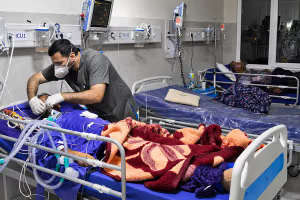
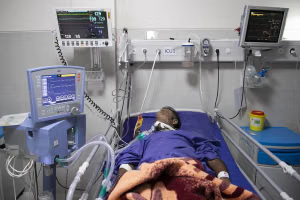
Bootleg alcohol has killed 20 people and poisoned 356, including a 12-year-old, across Iran since early November, the Health Ministry said on Tuesday, as cases spread from Neyshabur in the northeast to cities from Shiraz to Zabol.

Of those poisoned between November 1 and Tuesday morning, 187 were in hospital, 33 of them in intensive care, the ministry’s deputy for treatment said. Eighty were on dialysis or receiving it, 16 had blurred vision and 142 had been discharged. The average age was about 30, and several were under 18.

Neyshabur, in Razavi Khorasan province, has been hardest hit, with 211 cases. The ministry also recorded 66 in Shiraz, 37 in Hormozgan province, 19 in Alborz province, west of Tehran, eight in Khoy in West Azarbaijan, seven in Mashhad, three each in Zanjan and in Khalkhal in Ardabil province, and two in Zabol in Sistan and Baluchestan.

Most patients in Hormozgan had kidney damage and some had blurred vision, a provincial health spokeswoman said, symptoms that fit methanol poisoning.

Deaths and arrests

  • Deadly poisonings fuel anger over Iran's alcohol ban

    Deadly poisonings fuel anger over Iran's alcohol ban

  • Bootleg alcohol poisons 120 in northeastern Iran, four dead

    Bootleg alcohol poisons 120 in northeastern Iran, four dead

In Hormozgan, on the Persian Gulf, four people died in Bandar Abbas and one on Qeshm Island, the province’s university of medical sciences said.

In Neyshabur, four people had died and four had been declared brain dead by Monday evening, health officials said, and 34 patients had been sent to Mashhad and Sabzevar for treatment.

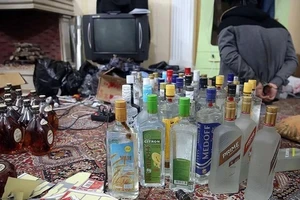
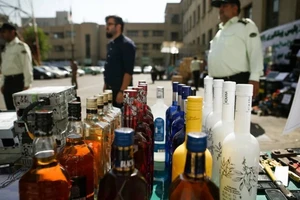
Neyshabur’s prosecutor said three people had been arrested in the case. Police had earlier said 12 suspects were detained.

In Fars province, one person has died in Shiraz and nearby Marvdasht, the provincial police chief said.

The Shiraz prosecutor said one patient in intensive care had been declared brain dead, seven people had been arrested for distributing counterfeit drinks and three production sites had been sealed.

‘Legal sales and health checks’

  • Bootleg alcohol identified as top cause of deaths from poisoning in Iran

    Bootleg alcohol identified as top cause of deaths from poisoning in Iran

  • Who is behind the sale of lethal bootleg alcohol in Iran?

    Who is behind the sale of lethal bootleg alcohol in Iran?

Some Iranians who wrote to Iran International said the ban on alcohol had fed a market where nobody checks what is in the bottle. Rather than blaming those who were poisoned, they called for legal sales and health inspections.

Alcohol is banned in Iran for Muslims, who face flogging if caught drinking, and only recognized religious minorities may make it for private use.

Homemade and counterfeit drinks, often made with cheap industrial alcohol, kill people in Iran several times a year. Methanol, a common cause, damages the kidneys and eyes.

In November 2025, eight people died after drinking bootleg alcohol in Iranshahr and Bampur, in the southeast, and one lost their sight. In early 2020, hundreds died after drinking methanol in the false belief that it protected against COVID-19.

Alcohol accounted for about 5 percent of deaths from poisoning in Iran in the five months to August 2025, according to the Legal Medicine Organization.