Iran president accuses 'enemies' of seeking to foment domestic unrest
Iranian President Masoud Pezeshkian meets with Mashhad's ultra-conservative Friday prayer leader Ahmad Alamolhoda.
Iranian President Masoud Pezeshkian accused the country's enemies of seeking to sow divisions within Iranian society on Tuesday, calling for greater cooperation among institutions to address the country's challenges.
Speaking during a meeting with Mashhad's Friday prayer leader Ahmad Alamolhoda, the supreme leader's representative in Razavi Khorasan province, Pezeshkian emphasized the need to improve social conditions through cooperation.
In a separate meeting with Ahmad Marvi, the head of the powerful religious foundation Astan Quds Razavi, Pezeshkian called for national unity to counter what he described as enemy efforts to foment domestic unrest and instability.
Pezeshkian arrived in Mashhad on Tuesday for a three-day provincial visit, the 21st stop on his government's provincial tour. Upon arriving in the city, Pezeshkian visited the Imam Reza shrine and paid tribute at the grave of slain Supreme Leader Ali Khamenei.
Russian President Vladimir Putin, Chinese President Xi Jinping and U.S. President Donald Trump arrive for a trilateral meeting at Kylin Villa on November 19, 2026 in Shenzhen, China.
A sense of strategic disappointment has emerged across Iran’s political spectrum over the limits of Russian and Chinese support during the 2026 war and the US naval blockade that followed.
Rather than advocating a break with Moscow or Beijing, however, Iranian officials and commentators increasingly describe Russia and China as self-interested great powers, not reliable partners.
The prevailing view is that diplomatic backing in Vienna, home to the IAEA, and at the United Nations in New York cannot break the US blockade or ease Iran’s economic crisis.
The belief that a Russia-China-Iran alignment could offset American military and economic power in a direct confrontation, promoted by some Iranian officials and media until recently, has largely faded from Tehran’s political discourse.
In its place is a more sober assessment: Moscow and Beijing may provide diplomatic support and political cover, but Iran ultimately stands alone in confronting the United States in the Persian Gulf.
Doubts have deepened since the Trump-Xi-Putin summit in Shenzhen on November 19. The summit’s four-point declaration made no mention of Iran, prompting figures from reformists to hardliners to warn against mistaking Russian or Chinese rivalry with Washington for a commitment to defend Tehran’s interests.
Zarif and Javan
Most strikingly, the Revolutionary Guards-affiliated hardline daily Javan and former foreign minister Mohammad Javad Zarif, a leading figure of the reformist-pragmatist camp, reached remarkably similar conclusions from opposite ends of Iranian politics. Others have since echoed them.
“Neither in war nor in peace will anyone defend us; we must stand on our own feet,” Zarif said at a book signing in Tehran on Thursday. He had warned on October 2 that although Iran should keep strategic relations with Russia and China, those ties “must not lead to dependence on the East.”
Relying too heavily on either power, he said, weakens Iran’s leverage with both Washington and its neighbors.
Javan’s editor-in-chief, Gholamreza Sadeghian, put Russia and China in the same category as the United States, arguing that Moscow and Beijing benefit from what he called a “conscientious and cost-free” opposition to any change in Iran’s nuclear doctrine.
In his view, keeping Iran non-nuclear serves all three powers, while Iran alone bears the economic and military costs of confrontation.
The remarks stood out for three reasons. Zarif, who backed cooperation agreements with Russia and China as foreign minister under President Hassan Rouhani, now sounds more skeptical of relying on the East. Javan has traditionally portrayed China and Russia favorably. And Sadeghian’s reference to a possible “change in Iran’s nuclear doctrine” appeared to signal openness to revisiting one of the Islamic Republic’s longstanding taboos: building nuclear weapons.
Reformists, conservatives and clerics
On Monday, the reformist international relations professor Mohammad Javad Haghshenas argued that Moscow and Beijing negotiate around their own priorities, including Ukraine and Taiwan. A partnership has value, he said, only if it advances the security, development and welfare of Iranians, not if it serves as a bargaining chip for other powers.
Similar themes have come from conservative and religious circles. On Saturday, Massih Mohajeri, editor-in-chief of Jomhouri Eslami, argued that Washington’s failure to win anti-Iran commitments from Xi and Putin in Shenzhen was not in itself a diplomatic success for Tehran.
He urged policymakers to address Iran’s economic and social problems at home instead of counting on tensions among the major powers.
Official outlets such as IRNA continue to stress Russian and Chinese diplomatic support, including their joint statement at the IAEA on November 19 and their speeches at the UN Security Council condemning US-Israeli actions. But economic commentators and political analysts are increasingly asking what Russia’s and China’s interests actually are, and how closely they align with Iran’s.
Rhetoric and reality
Economic analysts point to a widening gap between words and deeds. China’s independent refiners, known as “teapots,” have reportedly stopped importing Iranian crude by sea since September, fearing US interdiction and secondary sanctions.
Iran has not had a single full month of crude exports since, despite Beijing’s repeated criticism of unilateral US sanctions.
The conservative Mehr news agency noted in a November 21 analysis that Russia “lacks the ideological, military and industrial capacity of the Soviet Union” and faces serious problems of its own.
Even conservative politicians have begun to emphasize Iran’s independence over the promise of a “Look East” policy.
On November 21, Abbas Moghtadaei, deputy chairman of parliament’s National Security Committee, said Iran makes its decisions solely on the basis of national interests and “seeks permission from no outside power, whether in Washington, Beijing or Moscow.”
Foreign Ministry spokesman Esmaeil Baghaei struck a similar note at his November 23 briefing. While still calling Russia and China “our friends,” he sought to reassure Iranians that “decisions regarding Iran are not made anywhere outside Tehran.”
All these remarks suggest a broader shift in Iranian political thinking. The debate is no longer about whether relations with Russia and China should continue, but about what they can realistically deliver. Across much of Iran’s political spectrum, expectations have dropped sharply, and the emphasis has moved from dependence to self-reliance.
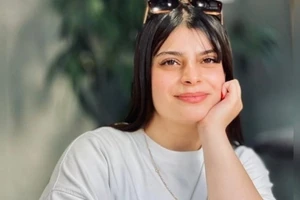
Police in the western Iranian city of Sanandaj have arrested the parents of Helia Fattahi on charges of killing their daughter, who rights groups said was strangled after telling her family she was two months pregnant.
Police in the western Iranian city of Sanandaj have arrested the parents of Helia Fattahi on charges of killing their daughter, who rights groups said was strangled after telling her family she was two months pregnant.
Both parents confessed during questioning, Shahram Abdi, head of the criminal police in Kordestan province, said on Tuesday. Detectives went to the house after a report of a young woman’s death, he said, and concluded she had been killed. The police, citing the parents, said the motive was “family disputes.”
Fattahi was killed on Saturday night at her family’s home in Sanandaj’s Naysar neighborhood, the rights group Hengaw reported. She had told her family she was pregnant the week before, Hengaw said, citing sources, and her parents beat her and then strangled her. Hengaw and another rights group, Hana, both described the killing as a so-called honor killing.
The police and Hengaw gave her age as 19. Hana said she was 16. The police did not comment on the pregnancy or on how she was killed.
Hana also said the Iranian news site Rokna had republished a photo of Fattahi first released by Hana, without credit, after digitally adding a hijab to it. Hana called it a distortion of the image and a breach of journalistic ethics.
Fattahi’s death is the third killing of a young woman or girl in Iran in a little over a week to draw national attention.
On November 18, Sadaf Haghbin, 23, was shot dead at her birthday party in Gilan province, in the north. Local media said a former boyfriend was the gunman, and the Khabaronline news site said the likely motive was her refusal to marry him.
Days earlier, Sogand Sayadi, a 16-year-old schoolgirl in Kermanshah, died after falling from the fifth floor of a building. A national network of teachers’ unions said she had warned school staff that her father would kill her if they sent her home with him. The coroner said she died of injuries from the fall, and Kermanshah’s prosecutor said the circumstances were under investigation.
‘No transparent data’
At least 84 women and girls were killed in Iran between March 21 and October 13, and in 75 cases the killer was someone they knew, according to a count of cases reported in the media. Twelve of the victims were under 18, and eight of those girls were killed by fathers, brothers or other blood relatives. The count covers only cases that reached the media.
Hana said on Monday, ahead of Wednesday’s International Day for the Elimination of Violence against Women, that it was alarmed by the rise in recorded killings of women in Iran. The lack of transparent data and the many cases of domestic violence that are never reported made it impossible to know the scale of the problem, its legal office said, calling for women at risk to have access to safe shelters and legal protection.
A bill to protect women from violence has been passed back and forth between the government, parliament and other state bodies for more than 15 years and has still not become law.
Under Article 301 of Iran’s Islamic Penal Code, a father or paternal grandfather who kills his child is exempt from qisas, or retribution in kind, the punishment for most murders. The exemption does not cover mothers. After Sayadi’s death, lawyers and women’s rights activists called for the law to be changed and for protective laws to be passed.
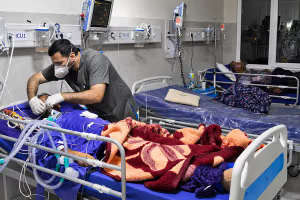
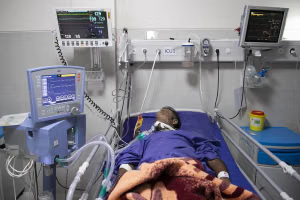
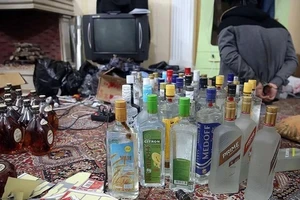
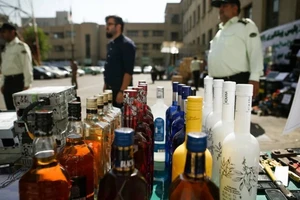
Bootleg alcohol has killed 20 people and poisoned 356, including a 12-year-old, across Iran since early November, the Health Ministry said on Tuesday, as cases spread from Neyshabur in the northeast to cities from Shiraz to Zabol.
Of those poisoned between November 1 and Tuesday morning, 187 were in hospital, 33 of them in intensive care, the ministry’s deputy for treatment said. Eighty were on dialysis or receiving it, 16 had blurred vision and 142 had been discharged. The average age was about 30, and several were under 18.
Neyshabur, in Razavi Khorasan province, has been hardest hit, with 211 cases. The ministry also recorded 66 in Shiraz, 37 in Hormozgan province, 19 in Alborz province, west of Tehran, eight in Khoy in West Azarbaijan, seven in Mashhad, three each in Zanjan and in Khalkhal in Ardabil province, and two in Zabol in Sistan and Baluchestan.
Most patients in Hormozgan had kidney damage and some had blurred vision, a provincial health spokeswoman said, symptoms that fit methanol poisoning.
In Hormozgan, on the Persian Gulf, four people died in Bandar Abbas and one on Qeshm Island, the province’s university of medical sciences said.
In Neyshabur, four people had died and four had been declared brain dead by Monday evening, health officials said, and 34 patients had been sent to Mashhad and Sabzevar for treatment.
Neyshabur’s prosecutor said three people had been arrested in the case. Police had earlier said 12 suspects were detained.
In Fars province, one person has died in Shiraz and nearby Marvdasht, the provincial police chief said.
The Shiraz prosecutor said one patient in intensive care had been declared brain dead, seven people had been arrested for distributing counterfeit drinks and three production sites had been sealed.
Some Iranians who wrote to Iran International said the ban on alcohol had fed a market where nobody checks what is in the bottle. Rather than blaming those who were poisoned, they called for legal sales and health inspections.
Alcohol is banned in Iran for Muslims, who face flogging if caught drinking, and only recognized religious minorities may make it for private use.
Homemade and counterfeit drinks, often made with cheap industrial alcohol, kill people in Iran several times a year. Methanol, a common cause, damages the kidneys and eyes.
In November 2025, eight people died after drinking bootleg alcohol in Iranshahr and Bampur, in the southeast, and one lost their sight. In early 2020, hundreds died after drinking methanol in the false belief that it protected against COVID-19.
Alcohol accounted for about 5 percent of deaths from poisoning in Iran in the five months to August 2025, according to the Legal Medicine Organization.
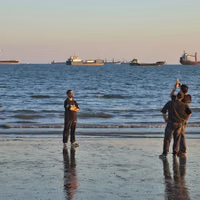
People on the waterfront in Bandar Abbas, Iran’s main port on the Strait of Hormuz, November 20, 2026.
Iranian state media and officials have denied that Iran was about to send tankers through the US naval blockade, after four days in which Guards-linked outlets, lawmakers and Friday prayer leaders spread the claim and AI-generated images showed ships breaking through.
The denials began on Sunday, the same day President Donald Trump said that if Iranian ships tested the blockade, “they’ll all be at the bottom of the sea like the rest of the navy.”
How the story grew
The reports began on Thursday, when the oil tracker TankerTrackers said Iran appeared to be preparing to ship out oil again. The Revolutionary Guards-affiliated Fars news agency had already published a commentary proposing a tanker convoy to break the blockade, and many readers took it as an operational plan.
The claims did not come only from commentators and social media. Friday prayer leaders in several cities called for the blockade to be broken, and some said tankers would soon sail from Kharg Island for China. Lawmakers repeated the claim over the weekend, and Foreign Minister Abbas Araghchi said on Friday that “the blockade must be broken.”
Hardliners welcomed the prospect of a confrontation. Propaganda images and videos, some built from real footage and others generated with artificial intelligence, claimed that an Iranian tanker named Khat Shekan, or “Line Breaker,” had crossed the blockade on Saturday. On Sunday, claims that 14 tankers had crossed spread widely online.
TankerTrackers said no tanker called Line Breaker existed. It also said an Iran-linked liquefied natural gas tanker named Tania Star that appeared in ship-tracking data on Sunday was a spoof, and that the vessel did not exist.
‘No basis in reality’
The Guards-affiliated Tasnim news agency said on Sunday that no operation had been planned for the weekend. The claims, it said, grew out of “a series of proposals by some individuals in the media or on social media,” and people had stitched together reports, some unrelated, to suggest an operation on Saturday or Sunday.
But Tasnim said Iran would not put up with the blockade forever. “Whether Iran will tolerate the naval blockade in the long term is not an issue of uncertainty; it will certainly break it, and this has been repeatedly stated by official military and civilian officials,” it said.
Iran was planning measures against the blockade and had prepared equipment and logistics, Tasnim said, but claims of an operation in the past day or two had “no basis in reality.” It accused people it called “capitulationists” of hoping to present a failed operation as proof that Iran had run out of options and should give in, and said the “enemy front” wanted to paint it as the failure of an Iranian military strategy.
Foreign Ministry spokesman Esmail Baghaei called the reports “media speculation” on Monday, blaming news sites, Telegram channels and other social media.
The state news agency IRNA, citing an account called the “War Message Center,” said no tanker convoy was moving toward the blockade as described or at the time claimed. The reports came from misreadings of ship-tracking data and speculation that hardened into claims of a confirmed operation through reposting, it said.
Iran’s response to the blockade was not limited to “a media scenario,” it said, and there were ways to get around or break the blockade whose details were not necessarily made public.
It is not clear who runs the War Message Center. It has not said it belongs to any state body, though accounts under that name have published war news and military statements since March.
‘Zero hour’
Nour News, which is close to the Supreme National Security Council, said on Sunday that the episode should not be judged only by whether an operation was confirmed or denied. The time for Iran to decide on breaking the blockade was “approaching rapidly,” it said, and everyone from Washington to regional governments and mediators should prepare for the coming “zero hour.”
Ending the blockade was becoming a public demand, it said, and the diplomatic window was not unlimited.
Mehdi Kharratian, a hardline commentator, told state TV’s Jahan Ara program on Sunday that he had not confirmed the tanker reports but that such news could influence decision-makers.
He urged officials to act, whether by halting all oil traffic through the Strait of Hormuz, confronting the UAE over what he called smuggling through the strait’s southern channel, or targeting ships heading for Arab ports.
“Ultimately, there are several solutions, and one of them has to be implemented,” he said.
Another hardline commentator, Ruhollah Jomei, wrote on X that the “project” had achieved its goals by stepping up regional diplomacy to lift the blockade. Regional capitals had been made to understand that “the Strait of Hormuz is either for everyone or for no one,” he wrote.
Fereydoun Majlesi, a former diplomat, told the Fararu news site that holding back a tanker operation, or denying it, showed “timely rationality.” The publicity and the threat of a US military response could have turned a maritime operation into a trap and a wider war, he said. “I believe we should not put the country in a position from which it would be difficult to exit, and which could cause damage that cannot be repaired.”
‘Lose-lose’
Some pro-government social media users asked why the reports had been allowed to run for days before being denied.
One, Abuzar Mashayekhi, suggested the reports had been a security operation to test reactions abroad, including in Arab countries, and public opinion at home, and that the late denial may have been deliberate.
Others said the confusion had damaged public trust. A user named Ario wrote on X that if the reports had only been meant to test the US response and measure support at home, the outcome was “lose-lose.” “Both the pragmatic credibility [of the approach] and social capital would be damaged,” the user wrote.
Iranian singer Parastoo Ahmadi performs alongside her band at the historic Deir-e Gachin Caravanserai near Qom, Iran, in December 2024.
The flogging of Iranian singer Parastoo Ahmadi and four members of her concert team on Monday sparked outrage on social media, with artists, activists and other users condemning the punishment and denouncing restrictions on women’s artistic expression in Iran.
Ahmadi, concert organizer Mohsen Lashkari and musicians Soheil Faghih-Nasiri, Amin Taheri and Amirali Pirnia each received 74 lashes at the prosecutor’s office in Qom, their lawyer Mostafa Nili said.
Women have been banned from singing solo in public in Iran since the 1979 Islamic Revolution.
Singer Mehdi Yarrahi, who himself received 74 lashes in March 2025 over a protest song challenging compulsory hijab, shared footage of Ahmadi’s performance on Instagram, expressing solidarity with her and her concert team.
Musician Hana Kamkar also condemned the punishment in an Instagram video, asking Islamic Republic officials what the artists had offered other than humanity, joy and beauty.
Ahmadi’s December 2024 concert was filmed at the historic Deir-e Gachin Caravanserai near Qom, a Shiite holy city and a center of religious conservatism in Iran.
Wearing a long, sleeveless black dress with her hair uncovered, Ahmadi sang alongside male musicians in a performance staged without a live audience. The virtual concert, which defied both mandatory hijab rules and restrictions on women singing publicly, has drawn more than 3.2 million views on YouTube.
Activist Zeinab Zaman highlighted the contrast between the virtual performance and the physical punishment inflicted on the singer.
“Her concert was virtual, but the lash on her body was real,” Zaman wrote on X. “We are recording act after act of courage and shame upon shame in this history. Bodies are eyewitnesses.”
The flogging also reignited accusations of double standards in the Islamic Republic’s treatment of female singers.
In April, as Iran was at war with the United States and Israel, footage of Lebanese singer Julia Boutros was screened at nighttime gatherings of government supporters in Tehran’s Ferdows Garden. Boutros is known for her songs in support of the Lebanese resistance.
Translator Emily Amraee recalled the gatherings in a post on X, noting that the authorities had “enthusiastically” broadcast the Lebanese singer’s performances over several consecutive nights, only to flog an Iranian woman for singing months later.
Others questioned the government’s priorities amid a conflict it has portrayed as a threat to its very existence.
“If possible, in the midst of what you yourselves call an ‘existential’ war, refrain from flogging the daughters of this country. Is that so difficult for you?” Mojtaba Najafi wrote on X.
Mahmood Amiry-Moghaddam, director of Norway-based Iran Human Rights, pointed to the government’s failure to address the country’s economic and infrastructure crises while continuing to punish women for defying its restrictions.
“She sang; the Islamic Republic responded with the lash,” he wrote on X.
“A government that is incapable of resolving the crises of livelihoods, water and electricity, yet does not hesitate to flog a woman for her voice, has reached the end of its life.”
The communications office of Iran’s exiled Crown Prince Reza Pahlavi condemned the flogging in a statement on X, describing it as an attempt to humiliate and suppress the artists and accusing the Islamic Republic of fearing women’s voices.
“The virtual concert staged by Parastoo Ahmadi, a young artist, two years ago and livestreamed on social media remains a lasting symbol of the voices of Iranian women who cannot be silenced,” the statement said.
“Before 1979, Iran was a cradle of art and music and women were pioneers in these fields. Today, however, the regime flogs courage and beauty,” it added.
The statement said the Islamic Republic would soon fall and that women would once again play a prominent role in Iran’s artistic, social, economic and political life.
Ahmadi and the four members of her concert team were convicted of offending public decency by producing and publishing what the court deemed vulgar and immoral content online.
An appeals court upheld their sentences in September, including two-year bans on artistic and musical activities and foreign travel.
Amnesty International had previously called on Iranian authorities to halt the flogging sentences, describing flogging as torture and urging an end to compulsory hijab and corporal punishment.