• العربية
  • فارسی
BrandBrand
  • Iran Insight
  • Politics
  • Economy
  • Analysis
  • Special Report
  • Opinion
  • Podcast
  • Live TV
  • Iran Insight
  • Politics
  • Economy
  • Analysis
  • Special Report
  • Opinion
  • Podcast
  • Live TV
  • Theme
  • Language
    • العربية
    • فارسی
  • Iran Insight
  • Politics
  • Economy
  • Analysis
  • Special Report
  • Opinion
  • Podcast
  • Live TV
All rights reserved for Volant Media UK Limited
volant media logo

Shalamcheh crossing remains open - Al Arabiya

Nov 23, 2026, 11:57 GMT+0

Most Viewed

Truck drivers strike across Iran over economic hardship
1

Truck drivers strike across Iran over economic hardship

2

Iran signals readiness for Hormuz showdown despite US buildup

3

Trump threatens Iran strikes in new year, says blockade runners will be sunk

4

Inside Iran's online gun market, where a few messages can start a deal

5
EXCLUSIVE

Family source recounts Iranian girl's alleged killing by father

Banner

Spotlight

  • ‘The city smelled of blood’: Witness recalls Iran protest crackdown

    ‘The city smelled of blood’: Witness recalls Iran protest crackdown

  • Iran-linked hackers posed as US expert to target Australian broadcaster
    PODCAST

    Iran-linked hackers posed as US expert to target Australian broadcaster

  • Who gets to be a journalist? Iran seeks greater control over press
    INSIGHT

    Who gets to be a journalist? Iran seeks greater control over press

  • Iran hardliners push tanker convoy to defy US blockade

    Iran hardliners push tanker convoy to defy US blockade

  • War damage leaves Iran with few options to avert winter gas crunch
    ANALYSIS

    War damage leaves Iran with few options to avert winter gas crunch

Banner
Banner
Banner
Banner
Banner
Banner
•
•
•

More Stories

Iran threatens European bases with missiles it says can reach 4,500 km

Nov 23, 2026, 10:38 GMT+0
100%
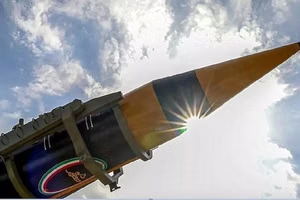
An Iranian missile on display in Tehran.

Iranian officials have renewed threats against military bases in Europe, with a lawmaker saying the country's missiles can now reach 4,500 kilometers, more than twice their previously declared range.

Ahmad Bakhshayesh Ardestani, a member of parliament's National Security and Foreign Policy Committee, said Monday that Iran's missile range had increased from 2,000 to 4,500 kilometers, placing European military bases within reach.

“Our young leader has announced that missiles must be made accurate and capable of precision strikes. This means we have Europe within our grasp,” Bakhshayesh Ardestani said.

The lawmaker offered no independent technical evidence for the 4,500-kilometer figure. Iran's previously declared missile range of approximately 2,000 kilometers already placed parts of southern and southeastern Europe within reach.

Daily threatens European bases

Hamshahri, a newspaper owned by Tehran Municipality, published an image on Monday under the headline “All of Europe within Iran's range.”

  • Iran says missiles no longer bound by range limits

    Iran says missiles no longer bound by range limits

The newspaper suggested that an order to respond to attacks without geographical restrictions could signal a shift in Iran's military strategy.

“Increasing the range of ballistic missiles to approximately 5,000 kilometers has raised concerns among Western countries,” Hamshahri wrote.

On November 3, Hamshahri published a map identifying US military bases and infrastructure across Europe as potential targets. Another article published by Hamshahri Online, citing the newspaper Javan, identified facilities in Cyprus and Greece.

Ebrahim Azizi, chairman of parliament's National Security and Foreign Policy Committee, said Monday that Iran's armed forces had developed the capability to make “enemies” regret attacking the country and were at their highest level of readiness, according to Tasnim, a news agency affiliated with the Revolutionary Guards.

Khamenei orders longer-range missiles

Qassem Qoreishi, deputy head of the Basij organization, said on November 18 that Mojtaba Khamenei had ordered the armed forces to increase missile range in response to the possibility of US operations shifting to more distant bases.

The following day, Qoreishi said Khamenei had also called for greater missile accuracy.

Mohammad Mokhber, an adviser to Khamenei, previously interpreted the leader's call for responses without geographical restrictions as removing limits on missile range.

The Revolutionary Guards subsequently announced that Iran's self-imposed 2,000-kilometer limit had been lifted, without specifying whether longer-range missiles had been developed or deployed.

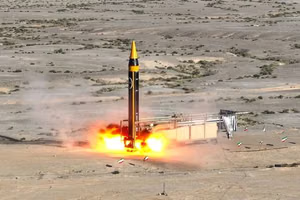
Tasnim has suggested that modifications to the Khorramshahr-4 missile, including reducing warhead weight, could extend its range to between 3,000 and 4,000 kilometers.

Missile capabilities face questions

An earlier Revolutionary Guards attack on the joint US-British base at Diego Garcia in the Indian Ocean involved two missiles, neither of which reached its target. One was intercepted and the other failed during flight.

Israeli officials estimated their range at approximately 4,000 kilometers, while the Associated Press raised the possibility that satellite-launch technology contributed to the extended range.

  • Iran state TV says modified missile could reach US base in Britain

    Iran state TV says modified missile could reach US base in Britain

The unsuccessful strike did not establish that Iran possesses missiles capable of consistently delivering accurate strikes at such distances.

Damage to missile facilities and difficulties obtaining foreign components have further constrained production, leaving questions about whether Iran's declared longer-range capabilities can be deployed reliably.

Tehran's subsidence zone expands 20% in two years

Nov 23, 2026, 08:55 GMT+0
100%
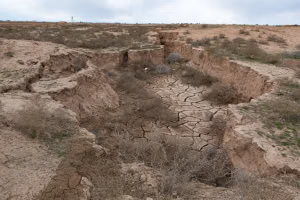
Deep cracks cut through dry ground in Iran, illustrating the impact of land subsidence.

The area affected by land subsidence in southwestern Tehran has expanded by around 20% over the past two years, driven by continuous groundwater extraction to supply drinking water to the capital, a senior Iranian official said on Monday.

Around 650 million cubic meters of groundwater are extracted annually from approximately 1,200 wells to supply Tehran and its surrounding areas, Ali Beitollahi, head of the earthquake and risk assessment department at Iran's Road, Housing and Urban Development Research Center, said.

Unlike agricultural wells, which may operate for only a few hours a day depending on seasonal demand, urban water supplies require year-round extraction, he said.

The continued pumping of groundwater in areas already affected by subsidence is lowering water tables and degrading water quality, Beitollahi said.

  • Land subsidence threatens villages and farms in southeast Iran

    Land subsidence threatens villages and farms in southeast Iran

Buildings, gas pipelines, water networks and sewage systems could suffer structural damage as the ground sinks, he warned, adding that population density and earthquake risks must also be considered when assessing the danger.

Subsidence spreads across Iran

Iran's largest subsidence zones overlap with its most densely populated metropolitan areas, particularly Tehran and neighboring Karaj, followed by Isfahan, Beitollahi said.

The entire Isfahan metropolitan area is exposed to subsidence risks, he added.

The scale of the problem has expanded nationwide. Land affected by subsidence increased tenfold over eight years, from approximately 10,000 to 100,000 square kilometers, Reza Shahbazi, deputy head of Iran's Geological Survey, said in September.

A parliamentary research report cited by Shargh newspaper in June warned that subsidence had reached a critical stage, with around half of Iran's population living in affected areas.

Population concentration strains water supplies

Around 40% of Iran's population lives within 100 kilometers of 10 major population centers, including Tehran and Mashhad, according to Beitollahi.

The concentration of jobs, infrastructure and services in these areas has increased demand for water, energy and food, placing further pressure on groundwater reserves.

  • Nearly half of Iranians live in land subsidence zones, report warns

    Nearly half of Iranians live in land subsidence zones, report warns

Water conservation alone cannot resolve the problem because of the scale of population concentration, Beitollahi said.

He called for creating employment opportunities and improving living conditions elsewhere in Iran to reduce pressure on Tehran and Karaj, warning that continued population concentration would make future water supplies unsustainable.

US weighs delaying Iran strikes despite Israeli pressure for military action

Nov 23, 2026, 04:23 GMT+0
100%
US President Donald Trump arrives to speak at a press conference in the James S. Brady Press Briefing Room at the White House in Washington, DC, US, November 20, 2026. REUTERS

US President Donald Trump is considering postponing renewed strikes on Iran despite Israeli pressure for a joint military campaign, as disagreements over military action persist in Washington and regional mediators seek to revive negotiations.

The United States has decided for now to delay a potential attack by at least a week, Israeli news outlet Ynet reported Sunday, citing US administration officials. Trump is reportedly inclined to wait until after the new year before authorizing further strikes if negotiations fail.

The reported delay comes as Israeli Prime Minister Benjamin Netanyahu presses Washington for a short, intensive campaign that he believes could severely weaken Iran's government and potentially lead to its collapse. Trump's advisers remain divided over whether another offensive would achieve that objective or whether Washington should continue relying on its economic blockade of Iran.

US Central Command (CENTCOM), meanwhile, remains at maximum readiness and favors a joint strike with Israel, i24NEWS reported Sunday, citing Israeli security officials. A US source told the broadcaster that CENTCOM wanted either to proceed with an attack or stand down rather than remain on heightened alert indefinitely. An Israeli source described the atmosphere as “anxious waiting.”

Tehran is seeking to break the military and diplomatic stalemate with Washington, with more than 14 oil tankers reportedly gathering near Iran's main crude export terminal on Kharg Island for a possible attempt to breach the US naval blockade. The reported preparations, based on satellite imagery and vessel-tracking data, have not been independently confirmed, and it remains unclear whether the vessels will attempt to cross the blockade.

Asked Sunday about a possible Iranian attempt to breach the US naval blockade, Trump told Fox News: “I hope they do, they'll all be at the bottom of the sea like the rest of the navy.”

Egypt is working with Qatar, Turkey, Saudi Arabia and Pakistan to bring Washington and Tehran back to the negotiating table, Foreign Minister Badr Abdelatty said Sunday.

“I believe that there is a possibility for dialogue, for reaching a deal, and for reaching a compromise,” Abdelatty told CNN.

Iranian Deputy Foreign Minister Kazem Gharibabadi said Sunday that negotiations with Washington were continuing and that the window for diplomacy remained open. Iranian Foreign Minister Abbas Araghchi separately told a cabinet meeting that “the path of diplomacy continues.”

In a Truth Social post Sunday, Trump said Iran had intensified its missile and drone attacks following the November 3 US midterm elections.

“Iran has launched more drones and missiles in the last week than at any time for over a year,” he wrote. “Don’t worry, they’ve all been knocked down, and done no damage.”

In Washington, incoming House Speaker Hakeem Jeffries said Sunday that Democrats would seek to end the conflict when they take control of the House in January.

“We need to end this reckless and costly war of choice in Iran that has skyrocketed gas prices, food prices, and diesel prices,” Jeffries told CBS News.

Trump threatens Iran strikes in new year, says blockade runners will be sunk

Nov 22, 2026, 20:58 GMT+0
100%

President Donald Trump said he was inclined to resume strikes on Iran after the new year if no deal was reached, and warned that Iranian ships trying to run the US naval blockade would be sunk, as Iran's attacks on Bahrain drew condemnation across the region.

In an interview with Fox News on Sunday, Trump accused Iranian officials of stalling in talks and said they had become more aggressive than before the US midterm elections. He called Iran's negotiators "professional tap dancers" who talked constantly but said nothing of substance.

Indirect talks with Tehran were continuing, he said, but he expected the exchanges of fire between US and Iranian forces to go on.

Asked about Iranian state media reports that Iran might test the blockade, Trump said: "I hope they do, they'll all be at the bottom of the sea like the rest of the navy."

He also urged Iranians protesting in recent days to keep going, after seeing videos of the protests, Fox News correspondent Trey Yingst reported.

Attacks on Bahrain

The Revolutionary Guards said on Saturday night that they had struck two radars for US Patriot air defense systems at bases in Riffa and Awali in Bahrain with missiles and drones. They called Iran's airspace a "red line" and warned of a response to any violation.

Bahrain's Interior Ministry said a civilian industrial facility had been hit and set on fire. Its Foreign Ministry rejected the Guards' account, saying the target was entirely civilian. Two people were injured, it said on Sunday: a Bahraini citizen with disabilities, whose condition was stable, and a Pakistani resident, who was in critical condition.

A US official told CBS News that the latest Iranian attacks had caused no damage to US forces or equipment in the region. It was the fourth attempted attack in Bahrain in about a week, the official said, after a pause of nearly two months.

Saudi Arabia, the UAE, Qatar, Jordan and the Arab League condemned the attacks, and the Gulf Cooperation Council said it stood with Bahrain. Saudi Arabia warned that Iran would bear the consequences if they continued.

Conflicting reports on tankers

Iran's navy said on Sunday that two tankers had caught fire after hitting mines east of the Strait of Hormuz, after entering the area with their identification and navigation systems switched off. The Guards' navy separately reported explosions that had disabled two supertankers north of Ghanam Island, east of the strait, and warned shipping companies to follow its instructions.

The UK Maritime Trade Operations agency said it had received a report of an incident between a tanker and military forces in the Gulf of Oman and was investigating. It did not confirm the mine accounts, and it is unclear whether the reports describe one incident or several. Seven tankers have been hit in the strait since November 16, the Joint Maritime Information Centre said.

Talks, and fears of a wider war

Deputy Foreign Minister Kazem Gharibabadi said on Sunday that talks with the United States were continuing and "the window of diplomacy is still open," but that Iran was ready for any scenario. Parliament Speaker Mohammad Bagher Ghalibaf said the state of "neither war nor peace" could not go on, and that removing the threat to Iran required "lasting deterrence."

Britain and several Arab states in the Persian Gulf have privately urged Washington not to launch new strikes, fearing Iranian retaliation and a long disruption to energy supplies, Bloomberg reported, citing people familiar with British government assessments.

Iran's housing crisis keeps divorced couples under one roof

Nov 22, 2026, 19:06 GMT+0
•
Sharareh Azizi
100%
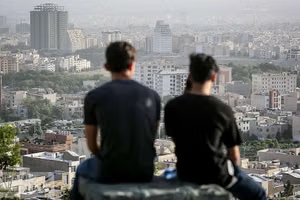
File photo of a sunset in Tehran

After 12 years of marriage and one child, they agree to divorce, and on a summer afternoon it is registered. Then they leave the registry office and go back to the same home, where they had split the rooms between them long before the divorce.

The father has moved into their 10-year-old son's room. The mother stays in the room she once shared with her husband.

For some couples in Iran, the marriage is over, but the housing crisis will not let them leave it behind.

The divorce has been granted, and neither sees the other as a spouse anymore. Yet every night they come home to the same apartment: not to reconcile, not to rebuild, but because neither can afford a place of their own.

In Tehran, the cost of housing can turn even a divorce into a half-finished decision.

A home out of reach

The latest data from Tehran's housing market show asking prices still rising. An analysis of 43,307 apartment listings in the city between November 13 and 20 put the average asking price at about 3 billion rials (about $1,100) per square meter, up 12.5 percent from a month earlier. At that price, a single square meter costs about 18 months of the minimum wage.

  • Tehran rents hit three times many workers’ monthly pay

    Tehran rents hit three times many workers’ monthly pay

  • Shared housing spreads in Iran’s deepening rent crisis

    Shared housing spreads in Iran’s deepening rent crisis

  • Skyrocketing rents push Iranians back to parents’ homes, shared housing

    Skyrocketing rents push Iranians back to parents’ homes, shared housing

Prices are rising even though households have little purchasing power left and sales have stalled.

Renters are under pressure too. Rents in the month to October 22 were 33.4 percent higher than a year earlier, the Statistical Center of Iran said, rising 3.5 percent in that month alone. That is slower than overall inflation, but it does not make renting cheaper. Tenants still pay more each time they renew a lease or look for a new home, which puts independent living further out of reach for low-income families.

For some divorced couples, paying for two homes is simply impossible, so they stay under one roof after their marriage has ended.

'Like two housemates'

Soudabeh, a bank employee who asked that her real name not be used, told Iran International that rising rents and living costs were the main reason she and her former husband still live together.

She had thought about divorce for years, she said, but hesitated because she worried about how she would cover her living costs, especially rent for a home of her own. Renting two separate places was practically impossible, she said. Now that the divorce is official, they live in the same home like two housemates.

  • ‘Living in despair’: uncertainty, economic turmoil erode hope in Iran

    ‘Living in despair’: uncertainty, economic turmoil erode hope in Iran

  • Food, medicine, hope: what Iran's economic crisis is costing its people

    Food, medicine, hope: what Iran's economic crisis is costing its people

The arrangement has cut their costs, she said, and spared them the difficulty of finding a place to rent as single people. But it comes with problems of its own. Privacy and the psychological effect on her children are the hardest parts, she said.

Soudabeh grew up in a traditional family. "Apart from close relatives, no one knows we are separated, and they find it hard to accept, even unacceptable," she said.

She hopes the arrangement is temporary, and that they will soon be able to rent two smaller homes of their own.

Living together after a divorce can take a psychological and social toll on both partners. The loss of privacy and independence, the difficulty of starting new relationships and unresolved tensions can all add to the strain.

For children, it is even more confusing. Children who still see their parents living together after a formal divorce may struggle to understand what has changed, caught between hoping their parents will reconcile and accepting that they have split. Without clear boundaries, and with conflicts still unresolved, their sense of security can suffer.

Families behind a curtain

Living together after divorce is only one of the new ways of living that the housing crisis has forced on Iranians.

In recent years, more and more families have moved in together to share the cost of a single apartment. Some are not even related. They share a home to pay the rent, cover mortgage installments or cope with rising living costs.

In one account on social media, a woman described two families sharing a home in south Tehran. They had divided it with a curtain, she said, but still shared the kitchen, bathroom and toilet.

It is a picture of families forced to adapt to the cost of housing, in a country where privacy has become a luxury.

In August 2023, as parliament debated the government's seventh development plan, its own research center published a report on housing that identified eight forms of homelessness produced by the crisis and the failure of the state's housing policies.

Alongside people sleeping on rooftops, in boiler rooms, in cars, on buses and even in graves, the report listed people who keep moving from place to place, people who take jobs mainly to get a place to sleep, and "two or more families sharing a single housing unit."

The research center said these were the result of low-income families and tenants being priced out of decent housing, and of housing policies that had failed the most vulnerable.

Poverty reshapes the family

Iran's housing crisis is no longer just about being unable to buy a home or pay the rent. It is changing the shape of family life, people's relationships, and even whether they can end one.

For some, separation no longer means leaving home and starting a life of their own. It means dividing the rooms, keeping their distance behind closed doors and going on living in a shared space.

Beyond the financial strain, that carries a psychological and social cost: it makes adjusting to divorce harder for both partners, and leaves children exposed to uncertainty, tension and their parents' unresolved conflicts.

The divorce is registered, but the home is still shared. Sometimes what keeps a marriage going is neither love nor a wish to return, but the inability to pay for a separation.