• العربية
  • فارسی
BrandBrand
  • Iran Insight
  • Politics
  • Economy
  • Analysis
  • Special Report
  • Opinion
  • Podcast
  • Live TV
  • Iran Insight
  • Politics
  • Economy
  • Analysis
  • Special Report
  • Opinion
  • Podcast
  • Live TV
  • Theme
  • Language
    • العربية
    • فارسی
  • Iran Insight
  • Politics
  • Economy
  • Analysis
  • Special Report
  • Opinion
  • Podcast
  • Live TV
All rights reserved for Volant Media UK Limited
volant media logo

Iran says missiles no longer bound by range limits

Nov 7, 2026, 19:17 GMT+0
File photo: Iranian ballistic missile Khorramshahr is said to have a range of approximately 2,000 kilometres

Iran's Revolutionary Guards said Saturday that restrictions on the range of the country's ballistic missiles had been lifted, raising the prospect of strikes against targets farther afield if US or Israeli attacks resume.

Iran has long maintained that it voluntarily restricted the range of its ballistic missiles to 2,000 kilometres (about 1,200 miles), sufficient to reach Israel and US military installations across much of the Middle East.

Referring to a recent directive from Supreme Leader Mojtaba Khamenei to respond to threats with “no geographical limits,” IRGC spokesman Hossein Mohebbi said: “That restriction has been lifted for us.”

He did not say whether Iran had developed or deployed missiles capable of exceeding its previously declared range limit, saying only that the country's capabilities should be demonstrated in practice, not through public statements.

Ali Bilali, an adviser to the commander of the IRGC Aerospace Force, said Saturday that Iran's missiles had a range of about 2,000 kilometres and were capable of precision strikes.

The question of whether Iran possesses longer-range weapons gained prominence during the war in March, when US and British officials said two ballistic missiles had been launched towards Diego Garcia, a joint American-British military base in the Indian Ocean nearly 4,000 kilometres from Iranian territory.

British Defence Secretary John Healey said one fell short and the other was intercepted before reaching its target. Iran denied responsibility for the attempted strike.

Iran's ballistic missile programme has repeatedly featured in US demands for restrictions on Tehran's military capabilities, although it appears to have receded from more recent diplomatic proposals, which have focused primarily on the nuclear programme.

Missiles are central to Iran's military deterrence, especially after two rounds of war that severely degraded its air defences and other conventional capabilities.

Regional powers, including Saudi Arabia, Qatar and Turkey, press for a negotiated settlement between Tehran and Washington, seeking to avert another round of fighting that could threaten their security, disrupt energy supplies and inflict further economic damage across the region.

Speaking at a news conference marking the IRGC's Aerospace Week, Mohebbi said the late Supreme Leader Ali Khamenei had previously directed the military to halt increases in missile range at certain times and authorised extensions at others.

He also claimed that the Guards had moved missile and drone production underground during the wars with Israel and the United States, allowing manufacturing to continue despite bombardment.

“Any point from which we sense a serious threat against our country can become our target,” Mohebbi said, warning that further attacks on Iran would carry a heavy price for its adversaries.

Most Viewed

Khamenei sent security chief to Moscow to seek S-400 air defenses – report
1

Khamenei sent security chief to Moscow to seek S-400 air defenses – report

2
INSIGHT

Opportunity or trap? Vance's Iran war remarks divide Tehran

3

Iran-linked ships go dark over Persian Gulf internet cables after threats - FT

4
INSIGHT

Trump's election defeat fuels debate in Tehran over US deal

5

Iran hardliners warn against compromise after US election shakeup

Banner

Spotlight

  • Iran's solar ambitions falter as Chinese panel imports collapse

    Iran's solar ambitions falter as Chinese panel imports collapse

  • Tehran hails US economic pain as Iranians struggle to make ends meet
    INSIGHT

    Tehran hails US economic pain as Iranians struggle to make ends meet

  • Opportunity or trap? Vance's Iran war remarks divide Tehran
    INSIGHT

    Opportunity or trap? Vance's Iran war remarks divide Tehran

  • Gas-rich Iran turns to Russia for an energy lifeline

    Gas-rich Iran turns to Russia for an energy lifeline

  • One man’s road from Westminster to the machine that carries Iran’s story abroad
    SPECIAL REPORT

    One man’s road from Westminster to the machine that carries Iran’s story abroad

  • Why social control remains central to Tehran's survival
    ANALYSIS

    Why social control remains central to Tehran's survival

Banner
Banner
Banner
Banner
Banner
Banner
•
•
•

More Stories

Netanyahu's pre-election Iran operation was dropped after US was tipped off - Channel 12

Nov 7, 2026, 10:02 GMT+0
100%
Israeli Prime Minister Benjamin Netanyahu

Israel’s prime minister and his Mossad chief planned an operation against Iran on the eve of Israel's October 27 election, over the objections of other security chiefs, and dropped it after a mistake by an Israeli operative tipped off Washington, Channel 12 reported on Friday.

The report, which the channel said was unsourced and broadcast under military censorship, did not describe the operation. It said other senior figures in the security establishment opposed it because it could cause an escalation and force the election to be postponed, but that planning went ahead until the United States learned of it and moved to stop it.

The Prime Minister's Office denied the report: "The prime minister himself clarified in real time that an attack before the Israeli elections was not on the agenda."

The account follows a run of reports in the week of the vote. On October 25, two days before the election, Channel 12 reported an "unprecedented confrontation" between Benjamin Netanyahuand the military chief of staff, Eyal Zamir, over an instruction for unspecified action involving Iran, with Zamir demanding further deliberations and signed legal authorization.

  • Israel denies pressing Trump for Iran strikes amid diplomatic push

    Israel denies pressing Trump for Iran strikes amid diplomatic push

  • Netanyahu pressing Trump to strike Iran immediately after midterms - Axios

    Netanyahu pressing Trump to strike Iran immediately after midterms - Axios

Iran International carried that report at the time. The next day Channels 12 and 13 reported that Zamir was the only security chief to oppose the action, and the New York Times reported, citing three senior defense officials, that Netanyahu had "sought for weeks to orchestrate a new airstrike on Iran" and was blocked by Zamir.

CNN reported that Netanyahu had asked President Donald Trump to approve a joint strike before the election and that Trump refused.

Netanyahu called the October 25 report "nonsense," saying in the same interview that he had "instructed the IDF and Mossad to topple the regime" in Iran. Former prime minister Ehud Barak said on Thursday that Netanyahu had planned "a provocation" via the Mossad "behind the back of the IDF chief of staff."

Friday's report came as Qatari-mediated talks between Washington and Tehran continued. Channel 12 reported this week that Netanyahu had urged Trump to resume the war immediately after Tuesday's US midterm elections, and that Trump wanted to give the talks more time.

"We're talking to Iran," Trump told reporters on Friday. "We haven't lost a soldier in six or seven months."

Opportunity or trap? Vance's Iran war remarks divide Tehran

Nov 6, 2026, 21:25 GMT+0
•
Maryam Sinaiee
100%

Iranian commentators are divided over JD Vance's remarks on the political costs of the war with Iran, with some seeing evidence of tensions within the Trump administration and others warning that he may be trying to lure Tehran into a disadvantageous deal.

In a post on X on Wednesday, Vance identified ending the war and reassessing relations with Israel among the priorities of voters who supported Donald Trump in 2024 but switched to Democrats in Tuesday's midterm elections.

Iran's parliament speaker and chief negotiator, Mohammad-Bagher Ghalibaf, quoted Vance's post to challenge the Trump administration's approach to the war and its relationship with Israel.

Iranian media have since offered differing interpretations of Vance's intentions and his influence over US policy.

The analytical website Vana News said the vice president's remarks highlighted differences in how senior US officials assessed the costs and future of the war, but cautioned against interpreting them as evidence of an irreconcilable rift.

“Differences in perspective do not necessarily mean a breakdown in political cooperation or an irreconcilable conflict between the president and his deputy,” Vana News wrote, adding that it remained unclear whether such differences would affect Washington's policy decisions.

‘Self-interest’

Mohsen Zahedi-Movahed, a retired diplomat and international affairs analyst, was more emphatic.

“Vance's admission that the war was the first reason voters were angry with Republicans is extremely important. How will Trump respond? The divide they wanted to create among Iranian leaders has now come back to haunt them!” he wrote on X.

Ali Nasri, a pro-government commentator, argued that Vance's apparent differences with Trump over Israel predated the Republican election defeat.

“[Vance realised] that his own political future and the survival of the entire America First movement depend on distancing himself from Israel and ending the war with Iran,” Nasri wrote on X. “We paid a heavy price to reach this position of strength,” he added.

‘Prelude to war’

But Parisa Nasr, a hardline journalist, warned against interpreting Vance's remarks as an encouraging sign, describing them as “another episode in Vance's double game.”

She accused Vance of pursuing an electoral and geopolitical manoeuvre designed to appeal to American voters while encouraging Iranian officials who favour an agreement with Washington.

Nasr also linked the remarks to mediation efforts by Qatar and Pakistan, warning that Tehran could be drawn into an agreement that would leave it vulnerable to renewed conflict.

“Even if it leads to an immediate asymmetric agreement, it is a prelude to the next war and poses a very serious danger,” she wrote.

Diplomacy continues

Asked on Wednesday whether he agreed that the war had contributed to the Republicans' defeat, Trump said it was “largely true” but defended his decision to attack Iran, insisting that military action was necessary to prevent Tehran from acquiring a nuclear weapon.

The debate over Vance's intentions comes against the backdrop of a letter he sent in late October to Mohsen Rezaei, secretary of Iran's Supreme National Security Council, to which Tehran has not formally responded.

According to US media reports, Vance called for the immediate start of comprehensive negotiations, including on Iran's nuclear programme, and expressed his readiness to lead the American delegation in talks with Iranian officials.

Rezaei said on October 31 that he had read the letter, delivered through Qatar, but had not yet responded. He described its tone as different from previous communications from Washington, calling it “a good sign” that demonstrated Iran had consolidated its power.

Foreign Ministry spokesman Esmail Baghaei struck a more cautious note on November 2, saying Tehran would judge Washington by its actions rather than the tone of its letters.

US urges Iranians to stay away from IRGC positions if tensions escalate

Nov 6, 2026, 20:26 GMT+0
•
Samira Gharaei
100%

A US military official urged Iranian civilians to remain indoors and stay away from Revolutionary Guards positions if military tensions escalate, telling Iran International that the IRGC was placing weapons and command centers in residential areas.

The official said the United States was concerned about the safety and security of the Iranian people.

“The IRGC has been placing military assets like weapons and command centers inside civilian neighborhoods and near homes,” the military official said.

The official accused Iran’s leadership and the Revolutionary Guards of using civilians to shield military assets while sheltering in protected locations.

“The Islamic Regime does not care about the people of Iran, as evidenced by Regime leaders and the IRGC using innocent civilians as human shields while they hide. They are hiding in fortified facilities and underground bunkers.”

The official also outlined precautions for civilians in the event of heightened tensions.

“If military tensions escalate, Iranian civilians should take appropriate precautions by remaining indoors and staying far away from the IRGC.”

“The safest place for Iranian civilians during heightened tensions is inside their home.”

The remarks follow an Iran International investigation published in March that found Iranian security and military forces had moved personnel, weapons and equipment into at least 70 civilian sites across 17 provinces during US-Israeli airstrikes.

Those sites included 34 schools, alongside hospitals, stadiums, universities, mosques, parks and government offices. Iran International could not independently verify every account but geolocated visual evidence from seven sites, all schools. Iranian officials have repeatedly denied using civilians as shields.

  • Iran’s military uses schools and civilian sites during US-Israeli war

    Iran’s military uses schools and civilian sites during US-Israeli war

The warning comes amid renewed diplomatic efforts to avert further fighting. President Donald Trump said Friday that talks with Iran were ongoing.

Qatari Prime Minister and Foreign Minister Sheikh Mohammed bin Abdulrahman Al Thani urged Washington and Tehran on Friday to accept a good deal rather than pursue a perfect one, saying the two sides had failed to reach a comprehensive agreement.

Bloomberg reported Friday, citing a diplomat familiar with the talks, that Iran was studying Qatari proposals involving nuclear issues previously off the table.

A senior Iranian official told Reuters a day earlier that Tehran had sent Washington a nuclear proposal through Qatar, but would discuss it only after the United States met its seven demands.

Khamenei sent security chief to Moscow to seek S-400 air defenses – report

Nov 6, 2026, 17:15 GMT+0
100%
File photo shows Russian S-400 missile defense system

Iran sent security chief Mohsen Rezaei to Moscow to request S-400 air defense systems in a personal letter from Supreme Leader Mojtaba Khamenei to President Vladimir Putin, The Telegraph reported Friday, citing a senior Iranian official.

A senior Iranian official told the newspaper Tehran was “optimistic” that Putin would deliver the systems, which Iran has sought for years.

Rezaei visited Moscow on Thursday, where he met the Russian president. The report did not establish that a deal had been finalized or give a delivery timetable.

The Telegraph also said confidential documents showed a secret parliamentary committee had recommended strengthening military ties with Russia and China before the war began in February. Its proposals called for building “strategic relations, especially military ones” with those powers and bolstering Iran’s “air defense, missiles and drones.”

The visit followed a phone call between Putin and Rezaei on Monday, after which no new military commitments were announced.

Alex Vatanka, a senior fellow at the Middle East Institute, told Iran International that Moscow would help Tehran so long as doing so did not risk direct confrontation with Washington.

Iran’s pursuit of the S-400 reflects the damage inflicted on its air defenses during the war, which exposed nuclear facilities and senior commanders to attack. But Moscow has stopped short of supplying the systems for years, wary of damaging relations with Israel and other regional states, analysts and regional officials told The Telegraph.

Russia’s own needs could also complicate any delivery. Analysts cited by the newspaper said Ukrainian drone and missile attacks had placed Russian air defenses under sustained pressure, limiting the systems Moscow could spare.

The talks add to evidence of expanding military cooperation. The Financial Times reported Thursday that Russia had agreed to supply Iran with 90 helicopter-mounted launchers for precision-guided missiles. A Russian production schedule identified the customer under a code used for Iran.

The partnership has developed in both directions: Iran supplied Russia with Shahed attack drones and helped establish Russian production. But analysts say Moscow continues to balance assistance to Tehran against its own war in Ukraine and relations with Washington and Middle Eastern powers, leaving the extent of its support uncertain.

Iran-linked ships go dark over Persian Gulf internet cables after threats - FT

Nov 6, 2026, 13:08 GMT+0
100%
Vessels at the Strait of Hormuz, as seen from Musandam, Oman, October 12, 2026.

Ships linked to Iran looped, loitered and went dark over undersea internet cables in the Gulf of Oman in the weeks after Tehran threatened the region’s digital infrastructure, the Financial Times reported on Friday. One of them had been boarded by US Marines in May.

At least four vessels tracked by the maritime analytics firm Windward took unusual routes and lingered over cable corridors off Oman in October, the FT said. Three were tankers under US sanctions. The fourth was a small Iranian fishing boat with no known owner.

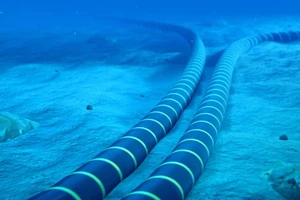
  • IRGC threatens undersea cables, but can it disrupt global internet?

    IRGC threatens undersea cables, but can it disrupt global internet?

The ships sailed normally “until they reached a specific cable corridor, and only then slowed, looped, turned back, loitered or went dark,” Windward told the newspaper. That behavior “fits the profile of mapping the cable routes, or placing charges or mines on them while dark,” it said.

86 hours in the dark

The most striking case is Celestial Sea, an Iran-flagged products tanker sanctioned by the United States last year and boarded by US Marines in the Gulf of Oman in May on suspicion of trying to run the American blockade.

On October 14 it drifted in a loop for more than four hours beside the 2Africa cable, which will connect Persian Gulf states to Europe and the east coast of Africa, according to Windward’s October 29 report, on which the FT’s story is based. The next day it switched off its transponder inside the 2Africa and Bay of Bengal Gateway corridors off Sohar. It stayed dark for 86 hours and reappeared nine nautical miles away, made a U-turn over the second cable and anchored. It was empty the whole time.

  • Iran finds a new weapon beneath Hormuz

    Iran finds a new weapon beneath Hormuz

  • IRGC-linked media hints at threat to Persian Gulf undersea internet cables

    IRGC-linked media hints at threat to Persian Gulf undersea internet cables

A second sanctioned tanker, a gas carrier loaded with about half a million barrels of Iranian LPG, left the same anchorage for Malaysia on October 23. Ten hours out, it slowed over 2Africa, turned 180 degrees back toward Oman and went dark. Five days later it had not reappeared. A loaded ship with a buyer waiting has no cargo reason to do that, Windward said.

The third, a crude tanker operated by Iran’s state tanker company, loitered at under one knot for about ten days in Iranian waters between Jask and Chabahar, within a few miles of four cable routes, switching off its tracking repeatedly, once for 33 hours.

The fishing boat

The fourth vessel is the odd one. A 34-meter Iranian fishing-support boat whose beneficial owner has been unknown since last year drifted at under half a knot along the Europe India Gateway and Transworld cables between October 21 and 26, in waters it had never entered in two years of tracking. Then it sailed north into Iranian waters and went dark.

Fishing in Iranian waters requires a state license, Windward noted, and the Revolutionary Guards’ navy has organized fishermen and their boats into a naval Basij that its commander has called a shadow navy. Iran has used civilian hulls as intelligence platforms before: the cargo ships Saviz and Behshad fed targeting data to the Houthis off Yemen, and on October 6 US forces destroyed an Iranian-linked dhow in the Gulf of Oman that CENTCOM said was watching American warships.

The threats that came first

The ships’ movements tracked a run of Iranian warnings. On October 12 Mohsen Rezaei, secretary of the Supreme National Security Council, said “data centers and artificial intelligence facilities will be destroyed” if the war resumes. On October 19 the Guards’ spokesman, Hossein Mohebbi, said seven cables ran under the Strait of Hormuz and that “new targets and new weapons shall be unveiled.” On October 21 the Guards’ political deputy, Yadollah Javani, said the cables would be hit in retaliation for attacks on Iranian infrastructure.

Two days later, two senior Iranian security officials told Iran International that Tehran had detailed plans to target the cables if the United States and Israel attacked again, and would try to prevent repairs to prolong any outage. That was the day the gas carrier turned around.

Who would feel it

Iraq, Kuwait, Bahrain and Qatar depend entirely on cables under the strait for their international connectivity, the FT reported, citing TeleGeography. The cables’ owners include Meta, Vodafone, Orange, AT&T, Verizon, BT and China Mobile.

Masha Kotkin of the Center for Strategic and International Studies told the FT that damage would slow financial transactions and disrupt cloud computing in Persian Gulf states that are betting on digital business to diversify from oil. Threats alone had already halted construction on several cable projects, she said.

Iran International reported last month that the strait carries less than one percent of the world’s international bandwidth and that the main Europe-Asia routes run through the Red Sea, so an attack would hurt Iran’s neighbors far more than the global internet.

The experts the FT consulted held back from conclusions. Sidharth Kaushal of the Royal United Services Institute said the maneuvers could be coincidence but that “Iran might be trying to demonstrate its capacity to damage undersea infrastructure if there is a war.” Jon Pentreath, a retired Royal Navy rear admiral, said almost any vessel could be fitted to lay mines. Celestial Sea’s owner did not respond to the FT.

Three of the four ships were still dark when Windward published. Where they reappear, it said, will show whether the cables were the destination or a stop on the way.