• العربية
  • فارسی
BrandBrand
  • Iran Insight
  • Politics
  • Economy
  • Analysis
  • Special Report
  • Opinion
  • Podcast
  • Live TV
  • Iran Insight
  • Politics
  • Economy
  • Analysis
  • Special Report
  • Opinion
  • Podcast
  • Live TV
  • Theme
  • Language
    • العربية
    • فارسی
  • Iran Insight
  • Politics
  • Economy
  • Analysis
  • Special Report
  • Opinion
  • Podcast
  • Live TV
All rights reserved for Volant Media UK Limited
volant media logo

US says Iran uses shadow banking network to fund terrorist proxies

Nov 23, 2026, 21:33 GMT+0

Iran is seeking to use its shadow banking network to purchase weapons and fund terrorist proxies, State Department spokesperson Tommy Pigott said Monday, as Washington moved to cut off more than two dozen entities and individuals supporting the network.

“The U.S. is cutting off more than two dozen exchange houses, front companies, and individuals that support Iran’s shadow banking network. The Iranian regime seeks to use this network to buy weapons and fund terrorist proxies,” Pigott wrote on X.

The statement follows the US Treasury's announcement Monday of sanctions targeting 22 companies and eight individuals as part of Operation Economic Outcast, aimed at disrupting Iran's access to international financial networks.

Most Viewed

Tehran's subsidence zone expands 20% in two years
1

Tehran's subsidence zone expands 20% in two years

2

Trump threatens Iran strikes in new year, says blockade runners will be sunk

3
VOICES FROM IRAN

Deadly poisonings fuel anger over Iran's alcohol ban

4

Flogging of Iranian singer Parastoo Ahmadi sparks outrage on social media

5

'Happy Ending' pushes the limits of Iran's underground cinema

Banner
Banner
Banner
Banner
Banner
Banner
Banner

Spotlight

  • Iranian media walk back tanker convoy claims after days of blockade-breaking hype

    Iranian media walk back tanker convoy claims after days of blockade-breaking hype

  • Iraqi forces enter Iran-backed militia stronghold, but who holds power?
    ANALYSIS

    Iraqi forces enter Iran-backed militia stronghold, but who holds power?

  • Tehran claims its missiles can reach Europe. What has it shown?
    ANALYSIS

    Tehran claims its missiles can reach Europe. What has it shown?

  • New video reveals where Iran clerics chose Mojtaba Khamenei as supreme leader
    INSIGHT

    New video reveals where Iran clerics chose Mojtaba Khamenei as supreme leader

  • Iran's housing crisis keeps divorced couples under one roof

    Iran's housing crisis keeps divorced couples under one roof

  • 'Happy Ending' pushes the limits of Iran's underground cinema

    'Happy Ending' pushes the limits of Iran's underground cinema

  • Power cuts return across Iran, threatening over one million jobs
    VOICES FROM IRAN

    Power cuts return across Iran, threatening over one million jobs

  • Inside Iran's online gun market, where a few messages can start a deal

    Inside Iran's online gun market, where a few messages can start a deal

  • ‘The city smelled of blood’: Witness recalls Iran protest crackdown

    ‘The city smelled of blood’: Witness recalls Iran protest crackdown

•
•
•

More Stories

US targets Iran’s shadow banking ‘lifeline’ with new sanctions

Nov 23, 2026, 20:24 GMT+0
100%

The United States imposed sanctions on 22 entities and eight people on Monday to disrupt the shadow banking networks Iran uses to move money abroad. A separate US Treasury report identified $14.7 billion in transactions potentially linked to those networks.

“Iran’s economy is underwater, and its leaders are panicking,” Treasury Secretary Scott Bessent said. “Iran’s shadow banking system is the last financial lifeline of a bankrupt regime.”

The sanctions, part of Washington’s Operation Economic Outcast, targeted Iranian exchange houses and overseas trading companies that Treasury said handled payments for Iranian oil, petrochemical and metals exporters. Most of the overseas companies named were based in Dubai, with others in Hong Kong and Turkey.

Treasury also sanctioned the Iran Center for Exchange of Currency and Gold, which matches Iranian exporters earning foreign currency with importers who need it to buy goods abroad. The center serves tens of billions of dollars in trade each year, Treasury said.

100%

According to Treasury, Iran’s central bank oversees a system in which exchange houses and bank affiliates known as rahbar companies use overseas fronts to make and receive payments for Iranian clients. One Dubai company, Recaz Star General Trading, sent and received more than $170 million in hundreds of payments involving people or entities associated with an Iranian exchange house, Treasury said. Another, OGA Global General Trading, handled millions of dollars in payments for the National Iranian Tanker Company.

The United Arab Emirates was also the leading destination for funds in the analysis released Monday by Treasury’s Financial Crimes Enforcement Network, or FinCEN. Recipients registered in the UAE accounted for $7.6 billion, or 52% of the total. The largest flow between banking systems was from mainland China to the UAE, at about $2.6 billion.

FinCEN reviewed reports from US financial institutions and identified 4,983 transactions of at least $500,000 each between January 2025 and August 2026. The agency said suspicious activity reports provide leads for investigators and can include lawful transactions. It said the volume of suspected activity appeared to decline over the period, a possible sign that Iran’s ability to move money through the networks had been partly disrupted.

Dispute over convicted hardline MP’s voting tablet divides Iran’s parliament

Nov 23, 2026, 18:08 GMT+0
100%
A photo released by Fars News Agency in November 2025 shows hardline Iranian lawmaker Hamid Rasaei browsing his Telegram account on his tablet during a parliamentary session.

A dispute over a convicted lawmaker’s voting tablet has divided Iran’s parliament, with a news agency accusing ultraconservatives on Monday of forcing the cancellation of Sunday’s session and allowing a factional feud to halt the work of the legislature.

The dispute centered on Hamid Rasaei, a hardline Tehran MP and outspoken critic of Parliament Speaker Mohammad Bagher Ghalibaf. Rasaei had been granted temporary leave from Evin Prison, where he began serving a 10-month sentence in September over an article accusing Ghalibaf of tampering with parliamentary documents.

Rasaei arrived at parliament on Sunday to find his access to the tablet system lawmakers use to participate and vote remotely still blocked.

Several allies, including Tehran MPs Mehdi Kouchakzadeh and Ali Khezrian, demanded that his access be restored and threatened to disrupt proceedings once the session opened, ILNA reported.

Enough lawmakers were present in person or online for a quorum. After about 90 minutes of efforts to resolve the dispute, the parliamentary leadership, chaired that day by Deputy Speaker Ali Nikzad, canceled the sitting.

Rasaei gave a different account, accusing Ghalibaf of refusing to restore his access and saying the leadership called off the session because it feared what he might say on the floor.

Parliament’s media office said Rasaei was still serving his sentence and his leave had expired. Lawmakers had raised the issue the previous Wednesday, when Deputy Speaker Hamidreza Haji-Babaei said parliament had asked the judiciary whether Rasaei could exercise his parliamentary duties while on leave. By Sunday, it had received no reply.

In its Monday analysis, ILNA said Rasaei and his allies had grounds to seek a ruling on his voting rights. But by threatening to disrupt the sitting, lawmakers close to the ultraconservative Paydari Front had turned a legal question into a show of factional strength. The agency also faulted the leadership for giving a handful of MPs an effective veto over whether the rest could meet.

“Parliament must not be held hostage to factional sensitivities,” ILNA wrote. “Not today, not tomorrow, not over a tablet or anything else.”

Don’t try to bypass us: Trump corridor in Armenia draws Tehran warning

Nov 23, 2026, 15:37 GMT+0
100%
FILE PHOTO: U.S. President Donald Trump holds the hands of Azerbaijan's President Ilham Aliyev and Armenian Prime Minister Nikol Pashinyan as they shake hands between each other during a trilateral signing event, at the White House, in Washington, D.C., August 8, 2025.

Iran warned Monday against using a US-backed transport corridor through southern Armenia to bypass Iranian territory, invoking the Strait of Hormuz as Armenia launched a project that would give Azerbaijan a land route to Turkey without crossing Iran.

“Fake routes will never replace real corridors, whether in Iran’s south or north,” Mohammad Mokhber, a senior adviser to Supreme Leader Mojtaba Khamenei, wrote on X. He cited both a route south of the Strait of Hormuz and the Trump corridor along Iran’s northern border, both backed by the United States.

“Iran’s geopolitical interests in the region are our red line, and we will not allow them to be bypassed,” Mokhber wrote. “Learn from the Strait of Hormuz.”

Armenian Prime Minister Nikol Pashinyan on Monday formally launched work on the Trump Route for International Peace and Prosperity (TRIPP) in Armenia’s southern Syunik region, describing it as the country’s largest economic project since independence.

"It is a great honor for me to announce the launch of the TRIPP project and the practical phase of the regional unblocking, carried out jointly by the governments of Armenia and the US," Pashinyan said, according to a statement from his office.

The Trump route would connect mainland Azerbaijan to its Nakhchivan exclave through Armenia’s southern Syunik province. Nakhchivan borders Turkey, but travel between the exclave and the rest of Azerbaijan has long depended in part on transit through Iran.

100%

Pashinyan said electricity would be an important part of the project. Armenia’s grid is already linked to Iran and Georgia. Pashinyan said his government now planned to connect it to the grids of Turkey and Azerbaijan as well.

Mokhber is the second senior Khamenei adviser this month to warn against the project. In a November 5 article in the Iranian newspaper Ettelaat, Khamenei’s foreign policy adviser Ali Akbar Velayati said he had told Armenia’s ambassador that if President Donald Trump and his allies crossed Iran’s red line, “we will break their legs.” He said Tehran would act to defend its interests in the South Caucasus with or without Russia.

Who controls the route?

The project grew out of an August 2025 White House declaration by Pashinyan and Azerbaijani President Ilham Aliyev aimed at reopening transport links after decades of conflict. Under the development agreement, Armenia would retain authority over customs, immigration and border security. A US-controlled entity would hold a 74% stake in the company developing the route, with Armenia holding the rest.

Hamed Khosroshahi, a researcher on the South Caucasus, wrote in Tehran’s Donya-ye Eghtesad newspaper that Yerevan had repeatedly assured Tehran it would retain sovereignty. For Iran, he said, “political assurances do not necessarily guarantee economic interests.”

The company’s power to choose contractors and decide where to invest would give Washington lasting influence over trade between Central Asia, the Caucasus and Turkey, Khosroshahi wrote.

He said US operators could invoke sanctions to restrict Iranian companies’ access, though Tehran could offset some of the lost transit business by improving its rail links and expanding energy trade with Armenia.

Deadly poisonings fuel anger over Iran's alcohol ban

Nov 23, 2026, 12:30 GMT+0
100%
A healthcare worker tends to a patient receiving respiratory support in an intensive care unit at a hospital in Iran.

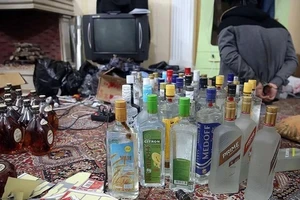
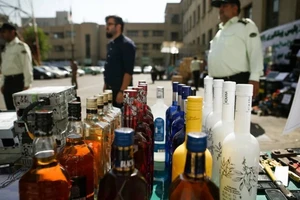
The poisoning of around 150 people and deaths of at least five from adulterated drinks have sparked widespread criticism of Iran's alcohol ban, with citizens blaming the policy for unsafe products and some accusing state institutions of distributing them.

At least five people have died after consuming counterfeit alcoholic drinks in Neyshabur, Shiraz and Marvdasht in recent days, according to official figures.

The number of people poisoned in Neyshabur reached 120, with four deaths, Milad Taqdisi Heydarian, acting deputy for treatment at Neyshabur University of Medical Sciences, said on November 22.

One patient was declared brain-dead and 11 others required intubation, according to the official figures.

Health officials in Shiraz also reported around 30 methanol poisoning cases in Shiraz and Marvdasht, leaving one person dead and four in intensive care.

Citizens blame prohibition for unsafe drinks

The poisonings prompted widespread reactions from Iran International's audience, with many arguing that the Islamic Republic's ban on alcohol production, sales and consumption has fueled an unregulated market.

  • Bootleg alcohol identified as top cause of deaths from poisoning in Iran

    Bootleg alcohol identified as top cause of deaths from poisoning in Iran

"Look at the result of prohibition. This is how they end up giving people poison," one citizen wrote.

Another criticized those who blamed the victims for drinking alcohol, questioning why Iran does not permit the sale of alcoholic drinks that meet international safety standards.

Several respondents argued that prohibition had failed to stop consumption while removing safeguards against dangerous products.

"People in our country drink alcohol. At least legalize it and regulate it. That would be better than the current situation," one citizen wrote.

"I don't drink, but its import and sale should be legalized," another said.

Fatal alcohol poisonings have repeatedly occurred in Iran. In December 2025, eight people died and one lost their sight after consuming contaminated drinks in separate cases in Iranshahr and Bampur.

Alcohol poisoning accounted for around five percent of 4,232 poisoning-related deaths during the first five months of the Iranian calendar year, according to a forensic medicine report published in October 2025.

Homemade and counterfeit alcoholic drinks were identified as major causes.

Revolutionary Guards accused of involvement

Some respondents accused institutions linked to the Islamic Republic, including the Revolutionary Guards, of distributing contaminated drinks.

"The Revolutionary Guards themselves distribute these counterfeit products," one citizen wrote.

Another described those supplying adulterated drinks as "system-affiliated sellers."

One respondent said methanol was advertised on Instagram as "90 percent corn alcohol" for 3000,000 rials per liter and accused the Revolutionary Guards of supplying it.

The actual number of alcohol poisoning cases could be [up to 10 times higher than emergency admission figures https, Deputy Health Minister Alireza Raisi said in October 2025, explaining that some victims avoid treatment because of fear or other reasons.

  • Who is behind the sale of lethal bootleg alcohol in Iran?

    Who is behind the sale of lethal bootleg alcohol in Iran?

Methanol poisoning can cause blindness, severe organ damage and death. Health officials in Neyshabur have yet to identify the substance responsible for the latest poisonings.

The deaths have renewed criticism of restrictions that citizens say leave consumers dependent on an unregulated market, with some demanding legalization and quality controls to prevent further fatalities.

Iran threatens European bases with missiles it says can reach 4,500 km

Nov 23, 2026, 10:38 GMT+0
100%
The front page of Tehran’s municipal newspaper Hamshahri on Monday featured an image under the headline “All of Europe within Iran’s range.”

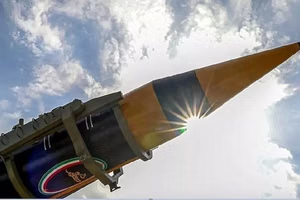
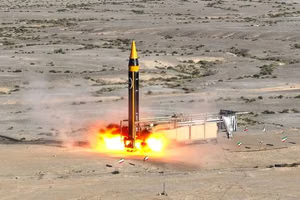
Iranian officials have renewed threats against military bases in Europe, with a lawmaker saying the country's missiles can now reach 4,500 kilometers, more than twice their previously declared range.

Ahmad Bakhshayesh Ardestani, a member of parliament's National Security and Foreign Policy Committee, said Monday that Iran's missile range had increased from 2,000 to 4,500 kilometers, placing European military bases within reach.

“Our young leader has announced that missiles must be made accurate and capable of precision strikes. This means we have Europe within our grasp,” Bakhshayesh Ardestani said.

The lawmaker offered no independent technical evidence for the 4,500-kilometer figure. Iran's previously declared missile range of approximately 2,000 kilometers already placed parts of southern and southeastern Europe within reach.

Daily threatens European bases

Hamshahri, a newspaper owned by Tehran Municipality, published an image on Monday under the headline “All of Europe within Iran's range.”

  • Iran says missiles no longer bound by range limits

    Iran says missiles no longer bound by range limits

The newspaper suggested that an order to respond to attacks without geographical restrictions could signal a shift in Iran's military strategy.

“Increasing the range of ballistic missiles to approximately 5,000 kilometers has raised concerns among Western countries,” Hamshahri wrote.

On November 3, Hamshahri published a map identifying US military bases and infrastructure across Europe as potential targets. Another article published by Hamshahri Online, citing the newspaper Javan, identified facilities in Cyprus and Greece.

Ebrahim Azizi, chairman of parliament's National Security and Foreign Policy Committee, said Monday that Iran's armed forces had developed the capability to make “enemies” regret attacking the country and were at their highest level of readiness, according to Tasnim, a news agency affiliated with the Revolutionary Guards.

Khamenei orders longer-range missiles

Qassem Qoreishi, deputy head of the Basij organization, said on November 18 that Mojtaba Khamenei had ordered the armed forces to increase missile range in response to the possibility of US operations shifting to more distant bases.

The following day, Qoreishi said Khamenei had also called for greater missile accuracy.

Mohammad Mokhber, an adviser to Khamenei, previously interpreted the leader's call for responses without geographical restrictions as removing limits on missile range.

The Revolutionary Guards subsequently announced that Iran's self-imposed 2,000-kilometer limit had been lifted, without specifying whether longer-range missiles had been developed or deployed.

Tasnim has suggested that modifications to the Khorramshahr-4 missile, including reducing warhead weight, could extend its range to between 3,000 and 4,000 kilometers.

Missile capabilities face questions

An earlier Revolutionary Guards attack on the joint US-British base at Diego Garcia in the Indian Ocean involved two missiles, neither of which reached its target. One was intercepted and the other failed during flight.

Israeli officials estimated their range at approximately 4,000 kilometers, while the Associated Press raised the possibility that satellite-launch technology contributed to the extended range.

  • Iran state TV says modified missile could reach US base in Britain

    Iran state TV says modified missile could reach US base in Britain

The unsuccessful strike did not establish that Iran possesses missiles capable of consistently delivering accurate strikes at such distances.

Damage to missile facilities and difficulties obtaining foreign components have further constrained production, leaving questions about whether Iran's declared longer-range capabilities can be deployed reliably.