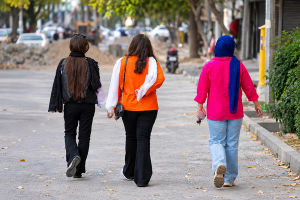
People in Isfahan, Tehran, Mashhad, Urmia, Arak, Karaj and Kermanshah described worsening air quality and its effects on public health, particularly among elderly people and those with underlying medical conditions.
"Fuel oil burning and air pollution have become so severe in Isfahan that most of our family suffers from headaches much of the time," a citizen wrote.
Another person in Urmia described persistent headaches affecting family members.
"Our city has become extremely polluted, and we have headaches every day. We take painkillers, but they don't help," the resident said.
"The city smells like burning tires. We can barely breathe in this air, and it hasn't even turned cold yet. Imagine what winter will be like," a Mashhad resident said.
Tehran residents report breathing difficulties
Tehran's air quality index reached 153 on Friday evening, November 13, a level considered unhealthy for all groups.
By Sunday morning, November 15, the index stood at 125, indicating conditions unhealthy for sensitive groups.
Citizens reported reduced visibility, burning eyes, headaches and respiratory problems.
"Tehran has become like Chernobyl," one person said in a video sent to Iran International.
Another compared the pollution to Nazi gas chambers, accusing authorities of gradually killing people through exposure to polluted air.
A Tehran resident described a sudden deterioration in air quality over several days and accused authorities of contributing to the pollution.
Another reported overcrowding at Tehran's Milad Hospital, saying many patients were seeking treatment for shortness of breath and severe coughing.
"Which problem are we supposed to endure? Inflation, petrol shortages or being unable to breathe?" another citizen asked, describing severe headaches and nausea.
Anger over schools remaining open
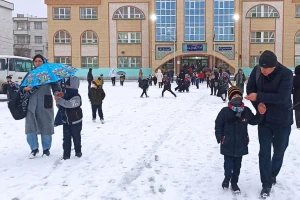
Parents and students also criticized authorities for keeping schools open despite worsening air quality.
A Tehran student reported coughing and experiencing breathing difficulties while returning home from school.
A person in Shahr-e Qods, west of Tehran, criticized the continuation of classes despite severe pollution and reduced visibility.
"These officials don't care about people in the slightest," the resident wrote.
"Are you aware of Tehran's pollution, or are you asleep? We can't breathe. Why aren't you closing schools?" another citizen asked.
Fuel oil burning continues
The complaints come alongside official confirmation that mazut, a heavy fuel oil, continues to be used in industrial facilities and power plants because of natural gas shortages.
Gas supplies to cement factories have been cut, forcing producers to switch to mazut, a situation likely to continue until March, Ali-Akbar Alvandian, secretary of the Cement Industry Employers Association, said on November 3.
A citizen in Pardis, near Tehran, previously reported severe pollution and white smoke covering the western part of the city, attributing the conditions to a nearby cement factory burning mazut.
Securing sufficient fuel for power plants will become more difficult during winter, and mazut will continue to be used as an alternative, Mostafa Rajabi Mashhadi, deputy energy minister for electricity, confirmed on November 14.
People had also raised concerns about mazut burning during the summer.
A Karaj resident reported sharply reduced visibility and worsening pollution, linking the conditions to fuel oil use at power plants.
Another person in Kermanshah said the Bisotun power plant had burned mazut in two generating units for more than two months, producing substantial pollution.