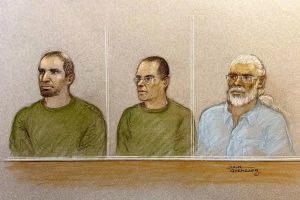
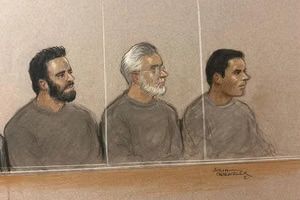
Deputy Assistant Commissioner Vicki Evans, Britain’s senior national coordinator for counterterrorism policing, set out the evidence at a briefing held before Thursday’s verdicts and embargoed until them.
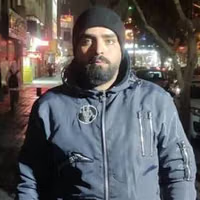
Mostafa Sepahvand, 41, and Farhad Javadi Manesh, 46, were convicted at Woolwich Crown Court of assisting a foreign intelligence service. A third man, Shapoor Qalehali Khani Noori, 57, was acquitted.
“The investigation also highlights the continuing and increasing threat to the UK from Iran,” Evans said. It was the fourth time police had prosecuted people who targeted Iran International staff or offices in London, she said.
The files
The three men were arrested at their homes in west London on May 3, 2025, and held for two weeks, the maximum the National Security Act allows. Officers went through 534 gigabytes of data from their phones and devices, much of it in Persian.
Among it were the tasking documents. Their targets were two Iran International journalists, a lawyer linked to the group UK Lawyers for Israel, and a media production professional.
“The briefing documents were extraordinarily detailed,” Evans said. They included photographs of the targets, their workplace addresses, the makes and colors of their cars and, in some cases, the names of their pets. Some of the background on the targets’ careers and social media had been gathered with ChatGPT, police said.
The files reached Sepahvand from Iranian phone numbers belonging to people police say were Revolutionary Guards members or intermediaries for Iranian intelligence.
One contact, saved in his phone as Mostafa Ghorbani and believed to be an old school friend, was asked at one point to find out how much influence a man called “Haji” had and whether he worked for Iranian intelligence. Another, saved as “Mostafa’s friend, Amin,” was also linked to the Guards, police said.
The surveillance
Sepahvand led the operation, passed on instructions to the other two men and drove them around London in his Mercedes, police said.
In December 2024, the men went to a block of flats where they believed an Iran International journalist lived, and to homes they linked to a second journalist, filming at each. They returned several times that month.
In February 2025, Sepahvand was told to watch two business premises believed to be linked to Iran International, and the men filmed them in early March. They later deleted data from their phones, which may have included more footage.
‘An intention to cause serious harm’
Sepahvand’s motive was money and help clearing a theft conviction in Iran, police said. One message referred to a promise to resolve his case there and pay him £150,000, about $200,000, for completing the job. He demanded at least £10,000 upfront, and another message appeared to tie the full payment to finding the target and attacking them.
In voice notes to Ghorbani, he complained that he had not been paid for the surveillance. “Often, they receive very little of what they were promised,” Evans said, describing a pattern seen in other cases.
Sepahvand told the court he acted under duress. Police believe the attack he contemplated would have used a relatively unsophisticated weapon, possibly a knife.
Asked whether the aim was to kill, Evans said: “We would certainly say that there was an intention to cause serious harm.”
A change in Tehran’s methods
All three men are Iranian nationals who reached Britain between 2016 and 2022, claimed asylum and were granted temporary leave to remain, police said. They were not a sleeper cell, Evans said. They met through the Iranian community in west London and had no criminal record in Britain.
That marked a shift, she said, from foreign criminal proxies flown in and out of the country to Iranians already living in Britain and directed from abroad. British nationals were also being recruited.
“Those directing the activity seek to remain several steps removed from the people performing it,” she said.
The earlier cases against people targeting Iran International include an Austrian man jailed for three and a half years after he was caught surveilling the channel’s then offices in Chiswick, west London, in 2023, and two Romanian men jailed this year for a combined 20 years for the 2024 stabbing of presenter Pouria Zeraati outside his London home. Three people were charged in April over an arson attack on Iran International’s new offices.
Iran-linked operations had led to more than 50 arrests in Britain in the past year, Evans said, citing MI5 chief Ken McCallum.