• العربية
  • فارسی
BrandBrand
  • Iran Insight
  • Politics
  • Economy
  • Analysis
  • Special Report
  • Opinion
  • Podcast
  • Live TV
  • Iran Insight
  • Politics
  • Economy
  • Analysis
  • Special Report
  • Opinion
  • Podcast
  • Live TV
  • Theme
  • Language
    • العربية
    • فارسی
  • Iran Insight
  • Politics
  • Economy
  • Analysis
  • Special Report
  • Opinion
  • Podcast
  • Live TV
All rights reserved for Volant Media UK Limited
volant media logo

Daily reports secret bread rationing in two Iranian provinces

Nov 17, 2026, 10:37 GMT+0
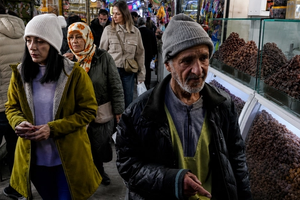
File photo: People queue to buy bread outside a bakery in Iran.

Bread rationing has been introduced without public notice in two Iranian provinces, triggering queues and disputes at bakeries, the hardline daily Kayhan reported, as government officials confirmed a nationwide bread purchase management system on Tuesday, November 17.

Kayhan, published under the supervision of a representative of Iran's Supreme Leader, reported that the restrictions had been introduced in Khuzestan province in southwestern Iran and Zanjan province in the northwest without informing bakers or consumers in advance.

The measures prompted residents to rush to bakeries and led to verbal confrontations, the newspaper reported.

Under the system described by Kayhan, each person receives a monthly allocation equivalent to approximately eight kilograms of subsidized flour, priced at 23,000 rials ($0.009) per kilogram.

Purchases exceeding the allocation are charged at the commercial rate of 126,500 rials ($0.047), more than five times the subsidized price, with the additional payments transferred to government accounts, Kayhan reported.

The newspaper questioned why the measures had been introduced without informing bakers or consumers and accused “elements within the government” of contributing to “public anxiety” through simultaneous changes affecting bread, gasoline and electronic food vouchers.

Local media had previously reported restrictions in Shadegan, Andimeshk, Omidiyeh and Zeydun in Khuzestan province, where daily bread allocations were set at between two and 2.5 loaves per person.

Purchases exceeding those amounts were priced at 131,500 rials ($0.049), according to the local reports.

Officials confirm nationwide rollout, deny household restrictions

The bread purchase management system is being implemented across Iran, but ordinary households face no restrictions on their daily purchases, Omid Jahannejadian, director-general of Khuzestan's Grain and Commercial Services Department, told the official IRNA news agency on Tuesday.

The program is intended to regulate subsidized flour consumption, prevent potential misuse and identify purchases exceeding normal household needs, Jahannejadian said.

Consumption thresholds are calculated using purchasing data collected over the past two years, taking account of differences between urban and rural areas.

The system calculates allocations at the household level, with purchases by family members counted toward a combined household allowance, Jahannejadian added.

100%
File photo: A baker prepares traditional bread at a bakery in Iran.

In Zanjan province, Ali Eyvazi, director-general of the provincial Grain and Commercial Services Department, also confirmed that unusually large bread purchases would be charged at commercial rates.

Ordinary household purchases would not face higher prices, Eyvazi told IRNA.

The guidelines were issued on November 15, with the system subsequently updated at bakeries and flour mills.

Although the average monthly flour allocation per Iranian is approximately eight kilograms, applying an identical limit to every person without accounting for household circumstances and regional differences would be inaccurate, Eyvazi said.

The program was initially tested in Markazi province before authorities decided to expand its implementation to other provinces following an evaluation.

In a separate interview with the Mehr news agency, Eyvazi rejected descriptions of the measures as a two-tier bread pricing system, saying ordinary household consumption would remain unrestricted despite the introduction of purchasing thresholds.

Supermarkets must obtain bread from bakeries operating without government subsidies, while commercial purchases from subsidized bakeries must comply with the new rules, Eyvazi added.

Rising food costs put pressure on households

The introduction of bread purchase controls comes as Iranians face increasing difficulties affording basic food products.

Iran's minimum monthly base wage stands at about 166 million rials ($62), following a 60 percent increase in March. The cost of a basic monthly basket of goods for a working-class family had reached approximately 906 million rials ($337) by July, more than five times the minimum base wage, according to calculations cited by Iranian media.

Accounts sent to Iran International describe households turning to installment payments to purchase essential items, including bread, meat, chicken and eggs.

In a video showing a bakery queue in Tehran, one resident described shortages alongside rising prices and shrinking loaf sizes.

"Bread has become scarce, and we have to stand in line to buy it. At the same time, the loaves have become smaller and more expensive. Can someone tell us how we are supposed to feed our children?" the resident said.

Other citizens have described reductions in flour allocations and changes in the taste and color of bread.

Economic hardship is also affecting social relations as more households struggle to meet their basic needs, sociologist Hossein Ghazian told Iran International.

When survival becomes people's primary concern, competition increasingly replaces cooperation, potentially contributing to domestic violence, street confrontations and crime, Ghazian said.

The economic pressures can also contribute to depression, suicide, declining marriage and birth rates, and migration, reflecting diminishing confidence in the future, Ghazian added.

The nationwide bread controls introduce new purchasing thresholds for a staple food even as officials insist that ordinary household consumption will remain unaffected.

  • Food, medicine, hope: what Iran's economic crisis is costing its people

    Food, medicine, hope: what Iran's economic crisis is costing its people

  • Inflation pushes Iranians to buy food in installments

    Inflation pushes Iranians to buy food in installments

  • Flour shortages force bakeries to close across Iran

    Flour shortages force bakeries to close across Iran

Most Viewed

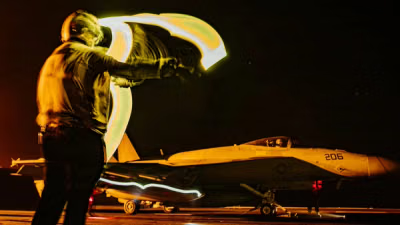
Third US carrier joins Iran blockade, Bessent warns of economic collapse
1

Third US carrier joins Iran blockade, Bessent warns of economic collapse

2

Iran facing one of fastest economic collapses ever, Bessent says

3

Blair's sister-in-law attended Iran conference linked to IRGC spy recruitment - Telegraph

4

Iran’s dams may have been built to support missile bases - NYT

5

UK PM warns Iran against attacks on journalists and military bases

Banner
Banner
Banner
Banner
Banner
Banner
Banner

Spotlight

  • Iraq’s move on militia stronghold may do little to curb Iran’s influence
    ANALYSIS

    Iraq’s move on militia stronghold may do little to curb Iran’s influence

  • 'Our turn to play': Iran hardliners call for breaking US blockade

    'Our turn to play': Iran hardliners call for breaking US blockade

  • Head full of pellets: protester recalls ordeal on Iran holiday island
    EXCLUSIVE

    Head full of pellets: protester recalls ordeal on Iran holiday island

  • Israeli opposition to Islamic Republic transcends party lines
    ONE-ON-ONE

    Israeli opposition to Islamic Republic transcends party lines

  • 2019 crackdown failed to break cycle of Iran street protests
    ANALYSIS

    2019 crackdown failed to break cycle of Iran street protests

  • Toxic air chokes Iranian cities, residents report health problems
    VOICES FROM IRAN

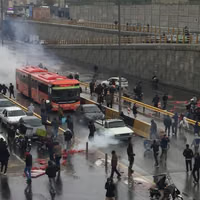
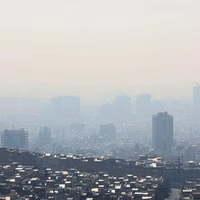
    Toxic air chokes Iranian cities, residents report health problems

  • Can higher fuel prices curb Iran’s smuggling problem?
    ANALYSIS

    Can higher fuel prices curb Iran’s smuggling problem?

  • Iran’s Janfada campaign gives Basij recruitment a patriotic banner
    ANALYSIS

    Iran’s Janfada campaign gives Basij recruitment a patriotic banner

•
•
•

More Stories

Iraq’s move on militia stronghold may do little to curb Iran’s influence

Nov 17, 2026, 04:52 GMT+0
•
Negar Mojtahedi
100%
A mourner attends the funeral of a commander from Iraq's Kataib Hezbollah armed group who was killed in what they called a "Zionist attack" in the Syrian capital Damascus on Friday, during a funeral in Baghdad, Iraq September 22, 2024. REUTERS/Thaier Al-Sudani/File Photo Purchase Licensing Rights

Iraq ordered troops on Monday to enter a stronghold of Iran-backed Kataib Hezbollah south of Baghdad following an investigation into suspected oil smuggling.

US pressure may have pushed Baghdad to act, but experts told Iran International that even if Iraqi forces take control of the town, the militias are likely to retain much of their power.
“It’s going to be once again a theatrical show,” said Omar Mohammed, an Iraqi historian who documented life under Islamic State through his blog Mosul Eye. He directs the Antisemitism Research Initiative at George Washington University’s Program on Extremism.

Senior Iraqi officials told Reuters that Kataib Hezbollah had operated an oil-smuggling network for years, generating hundreds of millions of dollars since 2021. The US-designated terrorist organization, which has attacked American forces in the region, has long controlled Jurf al-Sakher, also known as Jurf al-Nasr, in Babil province south of Baghdad. Kataib Hezbollah denied the smuggling allegations, Anadolu reported.

Why Jurf al-Sakher matters

Mohammed described Jurf al-Sakher as a financial hub Iran has used to evade sanctions. He said the town’s location near roads linking Baghdad with Karbala and Anbar gives whoever controls it strategic leverage over the capital. He also pointed to the displacement of Sunni residents, whose prolonged exclusion has fueled sectarian tensions.

More than 100,000 people from Jurf al-Sakher and surrounding communities remain unable to return more than a decade after Iraqi forces retook the area from Islamic State in 2014, Shafaq News reported. Government committees have entered the area in recent months, but such visits have been unusual and required high-level security and political coordination, the outlet said.

Prime Minister Ali al-Zaidi “ordered the armed forces to enter” Jurf al-Sakher, government spokesman Haidar al-Aboudi told the Iraqi News Agency, adding that “a deadline has been set for the armed faction to exit the area.” A security source told AFP the deadline was Friday.

Al-Aboudi said investigators found evidence of pipeline tampering. Nine security and oil officials were dismissed following the investigation, Reuters reported.

Sources told The New Arab that fighting between Iraqi forces and Iran-backed factions was possible. A senior Iraqi official told the outlet that the government had deployed armored vehicles to the town’s outskirts.

The militias’ reach beyond the town

David Patrikarakos, a special correspondent for the Daily Mail and author of Nuclear Iran: The Birth of an Atomic State, recalled seeing a separate line of commercial trucks at a checkpoint outside Mosul when he reported from Iraq a few years ago. His local contacts told him the truck drivers had to pay Iran-backed militias a levy to enter the city.

Patrikarakos welcomed Baghdad’s attempt to push back but said the government had limited room to maneuver. He pointed to the factions’ political wings and their role in the Popular Mobilization Forces, a state-funded security body that formally answers to the prime minister. Some factions, he said, retain their own weapons, separate chains of command and ties to Iran.

“I think maybe the Iranian-backed militias will allow them some cosmetic gains, but there’s no way that Iran is going to allow its footprint in Iraq to disappear,” he told Iran International.

Patrikarakos said Tehran sees Iraq as part of its strategic depth and that Iran-backed factions could make limited concessions while retaining much of their power. He said clashes were possible and questioned whether the Iraqi government could prevail in an armed confrontation.

Mohammed, whose recent memoir is Mosul Eye: A Scholar’s Clandestine War Against ISIS, said al-Zaidi’s reach was limited by how deeply the militias were embedded in Iraq’s economy and politics. He cited their access to US dollars and what he described as their grip on commerce in Mosul. In his view, taking Jurf al-Sakher would leave much of that influence intact.

Even if al-Zaidi is sincere, Mohammed said, his government lacks the political will and institutional capacity to rein in the Iran-backed factions. “Militias are still in control,” he said.

US pressure puts al-Zaidi to the test

Former US Ambassador John Craig called Baghdad’s move “about 10 years overdue.” He said Washington was putting significant pressure on al-Zaidi and that the prime minister appeared to understand that Iraq’s stability depended on reining in Iran-backed militias.

Craig questioned whether Iraqi forces had the training and resources to push back against factions that have had years to entrench themselves. He said some doubt al-Zaidi’s independence from the militias and see the order as an effort to satisfy Washington. The prime minister’s actions, Craig said, would show how serious he was.

Al Arabiya, citing unnamed sources, reported that al-Zaidi left a meeting of the ruling Shiite Coordination Framework after disagreements over Jurf al-Sakher.

An Iranian delegation arrived in Baghdad on Monday for talks aimed at defusing the standoff, Al Arabiya reported, citing sources. The delegation was expected to meet Iraqi officials, Shiite Coordination Framework leaders and armed factions to prevent a military confrontation.

Some Coordination Framework leaders proposed replacing Kataib Hezbollah fighters with Popular Mobilization Forces units affiliated with Iraq's religious shrines as a compromise, according to the report.

Mohammed said the troop order gave Baghdad something to show Washington. He argued that sustained pressure from the United States and Iraq’s neighbors could push the government toward more substantive action.

A lasting crackdown, he said, would require political will, a clear strategy and institutions capable of carrying it out.

The immediate test is whether Kataib Hezbollah leaves by the deadline. For families displaced from Jurf al-Sakher and nearby communities, a more lasting measure of Baghdad’s control is whether they can finally go home.

Iran’s daily hardships find a voice in IRGC-linked media

Nov 16, 2026, 21:28 GMT+0
100%
A man, a woman and a child wearing face masks ride a motorcycle in Iran, November 15, 2026. ISNA

The depth of hardship in Iran is evident even in messages published by the Revolutionary Guards-affiliated Fars news agency, which is airing accounts of families struggling to survive without examining the responsibility of its powerful patron.

Children leaving education to support their families, teachers struggling to afford their commute and a disabled parent awaiting assistance feature in the complaints, echoing what Iran International audiences have long described in its Voices from Iran coverage.

Their appearance in Fars brings those grievances into an outlet aligned with an institution that holds extensive political and economic power, and whose own role goes unexamined in the roundup.

Published under the heading “Messages you sent to Fars,” the accounts describe a recurring gap between promised support and what people say they can actually obtain.

The selection offers a bleak picture of daily life even through the accounts an establishment outlet chooses to publish.

The writers were not named in the roundup, and their individual accounts have not been independently verified by Iran International.

Children working, assistance falling short

One contributor, identifying himself as a painter, said his children had been unable to continue their education because the family could no longer afford it.

“Because I am a simple painter, my children had to work, and we pool our earnings to keep things going,” he wrote.

He said he paid 120 million rials (nearly $45) a month in rent and questioned his household’s placement in the fifth and sixth income deciles under the classification system used to determine eligibility for state assistance.

Iran's minimum monthly base wage stands at around 166 million rials ($62).

“For God’s sake, is it fair?” he asked, citing his rental deposit, several loans and two children of marriageable age.

Another contributor said shops were refusing electronic food vouchers, undermining assistance intended to help households buy essential goods.

“Most shops that supplied meat and chicken through food vouchers have stopped accepting them because they have not received their money,” the message said.

A parent with a severe physical disability said payments for care, living expenses and hygiene supplies had still not arrived.

“I am the head of a household with two schoolchildren and have a severe physical and mobility disability, meaning that even if I wanted to work, I could not,” the contributor wrote.

The accounts raise questions not only about the adequacy of assistance, but also whether it reaches recipients and can be used when they need it.

Struggling to get to work

Two teachers described the difficulty of meeting basic expenses despite being employed.

“I am a permanent teacher with 14 years of service. I earn 245 million rials ($91), part of which goes on commuting,” one wrote. “How can I live on this salary? How can I get married? How can I buy a car?”

Another, teaching in a nomadic community, said traveling to school and back required driving about 100 kilometers (62 miles) a day in a private vehicle.

“Without the stations’ fuel cards, how can I do this?” the teacher asked. “How much monthly gasoline allowance do I have to cover my car’s fuel needs?”

The complaint comes amid tighter restrictions on access to gasoline. Iran International reported on November 15 that shared station fuel cards, which allow motorists to refuel without using their personal cards, had been withdrawn in 11 provinces. A parliamentary energy committee official acknowledged that the restrictions had fueled public dissatisfaction.

Elsewhere, contributors described public services failing and officials passing responsibility between agencies.

A resident of a village in Bushehr province said fixed internet service had been disconnected for more than a month.

“Nobody answers. They keep putting us off until tomorrow.”

A resident of Rafsanjan in southeastern Iran described drinking-water pipes left broken for months despite persistent water shortages. The village administration referred residents to the water utility, which the writer said also failed to respond.

Grievances without accountability

The messages largely appeal to authorities for help. One contributor explicitly invoked what they described as workers’ support for the political system.

“The biggest supporters of this system are workers, the poor and the middle class,” the message said, before questioning why employers were not paying workers’ insurance contributions and why arduous jobs were not receiving special pension treatment.

The appeal highlights the contradiction in Fars’s role: it offers a platform for people seeking relief while being affiliated with an institution deeply embedded in the structures governing their lives.

The Revolutionary Guards’ influence extends beyond military and security affairs. Reports and investigations by Iran International, Reuters and many other outlets have documented its sprawling business empire across oil, construction, shipping, telecommunications and ports, alongside its growing political power.

Yet the roundup does not examine how that power is exercised, how the Guards’ economic interests affect ordinary Iranians or what responsibility the institution bears for public policy. Nor does it include responses from the agencies concerned or evidence that the complaints have been resolved.

The selection alone cannot establish whether Fars is seeking to pressure the government, retain readers’ trust or compete with independent media as a channel for public grievances.

Whatever the intention, the presentation allows an outlet tied to a major center of power to cast itself as an advocate for people seeking help, while leaving that center of power outside its scrutiny.

Senior Guards commander admits deep Israeli intelligence infiltration

Nov 16, 2026, 13:40 GMT+0
100%
A CCTV camera is seen in a street in Tehran, Iran, April 9, 2023.

A senior Revolutionary Guards commander acknowledged extensive intelligence infiltration across Iran's military, intelligence and government institutions, saying surveillance technology has made it virtually impossible to remain hidden.

"Enemy infiltration has occurred at high levels. There is infiltration even within the Revolutionary Guards, the Intelligence Ministry, state broadcasting and various government institutions. This infiltration is sometimes direct and sometimes indirect," Mohammad Jafar Asadi, a former deputy inspector of the Khatam al-Anbiya Central Headquarters, told Defa Press outlet.

Asadi said Israel could use its influence in European countries to obtain passports and identity documents for operatives, allowing them to enter Iran disguised as tourists or businesspeople.

His remarks follow two wars lasting 12 and 40 days, during which dozens of senior Islamic Republic officials, including Revolutionary Guards commanders, were killed, raising questions about the extent of intelligence penetration within Iran's security establishment.

Foreign Minister Abbas Araghchi acknowledged in a July 19 interview that US and Israeli knowledge of scheduled meetings at a government complex on February 28, the first day of the 40-day war, pointed to a security breach that may remain unresolved.

Araghchi said the infiltration could extend beyond access to classified information to influence government decision-making and its psychological environment.

  • CIA helped pinpoint Khamenei gathering before Israeli strike – NYT

    CIA helped pinpoint Khamenei gathering before Israeli strike – NYT

The New York Times previously reported that the operation that killed Ali Khamenei and other senior Islamic Republic officials involved close intelligence cooperation between Israel's Mossad and the CIA.

Surveillance systems leave nowhere to hide

Mobile phones, surveillance cameras and digital records have become powerful intelligence-gathering tools, Asadi said, describing how artificial intelligence can process footage from cameras installed along streets and inside shops and homes.

Information collected through electronic prescriptions, fuel purchases and airline bookings can also be used to track individuals, he added.

100%
Mohammad Jafar Asadi, a former deputy inspector of the Khatam al-Anbiya Central Headquarters

"We ourselves are providing services and information, and we can no longer say there is anywhere left to hide," Asadi said, adding that control over some of the systems and their hardware rests with outside parties.

The Islamic Republic has itself used surveillance equipment to monitor citizens and suppress protests.

  • Beyond espionage: Araghchi says spies seek to shape Iran's decisions

    Beyond espionage: Araghchi says spies seek to shape Iran's decisions

The Financial Times reported on June 8, citing an informed source, that Iranian authorities installed additional surveillance cameras during the December 2025-January 2026 uprising to monitor protesters.

Israel subsequently used footage from those cameras to identify Basij militia personnel stationed at checkpoints during the latest war, the source said.

Revolutionary Guards member abducted and questioned

Asadi also described the abduction and interrogation of a Revolutionary Guards member inside Iran, saying the kidnappers had been paid to seize the man under the pretext that he owed money.

"One of our Guards members was abducted with a sack over his head and taken to a house as someone who owed money. From inside that house, direct contact was established with Tel Aviv," Asadi said.

The abducted Guards member was later blindfolded and taken to a desert area in Varamin, near Tehran, where his captors threatened to shoot him if he moved within two hours, according to Asadi.

The man began shouting after approximately 10 to 15 minutes and eventually escaped, Asadi said, without identifying the individual or specifying when the abduction occurred.

Previous accounts have described Mossad operatives interrogating individuals linked to the Revolutionary Guards inside Iran.

In April 2022, Israeli media reported the interrogation of Mansour Rasouli in Iran. Iran International subsequently identified Rasouli as a member of a network linked to the Revolutionary Guards tasked with assassinating an Israeli in Turkey, an American general in Germany and a journalist in France.

  • Tehran Silent Over Israeli Claims Of Interrogating IRGC Agent

    Tehran Silent Over Israeli Claims Of Interrogating IRGC Agent

In July 2022, Iran International reported that Mossad operatives had interrogated Revolutionary Guards official Yadollah Khedmati inside Iran for several hours, obtaining information about weapons transfers to Syria, Iraq, Lebanon and Yemen.

  • Exclusive: Israeli Mossad Interrogated An IRGC Official Inside Iran

    Exclusive: Israeli Mossad Interrogated An IRGC Official Inside Iran

Asadi's account adds to disclosures by senior Iranian officials about the scale of intelligence penetration within the Islamic Republic, including vulnerabilities in the security institutions responsible for protecting its leadership.

Five job seekers arrested after protest at oil company in southwestern Iran

Nov 15, 2026, 19:11 GMT+0
100%
Images from a video published on November 15, show mothers protesting outside an oil company in Hoveyzeh, southwestern Iran, demanding the release of their sons, who were arrested after demonstrating over job opportunities.

Five young men seeking jobs at an oil company in southwestern Iran were arrested after protesting over employment opportunities, prompting their mothers to stage a demonstration demanding their release, according to Iranian rights monitors and local media.

The five men, aged between 25 and 30, were detained on Saturday outside the Dana Sohrab oil company near the town of Rafi in Khuzestan province, the human rights organization HRANA reported on Sunday.

HRANA identified them as Hossein Savari, Saeed Savari, Ebrahim Savari, Hamoud Savari and Khalil Savari.

Local sources said the arrests followed a complaint by Dana Energy, with the company's site manager and head of security named as complainants.

The men's whereabouts, the charges against them and their legal status remained unknown as of Sunday.

Mothers demand release of detained protesters

The local Telegram channel Moj Ahvaz published footage on Sunday showing the mothers of the detained men gathering outside the company's premises to demand their release.

Residents of Rafi, near the Iraqi border and the Sohrab and Azadegan oil fields, have complained that oil companies operating in the area recruit workers from elsewhere in Iran instead of hiring local residents.

Dana Petro Sohrab, a subsidiary of the privately owned Dana Energy Group, operates a development project at the Sohrab oil field near Rafi and Hoor al-Azim.

A local resident quoted by Moj Ahvaz criticized officials for failing to address unemployment, saying the detained men were trying to support their families and secure their futures.

"Demanding bread and work is not a crime," the resident said.

Employment grievances fuel protests across Iran

The arrests come amid persistent protests over unemployment, discriminatory hiring practices, unpaid wages and job insecurity across Iran.

In late August, Iran International reported that police opened fire on young protesters demonstrating over hiring practices at industrial facilities in Gachsaran and Ahvaz, two cities in southwestern Iran.

Iran's deputy labor minister, Malek Hosseini, said in late October that around 2.5 million people were unemployed and warned that continued economic contraction could put another 1.4 million jobs at risk by the end of the Iranian calendar year in March.

According to HRANA's annual report, at least 2,551 protest gatherings, including 724 labor demonstrations, and 390 labor strikes were recorded across Iran during the previous Iranian calendar year, which ended in March 2026.

Iran facing one of fastest economic collapses ever, Bessent says

Nov 15, 2026, 17:34 GMT+0
100%
A man walks past a currency exchange office displaying foreign exchange rates in Tehran, Iran.

US Treasury Secretary Scott Bessent said on Sunday that Iran was experiencing one of the fastest economic collapses in history, as Washington expanded its pressure campaign beyond a naval blockade to target the country's land-based supply routes.

Speaking to Fox News, Bessent predicted that Iran's rial would lose 25% of its value between March 2026 and March 2027, comparing the pace of the decline with the economic turmoil that followed the Soviet Union's collapse.

"To put that in perspective, the Russian economy went down 22% over three years when the Soviet Union collapsed," Bessent said. "So this is one of the fastest collapses in history."

Bessent argued that the deteriorating conditions were putting increasing pressure on Iran's political and military establishment, even as senior officials remained insulated from the consequences.

"A lot of the leadership, they're like rats in a sewer pipe," he said. "They are in underground bunkers, and they don't see how bad it is up top."

He also said US restrictions had severely limited Iranian officials' ability to travel abroad.

"And we have them completely isolated. We have an airline quarantined," Bessent said.

"They can't fly to London to see their family, Paris to see their girlfriends, Geneva to visit their money."

Bessent suggested that the economic pressure was beginning to cause concern within the Islamic Republic's leadership.

"We could see from the public statements, the public statements from the politicians began in the summer. Now we're seeing the IRGC get worried," he said, referring to Iran's Revolutionary Guards.

  • Bessent says Iran economy will contract by more than 25%

    Bessent says Iran economy will contract by more than 25%

  • US Treasury chief moves to military base after Iranian threats

    US Treasury chief moves to military base after Iranian threats

  • Bessent's tax boycott and fuel advice sparks debate among Iranians

    Bessent's tax boycott and fuel advice sparks debate among Iranians

US expands blockade to target Iran's land routes

Bessent's remarks came just over a week after the US military announced Task Force Iron Gate, an initiative designed to expand Washington's economic pressure campaign beyond its existing naval blockade.

Announced by US Central Command on November 7, the task force aims to disrupt the movement of advanced weapons, dual-use technologies, sanctioned materials and illicit revenue across Iran's land borders and the Caspian Sea.

The 20-member team, based in Tampa, Florida, will coordinate with US government agencies to restrict Tehran's access to military supplies and financial resources.

"The establishment of Task Force Iron Gate reinforces the success of our ironclad blockade against Iran at sea," CENTCOM commander Admiral Brad Cooper said.

The US military said its naval blockade had prevented Iran from exporting more than $25 billion worth of crude oil, an estimate that could not be independently verified.

President Donald Trump declared the new task force operational on November 8, saying it would further restrict Iran's access to international trade.

"Task Force Iron Gate is in full force and effect in the Islamic Republic of Iran," Trump wrote on Truth Social. "Coupled with history's greatest Naval Blockade, very little gets into, or out of, Iran!"

Pence says ending military campaign was a mistake

Former Vice President Mike Pence said on Sunday that the United States had halted its military campaign against Iran too soon and disputed Vice President JD Vance's assessment of why Republicans suffered losses in the midterm elections.

"Vice President Vance is wrong," Pence said on NBC's Meet the Press.

Pence argued that American forces had achieved substantial military successes during Operation Epic Fury, including destroying much of Iran's navy, establishing air superiority and attacking thousands of military targets.

He criticized the administration's decision to suspend operations after five weeks, describing the move as an embrace of the "politics of appeasement."

"There's an old saying that you don't make peace with your enemy, you make peace with your defeated enemy," he said.

  • Vance blames Iran war for election losses as Trump weighs next move against Tehran

    Vance blames Iran war for election losses as Trump weighs next move against Tehran

  • Opportunity or trap? Vance's Iran war remarks divide Tehran

    Opportunity or trap? Vance's Iran war remarks divide Tehran

  • Trump shifts Vance away from Iran talks, says deal unnecessary

    Trump shifts Vance away from Iran talks, says deal unnecessary

Pence pointed to continued Iranian military activity in the Persian Gulf as evidence that Tehran remained willing to confront Washington.

Vance has attributed Republican electoral losses to the Iran war and its economic consequences, including higher fuel prices. President Donald Trump, meanwhile, said on Thursday that Washington no longer needed a deal with Tehran and directed Vance to shift his attention from Iran diplomacy to domestic corruption investigations.

Bahrain reports fresh attacks as Iran vows retaliation

The dispute over Washington's strategy came as Bahrain reported intercepting further Iranian aerial attacks on Sunday, highlighting the continuing risk of military escalation despite the suspension of large-scale US strikes.

Bahrain's military said its air defenses destroyed several aerial threats before they reached their targets, following the interception of two drones Friday.

The country's Foreign Ministry condemned the attacks as violations of its sovereignty and urged the UN Security Council to take action against Tehran.

"These attacks constitute a blatant aggression against Bahrain's sovereignty and territorial integrity," the ministry said.

Iranian Foreign Ministry spokesperson Esmaeil Baghaei, asked about the strikes, said Tehran would continue responding to attacks against it.

"We have previously said that we will not leave any attack unanswered, and we will continue this approach from now on," Baghaei said on Sunday.