Senior Iranian cleric visits Bosnia, meets former presidents
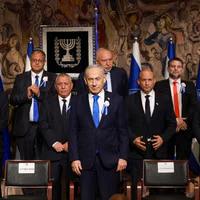
Alireza Arafi (center), head of Iran's Shiite seminaries.
The head of Iran's Shiite seminaries, Alireza Arafi, visited Bosnia and Herzegovina for the inauguration of the country's new top Muslim religious leader, holding meetings with former presidents and senior religious figures, Iranian media reported Monday.
Arafi, who also serves on Iran’s Assembly of Experts, attended Sunday's inauguration of Nedzad Grabus as grand mufti of Bosnia's Islamic Community. He also met Bakir Izetbegovic, a former member of Bosnia's tripartite presidency and son of the country's first president after independence, and former presidency member Sefik Dzaferovic.
Arafi also addressed members of the Shiite community commemorating the death of the daughter of Prophet Mohammad, and spoke about what he described as Iran's victories in the two recent wars with Israel and the United States.
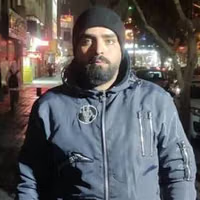
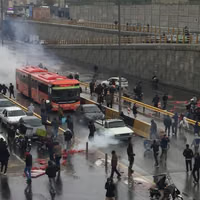
An Iranian protester who survived being shot in the head during January's nationwide demonstrations has described how security forces opened fire on crowds on the resort island of Kish, leaving him with more than 100 shotgun pellets lodged in his head and neck.
Kish is a holiday destination in the Persian Gulf known for its beaches, luxury hotels and shopping malls. Hardly a hotbed of political protest, the island became a scene of deadly violence during January's crackdown, according to 25-year-old Taha Eskandari.
"I thought Kish was a small place and that killings on the scale seen in other cities couldn't happen there," he told Iran International.
Eskandari said he was shot twice while fleeing security forces on January 9, lost consciousness and subsequently spent months in hiding, fearing arrest if he sought medical treatment.
X-rays and a radiology report dated September 22, reviewed by Iran International, identified more than 100 small, round metallic foreign bodies consistent with shotgun pellets in and around his skull, facial tissues, both eye sockets and neck, with a marked concentration around his left eye.
'The first thing we did was write our wills'
Eskandari said protests began on Kish on January 7, with larger demonstrations following a call by exiled Prince Reza Pahlavi on January 8 and 9.
Having participated in the 2022 anti-government protests, he anticipated a violent response and joined four others in preparing first-aid supplies for injured demonstrators.
"The first thing we did was write our wills," he said, explaining that they feared being killed and wanted their families prepared.
The group purchased medical supplies at their own expense, but their first-aid kits were nearly exhausted by around 10:30 p.m. on January 8 because of the number of wounded protesters, he said.
"They weren't shooting below the waist. They were shooting directly above the waist," Eskandari said. He described seeing security forces firing from the roof of a police station. "They were firing at people from above the police station. I saw it with my own eyes."
He also recalled witnessing a young woman being shot in the neck while standing beside him near Police Station 11 that night.
"She was standing beside me, protesting. We didn't have anything with us, not even a stick," he said. Suddenly, he heard a bullet pass close to his ear. It hit the woman.
"I looked down and saw her dying at my feet."
Eskandari said he and other protesters tried to move her to safety but were forced to scatter when security forces advanced. They could not recover her body or establish her identity.
"Whenever I talk about that night, my hands and feet start shaking," he said.
Shot twice while fleeing
The following day, according to Eskandari, security forces pursued protesters near Amir Kabir Square. He fled into the Maryam Hotel, but armed officers entered the building and began shooting. He escaped through a rear exit but was spotted by two armed men.
"The first shotgun blast hit my neck and back," he recalled. "The second hit me directly in the head, and I lost consciousness."
Eskandari said he regained consciousness roughly two hours later in another hotel, where someone had taken him after the shooting. Fearing arrest, he avoided hospitals and tried to treat his wounds himself.
"I couldn't sleep that night. When I tried to put my head on the pillow, my neck hurt. That was when I realized my neck was full of pellets," he said.
Eskandari subsequently spent months in hiding, including in the mountains near Varamin, southeast of Tehran, as swelling and infections worsened. He eventually fled Iran and underwent medical imaging abroad.
"My right eye is gradually losing its sight," he said. "What I see with that eye is no longer the same as what I see with the other."
He described the pellets still lodged in his body as permanent reminders of the crackdown.
"I've always said these are souvenirs for me. Souvenirs of those days, of the people who lost their lives," Eskandari said.
"I survived so I could be the voice of those inside Iran who cannot speak."
A CCTV camera is seen in a street in Tehran, Iran, April 9, 2023.
A senior Revolutionary Guards commander acknowledged extensive intelligence infiltration across Iran's military, intelligence and government institutions, saying surveillance technology has made it virtually impossible to remain hidden.
"Enemy infiltration has occurred at high levels. There is infiltration even within the Revolutionary Guards, the Intelligence Ministry, state broadcasting and various government institutions. This infiltration is sometimes direct and sometimes indirect," Mohammad Jafar Asadi, a former deputy inspector of the Khatam al-Anbiya Central Headquarters, told Defa Press outlet.
Asadi said Israel could use its influence in European countries to obtain passports and identity documents for operatives, allowing them to enter Iran disguised as tourists or businesspeople.
His remarks follow two wars lasting 12 and 40 days, during which dozens of senior Islamic Republic officials, including Revolutionary Guards commanders, were killed, raising questions about the extent of intelligence penetration within Iran's security establishment.
Foreign Minister Abbas Araghchi acknowledged in a July 19 interview that US and Israeli knowledge of scheduled meetings at a government complex on February 28, the first day of the 40-day war, pointed to a security breach that may remain unresolved.
Araghchi said the infiltration could extend beyond access to classified information to influence government decision-making and its psychological environment.
The New York Times previously reported that the operation that killed Ali Khamenei and other senior Islamic Republic officials involved close intelligence cooperation between Israel's Mossad and the CIA.
Surveillance systems leave nowhere to hide
Mobile phones, surveillance cameras and digital records have become powerful intelligence-gathering tools, Asadi said, describing how artificial intelligence can process footage from cameras installed along streets and inside shops and homes.
Information collected through electronic prescriptions, fuel purchases and airline bookings can also be used to track individuals, he added.
Mohammad Jafar Asadi, a former deputy inspector of the Khatam al-Anbiya Central Headquarters
"We ourselves are providing services and information, and we can no longer say there is anywhere left to hide," Asadi said, adding that control over some of the systems and their hardware rests with outside parties.
The Islamic Republic has itself used surveillance equipment to monitor citizens and suppress protests.
The Financial Times reported on June 8, citing an informed source, that Iranian authorities installed additional surveillance cameras during the December 2025-January 2026 uprising to monitor protesters.
Israel subsequently used footage from those cameras to identify Basij militia personnel stationed at checkpoints during the latest war, the source said.
Revolutionary Guards member abducted and questioned
Asadi also described the abduction and interrogation of a Revolutionary Guards member inside Iran, saying the kidnappers had been paid to seize the man under the pretext that he owed money.
"One of our Guards members was abducted with a sack over his head and taken to a house as someone who owed money. From inside that house, direct contact was established with Tel Aviv," Asadi said.
The abducted Guards member was later blindfolded and taken to a desert area in Varamin, near Tehran, where his captors threatened to shoot him if he moved within two hours, according to Asadi.
The man began shouting after approximately 10 to 15 minutes and eventually escaped, Asadi said, without identifying the individual or specifying when the abduction occurred.
Previous accounts have described Mossad operatives interrogating individuals linked to the Revolutionary Guards inside Iran.
In April 2022, Israeli media reported the interrogation of Mansour Rasouli in Iran. Iran International subsequently identified Rasouli as a member of a network linked to the Revolutionary Guards tasked with assassinating an Israeli in Turkey, an American general in Germany and a journalist in France.
In July 2022, Iran International reported that Mossad operatives had interrogated Revolutionary Guards official Yadollah Khedmati inside Iran for several hours, obtaining information about weapons transfers to Syria, Iraq, Lebanon and Yemen.
Asadi's account adds to disclosures by senior Iranian officials about the scale of intelligence penetration within the Islamic Republic, including vulnerabilities in the security institutions responsible for protecting its leadership.
File photo of Mohammad Hossein Shamkhani, son of Iran's slain security chief Ali Shamkhani
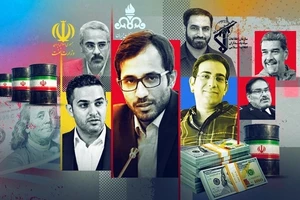
Iran's state-linked shipping company sold a damaged container vessel for less than $6 million to a firm owned by the sons of a senior Iranian official, raising questions over asset sales and shareholder interests, an Iranian news outlet reported Monday.
The Shahraz vessel was sold to Admiral, a company owned by the sons of Ali Shamkhani, a former secretary of Iran's Supreme National Security Council who was killed in Israeli attacks, and returned to commercial service after repairs costing several million dollars, Rouydad24 reported on November 16.
"Each of these cases raises serious questions about decision-making, pricing, the selection of buyers or recipients, the financial recording of transactions and the responsibility of managers," Rouydad24 wrote.
The website called for the publication of transaction documents and financial assessments to establish whether the sales served the interests of shareholders in the publicly listed Islamic Republic of Iran Shipping Lines (IRISL).
Damaged vessel sold below $6 million
The Shahraz container ship ran aground near the Singapore Strait on May 11, 2020, sustaining extensive hull damage.
The vessel was subsequently sold to Admiral for less than $6 million after incurring salvage and maintenance costs, Rouydad24 reported.
The outlet said the ship's recoverable scrap value may have exceeded its sale price, while shareholders received insufficient information about salvage expenses and insurance compensation.
Admiral subsequently spent several million dollars repairing Shahraz before returning it to commercial operations.
Rouydad24 questioned why IRISL had not undertaken the repairs itself and whether the vessel's commercial viability had been assessed before its sale.
It also sought details on whether the transaction involved a public auction or direct negotiations, how the buyer was selected and whether conflicts of interest existed.
Shamkhani shipping network faces US sanctions
Hossein Shamkhani, a son of Ali Shamkhani, has operated internationally under the aliases Hugo Hayek and Hector.
The US Treasury Department announced on July 14 that it was intensifying efforts to disrupt his network over shipping activities that circumvent US sanctions.
The network remains a major participant in Iranian oil exports and has expanded into container shipping and global commodities trading, according to the Treasury Department.
The measures followed earlier US sanctions against Shamkhani and much of his financial and shipping network in July 2025 and April 2026.
Bloomberg reported in August 2024 that the Dubai-based Milavous Group, where Shamkhani is a senior executive, had generated billions of dollars trading commodities from Iran, Russia and other countries.
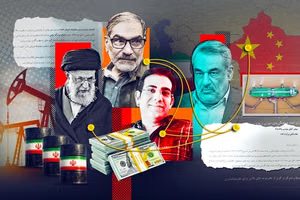
A confidential document obtained by Iran International on November 9 showed that Shamkhani had long dominated Iranian oil sales in the United Arab Emirates and used a vessel purchased with an Iranian government loan to transport Russian oil.
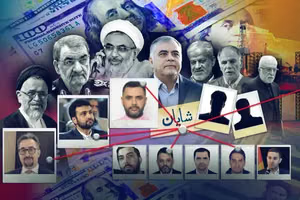
Iran International has also detailed an oil trading network linked to Revolutionary Guards intelligence, including a confidential letter from Shamkhani to Supreme Leader Ali Khamenei.
Fuel sales raise shareholder questions
IRISL continued supplying fuel to Admiral from its international operations allocation for a period after selling Shahraz, Rouydad24 reported.
The website said supplying fuel to a potential commercial competitor was not necessarily a violation, but questioned the pricing, revenue, authorizations and economic rationale.
"In a publicly listed company, the company's resources and commercial capacities must be used in accordance with its economic interests," Rouydad24 wrote.
The report called for disclosure of the sale proceeds received, Admiral's ultimate beneficial owners and any potential conflicts of interest involving those who approved the transaction.
The questions follow Iran International investigations into oil trading networks involving relatives of senior Islamic Republic officials, including the son of former Revolutionary Guards commander Mohsen Rezaei and relatives of two ministers.
Reports of organized corruption involving politically connected figures have drawn public anger as Iranians face mounting economic pressure and difficulties affording basic necessities.
The Shahraz transaction has renewed questions over the management of state-linked commercial assets and whether their sale benefits shareholders or politically connected buyers.
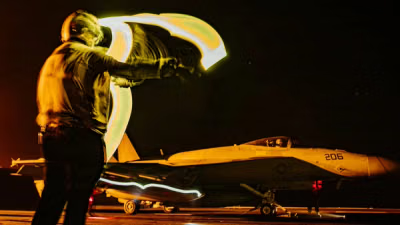
F/A-18 Super Hornet fighter jets prepare for takeoff aboard the USS George Washington aircraft carrier. (CENTCOM/X)
A third US aircraft carrier arrived in the Middle East Sunday, joining forces enforcing a blockade of Iranian ports, while Treasury Secretary Scott Bessent warned of a historic economic collapse in Iran, predicting a 25 percent contraction over the coming year.
The USS Theodore Roosevelt entered the US Central Command's area of operations on Sunday, ABC News reported, citing a US official. It joined the USS George H.W. Bush and USS George Washington, which have been operating in the Arabian Sea.
The naval deployment comes as Washington maintains economic pressure on Tehran. Bessent told Fox News on Sunday that Iran's economy could contract by 25 percent over the coming year.
“So this is one of the fastest collapses in history,” he said.
The remarks echoed a warning Bessent made in an interview with Iran International last month.
“I would predict that from March of '26 until March of '27, the economy would contract more than 25 percent, which is more than the Soviet Union contracted after its collapse,” he told Iran International on October 26.
Reuters reported Saturday that President Donald Trump was considering holding off on further strikes unless Iran or Yemen's Iran-backed Houthis launched new provocations. Saudi Crown Prince Mohammed bin Salman and Turkish President Tayyip Erdogan had urged him not to resume attacks, according to the report.
The risk of renewed fighting remains, however. Bahrain, home to the US Navy's Fifth Fleet, said its air defenses intercepted several Iranian aerial attacks Sunday, while the IRGC claimed to have targeted a US radar installation with six drones. The claimed strike was not independently confirmed.
Two days earlier, the US military said it had intercepted two drones without damage, rejecting a separate Iranian claim that it had struck an American early-warning radar.
Israel has also continued consultations with Washington over Iran. Mossad chief Roman Gofman returned from talks with senior US officials, Israeli outlet Ynet reported, while Axios said Prime Minister Benjamin Netanyahu had sought discussions about renewed strikes.
In Tehran, Parliament Speaker Mohammad Bagher Ghalibaf warned Sunday that another US attack could widen the conflict.
“If the Americans make a mistake this time, the geography of the battle will be determined by the capabilities and will of our armed forces,” he said.
Iranian Foreign Minister Abbas Araghchi is expected to visit Oman on Tuesday for talks with his counterpart, according to state media. Oman has previously mediated between Tehran and Washington.
Images from a video published on November 15, show mothers protesting outside an oil company in Hoveyzeh, southwestern Iran, demanding the release of their sons, who were arrested after demonstrating over job opportunities.
Five young men seeking jobs at an oil company in southwestern Iran were arrested after protesting over employment opportunities, prompting their mothers to stage a demonstration demanding their release, according to Iranian rights monitors and local media.
The five men, aged between 25 and 30, were detained on Saturday outside the Dana Sohrab oil company near the town of Rafi in Khuzestan province, the human rights organization HRANA reported on Sunday.
HRANA identified them as Hossein Savari, Saeed Savari, Ebrahim Savari, Hamoud Savari and Khalil Savari.
Local sources said the arrests followed a complaint by Dana Energy, with the company's site manager and head of security named as complainants.
The men's whereabouts, the charges against them and their legal status remained unknown as of Sunday.
Mothers demand release of detained protesters
The local Telegram channel Moj Ahvaz published footage on Sunday showing the mothers of the detained men gathering outside the company's premises to demand their release.
Residents of Rafi, near the Iraqi border and the Sohrab and Azadegan oil fields, have complained that oil companies operating in the area recruit workers from elsewhere in Iran instead of hiring local residents.
Dana Petro Sohrab, a subsidiary of the privately owned Dana Energy Group, operates a development project at the Sohrab oil field near Rafi and Hoor al-Azim.
A local resident quoted by Moj Ahvaz criticized officials for failing to address unemployment, saying the detained men were trying to support their families and secure their futures.
"Demanding bread and work is not a crime," the resident said.
Employment grievances fuel protests across Iran
The arrests come amid persistent protests over unemployment, discriminatory hiring practices, unpaid wages and job insecurity across Iran.
In late August, Iran International reported that police opened fire on young protesters demonstrating over hiring practices at industrial facilities in Gachsaran and Ahvaz, two cities in southwestern Iran.
Iran's deputy labor minister, Malek Hosseini, said in late October that around 2.5 million people were unemployed and warned that continued economic contraction could put another 1.4 million jobs at risk by the end of the Iranian calendar year in March.
According to HRANA's annual report, at least 2,551 protest gatherings, including 724 labor demonstrations, and 390 labor strikes were recorded across Iran during the previous Iranian calendar year, which ended in March 2026.