• العربية
  • فارسی
BrandBrand
  • Iran Insight
  • Politics
  • Economy
  • Analysis
  • Special Report
  • Opinion
  • Podcast
  • Live TV
  • Iran Insight
  • Politics
  • Economy
  • Analysis
  • Special Report
  • Opinion
  • Podcast
  • Live TV
  • Theme
  • Language
    • العربية
    • فارسی
  • Iran Insight
  • Politics
  • Economy
  • Analysis
  • Special Report
  • Opinion
  • Podcast
  • Live TV
All rights reserved for Volant Media UK Limited
volant media logo

Iran, Libya foreign ministers meet on sidelines of OIC session in Baghdad

Oct 17, 2026, 11:46 GMT+1

Iranian Foreign Minister Abbas Araghchi met Libya’s acting foreign minister, Taher al-Baour, on the sidelines of the 52nd session of the Organization of Islamic Cooperation’s Council of Foreign Ministers in Baghdad, Iranian state media reported on Saturday.

Most Viewed

Iran speaker says government overstepped on anti-terror finance rules
1

Iran speaker says government overstepped on anti-terror finance rules

2

Iran shipped jet fuel to Myanmar despite US blockade - Reuters

3

Armed suspect arrested over alleged plot to kill ex-minister, reformists say

4
ONE-ON-ONE

Iran’s rulers face a reckoning with their own people, former US envoy says

5
ANALYSIS

Iran touts economic resilience while households struggle to afford basics

Banner
Banner
Banner
Banner
Banner

Spotlight

  • Iran cultivated Houthis for years before opening new war front, Yemeni insider says
    PODCAST

    Iran cultivated Houthis for years before opening new war front, Yemeni insider says

  • After the killings, Iran turned on the families of the dead

    After the killings, Iran turned on the families of the dead

  • Iran’s rulers face a reckoning with their own people, former US envoy says
    ONE-ON-ONE

    Iran’s rulers face a reckoning with their own people, former US envoy says

  • Iran speaker says government overstepped on anti-terror finance rules

    Iran speaker says government overstepped on anti-terror finance rules

  • Ignore prices and economy is fine, Iran ex-minister says

    Ignore prices and economy is fine, Iran ex-minister says

  • Iran police killed brothers celebrating Khamenei’s death, source says

    Iran police killed brothers celebrating Khamenei’s death, source says

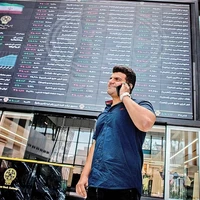
  • Nowhere else to go? The puzzle behind Iran’s stock rally
    INSIGHT

    Nowhere else to go? The puzzle behind Iran’s stock rally

•
•
•

More Stories

Iran giving Houthis targeting intelligence for Saudi attacks - WSJ

Oct 17, 2026, 09:52 GMT+1
100%
A poster bearing an image of late Iranian Supreme Leader Ayatollah Ali Khamenei is seen at a rally with Houthi supporters in Sanaa, Yemen, March 6, 2026.orters in solidarity with Iran and Lebanon in Sanaa, Yemen, March 6, 2026

Iranian support has helped Yemen’s Houthis carry out their most potent and sophisticated attacks yet on Saudi Arabia and its Yemeni allies, the Wall Street Journal reported, citing people briefed on intelligence from Saudi Arabia and Yemen’s anti-Houthi alliance.

The assistance includes help targeting drone and missile attacks, as well as training, intelligence and tactical guidance, according to the report. It has also contributed to rapid Houthi territorial gains in Yemen. The group now controls coastline along its side of the Bab al-Mandeb Strait and has attacked Saudi oil tankers, energy facilities and airports.

People briefed on regional intelligence cited by the WSJ said IRGC officers inside Yemen had helped the Houthis deploy missiles and radars threatening the Red Sea and Bab al-Mandeb.

The report said the Houthis used large numbers of fighters backed by missiles and drones during an offensive launched in early September, seizing the Red Sea port city of Mokha and territory around Bab al-Mandeb after catching Saudi-backed Yemeni forces off guard.

A person with forces opposing the Houthis cited by the WSJ said the group showed greater sophistication than in previous fighting, combining infantry assaults with missile and drone attacks, including first-person-view drones guided by fiber-optic wire.

Another anti-Houthi official cited by the newspaper said IRGC officers were on the front lines helping direct drone and missile attacks.

Danny Citrinowicz, a former head of the Iran branch for Israeli defense intelligence, said the operational relationship between Tehran and the Houthis was “very, very strong.”

“Iran has a major interest in the Houthis’ success,” he said, describing the relationship as strategic cooperation rather than a simple patron-client arrangement.

Senior Houthi official Mohammed al-Bukhaiti rejected allegations of Iranian military involvement, saying such claims exaggerated Tehran’s role and ignored the group’s own development of its capabilities.

“Iran does not interfere in Yemeni affairs,” Iranian Foreign Ministry spokesman Esmail Baghaei said last month, describing the Houthis as “entirely independent actors who make their decisions based on their own interests.”

A UN panel of experts found in 2024 that the Houthis had established joint operations rooms in Lebanon and Iraq to coordinate activities.

Iran cultivated Houthis for years before opening new war front, Yemeni insider says

Oct 16, 2026, 21:43 GMT+1
•
Negar Mojtahedi
100%
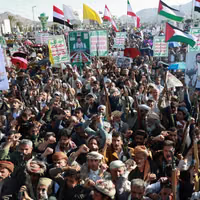
Houthi supporters rally to show support for the movement as fighting intensifies across several Yemeni fronts, in Sanaa, Yemen October 9, 2026.

Iran spent years building influence in Yemen through Hezbollah recruiters and Revolutionary Guards officers, a former Yemeni pro-democracy activist told Iran International, and is now using the Houthis to carry the war to Saudi Arabia and its Western allies.

Baraa Shiban, an associate fellow at the Royal United Services Institute (RUSI) in London who took part in Yemen’s 2011 uprising and later negotiated with the Houthis, told Iran International’s Eye for Iran podcast that Tehran’s involvement began long before the group became a major regional force.

His account comes as Houthi missile and drone attacks on Saudi airports and energy infrastructure have opened another front in the wider war, threatening aviation and trade routes already disrupted by the confrontation over the Strait of Hormuz.

“I think we’re entering phase three,” Shiban said, describing what he sees as Tehran’s strategy of extending the economic cost of the war to US allies.

Iran, he argued, had kept the Houthis in reserve as a strategic asset until it needed them. Their attacks now serve Tehran’s interests while advancing the group’s own ambitions inside Yemen.

From democracy conferences to an IRGC handler

Young Yemenis who took part in the 2011 Arab Spring were invited to conferences in Lebanon that were presented as discussions of democratic reform, Shiban said. Those who went found that Hezbollah operatives were behind them.

  • Houthi airport strikes carry echoes of Iran’s aviation threats, experts say

    Houthi airport strikes carry echoes of Iran’s aviation threats, experts say

  • Iran-US diplomacy stalls as Houthi attacks on Saudi Arabia intensify

    Iran-US diplomacy stalls as Houthi attacks on Saudi Arabia intensify

Activists receptive to Iran’s revolutionary ideology were introduced to a Revolutionary Guards officer working in Lebanon under the alias Abu Hadi, he said, and some went on to Tehran.

“We were calling it the Arab Spring. The Iranians called it the Islamic Awakening,” he said. Tehran, he said, wanted to present Yemen’s uprising as an extension of Iran’s 1979 revolution.

Shiban identified the officer as Hassan Irlou, who in 2020 became Iran’s ambassador to the Houthi authorities in Sanaa, a post the United States said was held by a Quds Force official. Irlou died in December 2021.

  • Iran Says Its Envoy, Evacuated From Yemen, Died Of 'COVID-19'

    Iran Says Its Envoy, Evacuated From Yemen, Died Of 'COVID-19'

Hezbollah ran much of the operation at first, Shiban said, before Revolutionary Guards personnel took a more prominent role.

The recruitment reached beyond political activists to women invited to conferences in Iran, some of whom came back converted to the Islamic Republic’s ideology. Shiban said he was shocked by one woman he knew as very liberal, who had protested alongside him and returned from Iran repeating Tehran’s case for crushing the Syrian revolution.

“She has absorbed that propaganda of what the Iranians were saying about the Syrian revolution and why they need to kill all of those protesters until the last one, given this woman herself was protesting with us,” he said.

People drawn into these networks went on to help set up the Houthis’ political bureau in Sanaa, Shiban said. Iran International could not independently verify the full extent of the recruitment he described.

Talks rejected

The account has new weight after Saudi Arabia disclosed on Thursday that the Houthis had rejected an invitation to negotiations in Oman in July.

Riyadh had sought talks to settle outstanding differences before the fighting escalated, Saudi Deputy Foreign Minister Rayed Krimly said.

The Saudi-led coalition said the Houthis had attacked King Khalid International Airport in Riyadh 20 times in October. At least 19 people have been killed in the recent attacks across the kingdom, according to Saudi officials.

Yemen analyst Fatima Alasrar said on X that the Houthis’ refusal reflected Tehran’s timetable rather than an effort to resolve their long-standing demands over airport access, and warned that Iran could keep leverage through the Bab el-Mandeb strait even if it reached a deal with Washington over Hormuz.

The Houthis also have their own aims, among them consolidating control over Yemen and forcing Saudi Arabia to end its support for rival Yemeni forces.

A second strategic chokepoint

The war has put Bab el-Mandeb, the narrow passage between the Red Sea and the Gulf of Aden, at the center of the regional confrontation.

Iran saw the leverage that disrupting Hormuz gave it and wanted the same at a second shipping route, Shiban said. “It saw how valuable and important the Strait of Hormuz was and it wanted to add another choke point.”

The consequences are visible inside Yemen. On Thursday, Houthi missiles struck the presidential palace compound in Aden, killing five people, according to Yemeni authorities. Houthi advances around Taiz have intensified fighting and displacement.

The escalation could prove costly for Tehran, Shiban said, having already antagonized Saudi Arabia and pushed Yemen’s internationally recognized government toward wider war. But Iran’s leaders appear willing to take that risk, he said, on the calculation that Western governments will hesitate to act decisively.

“I think right now they’re counting on the United States is going to be hesitant,” he said.

Even a long confrontation could suit Tehran, he said, if it raises the economic pressure on the Persian Gulf states and strains their ties with Washington.

You can watch Eye for Iran on YouTube or listen on any podcast platform.

After the killings, Iran turned on the families of the dead

Oct 16, 2026, 20:57 GMT+1
•
Omid Keshtkar
100%

A bullet is fired once. For the families of those killed in Iran’s Woman, Life, Freedom uprising, the punishment that followed lasted for years: bodies held hostage, false confessions forced on parents, funerals fired upon and killers set free, Amnesty International has found.

Threats, lies, humiliation and prison were the state’s weapons. Families were forced into silence under threat of having graves dug up, of rape and of execution. Many were denied even the right to mourn.

In a detailed report published four years after the uprising, Amnesty documented the killing of at least 377 people by security forces between September 2022 and early 2023, more than half of them in the first two weeks of protests, and said the true toll is far higher. The report also documents what happened next to the families of the dead.

  • Iran used state machinery to crush 2022 uprising, Amnesty says

    Iran used state machinery to crush 2022 uprising, Amnesty says

  • UN says Iran crackdown amounted to crimes against humanity

    UN says Iran crackdown amounted to crimes against humanity

Immediately after each unlawful killing, Amnesty found, the authorities began a campaign of silencing and cruelty against the victim’s family. The body was the first hostage, returned only once the family accepted the state’s false account of the death.

A wide range of institutions took part: the Intelligence Ministry, the police’s crowd-control units, the Revolutionary Guards’ Intelligence Organization, local Basij units, judicial and provincial officials, governors and local Friday prayer leaders.

‘Rioters,’ accidents and drugs

The pattern of forced narratives was almost identical across the country. A death had to be blamed on “rioters,” “counter-revolutionary groups,” “terrorists” or the opposition Mojahedin-e Khalq, or else on suicide, illness, an accident or drug use.

In Divandarreh, in Kordestan province in western Iran, hours after Fuad Ghadimi was killed on September 19, 2022, officials took his father to the state broadcaster and forced him to make false statements on air, threatening to withhold his son’s body and endanger his other children.

Plainclothes agents watched the grave and repeatedly replaced the headstone to remove the word shahid, martyr, which the family had carved on it.

In Kermanshah, Ardalan Ghasemi was shot on November 10 while writing slogans on a wall. An official at the hospital told his family that if they filed a complaint, his body would stay in the morgue for months, and to make the point, showed them the decomposed body of another person.

  • How Iran shielded forces over 2022 protest killings

    How Iran shielded forces over 2022 protest killings

  • How Iran’s 2022 crackdown was coordinated from the top

    How Iran’s 2022 crackdown was coordinated from the top

The family got Ardalan back only after signing a false statement that he had been killed while stealing a car.

The case of Fereshteh Ahmadi in Mahabad, in West Azarbaijan province, is among the most chilling in the report. Half an hour after she died on October 27, four agents dressed as nurses tried to take her body secretly out of the hospital. When the family stopped them, one agent held a gun to her husband’s head and threatened to kill him.

Her brother, Ebrahim Ahmadi, was arrested and held for 28 days in solitary confinement by the Revolutionary Guards’ intelligence arm in Sardasht. Agents offered him double the usual blood money if he would blame Kurdish opposition groups for her death. He refused.

The denial was even more intense when the victims were women and girls, Amnesty found. The UN Independent International Fact-Finding Mission on Iran also concluded that, compared with men, the deaths of women protesters were routinely blamed on alcohol, suicide, ordinary crime, illness, road accidents, family disputes or falls from windows and buildings. The authorities played down women’s deaths to stop them becoming symbols.

  • Mahsa’s dandelion: step by step through Iran's Woman, Life, Freedom

    Mahsa’s dandelion: step by step through Iran's Woman, Life, Freedom

Funerals under fire

Burials became another front for intimidation. Security forces tried to move bodies to undisclosed locations. In Javanrud, in Kermanshah province, the Revolutionary Guards took the body of Ismail Golanbar to their regional Najaf Ashraf base and returned it only on condition that he be buried outside the town.

Kumar Daraftadeh, a 16-year-old boy killed in Piranshahr on October 30, was given an hour for washing and burial; after repeated pleas, his family was allowed to bury him the next day, in a village 25 kilometers away.

Violence against mourners at times exceeded the violence against protesters. At the funeral of Zanyar Abubakri in Mahabad on October 27, hundreds of mourners carried his body above their heads while police special forces fired on them with assault rifles, birdshot and tear gas.

  • 'They shot on sight': Amnesty details 2022 protest killings in Kurdish areas

    'They shot on sight': Amnesty details 2022 protest killings in Kurdish areas

In Bukan, the brother of Shahriar Mohammadi, killed on November 18, described throwing himself onto his brother’s body to stop agents from seizing it. They beat him repeatedly on the head, kicked the body and shot him in the leg with birdshot at close range.

Hospitals, morgues and death certificates

Another layer of repression ran through hospitals, morgues and the coroner’s office. By forcing hasty burials, often within hours, the authorities sidestepped the legal requirement for an autopsy. When autopsies were carried out, families were usually denied the results.

In Sanandaj, the capital of Kordestan province, the coroner told the family of Hooman Abdollahi, shot directly in the heart on December 7, the cause of death only verbally. The family never received a written report or even a burial certificate.

Police seized the ambulance carrying his body and took it to an unknown location, and the family was made to bury him at night with no one else present.

Minoo Majidi, killed in Kermanshah on September 20, had 167 pellets in her body. A forensic expert told her family so, but no written report was ever issued.

Even the language of death certificates was changed to hide the truth. Phrases such as “impact of hard objects” or “hunting pellets” appeared without any indication of their source.

  • Mahsa Amini and the century-long struggle of Iranian women

    Mahsa Amini and the century-long struggle of Iranian women

For Habibollah Fathi, killed by a live round to the head on November 19, a first certificate gave the cause of death as “unknown.” When the family asked for it to be corrected, a second certificate cited heart disease.

The authorities also kept families from seeing their dead. In Sanandaj, relatives of Peyman Monbari, killed on October 8, were made to sign a document stating they had viewed the body, while what they received at the cemetery was a body already washed and shrouded.

Justice denied

Some families, despite everything, tried to seek justice through the courts. Amnesty was able to gather and examine ten such cases from eight provinces.

In four, prosecutors cleared the killers with a single line citing insufficient evidence. Two were referred to military courts to set blood money, without any investigation.

In two more, the authorities themselves admitted that security agents had fired the shots, but sent the cases not to a criminal court but to a military court to determine compensation, and only on condition that the victim be proven innocent.

One case did end in a sentence of qisas, retribution in kind. Mohammad Jamehbozorg was shot in the face in Malard, west of Tehran, after agents raided his home, where he had sheltered protesters.

A court sentenced the agent to death and the Supreme Court upheld the ruling. Then, after direct intervention by Revolutionary Guards commanders and Malard’s Friday prayer leader, the charge was reduced from intentional to unintentional killing, and the killer received three years in prison.

The cases of Sepehr Beiranvand in Khorramabad and Mehran Samak in Bandar Anzali followed the same course: an initial conviction, then the ruling overturned and the case sent back for review. Samak was shot after honking his car horn in solidarity with people celebrating Iran’s World Cup defeat to the United States.

The Bloody Friday case in Zahedan, the capital of Sistan and Baluchestan province, where security forces killed at least 87 people, most of them Baluch worshippers, on September 30, 2022, ended with prison sentences for a few low-ranking officers. All the commanders were acquitted.

The forces of repression were ready to kill and to intimidate. Security agents were trained to cover up the killings and to threaten families, and the judiciary stood ready to clear the killers and protect the forces behind them.

These accounts are an undeniable part of the Islamic Republic’s crimes against humanity: crimes that began in the streets and continued, for months and years afterward, in the suppression of families.

Iran raided, summoned and jailed Baha’is in Yazd 34 times in seven months

Oct 16, 2026, 18:23 GMT+1
100%

Iranian security and judicial authorities have taken action against Baha’is in the central city of Yazd at least 34 times in less than seven months, raiding homes, summoning dozens for interrogation and jailing members of the faith, the rights group HRANA reported on Friday.

Between March 28 and October 15, HRANA recorded 11 searches of homes and other property, 18 summonses for interrogation, three prison sentences and one person taken to prison to serve his term.

The targets went beyond people facing charges to guests at private gatherings and their relatives. Agents seized phones, computers, books, photographs and religious materials, and in one case a car.

On March 28, Intelligence Ministry agents broke up a gathering of about 50 Baha’is sharing a traditional soup, a local Yazd custom, and took their phones without a warrant. The phones have not been returned despite legal complaints. About 12 of those present were later summoned for questioning.

  • Iranian security forces arrest three Baha’is in Shiraz, source says

    Iranian security forces arrest three Baha’is in Shiraz, source says

  • ‘State-sponsored theft’: UN representative calls out rising seizures from Iran’s Bahá’ís

    ‘State-sponsored theft’: UN representative calls out rising seizures from Iran’s Bahá’ís

The pressure peaked in September, when six homes were searched and six people summoned. On September 27, about 40 agents searched the home of the family of Farhang Amiri, a Baha’i who was stabbed to death outside his house in Yazd on that date in 2016. The two men charged in his killing said they had attacked him because of his faith. That night agents also searched the homes of his son, daughter and son-in-law, and on October 1 they searched the family’s farm.

Flora Samadani, a Yazd resident, was sentenced by the city’s Revolutionary Court to three years and one day in prison for “deviant propaganda contrary to Islam by promoting Baha’ism.” Her husband, Ahmad Jafari Naeimi, received six months and one day for assisting her. Moein Mohammadi-Dehaj, 39, was sentenced in the summer to 16 years and seven months in prison, a 10-year loss of civil rights and a lifelong ban from public employment.

The crackdown extends well beyond Yazd. Raids on Baha’i homes since the January protests amount to “state-sponsored theft,” the Baha’i International Community’s representative to the UN in Geneva told Iran International in August, citing hundreds of incidents.

“With the misuse of their state authority, they essentially steal Baha’is’ properties with complete impunity,” Simin Fahandej said.

The community said this week that the case of 26 Baha’is in Shiraz, acquitted nearly four years ago, had been reopened, and that as of October 2 at least 64 Baha’is were in detention or prison, with 19 more serving sentences under electronic tags or on furlough. In August, 13 UN experts warned of torture, enforced disappearances and a sharp rise in persecution.

Iran’s Baha’is, estimated at more than 300,000, form the country’s largest non-Muslim minority. The constitution recognizes only Islam, Christianity, Judaism and Zoroastrianism, and Baha’is have faced systematic persecution since the 1979 revolution, including bans from universities, business closures and property confiscations.

Iran hangs Iraqi man on Saudi spying charge he denied

Oct 16, 2026, 17:37 GMT+1
100%

Iran has executed a 28-year-old Iraqi man convicted of spying for Saudi Arabia, a charge he denied, according to the Oslo-based group Iran Human Rights.

Iran has executed a 28-year-old Iraqi man convicted of spying for Saudi Arabia, a charge he denied, according to the Oslo-based group Iran Human Rights.

Ayoub Mohammad Nabil, from Haditha in western Iraq, was hanged on Sunday morning at Lakan Prison in Rasht, the capital of Gilan province on the Caspian coast, the group said. Iranian officials and domestic media had not reported his sentence or his execution by the time it was announced.

Nabil had entered Iran legally on his passport and was working as a caretaker at a private villa when Intelligence Ministry agents arrested him in the nearby town of Fouman on August 26, 2025. He had no prior security record, Iran Human Rights said.

A source told the group he was held for about five months at the Intelligence Ministry’s detention center in Rasht, where he was subjected to severe psychological torture. He denied any link to Saudi Arabia or groups tied to it, and said he had been accused because he was a practicing Sunni Muslim, wore a beard and taught the Quran to local children in his guardhouse.

Despite no evidence of any political activity, the source said, Branch One of Rasht’s Revolutionary Court sentenced him to death for “moharebeh,” or waging war against God, through spying for Saudi-backed proxy groups.

The Kurdish rights group Hengaw, citing its own sources, said Nabil was moved to solitary confinement for execution on October 8, as fighting between Saudi Arabia and Yemen’s Houthis intensified.

He is at least the 17th person executed in Iran on espionage charges this year, and the third Iraqi, according to Iran Human Rights. Thirteen were accused of spying for Israel or the United States; the other two Iraqis were accused of spying for an unnamed Arab country, and an Afghan man for an unnamed state. Fifteen of the 17 were executed after the war began in February.

More than 70 political prisoners have been executed in Iran since the January protests, and at least 20 more face execution on political charges, Iran International has found.

UN Secretary-General Antonio Guterres said in a report on Thursday that capital cases in Iran, especially security cases, involve systematic violations of fair-trial rights, including forced confessions, closed trials lasting minutes and restricted access to independent lawyers. He called for an immediate halt to executions.

The rights group HRANA said last week that at least 2,003 people were executed in Iran in the year to October 8, up 29 percent on the previous year.