Armed suspect arrested over alleged plot to kill ex-minister, reformists say
Abbas Akhoundi (left) and Mohammad Khatami (center) in front of a cake at Khatami’s birthday celebration at the National Library of Iran in October 2026.
An armed man was arrested over an alleged plot to assassinate a former Iranian minister after a gathering attended by Mohammad Khatami, the former president associated with efforts to reform the Islamic Republic from within, Iran’s Reform Front said.
The event held at the National Library complex in Tehran marked Khatami’s birthday and brought together figures advocating changes to Iran’s domestic and foreign policies.
The suspect allegedly warned that others would pursue the attack on former roads minister Abbas Akhoundi and named additional assassination targets, raising concerns about threats to other political figures.
The reformist coalition said on its Telegram channel that the man confronted Akhoundi’s driver as the former minister was leaving the seminar organized by Khatami’s Baran Foundation.
The driver managed to disarm the attacker during the confrontation, and security personnel and police intervened to arrest him, according to the account, carried by Iranian news website Entekhab.
The account did not identify the suspect or the other purported targets.
On Thursday, the IRGC-affiliated Fars news agency, citing an unnamed security source, reported that the incident occurred several days earlier and remained under investigation.
The source said inquiries with legal authorities had so far found no indications that it was terrorist or organized in nature, and investigators were examining the possibility of a personal motive.
The source also accused foreign and opposition media of "exploiting the incident to deepen political divisions and portray Iran as internally insecure."
Akhoundi challenges official narratives
Akhoundi’s speech, titled “Global transitions, value chains and the architecture of Iran’s development,” challenged official portrayals of American decline and argued for an approach to security rooted in economic development and international engagement.
“Although America’s hegemonic power is diminishing, what is promoted in official media as ‘decline’ is not accurate,” he said. “We are facing the systematic containment of American power by emerging powers, not its destruction.”
He questioned whether Iran should use its position along global trade routes to generate prosperity or seek control over them, arguing that major economies, including China and India, would not tolerate prolonged insecurity along those routes.
Abbas Akhoundi addresses the seminar held at the National Library of Iran in October 2026.
Akhoundi also called for a shift from “threat-based survival” to “development-oriented prosperity.”
“Yes, we have survived, but in poverty,” he said.
Akhoundi questioned the strategy of securing Iran through involvement beyond its borders, including in Yemen and Lebanon. He called for a regional security model centered on cooperation and economic prosperity, arguing that the ambition to dominate the region had become an obstacle to understanding Iran’s place in the world.
His argument included support for increased defense spending, alongside stronger political, social and economic foundations for security.
Khatami questions intervention on Palestinians’ behalf
Khatami, speaking at the same event, condemned Israel’s establishment through what he described as occupation and force, while arguing that decisions about the Palestinians’ future belonged to Palestinians themselves.
“Occupation does not confer legitimacy,” Khatami said. “That is a matter for the Palestinian people themselves.”
He distinguished moral support for people seeking freedom from intervening and confronting a powerful adversary on their behalf.
“For me to leave here, go there, put myself in the place of those people and confront a powerful force on their behalf, only for them to end up suffering greatly and choosing a different path — that is something I cannot accept,” he said.
The Reform Front’s account did not establish any connection between the speeches and the suspect’s alleged intentions.
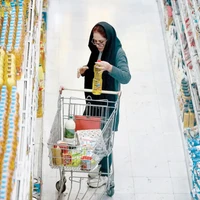
A former Iranian labor minister has drawn ridicule after saying the country has no economic problems other than high prices and inflation, remarks that came as official data showed year-on-year inflation approaching 90%.
Hojjat Abdolmaleki, who served under former president Ebrahim Raisi and is an economics professor, made the remarks in a recent interview with state television that has circulated widely online over the past two days.
“In the economy, the issue is only and only high prices and inflation,” Abdolmaleki said. “Set high prices aside and you have no other economic problems… We have no problems, praised be God.”
The former minister has previously made controversial remarks about the causes of inflation. In August, he claimed that rising prices were not even one percent attributable to the war and regional conditions.
Reformist and moderate newspapers, including Sazandegi, criticized the assertion as an oversimplification that ignored the economic costs and currency shocks resulting from political and military developments.
Abdolmaleki has also dismissed the economic consequences of international internet disruptions, saying nobody had lost their job because of internet shutdowns and that online sellers could move their businesses to domestic platforms.
Critics argued that changing platforms could not guarantee businesses would retain their customers, income or jobs.
Ridicule crosses political lines
Abdolmaleki's latest remarks have drawn criticism from conservatives as well as moderate and reformist voices.
The moderate conservative news website Khabar Online published the video under the headline: “Abdolmaleki’s Great Discovery About Iran’s Economy: Erase the Problem from the Equation to Solve It!”
Bamdadeno, an online media outlet active primarily on Instagram and Telegram, compared the argument to saying that “if you disregard poverty, there are no poor people; ignore unemployment, and everyone is employed.”
“The issue is not simply how bizarre a sentence is,” it added. “The issue is that decisions about employment, livelihoods and the welfare of millions of Iranians were once made on the basis of this kind of outlook and oversimplification.”
Rouhollah Jome’i, a conservative political activist, took a sarcastic swipe at Abdolmaleki, who is associated with hardline groups known as “super-revolutionaries.”
“What an interesting way of putting it! For example, if we set aside delusional super-revolutionaries, we would have no political or security problems either…” he wrote on X.
Journalist Mohammad Parsi applied the same logic to other problems facing Iranians.
“Yes, if there is no internet, there is no problem with filtering; if we do not get sick, there is no problem with medicine; and if we do not drive cars, there is no problem with petrol,” he wrote.
“This satire becomes bitter when we remember that this man was once a minister in this country and made decisions on our behalf!”
One Instagram user applied the same logic to several other problems: “Yes! The problem with drought is only a lack of water! The problem with power cuts is a lack of electricity! The problem with cars is a shortage of parts and funding! Otherwise, we have no problems!”
Another user questioned whether the country could hope for improvement with people like Abdolmaleki in positions of influence over major decisions.
Inflation approaches 90%
The remarks come as official figures indicate that inflationary pressures in Iran remain severe.
According to the latest figures from the Statistical Centre of Iran, year-on-year inflation rose by 0.8 percentage points last month to 89.8%. Annual inflation increased from 69.9% in August to 73.6% in September.
Inflation in food and beverages was considerably higher than the overall rate, with prices of some food items, including cooking oil, rising by more than 250% compared with a year earlier.
Even housing rents, which recorded the lowest rate of increase among the 12 main categories of goods and services in the household consumption basket, rose by more than 30% year on year.
The figures point to mounting pressure on Iranian households and declining purchasing power, providing a stark backdrop to Abdolmaleki's assertion that, high prices aside, the economy has no other problems.
Former foreign minister Mohammad-Javad Zarif. Screengrab of resurfaced video of speech in April or May 2025.
A resurfaced video of former foreign minister Mohammad Javad Zarif saying Iran lacked enough enriched uranium to produce a nuclear weapon has ignited a fierce debate after successive wars with Israel and the United States.
The speech appears to have been delivered in late April or May 2025, shortly before the 12-day war with Israel.
Zarif argued that the balance of power had changed and that nuclear weapons no longer provided effective deterrence, pointing to Israel's experience and the collapse of the Soviet Union to argue that possessing them neither prevented attack nor guaranteed a state's survival.
He dismissed acquiring an atomic bomb as “the paradigm promoted by a few ignorant demagogues.”
More than a year and two wars later, the remarks collide with a growing hardline argument that Tehran's failure to possess a nuclear weapon deprived it of the deterrent that might have prevented those attacks.
The video's renewed circulation has therefore fed directly into a growing debate over whether the wars vindicated Zarif's skepticism about military deterrence or proved his critics right.
Calls for a change in nuclear doctrine
Some officials and media outlets have openly raised the possibility of changing the country's nuclear doctrine.
Hassan Ghashghavi, a member of parliament, claimed in recent days that support for such a change was growing among the public, experts and officials.
The conservative newspaper Vatan-e Emrooz put the issue prominently on its front page Monday with the headline “Iran Should Build a Bomb.”
An accompanying report argued that Iran should develop a “deterrent” nuclear weapon to prevent future attacks by Israel and the United States.
The argument contrasts sharply with Zarif's contention that nuclear weapons cannot guarantee security and that Iran should place greater emphasis on diplomacy and economic cooperation.
Ahmad Bakhshayesh Ardestani, a member of parliament's National Security and Foreign Policy Committee, told Khabar Online on Tuesday that threats from Israel and the United States could strengthen arguments inside Iran for acquiring a bomb.
Journalist Seyed Sadegh Hosseini, writing on Sadegh Media, defended Zarif's argument, saying attacks on Iran's nuclear facilities and the assassinations of its nuclear scientists had demonstrated the failure of the assumption that uranium enrichment and stockpiling nuclear material would deter attacks or force Washington to make concessions.
Hardliners turn on Zarif
The video's renewed circulation has also prompted attacks on Zarif at pro-government and pro-war gatherings in several parts of Iran, including Isfahan and Borujerd, where demonstrators chanted slogans against him and former president Hassan Rouhani.
In Isfahan, protesters called Zarif a “spy” and an American “mercenary.”
The conservative newspaper Kayhan also attacked Zarif in an article titled “Mr Zarif! Why do you carry out a suicide operation whenever America is in trouble?!”
Kayhan accused the former foreign minister of making statements at sensitive moments that damaged Iran's national security capabilities and gave its adversaries “an opportunity to breathe.”
It also criticized Zarif's record in the negotiations that produced the 2015 nuclear agreement, accusing him of seeking to “whitewash the enemy and blame our own side.”
Two visions of Iranian power
But Zarif's speech went beyond the question of whether Iran should possess a nuclear weapon, challenging the security-oriented approach that has shaped much of the Islamic Republic's regional policy.
He drew a distinction between what he called a “threat-oriented” and an “opportunity-oriented” view of Iran's neighbors, arguing that Tehran's conception of the region determined the kind of relationship it built with surrounding states.
“If Iran's view of the region is threat-oriented, its ambassador should be a representative of the Quds Force. If its view is opportunity-oriented, the ambassador should be chosen from among businesspeople and diplomats,” Zarif said.
He argued that the dominance of security considerations in foreign policy had prevented Iran from taking full advantage of economic relations with neighboring countries.
“Why are our ambassadors in Afghanistan, Syria and Iraq representatives of the Quds Force?” he asked. “Because we see them as threats.”
Zarif's critics say the wars demonstrated the danger of entering a confrontation without the ultimate deterrent and strengthened the case for greater military capability. His argument points in the opposite direction, that Iran has placed too much faith in military deterrence and treated economic ties and diplomacy as secondary sources of national power.
More than a year after he made it, that argument is being tested against a reality Zarif could not then have known.
Iran was subsequently attacked by both Israel and the United States, and the question of what might have prevented those attacks has become one of the most consequential debates in Tehran.
The Quds Force of Iran’s Islamic Revolutionary Guard Corps has appointed a new commander to its overseas assassination unit and renamed it to Unit 600 after its personnel and structure were exposed, two sources close to the IRGC-QF told Iran International.
Esmail Qaani, commander of the IRGC’s overseas arm, recently appointed Mojtaba Hagh-Lesan to lead the unit previously known as Unit 840, the sources said.
Hagh-Lesan, 64, previously headed the unit’s intelligence department. He replaces Yazdan Mir, also known as Haj Asghar Bagheri, who was killed in a targeted Israeli strike on April 6.
The unit had been without a commander since Mir’s killing, the sources said. Hagh-Lesan’s appointment puts an existing senior member in charge of a formation linked to plots against Iranian dissidents, journalists, former US officials and Israeli targets abroad.
The sources provided Iran International with the unit’s latest command chart, identifying its leadership and the officials responsible for operations across several regions.
Command structure revealed
According to the chart, Mohammad-Reza Ansari serves as Hagh-Lesan’s deputy and oversees the Israel portfolio.
Mohsen Boroujeni heads special operations for the United States and Europe, while Morteza Babaei leads the department responsible for the Middle East and Africa. Javad Sharfaei oversees special operations in Asia.
The chart identifies Meysam Sahraei as an operative involved in preparing attacks in Africa and India. It also names Gholamhossein Hosseini and Mohammad Hosseinpour as prominent operatives involved in the department’s activities.
The sources said the reliance on existing personnel reflected a crisis in the command structure following the killing of senior IRGC officers. They said it had also raised doubts among Quds Force members about the organization’s effectiveness.
Hagh-Lesan’s published work includes two articles in Strategic Studies, a journal published by the Expediency Council’s Center for Strategic Research.
“Regional Unrest and Domestic Security” appeared in the combined fifth and sixth issues, published on September 23, 1999. “US Intervention in the Bosnian Crisis” was published on November 22, 2004.
From US officials to Israeli businessmen
Unit 840 emerged from Unit 400 in the early 2010s on the orders of then-Quds Force commander Qassem Soleimani. Unit 400 is a covert special operations formation with close ties to Hezbollah.
A photograph of Mir alongside Hezbollah leader Hassan Nasrallah and senior IRGC commanders Mohammad Reza Zahedi and Mohammad Hejazi illustrates those connections.
Yazdan Mir, the former commander of Unit 840, pictured with Hassan Nasrallah, Mohammad Reza Zahedi and Mohammad Hejazi.
Informed sources told Iran International that a Western intelligence service identified and attacked the unit’s headquarters in Damascus in 2020.
The unit subsequently became the focus of investigations into assassination plots abroad.
In August 2022, the US Justice Department charged IRGC member Shahram Poursafi with plotting to assassinate John Bolton, who served as national security adviser during President Donald Trump’s first administration.
Prosecutors said Poursafi offered $300,000 for Bolton’s killing, likely in retaliation for the US strike that killed Soleimani in January 2020.
Iran International’s subsequent investigation, based on information provided by the Black Door hacking group, identified Ansari as the Syria-based Unit 840 commander who led the failed operation against Bolton and former Secretary of State Mike Pompeo.
According to that reporting, Poursafi worked under Ansari, and the network sought to hire non-Iranians to conceal Tehran’s involvement. The person recruited to arrange the killings was an FBI informant.
In June 2023, the US Treasury sanctioned Ansari and Poursafi, saying Ansari, with Poursafi’s support, had planned and attempted to assassinate two former US government officials.
Ansari was also linked to a foiled plot against two Israeli businessmen in Colombia. Iran International reported in December 2022, citing an investigation by Infobae, that he had directed the operation through locally recruited criminals.
The businessmen and their families left Bogota under tight security after Colombian intelligence authorities warned them of the threat, according to that reporting.
Criminal networks and journalist targets
Unit 840 has repeatedly sought to use criminal gangs and traffickers to carry out operations abroad.
In Germany, Iran International previously reported that Ramin Yektaparast, an Iranian-German member of the Hells Angels motorcycle gang, organized attacks against synagogues in Bochum and Essen on behalf of the Quds Force.
The investigation, citing a Western intelligence source and a source within the IRGC, also linked him to a failed plot to assassinate Iranian rapper Shahin Najafi at a concert in Hanover in September 2023.
Yektaparast was shot four times and killed in Tehran on April 28, 2024. Following reports of possible Mossad involvement, the IRGC-linked Tasnim news agency denied he had ties to the Guards and said he was killed in a dispute over “personal matters.”
His funeral notice nevertheless described his death as a “martyr-like ascension,” and he was buried in Section 19 of Tehran’s Behesht-e Zahra cemetery, reserved for fallen IRGC and Basij members.
In Britain, an ITV News investigation exposed a Unit 840 plot, codenamed “the wedding,” to kill Iran International journalists Fardad Farahzad and Sima Sabet.
ITV reported in December 2023 that Iranian operatives had offered a people-smuggler $200,000 to arrange the murders. It identified Ansari as the commander behind the plot.
The plan failed because the smuggler was working as a double agent for a Western intelligence service and passed details to his handler, according to the investigation. Iran’s embassy in London rejected ITV’s findings as baseless.
In Sweden and Denmark, the Quds Force used Rawa Majid, leader of the Foxtrot criminal network, to attack Israeli-linked targets, according to Iran International’s previous reporting.
Swedish investigative journalist Diamant Salihu told the BBC that Majid fled to Tehran in October 2023 and that his links with Iranian authorities developed afterward. Iran International reported in April 2025 that he was living in Iran under IRGC protection.
Britain sanctioned Majid and Foxtrot in 2025. Iran’s embassy in London denied Tehran’s links to the network.
Repeated intelligence setbacks
The unit has suffered a series of blows through the exposure of its personnel and operations.
In May 2022, footage emerged of an interrogation attributed to Mossad in which Mansour Rasouli, a trafficker linked to Unit 840, said he had been tasked with killing an Israeli citizen in Turkey, a senior US general in Germany and a journalist in France.
Later that month, Hassan Sayyad Khodaei, a senior figure in the unit, was shot dead in central Tehran. The New York Times, citing an intelligence official, reported that Israel had told the United States it was responsible.
Those setbacks were followed in June by the removal of Hossein Taeb as head of the IRGC Intelligence Organization.
The following month, Iran International reported that Mossad agents had interrogated Yadollah Khedmati, an IRGC logistics and support commander, near Tehran. Footage of that interrogation was also released.
More recently, Israel announced the disruption of another IRGC network accused of planning attacks on strategic infrastructure and Israeli and Jewish targets abroad.
In a joint statement on April 20, Mossad, the Israeli military and Shin Bet said an operation in Azerbaijan had foiled plans to attack the Baku–Tbilisi–Ceyhan oil pipeline, the Israeli embassy, a synagogue in Baku and Jewish community leaders.
Azerbaijani authorities arrested members of the cell and seized explosive drones and other explosives smuggled from Iran, according to the Israeli account. The suspects had conducted surveillance and photographed targets under orders from handlers in Tehran.
The US, Britain and European Union have imposed sanctions on figures linked to overseas assassination plots. Alongside the US measures against Ansari and Poursafi, Britain sanctioned Unit 840 and Ansari in January 2024. The EU sanctioned Ansari in July 2025, accusing him of ordering the assassination of journalists critical of the Islamic Republic.
Reorganization amid calls for revenge
According to Iran International’s sources, the Quds Force decided to reorganize Unit 840 after its structure and personnel were exposed. Six months after Mir’s killing, Hagh-Lesan’s appointment restores a commander to a unit responsible for covert operations against Iranian government opponents, critical journalists and Israeli targets worldwide.
The reorganization follows public calls for revenge over the killing of former Supreme Leader Ali Khamenei.
In July, Hossein Shariatmadari, the supreme leader’s representative at the hardline Kayhan newspaper, urged authorities to declare Trump and pilots involved in Khamenei’s killing people whose killing was a religious obligation.
Kayhan also said the security of Trump and Israeli Prime Minister Benjamin Netanyahu had been permanently destroyed. Tehran municipal murals threatened both leaders, including one bearing the English words “We will kill Trump.”
Iranian authorities have also expanded efforts to collect information about government opponents abroad.
In September, the IRGC-affiliated Fars news agency announced a system called “Alaj” to identify and track such individuals. It urged government supporters to submit information through the system’s website and the Telegram and Bale messaging platforms.
نام «دریای کاسپین» روی نقشه در یکی از برنامههای صداوسیما
Iranian state television has begun referring to the country’s northern sea as Caspian in Persian, a departure from the customary Khazar, after airing claims that the older familiar name serves alleged Israeli ambitions in the Caucasus.
Caspian takes its name from the Caspians, an ancient people who lived along the sea’s southwestern shores in modern Iran. Khazar refers to the Khazars, a medieval Turkic people whose state lay to the north and northwest of the sea and whose ruling elite adopted Judaism.
It remains unclear whether Iran’s state broadcaster has issued a formal directive to change its terminology across programs. However, the name change brings attention to competing arguments over history and national identity.
Supporters of Caspian describe it as a restoration of Iranian heritage, while opponents say Khazar is itself a deeply rooted geographical name whose use does not endorse the people it originally described.
State TV’s website features a segment from IRGC-affiliated Ofogh channel’s “War Headquarters” program with commentator and academic Ahmad Kazemi under the title “The Zionists’ plot to change the name of the Caspian Sea to Khazar.”
In remarks also shared by the IRGC-affiliated Fars News, Kazemi portrayed the use of Khazar as supporting an Israeli historical claim.
“By using the non-Iranian word Khazar today, we are effectively helping Israel’s thesis that seeks to prove the existence of a Jewish empire in the Caucasus,” he said.
The name Caspian Sea in Persian on another Iranian state TV program aired on Tuesday Oct. 13 , 2026.
Kazemi said people outside Iran mocked Iranians for using what he described as a foreign name while others used Caspian. He described the Caspians as an Iranian people who had lived across areas stretching from Kashan to Mazandaran and the Caspian coast.
His remarks did not provide evidence of an Israeli effort to influence the sea’s Persian name.
An appeal to Iranian heritage
For English-speaking audiences, the distinction can be easy to miss: the body of water is already called the Caspian Sea in English. The question is what Iranians should call it in Persian.
Campaigns to replace Khazar predate the television material. A petition addressed to the parliament speaker, the head of state broadcasting and the education minister calls for Caspian to be used in official sources, describing it as an authentic Iranian name.
Mohammad Ebrahim Zarei, then acting head of Iran’s Research Institute of Cultural Heritage and Tourism, also proposed using Caspi or Caspian at an annual gathering of Iranian archaeologists in 2025, arguing that it was the older name.
Caspian derives from the Caspians, an ancient people who lived along the sea’s southwestern shores. Encyclopedia Iranica identifies them in ancient sources while noting uncertainties about their precise location and linguistic background.
Khazar, meanwhile, derives from the medieval Khazars, whose state lay to the north and northwest of the sea. The name has been used in regional geographical writing for centuries.
The sea has also been known in Iran as the Mazandaran Sea, a name previously used in official contexts. During Mohammad Khatami’s presidency, a 2002 naming decision standardized Khazar for domestic use and Caspian for foreign texts and international agreements.
That policy favored an already established name over alternatives such as Mazandaran, rather than introducing Khazar for the first time.
Objections to replacing Khazar
Political geographer Pirouz Mojtahedzadeh offers a different argument, saying established geographical names should not be changed because of political, ethnic or religious objections to their origins.
He argued that abandoning Khazar over alleged Israeli claims to the region would accept the premise of those claims rather than challenge them. He also warned that changing the sea’s name would undermine Iran’s opposition to attempts to rename the Persian Gulf.
“Would you not, in practice, have justified and endorsed Arab efforts to change the geographical name of the Persian Gulf?” he asked supporters of replacing Khazar.
More recently, objections to the campaign have appeared on the website of the Islamic Revolution Documents Center.
In an August article, Arash Nasiri challenged the argument that the Khazars’ ethnic origins, military history or association with Judaism justified abandoning the name.
Some Khazar rulers adopted Judaism, but treating the entire population as uniformly Jewish oversimplified the historical record, he wrote.
Nasiri also argued that using a geographical name did not mean endorsing the conduct or beliefs of the people from whom it originated. Khazar had become an established part of Persian usage, extending beyond its association with a medieval people.
Caspian was historically valid, he wrote, but presenting the choice as “Iranian Caspian” versus “foreign Khazar” reduced a complex history to a political distinction.
A protest over the name of a newly created county in central Iran turned violent after security forces moved to disperse demonstrators, with videos sent to Iran International capturing gunfire, tear gas and injured protesters.
The gathering took place on Sunday in Meymeh, a city in Isfahan province, where residents have objected to the new administrative district being named “Meymeh and Vazvan” rather than simply “Meymeh.”
Videos received by Iran International show demonstrators in the streets, tear gas in the area and people with bloodied clothing receiving medical treatment. Gunshots can also be heard, although it was not immediately clear what type of ammunition was used.
The number of people injured or detained remains unclear.
Local dispute over county name
Residents of Meymeh had campaigned for around two decades for their district to be upgraded to county status. The government eventually approved the change but in August 2024 named the new county Meymeh and Vazvan, combining the names of two cities.
Some Meymeh residents argue that their city’s historical identity should be reflected in the county name and have repeatedly called for the decision to be reversed. Officials have said the name should also recognize Vazvan.
The dispute culminated in Sunday’s street protest shortly before the new county administration was due to begin operating.
Footage showed some protesters carrying Islamic Republic flags and portraits of late Supreme Leader Ali Khamenei, underscoring the local nature of the dispute rather than an explicitly anti-government demonstration.
Security presence increases
The protest continued into the evening before security forces intervened and fired tear gas, according to videos and information received by Iran International.
Witnesses told Iran International that several protesters were wounded and detained, including some who were later taken into custody at hospitals. Iran International could not independently establish the number of arrests or verify the circumstances of each reported injury.
Reports from Meymeh on Tuesday indicated an increased security presence following the confrontation.