• العربية
  • فارسی
BrandBrand
  • Iran Insight
  • Politics
  • Economy
  • Analysis
  • Special Report
  • Opinion
  • Podcast
  • Live TV
  • Iran Insight
  • Politics
  • Economy
  • Analysis
  • Special Report
  • Opinion
  • Podcast
  • Live TV
  • Theme
  • Language
    • العربية
    • فارسی
  • Iran Insight
  • Politics
  • Economy
  • Analysis
  • Special Report
  • Opinion
  • Podcast
  • Live TV
All rights reserved for Volant Media UK Limited
volant media logo

Iran says three killed as armed clashes intensify in southeast

Oct 13, 2026, 10:12 GMT+1

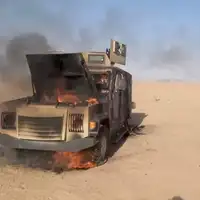
Iranian authorities said three people were killed on Tuesday during a security operation near Zahedan in southeastern Iran, as separate reports pointed to heavy fighting between forces of the Islamic Republic and armed men elsewhere in Sistan-Baluchestan province.

Tasnim, a news agency affiliated with the Islamic Revolutionary Guard Corps, said security forces located and destroyed what it described as a militant safe house in the Chah Ahmad-Kurin area near Zahedan.

The outlet said three people had been killed and that the operation was continuing. It said a final casualty toll would be announced after what it described as a clearing operation was completed.

Tasnim identified those killed in its headline as members of Jaish al-Adl, an armed Baluch group that has carried out attacks on security forces, but did not name them or provide evidence establishing their affiliation. It gave no information about possible casualties among Islamic Republic forces.

Heavy fighting reported in Taftan

Separately, Haalvsh, which covers developments in Sistan-Baluchestan, reported heavy fighting in the mountainous Lop area around Chah Ahmad and Arzan Tak in Taftan County.

Haalvsh described the forces involved as members of the Revolutionary Guards. Citing local sources, it said the fighting began at around 6 a.m. on Tuesday and involved light, medium and heavy weapons. Additional military forces were sent to the area, according to the report.

The fighting was still under way when Haalvsh issued its initial report. The identities of the armed men, the circumstances that led to the confrontation and any casualties were not immediately clear.

Attacks on police and military personnel

Sistan-Baluchestan, which borders Pakistan and Afghanistan, has seen a series of armed attacks and security operations in recent weeks.

On October 9, Iranian state media reported that Nosrat Eftekhari, a senior police official responsible for cultural and social affairs in the province, was killed in a roadside bombing on the Cheshmeh Ziarat road near Zahedan.

A day earlier, a member of a police commando unit was killed in an armed attack near Nosratabad. A separate attack on a vehicle carrying Iranian Army personnel near Nikshahr killed another serviceman.

On September 23, an armed confrontation in Saravan killed Hossein Zarifi, a commander with the IRGC’s Sajjad base, according to the Guards’ Quds regional headquarters. Haalvsh separately reported that another intelligence official was killed and at least 13 other personnel were wounded.

At least five members of the Fatemiyoun, an Iran-backed Shiite militia made up largely of Afghan fighters and organized with support from the Revolutionary Guards, were also reported killed in an armed attack near Zahedan on October 2.

More than 90 killed since March - HRANA

The US-based Human Rights Activists News Agency said Monday that at least 94 people had been killed and 33 wounded in 63 armed incidents across southeastern Iran between March 31 and October 10.

HRANA said attacks on patrol vehicles and military convoys were the most common incidents it recorded, followed by targeted shootings. It also reported increased use of mines, rocket-propelled grenades and heavier weapons by armed groups, while government forces used drones, artillery and armored vehicles in some operations.

The group said the People’s Fighters Front, an alliance formed in December 2025 that includes Jaish al-Adl and several smaller Baluch armed groups, had taken responsibility for six incidents documented in its report. Most attacks remained unattributed or could not be reliably linked to a particular group, HRANA said.

Sistan-Baluchestan, one of Iran’s poorest provinces and home to much of the country’s Sunni Baluch minority, has long seen armed confrontations between government forces and Baluch groups. Recent incidents have increasingly involved attacks on police posts, military vehicles and senior security personnel.

Most Viewed

World leaders condemn Houthi attack on Riyadh airport
1

World leaders condemn Houthi attack on Riyadh airport

2
ANALYSIS

Machete-wielding men at IRGC-backed rally revive scrutiny of crackdowns

3
INSIGHT

Tehran seizes on Rubio’s Xerxes remarks to champion a past it once disparaged

4

Iran-US diplomacy stalls as Houthi attacks on Saudi Arabia intensify

5

Iran warns of wider risks as regional attacks intensify

Banner
Banner
Banner
Banner

Spotlight

  • US military support against Houthis risks widening Iran war, expert says
    ANALYSIS

    US military support against Houthis risks widening Iran war, expert says

  • Iran hardliners back threats to strike Persian Gulf digital infrastructure

    Iran hardliners back threats to strike Persian Gulf digital infrastructure

  • Can US sanctions derail Iran’s China trade route?
    ANALYSIS

    Can US sanctions derail Iran’s China trade route?

  • Machete-wielding men at IRGC-backed rally revive scrutiny of crackdowns
    ANALYSIS

    Machete-wielding men at IRGC-backed rally revive scrutiny of crackdowns

  • Russia fears a pro-Western Iran more than an Iranian atomic bomb
    ONE-ON-ONE

    Russia fears a pro-Western Iran more than an Iranian atomic bomb

  • War puts Iran’s nuclear ambiguity under scrutiny
    INSIGHT

    War puts Iran’s nuclear ambiguity under scrutiny

  • Iran’s oil lifeline could run dry by mid-December, Kpler says
    PODCAST

    Iran’s oil lifeline could run dry by mid-December, Kpler says

  • 'Three golden weeks': Trump’s no-strike pledge fuels calls in Iran to act first

    'Three golden weeks': Trump’s no-strike pledge fuels calls in Iran to act first

  • Iranian security forces face wave of deadly attacks in restive southeast

    Iranian security forces face wave of deadly attacks in restive southeast

  • Police officer killed in armed attack near Zahedan as violence continues in southeast Iran

    Police officer killed in armed attack near Zahedan as violence continues in southeast Iran

  • Over 90 killed in six months as clashes escalate in Iran's southeast - report

    Over 90 killed in six months as clashes escalate in Iran's southeast - report

•
•
•

More Stories

‘Best advertisement for Starlink’ Iranians mock threat to subsea cables

Oct 13, 2026, 10:05 GMT+1
100%
File photo shows a Starlink satellite internet system set up on a miners boat on the Madeira River in Porto Velho, Rondonia state, Brazil, July 4, 2024.

The Islamic Republic’s threats to target undersea internet cables in the Persian Gulf drew mockery and criticism from readers who told Iran International that such attacks could deepen Iran’s isolation and damage its own connectivity.

The responses followed a warning by Mohsen Rezaei, secretary of Iran’s Supreme National Security Council, that communications cables, data centers and artificial intelligence facilities in the region could become targets if war resumes.

Hossein Shariatmadari, editor of the hardline Kayhan newspaper and the supreme leader’s representative at the publication, backed the warning and advocated cutting international fiber-optic cables to confront the United States and its allies.

“The threat to cut internet cables will end up like the Strait of Hormuz story: the whole region will have internet except Iran. Perhaps that is their aim,” one reader wrote.

Others mocked the proposal as an incentive to turn to satellite internet, with one calling it “the best advertisement for Starlink.”

‘Give him the wire cutters’

Much of the criticism focused on Shariatmadari, who wrote on Monday that nearly seven major international internet cable systems pass through the Persian Gulf and the Strait of Hormuz. He claimed even minor damage could disable more than 80 percent of commercial, banking, military and AI-related communications and disrupt the global internet.

Some readers questioned his technical understanding of the infrastructure he was proposing to attack.

“Give him the wire cutters. The strongman wants to cut the wires,” one wrote.

“Do you even know what fiber optics are?” another asked.

Other responses suggested the threats would encourage greater interest in Starlink, which provides internet access through low-Earth-orbit satellites and a dedicated terminal, without relying on local fixed or mobile networks.

“Starlink will surely support this too,” one reader quipped.

A reader from Firuzkuh wrote: “By the time you pick up the pliers to cut off the internet, Elon Musk will have activated Starlink. This remark alone gives him a good incentive to bring high-speed internet into Iran.”

‘Do you know anything about building?’

Other readers contrasted Shariatmadari’s proposal with what they described as his lack of interest in developing the country.

“Have you ever, even once in your life, thought about building and developing the country, now that you are threatening fiber-optic cables on the seabed?” one asked.

Another put it more briefly: “Do you know anything about building and development?”

One reader questioned the influence wielded by the newspaper editor: “The country has become so lawless that when Kayhan’s editor gives his opinion, you would think he was the supreme leader.”

Several messages drew comparisons with Shariatmadari’s earlier support for closing the Strait of Hormuz, warning that another attempt to disrupt regional infrastructure could backfire on Iran.

Shariatmadari has repeatedly advocated using communications infrastructure against Washington. On September 3, he urged Iran’s army and Revolutionary Guards to turn fiber-optic cables in the Persian Gulf into a means of confronting the United States.

Other hardline outlets have also promoted pressure on technology companies. In May, Tasnim News Agency called for charging foreign companies fees for cables passing through the Strait of Hormuz and requiring technology giants, including Meta, Amazon and Microsoft, to operate under Iranian laws.

Iran officials hinted at land incursions if US resumes strikes - WSJ

Oct 13, 2026, 08:03 GMT+1
100%
Members of the Iranian Army take part in a military exercise dubbed Fatehan of Kheibar, in the northwestern parts of Iran / File photo.

Some Iranian officials have privately suggested Tehran could send forces into neighbouring countries if the United States launches new strikes, the Wall Street Journal reported on Tuesday, citing people familiar with the warnings.

The newspaper did not identify the officials, specify which countries could be targeted by such incursions or provide details about when the warnings were delivered.

The report said Iranian officials have warned regional governments, both publicly and privately, that Tehran would widen its response across the Middle East if US attacks resume.

Iran has separately warned Arab officials that Saudi oil facilities could be targeted in a renewed conflict, according to people cited by the Journal. Mohsen Rezaei, Iran’s top national security official, said publicly on Sunday that Tehran could also target the United Arab Emirates, as well as regional data centers and internet cables.

US forces and warships threatened

The Iranian government has also told mediators that it could target US personnel more aggressively, including by trying to sink American warships in the Middle East and kill their crews, the Journal reported, citing people familiar with the warnings.

Iranian missiles came close to US warships during attacks in September, according to the report.

  • US pressure threatens Iran’s political survival but may not bring concessions

    US pressure threatens Iran’s political survival but may not bring concessions

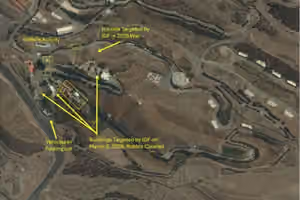
  • Iran may be restoring activity at nuclear-linked site struck by Israel

    Iran may be restoring activity at nuclear-linked site struck by Israel

The Journal said Washington is also preparing for the possibility of renewed fighting, with a third aircraft carrier strike group and another Marine expeditionary unit heading toward the Middle East. The Pentagon is considering sending additional air-defense equipment and munitions to regional bases, it added.

President Donald Trump said last week that he would not order an attack on Iran before the November 3 midterm elections, although US officials have said the military is preparing options for further strikes.

Nuclear sites and military facilities reinforced

Iran has meanwhile reinforced defenses around nuclear sites and other sensitive facilities, the Journal reported.

Satellite imagery analyzed by the Institute for Science and International Security showed new passive defenses, including dirt barriers, around the Natanz and Pickaxe Mountain nuclear sites, according to the report.

The Journal also said Iran has used the pause in major direct fighting to rebuild missile and drone production facilities and replenish its arsenal.

Iranian officials have publicly said airports, ports and power plants are being prepared to operate under wartime conditions. State media have also shown pro-government rallies and military-related training, while billboards in Tehran have advertised civilian courses involving shoulder-fired anti-aircraft weapons and sniper rifles.

The report said the preparations reflect Tehran’s expectation that fighting with the United States could resume after the US midterm elections.

UKMTO warnings show 12 commercial ships attacked in one week

Oct 13, 2026, 04:37 GMT+1
100%
A view of the Strait of Hormuz from the coast of Bandar Abbas, southern Iran, October 6, 2026. (ISNA)

Twelve attacks on commercial vessels were reported in and around the Strait of Hormuz and Persian Gulf between October 5 and 11, according to UK Maritime Trade Operations (UKMTO) warnings.

The attacks culminated on October 11, when six commercial vessels — five tankers and a container ship — were reported struck in the Strait of Hormuz and near Oman’s Sohar anchorage.

Several incidents were reported only after they occurred, meaning initial assessments did not capture the full number of attacks. The Joint Maritime Information Center (JMIC) listed three confirmed attacks in the Strait of Hormuz during the preceding 72 hours and another in the Persian Gulf in its October 11 advisory.

A crude oil tanker was struck by an unidentified projectile while transiting the Strait of Hormuz on October 6. The incident was reported to UKMTO two days later. No casualties were reported.

A tanker was struck by multiple projectiles about 51 nautical miles north of Madinat ash Shamal, Qatar, on October 7. UKMTO reported casualties.

A tanker at anchor off the UAE coast was attacked on October 9, while an outbound tanker was struck in the Strait of Hormuz on October 10, causing a fire. The crew of the October 10 vessel was reported safe.

Another outbound tanker was hit in the strait on October 11, damaging its steering gear room and a water tank. Five additional attacks from that day were subsequently disclosed in UKMTO warnings, bringing the October 11 total to six.

Hormuz threat remains severe

JMIC maintained the threat level for the Strait of Hormuz at SEVERE, its second-highest classification, saying deliberate hostile action was highly likely.

It cited recent Iran attacks and continuing navigation interference, as well as Revolutionary Guards attacks, hailing and routing pressure.

JMIC also said attacks were spreading beyond the Hormuz transit lanes to vessels at anchor in the Persian Gulf. It warned that further projectile or drone attacks could affect tankers at UAE anchorages and outbound vessels in the southern Omani corridor.

Hormuz traffic remains far below normal

Commercial traffic through the Strait of Hormuz remains below historical levels.

US Naval Cooperation and Guidance for Shipping data showed about 29 US-facilitated vessel transits per day over the preceding 72 hours, compared with a historical average of roughly 138 daily transits, according to JMIC. Independent tracking indicated substantially fewer vessels passing through the strait.

JMIC maintained the Strait of Hormuz security threat at SEVERE, its second-highest classification.

US military support against Houthis risks widening Iran war, expert says

Oct 13, 2026, 02:01 GMT+1
•
Kambiz Tavana
100%
Iran-aligned Houthi fighters move next to a destroyed vehicle following what the source described as an attack on Saudi-backed forces in the location given by the source as al Jawf governorate, Yemen, in this screengrab taken from a video released by Houthi Military Media on September 15, 2026

Washington could support the Saudi campaign against the Houthis at little direct cost by lifting political objections to its operations, but deeper military involvement risks appearing to widen the Iran war, senior Middle East analyst Ryan Bohl told Iran International.

Recent Houthi attacks on Saudi Arabia, including Riyadh’s international airport, have sharpened questions about how far Washington and other governments are prepared to go in supporting the kingdom.

Bohl, a senior analyst at the risk intelligence firm RANE, said the least costly US option would be to drop objections similar to those Washington raised over Saudi-led military operations before the 2022 truce. Those concerns included civilian casualties from airstrikes and the humanitarian consequences of an offensive on the Red Sea port city of Hudaydah.

Washington helped push for a halt to the offensive on Hudaydah in 2018. The UN-brokered Stockholm Agreement established a ceasefire there later that year.

“That will cost the United States virtually nothing,” Bohl said of lifting political objections, referring to munitions, troops and additional spending.

Greater intelligence support, assistance in targeting Houthi forces or direct American airstrikes would carry military, economic and especially political costs, he said.

“It will look like President Trump is now expanding the war that he seems to be trapped in with the Iranians.”

Air power has limits

Air power alone is unlikely to defeat the Houthis, Bohl said, but could help capable ground forces advance and hold territory.

He pointed to Yemeni units backed by the Saudi-led coalition, including the Giants Brigades, whose ability to capture and retain territory could depend heavily on tactical air support.

The question is whether those forces have recovered sufficiently from recent Houthi advances to mount a sustained counteroffensive.

Bohl said forces aligned with Yemen’s internationally recognized government had appeared disorganized after a Houthi advance toward the southern end of the Red Sea coast. Some units were now regrouping and resuming offensive operations, he said, but their ability to coordinate remained uncertain.

“The big question is, will they gain enough coherence in order to push back the Houthi advances around Taiz, and more importantly, push up the Red Sea coast towards Hudaydah.”

More support for defense than offense

Foreign governments are more willing to help defend Saudi Arabia than to support a campaign to recapture Houthi-held territory, Bohl said.

He cited Pakistani military support and Turkish preparations to provide defensive assistance as examples of efforts to protect the kingdom. Such support, he said, was primarily aimed at defending Saudi airspace and preventing further attacks.

An offensive inside Yemen would be a harder commitment to secure.

Israeli Prime Minister Benjamin Netanyahu is seeking Saudi consent through US mediation for Israel to join the campaign against the Houthis, Haaretz reported on Monday.

Saudi Crown Prince Mohammed bin Salman opposes Israeli participation over concerns about a public backlash, the newspaper said. Netanyahu reportedly hopes cooperation would strengthen ties with Riyadh and help advance normalization.

Many governments see the country as “a geopolitical black hole that their forces will disappear into and that they’ll never achieve victory,” Bohl said.

They also look to Washington to provide military capabilities they cannot deploy at comparable scale. Turkey could influence events in its neighborhood, he said, but would face greater constraints in sustaining an extensive campaign as far away as Yemen.

Whether an effective offensive coalition emerges will depend heavily on Washington’s objectives, Bohl said. Those could range from reversing recent Houthi gains to supporting a broader effort to recapture territory, potentially including Sanaa.

The United States’ 2025 air campaign ended with an Oman-brokered ceasefire with the Houthis in May that year. A campaign supporting territorial advances would raise a different question: how far Washington was prepared to help allied ground forces go.

“America’s role in it will be instrumental in us understanding whether or not a coherent offensive coalition can actually be put together and have an impact on conditions on the ground.”

Iran hardliners back threats to strike Persian Gulf digital infrastructure

Oct 12, 2026, 23:59 GMT+1
•
Maryam Sinaiee
100%
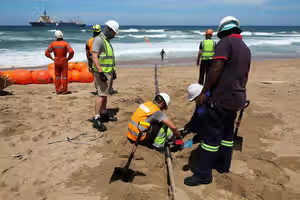
File photo shows workers toil on the 2Africa undersea cable project carried out by France’s Alcatel Submarine Networks in Amanzimtoti, South Africa on Feb. 7, 2023.

Iranian hardliners have backed security chief Mohsen Rezaei’s threat to strike data centers, undersea internet cables and artificial intelligence facilities in the Persian Gulf if the United States and Israel resume hostilities.

Rezaei, secretary of Iran’s Supreme National Security Council, told state-owned Press TV on Sunday night that Tehran was prepared for renewed conflict and could target critical technology infrastructure across the Middle East.

He said valuable American assets in the United Arab Emirates and around the Strait of Hormuz had not yet been included among Iran’s targets, but Tehran was prepared to demonstrate new capabilities to strike them. He claimed those assets and the region’s digital infrastructure were worth more than $2 trillion.

“Every miscalculation by the enemy against Iran has resulted in a heavy defeat for them; the next mistake will bring new fronts and greater surprises,” Rezaei wrote on X on Monday.

Hardliners urge pressure on US technology interests

Tasnim News Agency, which is affiliated with the Islamic Revolutionary Guard Corps, argued in an article titled “Why Is Artificial Intelligence on the Target List?” that attacks on AI centers could undermine US technological competition with China, deter investment and put pressure on US stock markets.

  • Iran finds a new weapon beneath Hormuz

    Iran finds a new weapon beneath Hormuz

Hossein Shariatmadari, editor-in-chief of the hardline Kayhan newspaper and the supreme leader’s representative at the publication, welcomed Rezaei’s threat in an article titled “Well Done, Brother Mohsen!”

He called for using fiber-optic cables running through the Persian Gulf and the Strait of Hormuz to pressure Washington and its allies. He claimed that nearly seven major international cable systems pass through the region and that damage to them could disrupt more than 80 percent of commercial, banking, military and AI-related communications.

Kayhan also accused what it called “Western-oriented” political factions of double standards over internet access. It quoted Shariatmadari as predicting that politicians and parties “not fully aligned with the revolution” would oppose Rezaei’s threat and portray it as fueling war.

“The reformists had previously described internet shutdowns [in Iran] as a cause of deep dissatisfaction and called for stable, free and secure internet access for the public. But now that this same internet has become a strategic weapon for Iran against the United States, they have either remained silent or opposed it in the language of peace,” the article said.

Political analyst Ruhollah Rahimpour, however, told Iran International that while Iran could technically and operationally damage data centers and communications infrastructure in the Persian Gulf, the impact would primarily fall on regional networks rather than seriously affect the global internet.

Such attacks could raise the cost of war for other countries, he said, but also widen the conflict and impose greater security and economic costs on Iran.

Mohsen Zanganeh, a member of parliament’s knowledge-based companies and technology faction, endorsed Rezaei’s warning in an interview with ANA news agency, saying it reflected technological realities.

He said many data centers operated by major technology companies, most of them American, and the main communications routes connecting them were located in countries along the southern coast of the Persian Gulf.

Attacks could damage equipment, cloud networks and processing systems while disrupting US military operations, Zanganeh argued. Because Arab countries host both US bases and American technology infrastructure, he said, the consequences could spread to other countries and increase the global economic cost of war, as had happened in the energy sector.

WANA News described Rezaei’s remarks as an attempt to deter military action by raising its potential cost, saying a declaration of readiness did not necessarily signal a decision to launch operations.

Warnings amid strained diplomacy

Rezaei’s threats came alongside indications of continued differences between Tehran and Washington.

In a separate post on X on Sunday, he said the United States had accepted some of Iran’s seven conditions, but Tehran considered its response insufficient.

“Iran’s diplomacy has changed, and we will not return to the previous situation,” he wrote.

Mostafa Najafi, a commentator supportive of Rezaei, interpreted the remarks as a sign that the two sides remained far from an agreement.

“This position by the secretary of the Supreme National Security Council means that negotiations between Iran and the United States are a long way from an agreement and much closer to tensions,” he wrote on X.

The infrastructure threats also drew criticism on social media.

One user, Mohammad Nikbakht, questioned why Rezaei was announcing potential targets and argued that attacks would encourage Arab countries to unite against Iran.

Another commenter warned that threats without the capability to carry them out could backfire, drawing a comparison with Iran’s efforts to close the Strait of Hormuz, which the commenter said had resulted in a naval blockade of Iran.

“We are much more worried about miscalculations by our country’s executive officials than about miscalculations by the enemy,” a different user wrote.