• العربية
  • فارسی
BrandBrand
  • Iran Insight
  • Politics
  • Economy
  • Analysis
  • Special Report
  • Opinion
  • Podcast
  • Live TV
  • Iran Insight
  • Politics
  • Economy
  • Analysis
  • Special Report
  • Opinion
  • Podcast
  • Live TV
  • Theme
  • Language
    • العربية
    • فارسی
  • Iran Insight
  • Politics
  • Economy
  • Analysis
  • Special Report
  • Opinion
  • Podcast
  • Live TV
All rights reserved for Volant Media UK Limited
volant media logo

Jailed wife of executed Iran protester pressured to deny marriage

Oct 10, 2026, 10:40 GMT+1

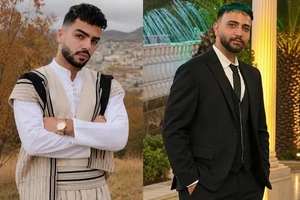
The jailed wife of an Iranian protester executed this week is being interrogated and pressured to deny that the couple married shortly before his execution, a source familiar with the case told Iran International.

Mahshad Kashani, a 22-year-old student serving a five-year prison sentence, has also had her phone contact with people outside Dowlatabad prison in Isfahan cut off, according to information obtained by Iran International on Saturday.

The source said relatives of both Kashani and her husband, Alireza Sepahi, have also been pressured to deny that the marriage took place.

Marriage shortly before execution

Sepahi, 25, was executed on Monday over the Alikhani Square case, which stems from clashes during the January protests in Isfahan that Iranian authorities say killed four security personnel.

He and Kashani married shortly before his execution while being held in separate prisons, Sepahi at Dastgerd and Kashani at Dowlatabad. Iranian law allows either party to appoint a representative to conclude a marriage contract, enabling the ceremony to be completed remotely while the couple communicated by phone.

The source identified Fatemeh Asgari, an official in the women’s section of Dowlatabad prison, as one of those involved in pressuring Kashani.

Seven executed in Alikhani Square case

Sepahi was one of 12 defendants sentenced to death over clashes in Isfahan’s Alikhani Square in January. Seven of the 12 have now been executed.

Reuters reported this week that UN experts had raised concerns over the case, saying all 12 defendants were sentenced to death in a single closed hearing without clarity over each defendant’s individual responsibility, in violation of fair-trial standards.

Sepahi had previously been scheduled for execution in July alongside his cousin Abolfazl Sepahi and Amirhossein Safari Hosseinabadi, but his execution was postponed after he suffered a medical emergency before being taken to the execution site. The other two men were executed that day.

  • Iran sentences 38-year-old to death as January protest executions mount

    Iran sentences 38-year-old to death as January protest executions mount

  • Two more January protesters executed in Iran

    Two more January protesters executed in Iran

  • Family of executed January protester says Iran concealed burial site

    Family of executed January protester says Iran concealed burial site

Most Viewed

Iran turns on Pakistan as Saudi defense pact takes effect
1

Iran turns on Pakistan as Saudi defense pact takes effect

2

Iranian security forces face wave of deadly attacks in restive southeast

3
VOICES FROM IRAN

Iran's reported $200 million Hezbollah aid angers cash-strapped citizens

4
ANALYSIS

Three years after October 7, Iran pays the price of miscalculation

5

'Three golden weeks': Trump’s no-strike pledge fuels calls in Iran to act first

Banner
Banner

Spotlight

  • 'Three golden weeks': Trump’s no-strike pledge fuels calls in Iran to act first

    'Three golden weeks': Trump’s no-strike pledge fuels calls in Iran to act first

  • J’Accuse! Tehran defends French students, silences Iranian youth
    OPINION

    J’Accuse! Tehran defends French students, silences Iranian youth

  • US pressure hits Iranians harder than rulers, 68% in poll say
    VOICES FROM IRAN

    US pressure hits Iranians harder than rulers, 68% in poll say

  • Saudi Aramco hires US firm to upgrade shared oil field as Iran lags behind

    Saudi Aramco hires US firm to upgrade shared oil field as Iran lags behind

  • Iran looks for escape routes as US sanctions close in
    INSIGHT

    Iran looks for escape routes as US sanctions close in

  • China shifts to Iraqi oil: is Iran using old workaround to beat US blockade?
    ANALYSIS

    China shifts to Iraqi oil: is Iran using old workaround to beat US blockade?

Banner
Banner
•
•
•

More Stories

Iran detains football coach over child sexual abuse allegations

Oct 10, 2026, 10:34 GMT+1
100%

Iranian judicial authorities have detained a football coach in the western city of Divandarreh after five people filed complaints alleging sexual abuse connected to a youth football club.

Mohammad Jabbari, chief justice of Kordestan province, said the suspect was summoned to the judiciary in Divandarreh and remanded in custody after being formally accused of sexual abuse and producing obscene footage and other material, according to the judiciary-affiliated Mizan news agency.

Jabbari said the case had been referred to Kordestan province’s Criminal Court One and that further investigations were underway. Authorities have not publicly identified the suspect.

Divandarreh prosecutor Afshar Amir-Ahmadi said the judiciary ordered the arrest after reports emerged that a local teacher and football coach had sexually abused children. He said reports circulating on social media and concerns raised by families prompted authorities to investigate.

The local football association confirmed that the detained man was a football coach in Divandarreh. Police chief Hossein Montazeri said authorities had been aware of the allegations for several weeks and that the coach had been suspended from sporting activities.

Reports point to possible wider case

Earlier reporting by local news outlets in western Iran said around 50 children and teenagers at the Setaregan Divandarreh football club may have been sexually abused, although judicial authorities have so far confirmed only five complaints.

The outlets reported that one student initially filed a complaint with Iran’s cyber police, after which other students also came forward. It also said some students reported being sexually exploited after being promised opportunities to advance in football or join better teams.

Previous cases involving young athletes

The case follows other reports of sexual abuse allegations involving minors in Iranian sports.

In Tehran, a football coach accused by the families of eight teenage boys was initially sentenced to death, but the Supreme Court overturned the sentence. After a retrial, he was sentenced to 99 lashes, two years in internal exile and a two-year ban from coaching and other sporting activities. Forensic authorities had not established rape under the legal definition used in the case.

In Mashhad, parents of 15 young footballers raised sexual abuse allegations against a coach in 2023. Other cases involving coaches and minors have also been reported in Isfahan, Shiraz and Tehran, though the final judicial outcome of some cases has not been made public.

Iran turns to Turkey, Turkmenistan for power as war strains industry

Oct 10, 2026, 08:29 GMT+1
100%
Electricity grid near capital Tehran

Iran is seeking more electricity from Turkey and Turkmenistan as war damage and other outages leave thousands of megawatts of industrial and petrochemical power capacity offline, even as Washington presses neighboring countries to help restrict Tehran’s remaining economic routes.

Mohammad Allahdad, head of Iran’s electricity company Tavanir, told ILNA that about 4,700 megawatts of generation capacity belonging to industries and petrochemical companies had gone offline for various reasons.

He said the infrastructure was now in place for petrochemical plants to receive imported electricity from Turkey through Iran’s national grid. The companies have not yet signed contracts for the supply.

“If this does not happen, supplying electricity to these industries will face challenges,” Allahdad said.

War damage drives import push

Allahdad said serious damage during the war to utilities serving petrochemical complexes had sharply increased their dependence on the national grid. Iran supplied the sector with six times as much electricity this summer as in previous years, he said.

He added that Iran currently had no plans to export electricity and was instead focused on increasing imports, particularly during the winter.

Iran is also negotiating with Turkmenistan to extend an existing electricity import agreement and increase the volume of power exchanged between the two countries, according to a government statement.

Officials have also discussed additional cross-border power lines and the possible transit of electricity through Turkmenistan to third countries, though those proposals remain subject to technical and economic studies.

US seeks to close remaining economic routes

The push for additional electricity imports comes as the United States broadens its economic campaign against Iran beyond oil exports and financial sanctions.

US Treasury Secretary Scott Bessent said this week Washington was working with Turkey and Pakistan to restrict Iran’s overland commercial routes, while describing the United Arab Emirates and Oman as partners in the broader pressure campaign.

“We did have a maximum pressure campaign. Now we have an absolute isolation campaign and it’s working,” Bessent told Newsmax.

Bessent has also said Washington is targeting Iran-linked cryptocurrency and its remaining shipping network. Treasury on Thursday sanctioned 17 vessels and their owners, saying they were part of what remained of Iran’s shadow fleet, while Bessent said the US could seize about $1 billion in Iran-linked digital assets.

The overlap puts Turkey in an unusual position, with Tehran seeking greater electricity supplies from its western neighbor while Washington says Ankara is also cooperating in efforts to constrict Iran’s remaining overland economic links.

Iran-linked actors used US AI for fake journalism, military targeting

Oct 10, 2026, 00:30 GMT+1
100%
Social media accounts for the “Ervin B. Hoskins” fake journalist persona, which OpenAI said was used in an Iran-origin influence operation to place articles in online media outlets. (OpenAI)

Iran-based and Iranian-linked actors have used two leading US artificial intelligence platforms to place articles under fake journalist identities and help develop targeting recommendations against US naval forces, according to separate investigations by OpenAI and Anthropic.

The latest disclosure came Thursday, when OpenAI said it disrupted an Iran-origin influence operation that used ChatGPT to help fake journalist personas place almost 100 articles in roughly a dozen online outlets around the world.

OpenAI dubbed the campaign “Bogus Bylines.”

The operators used seven fake journalist identities to pitch English-language articles, primarily about the US-Iran conflict. ChatGPT was used to refine drafts according to outlets’ submission requirements and prepare emails pitching them to editors.

The personas presented themselves as Western journalists, usually Americans. One, Ervin B. Hoskins, described himself as an “American freelance writer” and maintained accounts on X, Facebook, Instagram and Threads.

But OpenAI said platform transparency information showed the accounts were operated from Iran.

OpenAI identified articles under the operation’s bylines dating from July 2025 through October 2026 and said publication increased significantly after the US-Iran conflict began.

Some outlets subsequently promoted the articles through their own social media accounts, potentially exposing the material to audiences the operators could not otherwise reach.

The operators also used ChatGPT to produce batches of social media comments. Some were generated in response to posts promoting their own articles and praised or endorsed the stories, which OpenAI assessed was likely intended to make them appear more popular.

Other prompts requested comments portraying the United States as the aggressor in the conflict, Israel as an unreliable US ally and Iran as a defiant but resilient victim.

The operation generated more than two dozen batches of hostile Persian-language responses to posts by Iran International.

OpenAI said the replies it found generally received low engagement and rated that component Category 2 on its six-level IO Breakout Scale. The article-placement campaign was more successful, reaching Category 4 after repeatedly getting material published by media outlets.

OpenAI said the overall activity was consistent with a commercial actor running an influence campaign for hire but said it could not identify the actor behind it.

From influence to military targeting

The OpenAI findings follow a September report from Anthropic documenting Iranian-linked use of Claude for activities extending beyond influence operations.

Anthropic said it disrupted an “Iran-nexus threat actor” that used Claude to collect and analyze publicly available information to develop targeting recommendations against US naval forces in the region.

The actor used Claude to help construct a Python pipeline for tracking naval positions and compiling targeting handbooks.

The material included US personnel identified from captions on publicly available military photographs, ship and aircraft transponder identifiers, scripts for querying commercial satellite imagery and lists of public websites exposing US naval movements.

The actor also directed Claude to research vulnerabilities in shipboard systems, including maritime satellite communications terminals, Cisco communications equipment and industrial control products.

OpenAI and Anthropic have documented misuse by actors linked to several countries, including for cyber operations, influence campaigns and intelligence gathering, suggesting generative AI is increasingly being incorporated into activities that long predate the technology.

OpenAI concluded that the influence operations it uncovered resembled campaigns from the pre-AI era, with artificial intelligence making parts of the workflow easier.

The two investigations suggest AI is being used less to invent entirely new forms of influence and intelligence activity than to accelerate existing ones: drafting and pitching articles, manufacturing online responses, processing surveillance data, writing software and assembling open-source military intelligence.

Iran executed over 2,000 people in past year, rights group says

Oct 9, 2026, 20:04 GMT+1
100%

Iran executed at least 2,003 people over the past year, a 29% increase from the previous period, rights group HRANA reported Friday, as UN experts warned that Tehran uses capital punishment to silence dissent and instill fear.

The report was released on October 9, on the eve of World Day Against the Death Penalty. Its figures cover October 10, 2025, through October 8, 2026.

The toll was the highest in 10 reporting periods, up from 1,553 the preceding year and 505 in 2016–2017. HRANA compiled its findings from 1,857 reports and said restrictions on independent monitoring may leave some executions undocumented.

According to HRANA, murder charges accounted for 57.56% of executions and drug offenses for 36.25%. About 95% of executions were not announced by official sources, while only 5% were officially reported.

Nine executions took place in public, while six other people received sentences calling for public executions. Among those executed were 47 women and four people who had been under 18 at the time of their alleged offenses.

Political executions and January protests

HRANA documented 69 political or security-related executions during the reporting period, including 35 cases linked to the January 2026 protests. Twenty-nine people were executed on charges of moharebeh, or enmity against God, alone or alongside other accusations.

Another 29 political or security-related executions occurred in April and May 2026 alone.

HRANA also documented 369 televised confessions connected to the January protests that it said had been extracted under torture. It cited the cases of Amirhossein Hatami, executed at 18, and Saleh Mohammadi, charged at 18 and executed at 19.

A separate Iran International review published on October 6 identified at least 70 executions in political and security cases between January 7 and October 5, averaging nearly two a week.

  • Iran executes nearly two people a week since January protests

    Iran executes nearly two people a week since January protests

Of those, 35 were linked to the January protests, nine to the 12-day and 40-day wars, and 26 to other political and security cases.

The review also identified at least 194 people facing death sentences in political and security cases, including 113 arrested in connection with the January protests. Among those facing execution were 13 women and at least seven people who were under 18 at the time of their alleged offenses.

The review found that 44 of the 70 executions had taken place in Karaj and Isfahan. It cautioned that the figures represented verified cases rather than the full scale of executions and death sentences.

In an accompanying statement, HRANA said judicial authorities and Revolutionary Courts accelerated proceedings against political prisoners and protesters following the January demonstrations.

The group said death sentences were issued and carried out after grossly unfair trials, extending repression from the streets into courtrooms and prisons and threatening protesters with death.

HRANA's monthly figures show 1,075 executions since the start of 2026, including 334 in January and 282 in February.

UN experts warn of repression

UN human rights experts on Friday described Iran as the world's most prolific executioner per capita and called for an immediate halt to executions.

“Iran’s death penalty is used to silence dissent, with broadly defined national security offences recasting peaceful activity as a threat,” the experts said.

They warned that prosecutions of people arrested during the January 2026 protests involved torture, enforced disappearances, sexual violence, coerced confessions and denial of access to lawyers.

A UN fact-finding mission previously concluded that the killing of thousands of protesters in January amounted to crimes against humanity.

The UN experts also said executions for drug offenses often targeted low-level couriers from impoverished and marginalized communities. They criticized Iran's qisas system, under which a defendant's ability to pay blood money can determine whether a death sentence is carried out.

HRANA said executions following unfair trials violated Article 6 of the International Covenant on Civil and Political Rights and called for an immediate halt. The UN experts also urged Tehran to commute death sentences and review cases against fair-trial standards.

J’Accuse! Tehran defends French students, silences Iranian youth

Oct 9, 2026, 18:07 GMT+1
•
Clément Therme
100%
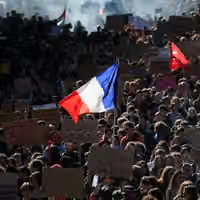
The French flag is hoisted during protests in Nantes, October 8, 2026.

Tehran has seized on protests by French high school students to accuse Paris of repression, seeking to obscure its own treatment of young Iranians by turning the language of human rights against one of its Western critics.

On October 6, Iran summoned French ambassador Pierre Cochard over the crackdown on high school demonstrations in France. The following day, Paris summoned Iran’s ambassador, accusing Iranian authorities of spreading disinformation through official Foreign Ministry accounts.

The diplomatic exchange reveals how the Islamic Republic appropriates the language of rights while denying those rights at home. It is also a struggle over the meaning of protest and who can claim to defend it.

Tehran seeks to reposition itself as an accuser, turning scrutiny away from its own security apparatus and toward a government that has condemned Iranian repression.

Internationally, Tehran seeks to weaken the authority of European criticism. Domestically, the diplomatic spat offers supporters reassurance that Western governments also face rejection. Neither objective requires solidarity with the students themselves; both require their images and grievances to be repurposed in defense of the regime.

This tactic has precedent. During the Yellow Vest movement, Ali Khamenei condemned French police violence, while a small group of regime supporters gathered outside the French embassy in Tehran.

Some wore yellow vests and placed candles and photographs of injured French protesters outside the embassy. Their placards denounced police violence but also carried an explicitly ideological message: “If only the French people had an Imam Khomeini!”

A statement read at the gathering invoked France’s reception of Khomeini at Neauphle-le-Château forty years earlier and portrayed Emmanuel Macron’s government as cruel and despotic.

At the same time, Iranian authorities were cracking down on protests by pensioners, workers, teachers and students. Then, as now, the tactic allowed Tehran to answer criticism of its own repression by accusing its critics of hypocrisy. Human rights become an arena for diplomatic one-upmanship rather than obligations owed to citizens.

France’s conduct must, of course, be scrutinized on its own merits. Injuries to demonstrators, particularly minors, demand independent investigation and accountability. But the evidence concerning Iran is substantial.

In March 2024, the UN Independent International Fact-Finding Mission concluded that violations committed during the repression of “Woman, Life, Freedom” included crimes against humanity.

Its findings encompassed murder, imprisonment, torture, rape and other sexual violence, persecution and enforced disappearance. The mission documented the involvement of state institutions and security forces, undermining attempts to portray the violence as a series of isolated excesses.

On September 17, 2026, the same mission reported that Iranian authorities had also committed crimes against humanity during the crackdown on protests that began in late December 2025 and continued into January.

Generation Z played a crucial role in “Woman, Life, Freedom” following Mahsa Amini’s death in September 2022. Schoolgirls removing their headscarves, teenagers challenging clerical authority and young women demanding control over their bodies exposed the limits of decades of ideological education.

The state had sought to reproduce loyalty. Instead, many young people asserted their right to determine how they would live.

Young Iranians mobilized again in the protests that began in late 2025, bringing another generation raised entirely under the Islamic Republic into confrontation with the state. Their rejection of its prescribed norms challenges the assumption that political control necessarily produces ideological consent.

The authorities’ response combines repression with continued recruitment into structures of loyalty. The Basij, under Revolutionary Guards command, provides a network for ideological discipline and security mobilization.

Human Rights Watch and Amnesty International have reported that an IRGC recruitment campaign accepts children as young as twelve, with Amnesty documenting children carrying weapons and serving at checkpoints and on patrols.

This goes beyond patriotic rhetoric: it places children directly in harm’s way. The state invokes the protection of young people abroad while drawing children into its military apparatus at home.

Yet Iranian youth cannot be divided neatly between those who serve the regime and those who confront it. Many seek simply to build lives apart from official Iran. Their resistance is not limited to protest: it also finds expression in everyday acts—choosing what to wear, loving, dancing, listening to music, nurturing friendships and keeping parts of their lives beyond the authorities’ control.

This has produced a form of what might be called “secular separatism”: an attempt to shield personal life from the regime’s ideological grip.

Within social, cultural and emotional circles, and spaces of celebration, another, fragile society is taking shape, though access to it inevitably varies with resources and social background.

Joy itself can become a way of asserting autonomy. Under a regime that glorifies martyrdom and encourages citizens to denounce one another, the simple acts of enjoying life and pursuing happiness acquire political meaning.

Tehran claims to speak for French high school students. It should begin by listening to young Iranians who aspire to build their own lives.