• العربية
  • فارسی
BrandBrand
  • Iran Insight
  • Politics
  • Economy
  • Analysis
  • Special Report
  • Opinion
  • Podcast
  • Live TV
  • Iran Insight
  • Politics
  • Economy
  • Analysis
  • Special Report
  • Opinion
  • Podcast
  • Live TV
  • Theme
  • Language
    • العربية
    • فارسی
  • Iran Insight
  • Politics
  • Economy
  • Analysis
  • Special Report
  • Opinion
  • Podcast
  • Live TV
All rights reserved for Volant Media UK Limited
volant media logo

Iran lawmaker says rerouted imports have pushed up prices

Oct 8, 2026, 06:13 GMT+1

Iran has had to bring in some goods through alternative routes instead of southern ports, raising import costs and prices for many products, lawmaker Mehrdad Lahouti said on Thursday.

Lahouti, a member of parliament’s Planning and Budget Committee, said the shift to other import routes had increased “the cost of imports and, as a result, the price of many goods.”

He did not specify which goods or alternative routes were involved.

Most Viewed

Iran’s own surveys reveal demand for 'fundamental change'
1

Iran’s own surveys reveal demand for 'fundamental change'

2
ANALYSIS

Houthi gains reversed at Bab al-Mandab, but Iran’s leverage runs deeper

3
INSIGHT

Iran, US back to ‘square one’ as diplomacy stalls

4

Tehran divided over $2 billion plan to prop up rial

5

Iran says economy holding up as pressure mounts on oil, rial

Banner
Banner

Spotlight

  • Hezbollah recruitment network in Iran exposed, four safe houses identified
    EXCLUSIVE

    Hezbollah recruitment network in Iran exposed, four safe houses identified

  • From talks to war: Tehran sees the gap narrowing
    ANALYSIS

    From talks to war: Tehran sees the gap narrowing

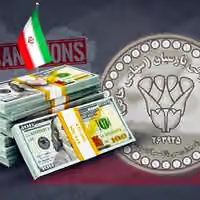
  • Iran looks for escape routes as US sanctions close in
    INSIGHT

    Iran looks for escape routes as US sanctions close in

  • China's turn to Iraqi crude shows growing impact of Iran oil blockade
    ANALYSIS

    China's turn to Iraqi crude shows growing impact of Iran oil blockade

  • Tehran divided over $2 billion plan to prop up rial

    Tehran divided over $2 billion plan to prop up rial

  • Parsian Exchange transferred millions of dollars for Iran despite sanctions
    EXCLUSIVE

    Parsian Exchange transferred millions of dollars for Iran despite sanctions

  • Iran protester recounts torture, mock execution after January arrest

    Iran protester recounts torture, mock execution after January arrest

  • Iran’s own surveys reveal demand for 'fundamental change'

    Iran’s own surveys reveal demand for 'fundamental change'

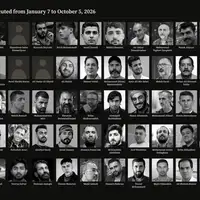
  • Iran executes nearly two people a week since January protests

    Iran executes nearly two people a week since January protests

  • Iran, US back to ‘square one’ as diplomacy stalls
    INSIGHT

    Iran, US back to ‘square one’ as diplomacy stalls

Banner
Banner
•
•
•

More Stories

Hezbollah recruitment network in Iran exposed, four safe houses identified

Oct 8, 2026, 04:53 GMT+1
•
Mojtaba Pourmohsen
100%
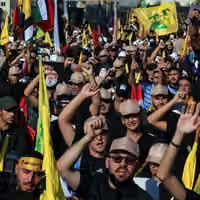
Hezbollah supporters attend a ceremony held by Hezbollah to commemorate the first anniversary of their late leader Hassan Nasrallah's killing by Israel, on the outskirts of Beirut, Lebanon, September 27, 2025. REUTERS/Mohamed Azakir

Hezbollah’s external operations unit has been recruiting foreign nationals in Iran and using safe houses in Qom and Tehran to train and shelter recruits, according to information obtained by Iran International.

Information provided to Iran International by an international intelligence agency shows that Hezbollah began contacting foreign students at Al-Mustafa International University five years ago. Those recruited have received training in weapons handling, sabotage, cyberattacks and espionage.

The recruitment operation is conducted in coordination with the Revolutionary Guards’ Quds Force and targets students at Al-Mustafa. The state-run institution was established 18 years ago on the orders of former Supreme Leader Ali Khamenei and has branches in more than 60 countries.

Iran International’s sources identified Mohammad Hassan, an Indonesian national and Al-Mustafa graduate, as the person overseeing Hezbollah’s operation in Iran. Under the supervision of Quds Force commanders, Hassan works for Talal Hamiyah, head of Hezbollah’s Unit 910, the group’s external operations unit.

Under Hassan’s direction, Hezbollah’s recruits maintain numerous safe houses, known as “operations houses,” across Iran. Iran International obtained the locations of four such properties in Qom and Tehran.

Hassan uses an apartment in Kashaneh 2 Tower in Qom’s Velayat district, near Hakim and Payambar-e Azam boulevards, as a safe house for recruitment and training. In Tehran, the network uses properties on Seventh Kish Street in the Naft neighborhood, Third West Sarvestan Street in Rah Ahan and Sarv Alley off Alborz Street in Pounak.

The Quds Force and Hezbollah use the properties as cover to shelter newly recruited members, who also receive training there.

The US Treasury designated Hamiyah a Specially Designated Global Terrorist in 2012 for supporting Hezbollah’s terrorist activities in the Middle East and around the world. The State Department’s Rewards for Justice program offers up to $7 million for information on him.

The unit’s first commander was Imad Mughniyeh, a senior Hezbollah figure who was killed in 2008. Hezbollah’s external operations unit initially included four prominent figures: Mughniyeh, Mustafa Badreddine, Talal Hamiyah and Ahmad Vahidi, then commander of the Quds Force and now commander-in-chief of the IRGC.

After Badreddine was killed, Hamiyah took command of the unit. Mohammad Hassan is now recruiting for him in Qom.

Iran International’s sources identified cleric Habib Mustafa Zaatar as another participant in the recruitment operation. Born in Lebanon’s Jabal Amel region, he lives in Qom. The sources said Zaatar is a US citizen and travels to the United States several times a year. Zaatar teaches Sharh al-Lum‘ah and its section on hudud punishments at Qom’s religious seminary.

Serving as an adviser at the Noor Islamic Center and Hikmat International Academy in Qom, he teaches Shia religious subjects in English. Tuition for his course at Hikmat Academy is 835,000 tomans per month.

Habib Mustafa Zaatar also has close ties to the Najaf religious seminary. He is a lecturer and researcher at the Al-Abbas shrine in Iraq and has translated several well-known Shia religious books. His command of English gives him a key role in recruiting foreign nationals studying at Al-Mustafa and Qom seminaries.

Iran International also identified four people recruited by Hezbollah who have been training for years as members of a sleeper cell in Iran.

One is Mohammad Zaki Fathoni. He heads the regional leadership council of Indonesia’s Ahlul Bayt Foundation and is a member of the Al-Mustafa alumni association. He represented Indonesia at the Fourth International Congress on Nahj al-Balagha and Alawi Governance, held at Iran’s presidential complex in Tehran in fall 2025, with President Masoud Pezeshkian in attendance.

Another recruit is Ahmad Dzilal Mukhlis. He is also a member of the Al-Mustafa alumni association.

100%
Ali al-Attas attends a government-organized Quds Day march in Qom.

Another Indonesian national in Qom, Seyyed Mohammad Mahdi Ali al-Attas, has also been recruited by Hezbollah. He heads the association of Indonesian students studying in Iran and is a member of Indonesia’s Ahlul Bayt Council. Al-Attas hosts a podcast in which he strongly supports the Islamic Republic and speaks against Israel and Zionism.

A photograph reviewed by Iran International shows al-Attas attending a government-organized Quds Day march in Qom.

The fourth Hezbollah recruit in Iran is Mohammad Saleh. He is an Al-Mustafa student and a member of a religious seminary students’ association. On January 29, 2026, Saleh met Reza Ramazani, secretary-general of the Ahlul Bayt World Assembly, as a member of the Indonesian, Thai and Malaysian religious students’ associations.

According to a photograph published by media outlets inside Iran, Saleh attended a pro-government march in September 2022, days before the protests that followed Mahsa Amini’s death, and called for compulsory hijab for Iranian women. He is active in Qom’s religious circles.

100%
Mohammad Saleh attends a pro-government rally calling for mandatory hijab in September 2022, days before the protests that followed Mahsa Amini’s death.

All these activities take place under the cover of Al-Mustafa, which received 1.8 trillion tomans in state funding for the Iranian year that began in March 2026.

Al-Mustafa describes its mission as educating Muslim students in other countries. The United States sanctioned the institution over alleged links to the Quds Force’s military and intelligence activities.

From talks to war: Tehran sees the gap narrowing

Oct 8, 2026, 02:57 GMT+1
•
Maryam Sinaiee
100%
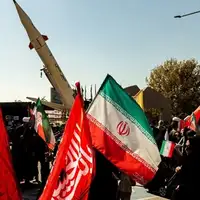
People carry Iranian and religious flags during a state-organized rally in Mashhad, October 6, 2026

Fears of renewed war with the United States, Israel or both are growing in Iran, as military officials talk openly about pre-emptive action and analysts warn that the distance between diplomacy and another round of fighting is becoming dangerously short.

The warnings come as Tehran and Washington continue indirect discussions, mediated by Qatar and others, over a framework for reopening the Strait of Hormuz and ending the conflict, while military preparations and explicit threats complicate the diplomatic track.

Morteza Maki, a senior international relations analyst, wrote in Etemad newspaper that another war was not inevitable, but pressure had reached a point where “the boundary between the threat of war and the start of war has become more fragile than before.”

Ruydad24 similarly warned Wednesday that the most important message from recent developments may not be that Washington has decided to go to war, but that “the distance between the path of negotiations and the path of military escalation has once again become very short.”

Fararu described “strategic ambiguity” as one of the defining features of the current crisis, warning that contradictory claims and uncertainty over the rules of engagement could lead to miscalculation.

The Strait of Hormuz, it said, “has now reached a point where every action there is not merely a tactical move, but a strategic statement.”

Iran signals readiness to strike first

The concerns have taken on greater significance as Iranian military officials increasingly describe pre-emption as part of Tehran’s strategy.

Brig. Gen. Mohammad Akrami-Nia, an army spokesman, told Fars that Iran had carried out pre-emptive operations in the past and would do so again under the framework of self-defense if necessary.

If Iran concludes that an enemy attack is imminent, he said, it will “definitely” launch a pre-emptive operation.

Akrami-Nia described an Iranian attack on a US base in Jordan as pre-emptive and said last week that Iran had shifted its strategy toward pre-emptive warfare following the 12-day war.

The statements have added to concerns that confrontation could escalate not only through a deliberate decision to start a war, but through either side acting on the assumption that an enemy attack is imminent.

Israeli preparations draw scrutiny

Iranian media have also focused on Israeli preparations for a possible new operation against Tehran.

Ruydad24 cited warnings by Israeli Prime Minister Benjamin Netanyahu about a possible Iranian attack alongside reports of Israeli military preparations as reasons the prospect of renewed conflict was being taken more seriously.

The outlet argued, however, that Iran’s ability to launch a pre-emptive attack should not be confused with an intention to do so, saying such an operation would carry significant costs for Tehran.

Fears of a trigger

The possibility of an incident providing the trigger for a wider conflict has become a recurring theme in Iranian commentary.

Journalist Ahmad Zeidabadi warned that Israel could stage a false-flag operation and attribute it to Iran, or conduct such an operation through infiltrators inside the country. He urged Iranian decision-makers not to fall into what he described as Netanyahu’s trap.

Foreign Ministry spokesman Esmail Baghaei raised similar concerns Wednesday in a video about alleged false-flag operations by the United States and Israel.

“False flags are an old craft: manufacture the incident, assign the blame, and harvest the consequences,” Baghaei wrote on X.

Ruydad24 warned that the greatest danger may be an ambiguous incident that sets off a wider escalation.

“The biggest danger for Tehran is not merely a direct attack; it is becoming trapped in a scenario in which a limited action, an ambiguous incident or an operation attributed to Iran becomes the pretext for another round of war,” it wrote.

War or pressure for a deal?

Despite the increasingly alarmed tone, some Iranian analysts believe a direct confrontation before the US elections remains unlikely.

Jafar Ghanadbashi, an international affairs analyst, told ILNA that “one should not expect a war before the US elections.”

He argued that the approaching elections and recent Israeli moves could instead produce efforts to create the impression that war was imminent in order to extract concessions from Iran.

That assessment offers a different reading of the military signaling: the threat of war may itself be a tool of pressure, without either side necessarily having decided to initiate another conflict.

The central concern running through Iranian commentary is not that either side has necessarily decided to start another war, but that pre-emptive military doctrines, strategic ambiguity and fears of a triggering incident have left little distance between confrontation and full-scale conflict.


Iran looks for escape routes as US sanctions close in

Oct 8, 2026, 00:00 GMT+1
•
Behrouz Turani
100%
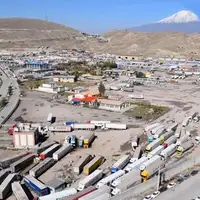
File photo: Trucks at the Bazargan border crossing between Iran and Turkey, with Mount Ararat in the background.

The widening reach of US sanctions across Iran’s transport and industrial networks has raised alarms in Tehran that Washington is seeking to close off the alternative trade routes the country has relied on to circumvent years of economic pressure.

Recent US measures have targeted Iran’s national railway system and major automakers including Iran Khodro and SAIPA, alongside foreign facilitators involved in their supply chains, while pressure has also expanded across aviation, maritime transport and financial networks.

The pattern has prompted some Iranian commentators to warn of what they describe as “network encirclement”: rather than trying to stop Iranian trade at a single chokepoint, sanctions raise the cost of moving money and goods across multiple routes simultaneously.

But Iranian economists and industry analysts are divided over how much additional pressure that can produce after years in which businesses have adapted to sanctions, and whether domestic dysfunction now poses a greater threat to industry than new US designations.

Closing alternative routes

Moderate outlet Khabar Online described the emerging strategy as “network encirclement,” arguing that modern economic blockades do not require borders to be physically sealed.

Instead, pressure can be applied simultaneously through financial sanctions, transport restrictions, higher insurance and compliance costs, and measures targeting companies and intermediaries that facilitate trade.

The importance of alternative routes was illustrated in a recent report by Mehr News Agency examining how Iran has sought to compensate for restrictions on maritime trade and rising insurance costs in the Persian Gulf.

The report highlighted truck traffic through northwestern crossings including Bazargan, Astara and Jolfa, connecting Iran with Turkey, the Caucasus and Russia. It argued that expanding land and rail corridors could reduce dependence on maritime shipping.

But Washington is increasingly targeting some of those alternatives as well.

Recent US sanctions have included Iran’s national railway system and major automakers, while also targeting facilitators in the UAE, Turkey, Hong Kong and India involved in supply chains.

Donya-e-Eghtesad described the measures as an expansion of pressure from maritime routes to overland trade, including networks used to obtain automotive parts.

An economy that has learned to adapt

Whether that approach can substantially increase pressure on Iran is less clear.

Industry analysts cited by Donya-e-Eghtesad said major Iranian automakers have developed extensive domestic sourcing after years of sanctions and reduced dependence on direct relationships with foreign manufacturers.

Eqtesad News went further, arguing that the latest measures against automakers and rail companies may carry greater political and psychological significance than immediate economic consequences.

Iran’s automotive industry has operated without direct partnerships with major international manufacturers for more than eight years and already relies heavily on intermediaries to obtain foreign components, it said.

The outlet argued that sanctions may therefore be producing diminishing returns, while domestic problems including price controls, supply-chain mismanagement and regulatory bottlenecks increasingly constrain production.

Economist Rasoul Safarahang made a similar argument in Khabar Online, saying an economy that has spent years adapting to sanctions is likely to respond to additional pressure by developing informal workarounds rather than immediately altering government policy.

Pressure extends to aviation

Aviation represents another potential pressure point because of its dependence on international maintenance, insurance, fuel and other services.

Iranian media have reported that US restrictions now cover 27 Iranian airlines, potentially affecting not only passenger travel but also time-sensitive cargo and the movement of industrial equipment and other goods.

Khabar Online estimated that restrictions on commercial aviation could cause between $3.5 billion and $5.2 billion in losses through reduced trade, tourism and supply-chain disruption, although the report did not provide sufficient detail to independently assess that estimate.

The outlet argued that longer transport times and more expensive alternative routes could ultimately feed through into higher domestic prices.

The debate in Iranian media therefore reflects two competing assessments of Washington’s strategy.

One sees sanctions as closing the routes Iran has used to adapt to earlier restrictions. The other sees an economy already so accustomed to sanctions that additional designations produces less leverage, while Iran’s own structural economic problems pose the greater threat.

‘$100k-a-month captains’: What it costs to move oil through Hormuz

Oct 7, 2026, 20:23 GMT+1
100%
A vessel sails through the Strait of Hormuz off the Iranian port city of Bandar Abbas, October 6, 2026

Oil tanker captains are being paid as much as $100,000 a month and offered $50,000 bonuses for individual trips through the Strait of Hormuz, the latest sign of the extraordinary costs now required to keep crude moving through the waterway since the Iran war began.

The payments, reported by the Financial Times on Wednesday, are several times normal salaries and are part of a wider surge in the cost of shipping through waters where Iranian missile and drone attacks have made transit perilous.

Regular crew members are also receiving multiples of their usual pay for making the crossing, according to the report.

The Wall Street Journal reported this week that some seafarers were being offered bonuses of as much as $25,000 for a single trip, with some shuttle voyages costing shippers as much as $40 million.

Middle Eastern crude exports rose above prewar levels on several days in late September, with the seven-day moving average reaching about 18.5 million barrels a day on Oct. 1, according to Kpler data reported by Reuters.

But the recovery in barrels has come at a remarkable price.

The price of passage

The cost of chartering a very large crude carrier from the Persian Gulf to China has climbed to the equivalent of about $24 a barrel, according to Kpler, with freight alone now accounting for roughly a quarter of the value of the crude being shipped.

Before the war, it accounted for about 5%.

The Baltic Exchange estimated daily earnings on its benchmark Persian Gulf-to-China route at more than $1.2 million last week.

The Financial Times reported that war-risk insurance for some tankers can reach $20 million, while ordinary sailors who make Hormuz crossings are receiving four to six times their normal wages.

Marine insurers had incurred about $2 billion in losses from the Hormuz crisis, the International Union of Marine Insurance estimated last month, even as premiums charged for individual voyages rose by multiples of their prewar levels.

‘Recovery, not normality’

The result is an unusual oil market: physical supply has recovered, but the cost of moving it has not.

Kpler says shipping has adapted through naval escorts, shuttle tankers, ship-to-ship transfers and alternative routes, allowing crude supply to recover without a political agreement between Washington and Tehran.

But it cautions that the recovery should not be mistaken for a return to normality.

“Buyers can regain access to Middle East barrels without regaining pre-conflict delivered costs,” the firm said in an analysis last week.

‘Hormuz closed’

Iran, meanwhile, rejects Washington's portrayal of the increased flows as evidence that the strait has effectively reopened.

Mohammadreza Naqdi, an adviser to the Revolutionary Guards commander, said Wednesday that Iran remained in control of Hormuz and would maintain its restrictions until Tehran's demands were met.

Tehran has said a formal reopening depends on the United States meeting seven conditions under a proposed arrangement being discussed through Qatari mediation.

At least seven attacks on tankers were reported in the first week of October, while shipping through the strait slowed sharply over the weekend.

Kpler recorded only five commodity vessels crossing on Saturday and none on Sunday, compared with 31 the previous weekend.

Tankers are crossing Hormuz, in some cases under US military protection. But shipowners, insurers and crews are demanding extraordinary compensation to take the risk — and that cost is traveling with the oil.

Kayhan attacks Ghalibaf’s role in talks. Didn’t Khamenei approve it?

Oct 7, 2026, 19:01 GMT+1
100%
Iranian Parliament Speaker Mohammad-Bagher Ghalibaf speaks with a lawmaker during a parliamentary session in Tehran, September 29, 2026

An editorial questioning Mohammad-Bagher Ghalibaf’s role as Iran’s lead negotiator has raised an awkward question in Tehran: who exactly is Kayhan criticizing, given that senior officials have said the parliament speaker was given the job with the Supreme Leader’s approval?

In a sharply worded column Wednesday, Kayhan editor Hossein Shariatmadari argued that Ghalibaf’s appointment had effectively sidelined parliament for seven months and said those responsible should explain why they had allowed one of Iran’s central institutions to become largely inactive during wartime.

“If those who made this decision knew that its consequence would be the closure of parliament, they must answer this question: What was their purpose in shutting down parliament?” he wrote. “And if they were unaware of the consequence, that is regrettable.”

Iran’s parliament largely suspended its normal work following the outbreak of war in February, with security conditions and Ghalibaf’s negotiating responsibilities limiting its activities.

‘Coordinated with the Leader’

The criticism is striking because Mahmoud Nabavian, a senior hardline lawmaker, said on April 10 that Khamenei had specifically stipulated that Ghalibaf should lead negotiations with Washington.

Nabavian said the selection had been made “with the opinion and coordination of the leadership.”

Ghalibaf has played a central role in talks with Washington since negotiations began in Islamabad in April. He subsequently said he had not volunteered for the role and took it on following a decision by the country’s governing institutions, while describing the negotiations as having proceeded with Khamenei’s authorization.

Shariatmadari did not name Khamenei or directly question his role in the appointment. But his criticism leaves unclear whom he holds responsible for a decision publicly attributed to Iran’s highest authority.

Who watches the negotiator?

The Kayhan editor went further, arguing that Ghalibaf’s roles as parliament speaker and chief negotiator were fundamentally incompatible.

Parliament is responsible for overseeing the negotiating team, Shariatmadari wrote, meaning Ghalibaf is effectively expected both to supervise the negotiations and to be subject to that supervision.

The argument amounts to a challenge to Ghalibaf’s continued combination of the two roles while negotiations with Washington remain unresolved.

Shariatmadari, a longtime hardline figure appointed to Kayhan by the late Supreme Leader Ali Khamenei, publicly clashed with Ghalibaf in August over his support for negotiations.

Ghalibaf responded by defending diplomacy as a tool of statecraft, writing that negotiations were neither inherently valuable nor taboo and that Iran should “talk when necessary, and fight when necessary.”

Ghalibaf has also acknowledged divisions within the establishment, criticizing both those who reject diplomacy altogether and those he accuses of advocating concessions to Washington.

Shariatmadari’s latest intervention goes further. Rather than challenging Ghalibaf over what he is negotiating, it questions whether the parliament speaker should have been given the job in the first place.