• العربية
  • فارسی
BrandBrand
  • Iran Insight
  • Politics
  • Economy
  • Analysis
  • Special Report
  • Opinion
  • Podcast
  • Live TV
  • Iran Insight
  • Politics
  • Economy
  • Analysis
  • Special Report
  • Opinion
  • Podcast
  • Live TV
  • Theme
  • Language
    • العربية
    • فارسی
  • Iran Insight
  • Politics
  • Economy
  • Analysis
  • Special Report
  • Opinion
  • Podcast
  • Live TV
All rights reserved for Volant Media UK Limited
volant media logo

Rubio accuses Iran of killing wounded protesters in hospitals

Oct 8, 2026, 18:07 GMT+1

US Secretary of State Marco Rubio accused Iran on Thursday of killing wounded protesters in hospitals and, in some cases, doctors and nurses who treated them.

“The Iranian regime goes into hospitals when protesters are injured and murders the people there, and sometimes murders the doctors and the nurses who treated them,” Rubio said during a visit to Lisbon.

Most Viewed

Iran looks for escape routes as US sanctions close in
1
INSIGHT

Iran looks for escape routes as US sanctions close in

2

Iran’s own surveys reveal demand for 'fundamental change'

3

Tehran divided over $2 billion plan to prop up rial

4
ANALYSIS

China shifts to Iraqi oil: is Iran using old workaround to beat US blockade?

5
ANALYSIS

From talks to war: Tehran sees the gap narrowing

Banner
Banner

Spotlight

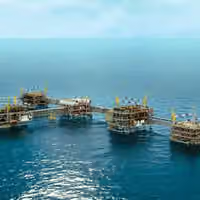
  • Saudi Aramco hires US firm to upgrade shared oil field as Iran lags behind

    Saudi Aramco hires US firm to upgrade shared oil field as Iran lags behind

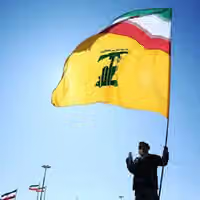
  • Iran's reported $200 million Hezbollah aid angers cash-strapped citizens
    VOICES FROM IRAN

    Iran's reported $200 million Hezbollah aid angers cash-strapped citizens

  • From talks to war: Tehran sees the gap narrowing
    ANALYSIS

    From talks to war: Tehran sees the gap narrowing

  • Iran looks for escape routes as US sanctions close in
    INSIGHT

    Iran looks for escape routes as US sanctions close in

  • China shifts to Iraqi oil: is Iran using old workaround to beat US blockade?
    ANALYSIS

    China shifts to Iraqi oil: is Iran using old workaround to beat US blockade?

  • Parsian Exchange transferred millions of dollars for Iran despite sanctions
    EXCLUSIVE

    Parsian Exchange transferred millions of dollars for Iran despite sanctions

Banner
Banner
•
•
•

More Stories

Three years after October 7, Iran pays the price of miscalculation

Oct 8, 2026, 15:59 GMT+1
•
Ata Mohamed Tabriz
100%
Three masked Iran-backed Hamas militants carrying assault rifles stand beneath a Palestinian flag.

Three years after Hamas's October 7 attack on Israel, the Islamic Republic faces a weakened network of regional allies, direct military confrontation and mounting economic pressure, upending its long-held strategy of deterring enemies while keeping war away from its territory.

"Don't ask when Iran will enter Gaza. Ask when it will leave," Hossein Shariatmadari, editor-in-chief of the hardline Kayhan newspaper, said a few weeks after the October 2023 attack.

The remark captured a contradiction in Tehran's approach. Iranian officials denied directing the Hamas operation while celebrating its consequences and presenting the so-called axis of resistance as evidence of the Islamic Republic's growing regional influence.

“Axis of Resistance” is the term Tehran uses for a network of Iran-backed groups in the region, including Palestinian militant groups, Lebanon’s Hezbollah, Iraqi militias and the Houthis in Yemen.

  • Hardline media admits losses after Assad’s fall in Syria

    Hardline media admits losses after Assad’s fall in Syria

The calculation rested on two assumptions: that time favored Iran and that its network of allied armed groups could simultaneously pressure Israel and shield Tehran from direct confrontation.

Three years later, both assumptions have been tested by wars that have weakened Iran's regional allies and brought military confrontation onto Iranian territory.

Celebrating an attack while denying responsibility

On October 10, 2023, then-Supreme Leader Ali Khamenei praised the Palestinian fighters behind the Hamas operation while denying Iranian involvement in planning it.

The distinction was deliberate. Tehran sought to benefit politically from the operation without assuming direct responsibility or risking a wider war with Israel and the United States.

Former Iranian vice president Mohammad Bagher Nobakht warned officials against remarks suggesting Iran had directly orchestrated the attack. Meanwhile, figures within the establishment argued that Hamas's weapons, tactics and organization would inevitably be associated with Iranian support.

The competing messages reflected a broader strategic dilemma: Tehran wanted its regional allies to appear powerful enough to deter its adversaries, but sufficiently independent to insulate Iran from retaliation.

Hossein Salami, then commander of the Revolutionary Guards, described the Hamas operation as Israel's greatest defeat since its establishment.

Iranian officials and military figures portrayed the attack as evidence of a shifting regional balance of power and declining US and Israeli influence.

  • Inside Iran’s Rhetoric On Hamas War On Israel

    Inside Iran’s Rhetoric On Hamas War On Israel

The underlying expectation was that Israel would struggle to sustain a prolonged conflict across multiple fronts, eventually strengthening Iran's position without requiring direct Iranian military intervention.

The regional shield breaks down

For decades, the Islamic Republic invested in a network of armed allies, including Hezbollah in Lebanon, Hamas in Gaza, Iraqi militias and the Houthis in Yemen.

These groups provided Tehran with influence beyond its borders and the ability to impose military costs on adversaries without committing Iranian forces directly.

But the wars following October 7 exposed the limitations of that arrangement.

The collapse of Bashar al-Assad's government in Syria deprived Iran of a central regional ally and a critical link in its network of influence.

Hezbollah suffered major military losses, including the killing of its leader Hassan Nasrallah, while Hamas and other Iran-aligned groups faced mounting military and political pressure.

The weakening of these allies preceded direct confrontation between Iran and Israel.

During the 12-day war, Israeli strikes damaged Iran's air defenses and killed senior military commanders, including figures who had spent years developing the Islamic Republic's regional network.

  • Iran replaces air defense commander in charge during June war

    Iran replaces air defense commander in charge during June war

The subsequent 40-day war exposed further weaknesses. The United States and Israel killed Iran's Supreme Leader Ali Khamenei at the outset of the conflict, while Hezbollah entered the fighting against Israel.

The Houthis later launched ballistic missiles toward Israel, and Iraqi militias targeted American positions in Iraq.

Although these operations imposed costs, they failed to prevent continued military action against Iran and its allies.

Fighting in southern Lebanon continued even after Tehran presented the cessation of hostilities as covering multiple fronts, underscoring its limited ability to protect regional partners.

  • Fall of Hezbollah heights ignites blame game in Tehran

    Fall of Hezbollah heights ignites blame game in Tehran

The network once intended to keep war away from Iranian territory had become increasingly unable to perform that function.

From regional proxies to strategic waterways

With its regional military network weakened, Tehran increasingly turned to geography as an instrument of pressure.

The Strait of Hormuz, a vital passage for global energy shipments, became central to Iran's efforts to raise the economic cost of military confrontation.

By restricting maritime traffic, the Islamic Republic sought to exert pressure not only on its immediate adversaries but also on Persian Gulf countries and the wider international economy.

  • Yemen takes Syria’s place in Iran’s security doctrine, says former commander

    Yemen takes Syria’s place in Iran’s security doctrine, says former commander

Tehran also looked toward the Houthis and their ability to threaten shipping through the Bab al-Mandab Strait, another critical maritime chokepoint connecting the Red Sea to international trade routes.

The strategy marked a shift from relying primarily on allied armed groups to using disruption of international commerce as leverage.

Yet it carried significant limitations.

Economic pressure on global markets did not necessarily translate into military deterrence against adversaries already prepared for confrontation.

At the same time, restrictions on shipping and the resulting increases in transportation costs placed additional pressure on Iran's own economy.

The Islamic Republic was therefore attempting to use economic disruption as a strategic weapon while facing increasingly severe economic constraints itself.

The cost of a strategy built on time

One assumption has remained remarkably consistent since October 2023: that prolonged confrontation will ultimately work in Iran's favor.

Tehran's strategy continues to depend on the belief that economic pressure on Persian Gulf states, disruption to global markets and the cost of sustained American military involvement will eventually strengthen its negotiating position.

But the conditions under which that calculation operates have changed substantially.

Iran now faces US pressure extending across maritime, air and land routes, alongside the consequences of war and the erosion of its regional military partnerships.

The pressure has exposed a contradiction in Tehran's strategy. Measures intended to raise the cost of confronting Iran have also increased the economic burden on the country itself.

  • Iran bears biggest economic cost of Hormuz closure

    Iran bears biggest economic cost of Hormuz closure

In 2023, the Islamic Republic sought to use the strength of its allies to force concessions from its adversaries while avoiding direct war.

Three years later, it is attempting to preserve its regional influence with fewer military buffers, a weakened economy and greater reliance on the strategic importance of Hormuz and Bab al-Mandab.

  • From Hormuz to Bab el-Mandeb, conflict converges on vital shipping lanes

    From Hormuz to Bab el-Mandeb, conflict converges on vital shipping lanes

The central question is no longer whether Iran's allies can exhaust Israel through prolonged confrontation, but whether Tehran can construct a credible form of deterrence after the weakening of the regional network on which its strategy depended.

The Islamic Republic entered the post-October 7 period expecting time and geography to strengthen its hand. Three years later, it must determine whether those same instruments can compensate for the military and economic costs of its original calculation.

Iran's reported $200 million Hezbollah aid angers cash-strapped citizens

Oct 8, 2026, 12:54 GMT+1
•
Saba Heidarkhani
100%

Reports that the Islamic Republic sent $200 million to Lebanon's Hezbollah have drawn anger from Iranians struggling with rising living costs, low wages and medicine shortages, according to messages sent to Iran International.

Citizens accused the authorities of prioritizing financial support for regional allies over the needs of Iranians, contrasting the reported payment with their own incomes, government subsidies and mounting household expenses.

In messages, several people described struggling to afford basic necessities, while others questioned why the Islamic Republic was directing resources abroad during Iran's economic crisis.

Hezbollah payments dwarf Iranian wages

"You give each Hezbollah family 8 billion rials, but deposit a 5000,000-rial food allowance for each Iranian and then take even that back a few hours later. This country's money belongs to its people, not Hezbollah," one citizen said.

Another compared the payments with compensation given to Iranian soldiers.

"A soldier who spent eight months under missile fire with no way to escape received seventy million rials in combat pay. Then you gave Hezbollah 8 billion rials from our money," the citizen said.

  • Parsian Exchange transferred millions of dollars for Iran despite sanctions

    Parsian Exchange transferred millions of dollars for Iran despite sanctions

Reuters reported on October 7, citing two people with direct knowledge, that Hezbollah received $200 million from Iran in September and planned initial payments of $3,000 per family, prioritizing approximately 50,000 families displaced by the war.

At an exchange rate of approximately 2.67 million rials per dollar on Iran's open market, $3,000 amounts to roughly 8 billion rials.

A teacher in Tehran with 18 years of experience compared the payments with his annual salary.

"My salary for an entire year is about 3 billion rials, yet you gave 8 billion rials of our money to the Lebanese," the teacher said.

A local government employee with 29 years of service and a master's degree said his total monthly income was 350 million rials.

Citizens in Neyshabur and Malard also criticized the reported payments, saying the Islamic Republic was directing national resources toward allied groups abroad while Iranians faced poverty and declining purchasing power.

Islamic Republic officials have not formally confirmed the reported $200 million transfer, and the US government has rejected the account.

  • Hezbollah recruitment network in Iran exposed, four safe houses identified

    Hezbollah recruitment network in Iran exposed, four safe houses identified

"Hezbollah has been decimated and caused misery for hundreds of thousands of innocent Lebanese. It is now trying to save face with fake stories about cash influxes from Iran," US State Department spokesperson Tommy Pigott said in a statement. "It can claim whatever it wants, but the money is not there."

Families sell belongings to afford basic necessities

Several citizens described the financial pressures facing their families, including difficulties paying for medicine, food and other essentials.

One person said her husband and son had been forced to sell their mobile phones to cover household expenses, contrasting the family's financial difficulties with the reported funding for Hezbollah.

Another described the rising cost of medication for her father.

"I bought just three blood pressure and heart medications for my father, and they cost 85 million rials. I didn't have enough money to buy the rest of his medicines. Insulin is also unavailable. Previously, these medicines did not even cost 5 million rials," the citizen said.

Other citizens described struggling to afford food and household expenses despite receiving government subsidies and food vouchers.

One person said the authorities treated modest increases in food assistance as a financial burden while continuing to spend substantial sums supporting allied groups in Lebanon.

Anger over Islamic Republic's spending priorities

Some calculated how many Iranian households could benefit from the reported $200 million payment, arguing that the money could help tens of thousands of families struggling with living expenses.

One person directed criticism at Supreme Leader Mojtaba Khamenei over the allocation of national resources.

"You have abandoned your own nation and are giving the Iranian people's money to the Lebanese. It is not your father's inheritance. Charity begins at home," the citizen said.

Another questioned the priorities of President Masoud Pezeshkian and his deputy, saying their public emphasis on serving Iranians conflicted with the financial support directed toward Hezbollah.

The citizen also expressed concern that such funding could contribute to continued armed conflict and civilian deaths.

  • Fall of Hezbollah heights ignites blame game in Tehran

    Fall of Hezbollah heights ignites blame game in Tehran

Several others described the reported payment as part of the Islamic Republic's longstanding policy of financing allied armed groups across the Middle East.

Reuters reported in June that Hezbollah was awaiting additional financial support from Iran after suffering heavy losses in its war with Israel.

The US Treasury Department previously said Iran had transferred over $1 billion to Hezbollah during the first 10 months of 2025.

Police officer killed in armed attack near Zahedan as violence continues in southeast Iran

Oct 8, 2026, 09:28 GMT+1
100%

An Iranian police officer was killed on Thursday when gunmen attacked a patrol near Zahedan in Sistan-Baluchestan, the latest in a series of deadly attacks and clashes involving security forces in southeastern Iran.

Zahedan governor Jamshid Rakhshani-Nasab said a vehicle belonging to a police commando unit came under fire in the Nosratabad area and that officers returned fire.

Sistan-Baluchestan police said the patrol was attacked on the main road in the Lakhshak area while carrying out a security mission. The officer killed was identified as Vahid Enayat.

Police said several attackers were wounded and fled the scene. Security forces were searching the area for those responsible, according to the statement.

Army minibus attacked on Makran coast

In a separate incident on Thursday, gunmen attacked a minibus carrying personnel from the Iranian Army’s 88th Armored Division stationed along the Makran coast, Mehr news agency reported.

The division said the personnel were traveling for a shift change when the vehicle came under fire. One person, identified as Mohammadreza Okati, was killed and three others were wounded.

Series of attacks in Sistan-Baluchestan

No group immediately took responsibility for Thursday’s attack.

The incident came three days after gunmen attacked two military vehicles in Bampur, also in Sistan-Baluchestan. Rights group Haalvsh reported at least three people killed in that attack, while Iranian state media reported lower casualty figures.

Last week, another roadside attack near Zahedan killed several people, according to differing accounts from Iranian authorities and Haalvsh. The IRGC confirmed that one of its fighters was killed in a bombing, while Haalvsh reported a higher toll and said those killed were members of the Iran-backed Fatemiyoun militia.

Repeated clashes in the southeast

The province has also seen recent fighting in Rask, Saravan and other areas, including attacks on police positions and security facilities.

Iranian authorities regularly describe armed groups operating in Sistan-Baluchestan as terrorist organizations. The province has seen repeated armed attacks, insurgent activity and clashes between security forces and gunmen in recent weeks.

Hezbollah recruitment network in Iran exposed, four safe houses identified

Oct 8, 2026, 04:53 GMT+1
•
Mojtaba Pourmohsen
100%
Hezbollah supporters attend a ceremony held by Hezbollah to commemorate the first anniversary of their late leader Hassan Nasrallah's killing by Israel, on the outskirts of Beirut, Lebanon, September 27, 2025. REUTERS/Mohamed Azakir

Hezbollah’s external operations unit has been recruiting foreign nationals in Iran and using safe houses in Qom and Tehran to train and shelter recruits, according to information obtained by Iran International.

Information provided to Iran International by an international intelligence agency shows that Hezbollah began contacting foreign students at Al-Mustafa International University five years ago. Those recruited have received training in weapons handling, sabotage, cyberattacks and espionage.

The recruitment operation is conducted in coordination with the Revolutionary Guards’ Quds Force and targets students at Al-Mustafa. The state-run institution was established 18 years ago on the orders of former Supreme Leader Ali Khamenei and has branches in more than 60 countries.

100%

Iran International’s sources identified Mohammad Hassan, an Indonesian national and Al-Mustafa graduate, as the person overseeing Hezbollah’s operation in Iran. Under the supervision of Quds Force commanders, Hassan works for Talal Hamiyah, head of Hezbollah’s Unit 910, the group’s external operations unit.

Under Hassan’s direction, Hezbollah’s recruits maintain numerous safe houses, known as “operations houses,” across Iran. Iran International obtained the locations of four such properties in Qom and Tehran.

Hassan uses an apartment in Kashaneh 2 Tower in Qom’s Velayat district, near Hakim and Payambar-e Azam boulevards, as a safe house for recruitment and training. In Tehran, the network uses properties on Seventh Kish Street in the Naft neighborhood, Third West Sarvestan Street in Rah Ahan and Sarv Alley off Alborz Street in Pounak.

100%

The Quds Force and Hezbollah use the properties as cover to shelter newly recruited members, who also receive training there.

The US Treasury designated Hamiyah a Specially Designated Global Terrorist in 2012 for supporting Hezbollah’s terrorist activities in the Middle East and around the world. The State Department’s Rewards for Justice program offers up to $7 million for information on him.

The unit’s first commander was Imad Mughniyeh, a senior Hezbollah figure who was killed in 2008. Hezbollah’s external operations unit initially included four prominent figures: Mughniyeh, Mustafa Badreddine, Talal Hamiyah and Ahmad Vahidi, then commander of the Quds Force and now commander-in-chief of the IRGC.

100%

After Badreddine was killed, Hamiyah took command of the unit. Mohammad Hassan is now recruiting for him in Qom.

Iran International’s sources identified cleric Habib Mustafa Zaatar as another participant in the recruitment operation. Born in Lebanon’s Jabal Amel region, he lives in Qom. The sources said Zaatar is a US citizen and travels to the United States several times a year. Zaatar teaches Sharh al-Lum‘ah and its section on hudud punishments at Qom’s religious seminary.

Serving as an adviser at the Noor Islamic Center and Hikmat International Academy in Qom, he teaches Shia religious subjects in English. Tuition for his course at Hikmat Academy is 835,000 tomans per month.

100%

Habib Mustafa Zaatar also has close ties to the Najaf religious seminary. He is a lecturer and researcher at the Al-Abbas shrine in Iraq and has translated several well-known Shia religious books. His command of English gives him a key role in recruiting foreign nationals studying at Al-Mustafa and Qom seminaries.

Iran International also identified four people recruited by Hezbollah who have been training for years as members of a sleeper cell in Iran.

One is Mohammad Zaki Fathoni. He heads the regional leadership council of Indonesia’s Ahlul Bayt Foundation and is a member of the Al-Mustafa alumni association. He represented Indonesia at the Fourth International Congress on Nahj al-Balagha and Alawi Governance, held at Iran’s presidential complex in Tehran in fall 2025, with President Masoud Pezeshkian in attendance.

Another recruit is Ahmad Dzilal Mukhlis. He is also a member of the Al-Mustafa alumni association.

100%
Ali al-Attas attends a government-organized Quds Day march in Qom.

Another Indonesian national in Qom, Seyyed Mohammad Mahdi Ali al-Attas, has also been recruited by Hezbollah. He heads the association of Indonesian students studying in Iran and is a member of Indonesia’s Ahlul Bayt Council. Al-Attas hosts a podcast in which he strongly supports the Islamic Republic and speaks against Israel and Zionism.

A photograph reviewed by Iran International shows al-Attas attending a government-organized Quds Day march in Qom.

The fourth Hezbollah recruit in Iran is Mohammad Saleh. He is an Al-Mustafa student and a member of a religious seminary students’ association. On January 29, 2026, Saleh met Reza Ramazani, secretary-general of the Ahlul Bayt World Assembly, as a member of the Indonesian, Thai and Malaysian religious students’ associations.

According to a photograph published by media outlets inside Iran, Saleh attended a pro-government march in September 2022, days before the protests that followed Mahsa Amini’s death, and called for compulsory hijab for Iranian women. He is active in Qom’s religious circles.

100%
Mohammad Saleh attends a pro-government rally calling for mandatory hijab in September 2022, days before the protests that followed Mahsa Amini’s death.

All these activities take place under the cover of Al-Mustafa, which received 1.8 trillion tomans in state funding for the Iranian year that began in March 2026.

Al-Mustafa describes its mission as educating Muslim students in other countries. The United States sanctioned the institution over alleged links to the Quds Force’s military and intelligence activities.

From talks to war: Tehran sees the gap narrowing

Oct 8, 2026, 02:57 GMT+1
•
Maryam Sinaiee
100%
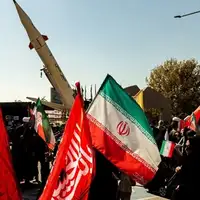
People carry Iranian and religious flags during a state-organized rally in Mashhad, October 6, 2026

Fears of renewed war with the United States, Israel or both are growing in Iran, as military officials talk openly about pre-emptive action and analysts warn that the distance between diplomacy and another round of fighting is becoming dangerously short.

The warnings come as Tehran and Washington continue indirect discussions, mediated by Qatar and others, over a framework for reopening the Strait of Hormuz and ending the conflict, while military preparations and explicit threats complicate the diplomatic track.

Morteza Maki, a senior international relations analyst, wrote in Etemad newspaper that another war was not inevitable, but pressure had reached a point where “the boundary between the threat of war and the start of war has become more fragile than before.”

Ruydad24 similarly warned Wednesday that the most important message from recent developments may not be that Washington has decided to go to war, but that “the distance between the path of negotiations and the path of military escalation has once again become very short.”

Fararu described “strategic ambiguity” as one of the defining features of the current crisis, warning that contradictory claims and uncertainty over the rules of engagement could lead to miscalculation.

The Strait of Hormuz, it said, “has now reached a point where every action there is not merely a tactical move, but a strategic statement.”

Iran signals readiness to strike first

The concerns have taken on greater significance as Iranian military officials increasingly describe pre-emption as part of Tehran’s strategy.

Brig. Gen. Mohammad Akrami-Nia, an army spokesman, told Fars that Iran had carried out pre-emptive operations in the past and would do so again under the framework of self-defense if necessary.

If Iran concludes that an enemy attack is imminent, he said, it will “definitely” launch a pre-emptive operation.

Akrami-Nia described an Iranian attack on a US base in Jordan as pre-emptive and said last week that Iran had shifted its strategy toward pre-emptive warfare following the 12-day war.

The statements have added to concerns that confrontation could escalate not only through a deliberate decision to start a war, but through either side acting on the assumption that an enemy attack is imminent.

Israeli preparations draw scrutiny

Iranian media have also focused on Israeli preparations for a possible new operation against Tehran.

Ruydad24 cited warnings by Israeli Prime Minister Benjamin Netanyahu about a possible Iranian attack alongside reports of Israeli military preparations as reasons the prospect of renewed conflict was being taken more seriously.

The outlet argued, however, that Iran’s ability to launch a pre-emptive attack should not be confused with an intention to do so, saying such an operation would carry significant costs for Tehran.

Fears of a trigger

The possibility of an incident providing the trigger for a wider conflict has become a recurring theme in Iranian commentary.

Journalist Ahmad Zeidabadi warned that Israel could stage a false-flag operation and attribute it to Iran, or conduct such an operation through infiltrators inside the country. He urged Iranian decision-makers not to fall into what he described as Netanyahu’s trap.

Foreign Ministry spokesman Esmail Baghaei raised similar concerns Wednesday in a video about alleged false-flag operations by the United States and Israel.

“False flags are an old craft: manufacture the incident, assign the blame, and harvest the consequences,” Baghaei wrote on X.

Ruydad24 warned that the greatest danger may be an ambiguous incident that sets off a wider escalation.

“The biggest danger for Tehran is not merely a direct attack; it is becoming trapped in a scenario in which a limited action, an ambiguous incident or an operation attributed to Iran becomes the pretext for another round of war,” it wrote.

War or pressure for a deal?

Despite the increasingly alarmed tone, some Iranian analysts believe a direct confrontation before the US elections remains unlikely.

Jafar Ghanadbashi, an international affairs analyst, told ILNA that “one should not expect a war before the US elections.”

He argued that the approaching elections and recent Israeli moves could instead produce efforts to create the impression that war was imminent in order to extract concessions from Iran.

That assessment offers a different reading of the military signaling: the threat of war may itself be a tool of pressure, without either side necessarily having decided to initiate another conflict.

The central concern running through Iranian commentary is not that either side has necessarily decided to start another war, but that pre-emptive military doctrines, strategic ambiguity and fears of a triggering incident have left little distance between confrontation and full-scale conflict.