• العربية
  • فارسی
BrandBrand
  • Iran Insight
  • Politics
  • Economy
  • Analysis
  • Special Report
  • Opinion
  • Podcast
  • Live TV
  • Iran Insight
  • Politics
  • Economy
  • Analysis
  • Special Report
  • Opinion
  • Podcast
  • Live TV
  • Theme
  • Language
    • العربية
    • فارسی
  • Iran Insight
  • Politics
  • Economy
  • Analysis
  • Special Report
  • Opinion
  • Podcast
  • Live TV
All rights reserved for Volant Media UK Limited
volant media logo

Saudi plane heavily damaged by fire at Riyadh airport - Reuters

Oct 8, 2026, 20:02 GMT+1Updated: 21:04 GMT+1

A commercial plane belonging to state-owned Saudi Arabian Airlines was heavily damaged by fire while parked at a terminal at Riyadh airport on Thursday, Reuters reported, citing three people briefed on the matter.

The sources said the damage was believed to have been caused either by shrapnel or a direct hit by a projectile. The aircraft was believed to have been empty of passengers, though injuries could not be ruled out.

Most Viewed

Iran looks for escape routes as US sanctions close in
1
INSIGHT

Iran looks for escape routes as US sanctions close in

2

Iran’s own surveys reveal demand for 'fundamental change'

3

Tehran divided over $2 billion plan to prop up rial

4
ANALYSIS

China shifts to Iraqi oil: is Iran using old workaround to beat US blockade?

5
ANALYSIS

From talks to war: Tehran sees the gap narrowing

Banner
Banner

Spotlight

  • Saudi Aramco hires US firm to upgrade shared oil field as Iran lags behind

    Saudi Aramco hires US firm to upgrade shared oil field as Iran lags behind

  • Iran's reported $200 million Hezbollah aid angers cash-strapped citizens
    VOICES FROM IRAN

    Iran's reported $200 million Hezbollah aid angers cash-strapped citizens

  • From talks to war: Tehran sees the gap narrowing
    ANALYSIS

    From talks to war: Tehran sees the gap narrowing

  • Iran looks for escape routes as US sanctions close in
    INSIGHT

    Iran looks for escape routes as US sanctions close in

  • China shifts to Iraqi oil: is Iran using old workaround to beat US blockade?
    ANALYSIS

    China shifts to Iraqi oil: is Iran using old workaround to beat US blockade?

  • Parsian Exchange transferred millions of dollars for Iran despite sanctions
    EXCLUSIVE

    Parsian Exchange transferred millions of dollars for Iran despite sanctions

Banner
Banner
•
•
•

More Stories

Saudi Aramco hires US firm to upgrade shared oil field as Iran lags behind

Oct 8, 2026, 20:00 GMT+1
•
Dalga Khatinoglu
100%
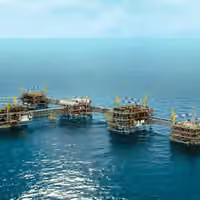
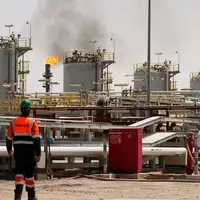
File photo from Saudi Aramco website shows Marjan offshore field

Saudi Aramco has hired a US engineering firm to upgrade an offshore oil field it shares with Iran, which has fallen far behind several neighbors in developing shared energy reserves.

KBR said on October 6 that it would provide engineering and project execution services for offshore processing facilities, gas compression and power systems at Marjan in the Persian Gulf. The work is intended to maintain production capacity and improve associated-gas processing. The company did not disclose the contract’s value.

The award follows a wider expansion of Marjan, whose total budget was put at $21 billion by industry publication Oil & Gas Middle East in a 2023 report.

Aramco said the Marjan project added 300,000 barrels a day of production capacity at the end of 2025. The expansion was designed to bring the field’s capacity to 800,000 barrels a day.

Iran calls its side of the reservoir Forouzan. Iran Open Data estimated Iranian production at about 35,000 barrels a day in a January 21 assessment, attributing the country’s wider difficulties developing shared fields to underinvestment and management constraints.

Saudi Arabia has also expanded its gas-processing infrastructure. Aramco said the Tanajib plant began operations in December 2025 and was expected to reach a raw-gas processing capacity of 2.6 billion cubic feet a day in 2026, handling supplies from both Marjan and Zuluf.

On the Iranian side, the Oil Ministry’s SHANA news agency reported in February that a project to collect gas otherwise burned off at Forouzan and other offshore fields was 76% complete. It said operations were expected to begin in 2028, subject to financing.

Saudi Arabia and Kuwait advance disputed gas project

Saudi Arabia and Kuwait are also moving ahead with development of the Durra offshore gas field, which Iran calls Arash and claims a share of.

Industry publication MEED reported in August that Al-Khafji Joint Operations had awarded contracts for two offshore packages and one onshore package worth an estimated $6.7 billion. The venture is jointly owned by Aramco Gulf Operations Company and Kuwait Gulf Oil Company, subsidiaries of the two countries’ state energy companies.

Iran says part of the field extends into its waters and that it should participate in development. Saudi Arabia and Kuwait reject that claim and maintain that rights to the field belong exclusively to them.

Iran’s wider production gap

The disparity extends to fields Iran shares with other neighbors. In its January assessment, Iran Open Data estimated UAE production from shared oil fields at 130,000 barrels a day, against 58,000 for Iran.

It put Iraq’s extraction from shared oil fields at roughly twice Iran’s and Qatar’s oil-layer output from the South Pars/North Field reservoir at 13 times Iran’s.

Oman was an exception: the assessment put each country’s production from the Hengam field, known as West Bukha in Oman, at about 10,000 barrels a day.

Iran’s national crude production has since fallen sharply during the war. The International Energy Agency estimated output at 2.16 million barrels a day in August, down from 3.59 million in February—a decline of about 40%.

US sanctions 17 ships in push to shut down Iran’s shadow fleet

Oct 8, 2026, 18:25 GMT+1
100%
FILE PHOTO: Tankers sail in the Persian Gulf, near the Strait of Hormuz, as seen from northern Ras al-Khaimah, near the border with Oman’s Musandam governance, amid the U.S.-Israeli conflict with Iran, in United Arab Emirates, March 11, 2026.

The US Treasury sanctioned 17 vessels and their owners Thursday under Operation Economic Outcast, saying the action effectively neutralizes most of Iran’s remaining shadow fleet.

In a statement, Treasury said the ships had carried millions of barrels of Iranian crude, petroleum products and petrochemicals to markets in South and East Asia. The network spanned more than a dozen jurisdictions and relied on international front companies.

Thursday’s broader Iran-related sanctions targeted six individuals, 27 entities and 22 vessels in total, including the 17 ships highlighted by Treasury. The additional targets included five Indian nationals and a Turkish national, along with companies including India’s Samudra Marine Services and SSPL Solutions and the UAE’s Hessonite Ship Management.

“Treasury is starving the tyrannical regime in Tehran of the money it uses to wage war in the region, and we will continue exposing those who enable the regime’s oil sales,” said Secretary of the Treasury Scott Bessent. “No enabler of Iranian sanctions evasion is safe from the full force of Treasury’s authorities.”

Among the targets were the Cameroon-flagged Shenzhen, which Treasury said had transported more than 3.5 million barrels of Iranian crude since November 2025, and the Vanuatu-flagged Tina 5, which carried more than 1.5 million barrels in August. Designated companies include firms in China, Hong Kong, the Marshall Islands and the British Virgin Islands.

Treasury said vessels regularly enter and leave the network, and pledged to continue monitoring attempts to evade sanctions.

Thursday’s measures, issued under Executive Order 13902, freeze the targets’ assets under US jurisdiction and generally prohibit US persons from dealing with them. Foreign financial institutions risk secondary sanctions for knowingly facilitating significant transactions for designated parties.

Treasury also removed the Hakuna Matata and Pinocchio from its sanctions list after they left Iran’s shadow fleet and were sold to non-sanctioned, US-aligned operators. Both vessels had been listed in June 2025.

Launched on August 24 and dubbed Economic D-Day, Operation Economic Outcast seeks to isolate Iran’s revenue and financial networks by increasing pressure on foreign companies and governments that sustain trade with Tehran.

The campaign expanded sanctions exposure across digital assets, technology, gold, aviation and shipping, threatening foreign businesses with exclusion from the US financial system. The broader authorities do not automatically sanction every foreign business in those sectors, but allow Washington to designate additional targets.

On October 1, Washington widened the campaign to Iran’s automotive and rail industries, sanctioning major manufacturers including Iran Khodro and SAIPA.

Treasury said the US military blockade, dwindling oil shipments outside it and widening sanctions were leaving Tehran with fewer options to stabilize its economy.

Iran’s central bank governor, Abdolnaser Hemmati, said Tuesday that the economy was still functioning and rejected what he described as US predictions of collapse.

Three years after October 7, Iran pays the price of miscalculation

Oct 8, 2026, 15:59 GMT+1
•
Ata Mohamed Tabriz
100%
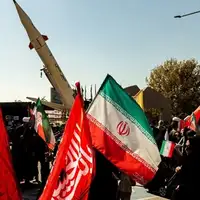
Three masked Iran-backed Hamas militants carrying assault rifles stand beneath a Palestinian flag.

Three years after Hamas's October 7 attack on Israel, the Islamic Republic faces a weakened network of regional allies, direct military confrontation and mounting economic pressure, upending its long-held strategy of deterring enemies while keeping war away from its territory.

"Don't ask when Iran will enter Gaza. Ask when it will leave," Hossein Shariatmadari, editor-in-chief of the hardline Kayhan newspaper, said a few weeks after the October 2023 attack.

The remark captured a contradiction in Tehran's approach. Iranian officials denied directing the Hamas operation while celebrating its consequences and presenting the so-called axis of resistance as evidence of the Islamic Republic's growing regional influence.

“Axis of Resistance” is the term Tehran uses for a network of Iran-backed groups in the region, including Palestinian militant groups, Lebanon’s Hezbollah, Iraqi militias and the Houthis in Yemen.

  • Hardline media admits losses after Assad’s fall in Syria

    Hardline media admits losses after Assad’s fall in Syria

The calculation rested on two assumptions: that time favored Iran and that its network of allied armed groups could simultaneously pressure Israel and shield Tehran from direct confrontation.

Three years later, both assumptions have been tested by wars that have weakened Iran's regional allies and brought military confrontation onto Iranian territory.

Celebrating an attack while denying responsibility

On October 10, 2023, then-Supreme Leader Ali Khamenei praised the Palestinian fighters behind the Hamas operation while denying Iranian involvement in planning it.

The distinction was deliberate. Tehran sought to benefit politically from the operation without assuming direct responsibility or risking a wider war with Israel and the United States.

Former Iranian vice president Mohammad Bagher Nobakht warned officials against remarks suggesting Iran had directly orchestrated the attack. Meanwhile, figures within the establishment argued that Hamas's weapons, tactics and organization would inevitably be associated with Iranian support.

The competing messages reflected a broader strategic dilemma: Tehran wanted its regional allies to appear powerful enough to deter its adversaries, but sufficiently independent to insulate Iran from retaliation.

Hossein Salami, then commander of the Revolutionary Guards, described the Hamas operation as Israel's greatest defeat since its establishment.

Iranian officials and military figures portrayed the attack as evidence of a shifting regional balance of power and declining US and Israeli influence.

  • Inside Iran’s Rhetoric On Hamas War On Israel

    Inside Iran’s Rhetoric On Hamas War On Israel

The underlying expectation was that Israel would struggle to sustain a prolonged conflict across multiple fronts, eventually strengthening Iran's position without requiring direct Iranian military intervention.

The regional shield breaks down

For decades, the Islamic Republic invested in a network of armed allies, including Hezbollah in Lebanon, Hamas in Gaza, Iraqi militias and the Houthis in Yemen.

These groups provided Tehran with influence beyond its borders and the ability to impose military costs on adversaries without committing Iranian forces directly.

But the wars following October 7 exposed the limitations of that arrangement.

The collapse of Bashar al-Assad's government in Syria deprived Iran of a central regional ally and a critical link in its network of influence.

Hezbollah suffered major military losses, including the killing of its leader Hassan Nasrallah, while Hamas and other Iran-aligned groups faced mounting military and political pressure.

The weakening of these allies preceded direct confrontation between Iran and Israel.

During the 12-day war, Israeli strikes damaged Iran's air defenses and killed senior military commanders, including figures who had spent years developing the Islamic Republic's regional network.

  • Iran replaces air defense commander in charge during June war

    Iran replaces air defense commander in charge during June war

The subsequent 40-day war exposed further weaknesses. The United States and Israel killed Iran's Supreme Leader Ali Khamenei at the outset of the conflict, while Hezbollah entered the fighting against Israel.

The Houthis later launched ballistic missiles toward Israel, and Iraqi militias targeted American positions in Iraq.

Although these operations imposed costs, they failed to prevent continued military action against Iran and its allies.

Fighting in southern Lebanon continued even after Tehran presented the cessation of hostilities as covering multiple fronts, underscoring its limited ability to protect regional partners.

  • Fall of Hezbollah heights ignites blame game in Tehran

    Fall of Hezbollah heights ignites blame game in Tehran

The network once intended to keep war away from Iranian territory had become increasingly unable to perform that function.

From regional proxies to strategic waterways

With its regional military network weakened, Tehran increasingly turned to geography as an instrument of pressure.

The Strait of Hormuz, a vital passage for global energy shipments, became central to Iran's efforts to raise the economic cost of military confrontation.

By restricting maritime traffic, the Islamic Republic sought to exert pressure not only on its immediate adversaries but also on Persian Gulf countries and the wider international economy.

  • Yemen takes Syria’s place in Iran’s security doctrine, says former commander

    Yemen takes Syria’s place in Iran’s security doctrine, says former commander

Tehran also looked toward the Houthis and their ability to threaten shipping through the Bab al-Mandab Strait, another critical maritime chokepoint connecting the Red Sea to international trade routes.

The strategy marked a shift from relying primarily on allied armed groups to using disruption of international commerce as leverage.

Yet it carried significant limitations.

Economic pressure on global markets did not necessarily translate into military deterrence against adversaries already prepared for confrontation.

At the same time, restrictions on shipping and the resulting increases in transportation costs placed additional pressure on Iran's own economy.

The Islamic Republic was therefore attempting to use economic disruption as a strategic weapon while facing increasingly severe economic constraints itself.

The cost of a strategy built on time

One assumption has remained remarkably consistent since October 2023: that prolonged confrontation will ultimately work in Iran's favor.

Tehran's strategy continues to depend on the belief that economic pressure on Persian Gulf states, disruption to global markets and the cost of sustained American military involvement will eventually strengthen its negotiating position.

But the conditions under which that calculation operates have changed substantially.

Iran now faces US pressure extending across maritime, air and land routes, alongside the consequences of war and the erosion of its regional military partnerships.

The pressure has exposed a contradiction in Tehran's strategy. Measures intended to raise the cost of confronting Iran have also increased the economic burden on the country itself.

  • Iran bears biggest economic cost of Hormuz closure

    Iran bears biggest economic cost of Hormuz closure

In 2023, the Islamic Republic sought to use the strength of its allies to force concessions from its adversaries while avoiding direct war.

Three years later, it is attempting to preserve its regional influence with fewer military buffers, a weakened economy and greater reliance on the strategic importance of Hormuz and Bab al-Mandab.

  • From Hormuz to Bab el-Mandeb, conflict converges on vital shipping lanes

    From Hormuz to Bab el-Mandeb, conflict converges on vital shipping lanes

The central question is no longer whether Iran's allies can exhaust Israel through prolonged confrontation, but whether Tehran can construct a credible form of deterrence after the weakening of the regional network on which its strategy depended.

The Islamic Republic entered the post-October 7 period expecting time and geography to strengthen its hand. Three years later, it must determine whether those same instruments can compensate for the military and economic costs of its original calculation.

Iran's reported $200 million Hezbollah aid angers cash-strapped citizens

Oct 8, 2026, 12:54 GMT+1
•
Saba Heidarkhani
100%

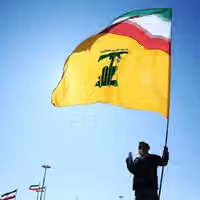
Reports that the Islamic Republic sent $200 million to Lebanon's Hezbollah have drawn anger from Iranians struggling with rising living costs, low wages and medicine shortages, according to messages sent to Iran International.

Citizens accused the authorities of prioritizing financial support for regional allies over the needs of Iranians, contrasting the reported payment with their own incomes, government subsidies and mounting household expenses.

In messages, several people described struggling to afford basic necessities, while others questioned why the Islamic Republic was directing resources abroad during Iran's economic crisis.

Hezbollah payments dwarf Iranian wages

"You give each Hezbollah family 8 billion rials, but deposit a 5000,000-rial food allowance for each Iranian and then take even that back a few hours later. This country's money belongs to its people, not Hezbollah," one citizen said.

Another compared the payments with compensation given to Iranian soldiers.

"A soldier who spent eight months under missile fire with no way to escape received seventy million rials in combat pay. Then you gave Hezbollah 8 billion rials from our money," the citizen said.

  • Parsian Exchange transferred millions of dollars for Iran despite sanctions

    Parsian Exchange transferred millions of dollars for Iran despite sanctions

Reuters reported on October 7, citing two people with direct knowledge, that Hezbollah received $200 million from Iran in September and planned initial payments of $3,000 per family, prioritizing approximately 50,000 families displaced by the war.

At an exchange rate of approximately 2.67 million rials per dollar on Iran's open market, $3,000 amounts to roughly 8 billion rials.

A teacher in Tehran with 18 years of experience compared the payments with his annual salary.

"My salary for an entire year is about 3 billion rials, yet you gave 8 billion rials of our money to the Lebanese," the teacher said.

A local government employee with 29 years of service and a master's degree said his total monthly income was 350 million rials.

Citizens in Neyshabur and Malard also criticized the reported payments, saying the Islamic Republic was directing national resources toward allied groups abroad while Iranians faced poverty and declining purchasing power.

Islamic Republic officials have not formally confirmed the reported $200 million transfer, and the US government has rejected the account.

  • Hezbollah recruitment network in Iran exposed, four safe houses identified

    Hezbollah recruitment network in Iran exposed, four safe houses identified

"Hezbollah has been decimated and caused misery for hundreds of thousands of innocent Lebanese. It is now trying to save face with fake stories about cash influxes from Iran," US State Department spokesperson Tommy Pigott said in a statement. "It can claim whatever it wants, but the money is not there."

Families sell belongings to afford basic necessities

Several citizens described the financial pressures facing their families, including difficulties paying for medicine, food and other essentials.

One person said her husband and son had been forced to sell their mobile phones to cover household expenses, contrasting the family's financial difficulties with the reported funding for Hezbollah.

Another described the rising cost of medication for her father.

"I bought just three blood pressure and heart medications for my father, and they cost 85 million rials. I didn't have enough money to buy the rest of his medicines. Insulin is also unavailable. Previously, these medicines did not even cost 5 million rials," the citizen said.

Other citizens described struggling to afford food and household expenses despite receiving government subsidies and food vouchers.

One person said the authorities treated modest increases in food assistance as a financial burden while continuing to spend substantial sums supporting allied groups in Lebanon.

Anger over Islamic Republic's spending priorities

Some calculated how many Iranian households could benefit from the reported $200 million payment, arguing that the money could help tens of thousands of families struggling with living expenses.

One person directed criticism at Supreme Leader Mojtaba Khamenei over the allocation of national resources.

"You have abandoned your own nation and are giving the Iranian people's money to the Lebanese. It is not your father's inheritance. Charity begins at home," the citizen said.

Another questioned the priorities of President Masoud Pezeshkian and his deputy, saying their public emphasis on serving Iranians conflicted with the financial support directed toward Hezbollah.

The citizen also expressed concern that such funding could contribute to continued armed conflict and civilian deaths.

  • Fall of Hezbollah heights ignites blame game in Tehran

    Fall of Hezbollah heights ignites blame game in Tehran

Several others described the reported payment as part of the Islamic Republic's longstanding policy of financing allied armed groups across the Middle East.

Reuters reported in June that Hezbollah was awaiting additional financial support from Iran after suffering heavy losses in its war with Israel.

The US Treasury Department previously said Iran had transferred over $1 billion to Hezbollah during the first 10 months of 2025.

Police officer killed in armed attack near Zahedan as violence continues in southeast Iran

Oct 8, 2026, 09:28 GMT+1
100%

An Iranian police officer was killed on Thursday when gunmen attacked a patrol near Zahedan in Sistan-Baluchestan, the latest in a series of deadly attacks and clashes involving security forces in southeastern Iran.

Zahedan governor Jamshid Rakhshani-Nasab said a vehicle belonging to a police commando unit came under fire in the Nosratabad area and that officers returned fire.

Sistan-Baluchestan police said the patrol was attacked on the main road in the Lakhshak area while carrying out a security mission. The officer killed was identified as Vahid Enayat.

Police said several attackers were wounded and fled the scene. Security forces were searching the area for those responsible, according to the statement.

Army minibus attacked on Makran coast

In a separate incident on Thursday, gunmen attacked a minibus carrying personnel from the Iranian Army’s 88th Armored Division stationed along the Makran coast, Mehr news agency reported.

The division said the personnel were traveling for a shift change when the vehicle came under fire. One person, identified as Mohammadreza Okati, was killed and three others were wounded.

Series of attacks in Sistan-Baluchestan

No group immediately took responsibility for Thursday’s attack.

The incident came three days after gunmen attacked two military vehicles in Bampur, also in Sistan-Baluchestan. Rights group Haalvsh reported at least three people killed in that attack, while Iranian state media reported lower casualty figures.

Last week, another roadside attack near Zahedan killed several people, according to differing accounts from Iranian authorities and Haalvsh. The IRGC confirmed that one of its fighters was killed in a bombing, while Haalvsh reported a higher toll and said those killed were members of the Iran-backed Fatemiyoun militia.

Repeated clashes in the southeast

The province has also seen recent fighting in Rask, Saravan and other areas, including attacks on police positions and security facilities.

Iranian authorities regularly describe armed groups operating in Sistan-Baluchestan as terrorist organizations. The province has seen repeated armed attacks, insurgent activity and clashes between security forces and gunmen in recent weeks.