• العربية
  • فارسی
Brand
  • Iran Insight
  • Politics
  • Economy
  • Analysis
  • Special Report
  • Opinion
  • Podcast
  • Live TV
  • Iran Insight
  • Politics
  • Economy
  • Analysis
  • Special Report
  • Opinion
  • Podcast
  • Live TV
  • Theme
  • Language
    • العربية
    • فارسی
  • Iran Insight
  • Politics
  • Economy
  • Analysis
  • Special Report
  • Opinion
  • Podcast
  • Live TV
All rights reserved for Volant Media UK Limited
volant media logo

Iranian women break records and barriers at Asian Games

Oct 3, 2026, 20:04 GMT+1Updated: 21:41 GMT+1
Rowers Kimia Zarei and Zeinab Norouzi celebrate with their gold medals after winning the women’s lightweight double sculls

Iranian women have delivered a record-breaking performance at the 2026 Asian Games, winning medals across an unusually broad range of sports and achieving a series of firsts for the country.

From first women’s gold medals in rowing and taekwondo to first female medalists in weightlifting and first women’s medal in a running event, the Games in Japan have produced breakthroughs across disciplines in which Iranian women have historically had little presence on the continental podium.

The results are particularly striking given the restrictions Iranian women face under the Islamic Republic over what they wear, which sports they can compete in and the resources available to them.

Perhaps the most striking came on the water.

Within about 20 minutes on September 24, Iranian women won their country’s first two Asian Games rowing golds. Fatemeh Mojallal won the lightweight single sculls before Kimia Zarei and Zeinab Norouzi took gold in the lightweight double sculls.

Mojallal also won bronze in the single sculls, while Zarei and Norouzi added silver in the double sculls. Mahsa Javer, Soha Fakhri, Saghi Maleki and Hengameh Kamyab took silver in the quadruple sculls.

100%
Iranian climber Sarina Ghaffari competes at the 2026 Asian Games in Aichi-Nagoya, Japan.

Iranian women finished the rowing competition with two golds, two silvers and a bronze.

The achievement came after preparations were severely disrupted by the war.

Zarei told the Olympic Council of Asia that the rowers spent around 50 days training at home after their camp was cancelled, using rowing machines rather than getting on the water.

They eventually returned to camp despite the continuing conflict.

“We risked our lives because we wanted this moment,” Zarei said, adding that Iranian women and athletes in particular face “very unique challenges.”

100%
Iran’s Zahra Kahrizi competes in padel at the 2026 Asian Games in Aichi-Nagoya, Japan.

Women were excluded from many disciplines after the 1979 Islamic Revolution and remain required to compete under state-mandated dress rules. Their access to facilities, funding and international competition has also frequently lagged behind that of male athletes.

Four years ago, the death of Mahsa Amini in morality-police custody sparked the Woman, Life, Freedom uprising, which grew into a broader challenge to state restrictions on women.

Since then, young Iranian women have increasingly defied compulsory hijab and other limits on their public lives, driving a social transformation that has continued despite the state’s efforts to reassert control.

Women’s participation in sport has also steadily expanded, sometimes producing success in disciplines where an Iranian female presence at elite international level is relatively recent.

100%
Hengameh Hadiyani competes in artistic gymnastics at the Asian Games

Twenty-year-old Hengameh Hadiyani made history simply by competing, becoming the first Iranian woman to take part in artistic gymnastics at the Asian Games since the 1979 revolution.

She competed in the vault qualification, placing 13th.

Iranian women had effectively been excluded from international gymnastics for decades, with officials citing mandatory dress requirements as an obstacle to participation.

As recently as 2023, a senior Iranian sports official said standard gymnastics attire was incompatible with the Islamic Republic’s “cultural standards.”

But Hadiyani’s full-body competition outfit, designed to comply with Iran’s dress rules while allowing her to compete, drew widespread attention and praise.

100%
Zahra Zarei competes in the women’s 400 metres at the 2026 Asian Games, where she won silver

In athletics, Zahra Zarei ran the 400 metres in 52.38 seconds to win silver, becoming the first Iranian woman to win an Asian Games medal in a running event.

There was another first in weightlifting.

Reihaneh Karimi, 20, lifted a combined 243kg in the 77kg category to take bronze, becoming Iran’s first female Asian Games medalist in weightlifting.

Two days later, 17-year-old Mahsa Beheshti added bronze in the 86kg category.

Iran only began fielding women internationally in weightlifting in recent years. In Nagoya, it produced two medalists, one just 17.

100%
Saghar Moradi Sheikhlari celebrates with her gold medal after winning the women’s under-67kg taekwondo title.

Another landmark came on Friday, when 19-year-old Saghar Moradi Sheikhlari won the women’s under-67kg taekwondo title, becoming the first Iranian woman to win an Asian Games gold in the sport.

A day later, Fatemeh Ahmadi won bronze in women’s taekwondo +67 kg.

Iranian women also took silver in kabaddi after losing a closely fought final 37-34 to India. It continued an unusual run of consistency for the team, which has now won a medal at five consecutive Asian Games, including gold in 2018.

In karate, Fatemeh-Zahra Saeidabadi won silver in the women’s under-55kg competition, while Fatemeh Sadeghi, Sepideh Amini and Zeinab Hosseini took another silver in team kata. Fatemeh Barmaki added bronze in kurash.

100%
Reyhaneh Karimi celebrates after a successful attempt in the women’s 77kg weightlifting event, where she won bronze.

Iran also won bronze in mixed team shooting through Hanieh Rostamian and Vahid Golkhandan.

Not every breakthrough came with a medal. Meshkatolzahra Safi and Mandegar Farzami became the first Iranian women to win singles matches in tennis at an Asian Games, both advancing from the opening round in Nagoya.

Female athletes also competed in mixed events in tennis, table tennis, archery and the mixed 4x400-metre relay.

Their presence across those events further reflected the breadth of the women’s contribution to Iran’s Games.

100%
Hanieh Rostamian and Vahid Golkhandan celebrate after winning bronze for Iran in the mixed team shooting event at the 2026 Asian Games.

Across rowing, athletics, weightlifting and taekwondo, Iranian women rewrote several parts of the country’s Asian Games record within the space of a few days.

Zarei has said she hopes the visibility of athletes like her can encourage another generation of Iranian girls.

“I always try to show the good part of an athlete’s life and motivate the girls at home,” she told the Olympic Council of Asia.

“I always try to show them that you can do this, you can do that, and you can be successful.”
Most Viewed

Iranian press sees diplomacy alive but narrowing after US response
1
INSIGHT

Iranian press sees diplomacy alive but narrowing after US response

2

Officials trade blame as Iran’s economy sinks deeper

3
ANALYSIS

Iran's rhetoric against UAE hardens after Netanyahu visit

4
INSIGHT

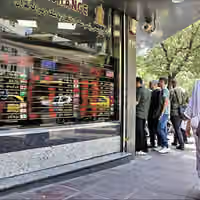
As the rial sinks, Iranians seek shelter in almost anything else

5
INSIGHT

Leaked Kremlin plan undercuts Moscow's claims on ruble-rial trade with Iran

Banner

Spotlight

  • Islamic Republic's 'slow meltdown' leaves it fewer ways out, analysts say
    PODCAST

    Islamic Republic's 'slow meltdown' leaves it fewer ways out, analysts say

  • Officials trade blame as Iran’s economy sinks deeper

    Officials trade blame as Iran’s economy sinks deeper

  • As the rial sinks, Iranians seek shelter in almost anything else
    INSIGHT

    As the rial sinks, Iranians seek shelter in almost anything else

  • Shot in leg, forced into hiding: Iran protester recounts January crackdown

    Shot in leg, forced into hiding: Iran protester recounts January crackdown

  • Al-Qaeda is Iran's quiet backup if the war turns, expert says

    Al-Qaeda is Iran's quiet backup if the war turns, expert says

  • Can the Caspian give Iran a way around Hormuz?
    ANALYSIS

    Can the Caspian give Iran a way around Hormuz?

  • A Mossad spy in Iran: From banking infiltration to nuclear and missile sabotage
    SPECIAL REPORT

    A Mossad spy in Iran: From banking infiltration to nuclear and missile sabotage

Banner
Banner
Banner
Banner
•
•
•

More Stories

'The end of illness is not treatment. It is death': Iranian MP on the cost of care

Oct 3, 2026, 12:28 GMT+1
100%
Patients receive treatment at Imam Khomeini Hospital in Tehran.

Iranians are selling livestock, cars and furniture to pay for treatment their insurance no longer covers, and a member of parliament's health committee says the system has reached the point where falling ill can end in death rather than care.

"We have reached a point where we hope people don't get sick, because if they do, the end of that illness is not treatment. It is death," Salman Es'haghi, spokesman for parliament's Health and Treatment Committee, told the labor-affiliated news agency ILNA.

The pressure cannot simply be blamed on war and sanctions, Es'haghi said, accusing the authorities of failing to tackle corruption and poor decision-making as households struggle to pay for medicines, equipment and diagnostic tests.

A separate ILNA report from clinics in Tehran found the same thing from the other side: insured patients waiting weeks or months for diagnostic services, or paying privately for tests they could not get through the Social Security Organization, the state insurer that covers most of Iran's workers and retirees.

A couple sells their sheep and their car

Es'haghi described a rural couple who had sold their livestock and their Pride, the cheap Iranian-built car that was for decades the country's most common, after being told the wife needed a heart valve.

"A man and a woman from one of the villages came to see me," he said. "They said they had several sheep and a Pride, and they had sold them because they were told they needed to buy a heart valve for his wife."

  • Officials trade blame as Iran’s economy sinks deeper

    Officials trade blame as Iran’s economy sinks deeper

  • As the rial sinks, Iranians seek shelter in almost anything else

    As the rial sinks, Iranians seek shelter in almost anything else

  • Iran’s truck repair hub feels the squeeze as work dries up

    Iran’s truck repair hub feels the squeeze as work dries up

The couple paid 13 billion rials for the valve, about $5,000 at Saturday's open-market rate, or six and a half years of the minimum wage, Eshaghi said. They were then told it was unsuitable and that they would need another.

"A suitable, high-quality valve costs close to 42 billion rials," he said, about $16,000, or 21 years of the minimum wage. "Which patient can pay 42 billion rials?"

Many farming families were selling animals, vehicles and other assets to cover both the equipment and the surgery, he said.

"We have unfortunately closed our eyes to our people dying because of a lack of medicine and the high cost of treatment," Es'haghi said.

Insurance leaves patients exposed

Iran's health insurance funds have stopped protecting patients from the cost of care, Es'haghi said.

"Our insurance funds have effectively declared bankruptcy, but they don't say it out loud," he said. "Because they don't acknowledge their own bankruptcy, they have shifted that bankruptcy onto the people."

More than 80 percent of treatment costs are now paid directly by patients, he said, without giving a source for the figure.

ILNA's reporting on the Social Security Organization points the same way. Nearly 9.9 million people insured by the organization in Tehran province have access to just 36 medical facilities it owns, including 16 polyclinics, according to official figures the agency cited. That is roughly one polyclinic for every 620,000 insured people.

Seeing a doctor is only the beginning

For many patients, getting an appointment does not mean they can complete the treatment prescribed.

At the Abureihan Social Security clinic in Tehran, one woman told ILNA that the ultrasound service the clinic once offered had disappeared.

"This place used to have ultrasound, but it hasn't had it for some time, and now I have to pay a huge amount outside," she said.

Another patient said the clinic had no mammography.

A middle-aged woman in severe abdominal pain said she could not afford the imaging and examinations she had been prescribed.

"I am in severe pain, but further imaging, tests and doctors are beyond what I can afford," she said.

She was the household's breadwinner, she said, earning money from weaving carpets while her husband was out of work. When she was referred to another hospital, she learned the care there would not be free either.

"I have to wait until the carpet is sold and I get the money," she said.

100%
Spokesman for parliament's Health and Treatment Committee Salman Es'haghi

Weeks or months of waiting

Patients who stay inside the Social Security system face long queues instead.

  • Meat, cream, rice: Food becomes loot as prices soar in Iran

    Meat, cream, rice: Food becomes loot as prices soar in Iran

  • Disease, drug shortages grip overcrowded Iran prison

    Disease, drug shortages grip overcrowded Iran prison

  • Tehran ‘ashamed’ as Iranians struggle to make ends meet

    Tehran ‘ashamed’ as Iranians struggle to make ends meet

Those referred to larger centers such as Milad Hospital, the organization's flagship hospital in Tehran, must often start over, ILNA reported, because diagnostic departments may accept orders only from the hospital's own doctors. That means another appointment, another consultation, and another wait for imaging or tests.

"These appointments are really useful for someone with a chronic illness who needs constant monitoring, not for someone who has an acute problem right now, today," one patient said.

The squeeze is hardest on retirees and lower-income households who cannot turn to private care.

An elderly woman said she kept making the long trip to a Social Security clinic because private doctors were too expensive, even though she still had to get some medicines and tests elsewhere.

"It's crowded, it's far away and getting here is difficult for me, but because the doctors here are good and my treatment costs less, I still come," she said.

'Why don't we import medicine?'

Es'haghi rejected the argument that Iran's medicine shortages can be explained by sanctions and the war.

"Whenever something happens, we say there is a war, there is no medicine, there are sanctions," he said.

100%
Patients wait for care at the Abureihan Social Security clinic in Tehran.

Iran should be able to use its relationships with Russia and China to obtain medicines and pharmaceutical ingredients, he said.

"We can import medicine and pharmaceutical raw materials from Russia and China. Why don't we?" he said. "If we are vigilant, if there is the will and if we fight corruption, I can tell you seriously that supplying medicine and pharmaceutical raw materials has nothing to do with the war."
  • US targets Iran auto, rail and metals sectors in new sanctions blitz

    US targets Iran auto, rail and metals sectors in new sanctions blitz

  • Iran faces postwar winter with major gas capacity still offline

    Iran faces postwar winter with major gas capacity still offline

  • Iran cancer patients sell household goods to pay for treatment

    Iran cancer patients sell household goods to pay for treatment

Figures presented at official meetings showed some pharmaceutical and medical equipment companies had sharply increased their profits during the war, he said.

"Why don't they tell these companies that during wartime they should at least accept a minimum profit margin so that people don't face such hardship?"

Inflation deepens the squeeze

The health crisis is unfolding as household purchasing power collapses.

Consumer prices in September were 89.8 percent higher than a year earlier, according to the Statistical Center of Iran, and average inflation over the preceding twelve months reached 73.6 percent. Food and drink prices had already risen 127.5 percent year on year in August.

The rial's fall to record lows has raised the local cost of imported medicines, equipment and pharmaceutical ingredients.

The strain is visible in the volume of demand on a system that cannot meet it. Social Security facilities in Tehran recorded more than 18.1 million outpatient visits in the Iranian year that ended in March, including about 8.5 million doctor consultations and 9.6 million visits for diagnostic and other services.

For poorer patients, each extra appointment means transport costs, lost wages and another delay. The result, ILNA said, is that some workers and retirees are forced to choose between paying privately, waiting, or abandoning part of their treatment.

Smartwatches on Iran's security chiefs spark row within the inner circle

Oct 3, 2026, 09:58 GMT+1
100%
IRGC General Gholamreza Jalali has been heading Iran’s National Organization for Passive Defense since 2005.

Senior Iranian military and security officials have been photographed wearing smartwatches, drawing fresh criticism of their basic security discipline after years in which Israel has tracked and killed Iranian commanders through the devices around them.

The images were posted on X on Friday by Ali Gholhaki, a conservative commentator with ties to Iran's security establishment. Some Iranian outlets describe him as close to parliament speaker Mohammad-Bagher Ghalibaf.

They show smartwatches on the wrists of three men: Gholamreza Jalali, who heads the Passive Defense Organization, the body that protects Iran's critical infrastructure; Reza Farahi, a Defense Ministry official; and Ali Shamkhani, the former secretary of the Supreme National Security Council.

Shamkhani was killed in US-Israeli airstrikes on February 28, on the first day of the current war. He had survived an Israeli strike in June 2025.

Asked about his watch by a Fars News reporter, Jalali asked whether people had smart televisions at home and said his device was effectively the same thing.

Gholhaki rejected the comparison. The man in charge of protecting the country's critical infrastructure, he argued, faces a different order of risk from an ordinary citizen, and such devices are hard to justify for senior security officials when Israel has repeatedly exploited electronic lapses to track Iranian personnel.

Smartwatches can transmit location and activity data through GPS, Bluetooth, Wi-Fi or a paired phone, and some carry microphones and other sensors.

The US military has long restricted location-tracking devices, smartwatches included, in operational areas because they can expose movements and routines; in 2018, a fitness app's public heat map revealed the outlines of American bases from soldiers' running routes.

'Careless use'

The row touches a much larger argument inside the Islamic Republic about repeated intelligence failures.

During the 12-day war in June 2025, Iran's Cyber Security Command banned officials and their security teams from using any device connected to public communication or telecommunications networks, Fars reported, as concern grew that mobile tracking was being used for targeted assassinations.

The directive named smartphones, laptops and smartwatches, and warned that switching a device off might not prevent it from being located.

It came too late. The New York Times later reported, citing Iranian and Israeli officials, that Israel tracked and targeted senior Iranian leaders and nuclear scientists in that war by hacking the phones of their bodyguards and drivers.

On June 16, 2025, the Supreme National Security Council met in a bunker deep beneath a mountain in western Tehran; none of the officials carried phones, but the Israelis found the meeting through the phones of the bodyguards who had driven them there. The bodyguards had long been exempt from the strict phone bans imposed on the commanders themselves, even after earlier assassinations.

Gholhaki tied the smartwatches directly to those failures, arguing that complacency had helped Israel and the United States kill senior military, security and political figures in successive wars. He called for fundamental changes in security practice and renewed his demand for a broad postwar inquiry into how the failures happened.

Gholhaki himself was among a group of Telegram channel operators arrested by the Revolutionary Guards' counterintelligence arm in 2022, accused of disturbing public opinion and publishing classified documents.

A blogger on death row

The judiciary has shown no such tolerance for ordinary Iranians accused of far smaller breaches.

Marziyeh "Sevda" Ebrahimi Shamsabadi, a 33-year-old blogger from Bandar Abbas who has been held since March, was sentenced to death in August by a Revolutionary Court on charges including insulting the supreme leader, intelligence activity on behalf of hostile governments, and taking and sending photographs to Persian-language media abroad.

One allegation concerned a photograph she was said to have taken, from a distance, of a site hit by a missile. She was held in solitary confinement for 20 days and faced severe pressure during interrogation.

Iran denies teachers are quitting despite viral resignation videos

Oct 2, 2026, 19:38 GMT+1
100%
A teacher embraces a young student in a girls’ classroom in Iran's southern port city of Bushehr, September 2026

Iran’s Education Ministry dismissed reports of teacher resignations over working conditions and security pressure as a “rumor,” despite numerous videos of teachers announcing departures and a teachers’ council warning of a growing exodus.

Education Ministry spokesman Ali Farhadi said Friday that reports of teacher resignations were “not true” and accused unspecified actors of trying to undermine in-person education.

“The resignation of teachers is a rumor,” Farhadi told the Tasnim news agency, saying teachers and students had welcomed the return to classrooms across the country, including in southern provinces such as Hormozgan.

But the Coordinating Council of Iranian Teachers’ Trade Associations has offered a sharply different account, saying numerous videos and reports of resignations have emerged from different parts of the country in recent weeks.

The council said teachers were leaving because of a combination of wages below the poverty line, worsening living conditions, administrative pressures and what it described as the securitization of the profession, including dismissals, suspensions, arrests and legal cases against teachers and union activists.

It warned that experienced teachers were being driven out of classrooms by policies that had pushed the education system toward decline.

Videos circulating on social media in recent days have shown teachers announcing their resignations and citing financial hardship, workload and a lack of recognition for their work.

The dispute comes as Iran’s education system is already grappling with teacher shortages and longstanding discontent over pay and working conditions.

Teachers have repeatedly protested over salaries and benefits, including at a demonstration outside the Planning and Budget Organization in Tehran in September.

Labor activists have also warned that financial pressures are forcing some teachers to work multiple jobs, while shortages of teaching staff are affecting the quality of education.

The resignations have emerged against a wider backdrop of pressure on teachers and union activists, who in recent years have faced arrests, prison sentences, dismissal and suspension from work.

The Coordinating Council rejected the government’s portrayal of the unrest in schools as the product of outside agitation, arguing that the discontent stems instead from conditions within the education system itself.

Whether the resignations amount to the “wave” described by the teachers’ council is difficult to establish. The pressures it says are driving teachers out are considerably easier to document.

Iran’s truck repair hub feels the squeeze as work dries up

Oct 2, 2026, 11:27 GMT+1
100%
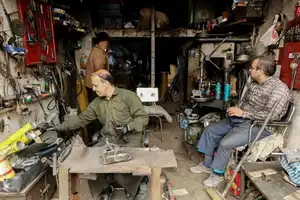
Staff at a repair workshop in Isfahan’s Amir Kabir industrial district, where businesses serving trucks and heavy machinery have reported a sharp drop in activity. (ILNA)

Business at one of central Iran’s main heavy-vehicle service hubs has fallen by about 30% from a year earlier, offering a ground-level view of an economy where soaring food prices, a battered currency and weaker freight activity are squeezing workers and small businesses.

The Amir Kabir industrial area in Isfahan is home to mechanics, machinists, body shops, battery specialists and parts dealers serving trucks, construction equipment and mining machinery. Labor news agency ILNA said activity across the district had fallen sharply as transport demand weakened and the cost of keeping vehicles on the road climbed.

“When freight activity slows and less cargo is being moved, drivers face serious problems,” a person working in the district told ILNA. “Most drivers bought their vehicles on installment, so besides making loan payments, they also have to cover the high cost of supporting their families.”
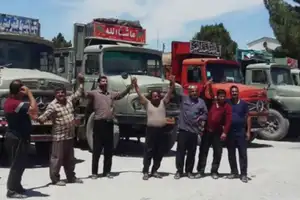
  • Explained: why Iran’s truckers are on strike and what it means

    Explained: why Iran’s truckers are on strike and what it means

  • Truckers' strike can paralyze Iranian government, experts say

    Truckers' strike can paralyze Iranian government, experts say

  • Truck driver strike tests Islamic Republic’s grip on road freight

    Truck driver strike tests Islamic Republic’s grip on road freight

Inflation eats into household budgets

The slowdown comes as Iranian households face some of the steepest price increases in years. Official data for September showed consumer prices were 89.8% higher than a year earlier, while average inflation over the preceding 12 months reached 73.6%. Food and drink prices had already risen 127.5% year on year in August.

Reuters reported in September that food prices had more than doubled while the wider economy was being squeezed by sanctions, restrictions on oil exports and the costs of the seven-month conflict with the United States.

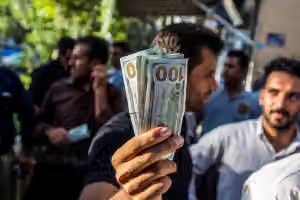
Iran’s currency has added another layer of pressure. The rial fell beyond 2.5 million to the US dollar on the free market earlier this week, a record low, compared with roughly 1.1 million a year earlier.

For businesses dependent on imported equipment, that fall feeds quickly into prices.

“Parts dealers buy according to the day’s dollar rate,” an Amir Kabir business operator said, adding that prices often fail to come back down even when the rial temporarily strengthens.

“The consumer and the worker end up carrying the greatest burden,” he said.
  • Meat, cream, rice: Food becomes loot as prices soar in Iran

    Meat, cream, rice: Food becomes loot as prices soar in Iran

  • Iran’s rial hits another record low under economic and military pressure

    Iran’s rial hits another record low under economic and military pressure

  • Disease, drug shortages grip overcrowded Iran prison

    Disease, drug shortages grip overcrowded Iran prison

Fewer loads hit an entire chain of jobs

The industrial district illustrates how weakness in one part of Iran’s economy spreads quickly into others.

A single truck can generate work for engine mechanics, gearbox specialists, machinists, painters, welders, upholsterers and parts sellers before it gets back on the road. When freight volumes fall, drivers delay repairs and workshops lose business.

“There’s a deep slowdown across the industrial area,” the tradesperson said. “It’s not that the vehicles don’t need work. Purchasing power and liquidity have fallen sharply.”

Some vehicles are repaired but then sit idle because there is no cargo to move, he said. Even when transport work is available, delayed payments from cargo owners leave drivers and workshops short of cash.

That weakness is also reflected in accounts shared with Iran International, with Iranians describing cuts to spending on food, housing and medicine as savings run down and private-sector job losses spread.

Cheap parts bring expensive problems

Workshop owners are also grappling with replacement parts that they say are either prohibitively expensive or of poorer quality.

A local tradesperson told ILNA that original components for older European and American heavy vehicles had become difficult to obtain, leaving operators increasingly dependent on Chinese-made replacements.

“In the past, if you rebuilt a Volvo or Mack with original parts, it could run for years without another major repair,” he said. “Now poor-quality parts mean repeated breakdowns.”

Original parts can still sometimes be found, he added, but at prices that often make them uneconomical for truck owners already dealing with loans, insurance and weaker freight income.

The result is a cycle in which operators choose cheaper parts, suffer more frequent failures and return to workshops while having less money available to pay for the repairs.
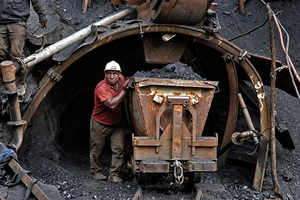
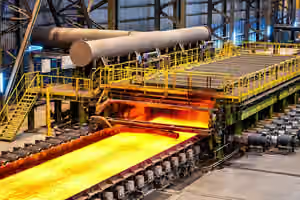
  • Economic crisis puts Iran’s coal miners at greater risk

    Economic crisis puts Iran’s coal miners at greater risk

  • Tehran ‘ashamed’ as Iranians struggle to make ends meet

    Tehran ‘ashamed’ as Iranians struggle to make ends meet

  • Iran factories face deepening raw material shortages

    Iran factories face deepening raw material shortages

Skilled jobs come under pressure

The downturn is beginning to affect hiring and job security.

A machining workshop may employ 10 to 12 people repairing engine blocks, crankshafts and other heavy components. With business down and insurance, municipal charges and other expenses still rising, workshop owners may stop taking on workers or begin cutting staff, according to ILNA.

“A workshop with 10 or 12 workers may no longer want to expand its workforce and may even reduce the number of employees because its income cannot cover its costs,” a local business owner said.

The impact could outlast the immediate downturn. Training an experienced technician can take about a decade, he said, but workshops have less incentive to bring in apprentices when they are unsure whether they can retain existing staff.

Pressure reaches beyond Isfahan

The problems in Amir Kabir mirror a broader contraction in everyday economic activity as the government struggles with reduced oil revenues, sanctions and restrictions on trade.

US pressure has sharply reduced Iran’s access to foreign currency from oil exports, while sanctions evasion has become more costly. That has made imported equipment and raw materials harder to finance just as the rial’s fall raises their local-currency price.

For the workers and drivers in Isfahan, however, the crisis comes down to a simpler calculation: there is less work, while virtually everything needed to do that work costs more.

“If prices are going to remain high, then at the very least the volume of work has to increase,” a local tradesperson told ILNA. “Businesses need enough cash flow to keep operating.”

Iran official warns Starlink could end state control of internet

Oct 1, 2026, 02:38 GMT+1
100%
The silhouette of Elon Musk and Starlink logo are seen in this illustration taken June 11, 2026. REUTERS

The spread of Starlink could deliver the “final nail in the coffin” of Iran’s ability to control cyberspace, Deputy Communications Minister Mohammad Hafez Hakami said Wednesday, even as authorities seek to suppress the technology through arrests, seizures and criminal penalties.

Hakami said Starlink had fundamentally changed that equation. “Our control over cyberspace is no longer based on our domestic network. It is based on Starlink,” Hakami said.

He said officials had warned for more than two years that wider use of the satellite internet service could eventually render existing methods of controlling communications ineffective, but had failed to produce an adequate policy response.

“I sometimes joke that we might as well turn the Ministry of Communications and the Supreme Council of Cyberspace into amusement parks, because they will no longer serve any purpose,” Hakami said.

Iran has repeatedly restricted internet access during periods of unrest. Hakami said the government’s response has grown progressively more restrictive, from blocking a single platform in 2017 to shutting down internet access during the 2019 protests, blocking two major platforms after the 2022 protests and ultimately disconnecting the entire network during the bloody crackdown on nationwide protests in January 2026.

Starlink poses a challenge to that approach because its terminals connect to satellites rather than relying on Iran’s domestic telecommunications network.

Hakami said even measures such as mandatory mobile phone registration could become ineffective with Direct-to-Cell technology, which allows ordinary mobile phones to connect directly to satellites.

“I don’t want to create ‘Starlink-phobia,’ but nothing will remain of our ability to control cyberspace,” he said.

Arrests and seizures
Iranian authorities have intensified their crackdown on Starlink as its use has expanded. Iran’s Economic Security Police said in August that authorities had seized 997 Starlink devices and related equipment and arrested 163 people during the four months through July. Police also impounded 15 vehicles carrying the equipment.

The crackdown has extended to individual users and sellers. Two men from Bukan were sentenced to two years in prison each for buying and selling Starlink equipment.

Iran also criminalized unlicensed satellite internet equipment under legislation adopted in 2025. The law prohibits the use, possession, purchase, sale and import of devices such as Starlink and provides for prison terms and confiscation. It permits the death penalty for specified activities involving the equipment when carried out for espionage or to confront the state and the perpetrator is deemed an enemy force.

Amnesty International said Iran’s Intelligence Ministry announced in March that “hundreds” of Starlink devices had been seized. The rights group said authorities had portrayed the use of alternative satellite connections as potential espionage or collaboration with hostile states and threatened users with prosecution.

Death after Starlink-related arrest
The crackdown has also been linked to a reported death in custody.

Hesam Alaeddin, a 40-year-old man detained in Tehran over his alleged use of Starlink equipment to bypass an internet blackout, died after he was severely beaten by government agents, a source familiar with the case told Iran International in May.

Alaeddin had gone to a hospital to check on his brother, Hamid, who had been shot during protests, when some of his electronic devices were seized, according to the source.

A week later, he went to retrieve the devices and was arrested. Agents took him to his home for questioning and a search, where they severely beat him with various objects and he died, the source said. Authorities concealed his death and continued to treat him as a living detainee before eventually telling his family to collect his body.

Amnesty International later documented Alaeddin’s death but said the precise timing and circumstances remained unclear. The rights group said his arrest was connected to an investigation involving his brother and alleged possession of a Starlink device.

Despite the enforcement campaign, Hakami said Starlink had already reached a significant level of use in Iran and questioned whether existing policies could keep pace with the technology.

“Tell me: What policy have we adopted to protect the country against Starlink?” he said.