• العربية
  • فارسی
Brand
  • Iran Insight
  • Politics
  • Economy
  • Analysis
  • Special Report
  • Opinion
  • Podcast
  • Live TV
  • Iran Insight
  • Politics
  • Economy
  • Analysis
  • Special Report
  • Opinion
  • Podcast
  • Live TV
  • Theme
  • Language
    • العربية
    • فارسی
  • Iran Insight
  • Politics
  • Economy
  • Analysis
  • Special Report
  • Opinion
  • Podcast
  • Live TV
All rights reserved for Volant Media UK Limited
volant media logo

Iran cancer patients sell household goods to pay for treatment

Sep 17, 2026, 11:27 GMT+1
A cancer patient receives treatment at a hospital in Iran.

Some cancer patients in Iran are selling essential household goods or abandoning medication as soaring drug prices and gaps in insurance coverage put treatment beyond the reach of low-income families, a charity director said on Thursday.

Families have sold refrigerators and televisions to buy cancer drugs, while some patients have stopped taking medication because they can no longer afford it, Hossein Zehtaban, the head of a cancer support charity in the western province of Kermanshah, told Iran's ILNA news agency.

“We are facing patients who explicitly say they cannot afford their medication, that they are no longer taking it and are waiting to see what happens,” he said.

The warning comes during a sharp rise in pharmaceutical costs across Iran. Producer inflation in the pharmaceutical, chemical and herbal products sector reached 114% year-on-year, according to Iranian economic outlet Zooman.

A recently published price list from Iranian pharmaceutical manufacturer Loghman showed increases of more than 500% for some medicines. Donepezil, used to treat symptoms of Alzheimer's disease, rose 543% for a 10-milligram dose, while the price of clarithromycin increased 308%.

Workers struggle with treatment bills

Zehtaban cited one family with three cancer patients whose main breadwinner is a worker. Medication for each patient can cost 400 million to 500 million rials ($174-$217 at an exchange rate of 2.3 million rials to the dollar) a month, he said.

100%
A healthcare worker tends to a patient in an intensive care unit at a hospital in Iran.

Iran’s minimum base wage for workers is about 166 million rials a month, meaning the medication for just one of the three patients could cost roughly two-and-a-half to three times a minimum-wage worker’s monthly pay.

The charity has about 1,700 cancer patients registered for support, though the charity director said the figure does not represent the total number of cancer patients in Kermanshah province because other organizations also provide assistance.

Insurance problems are adding to the financial pressure, he said. Pharmacies facing unpaid insurance reimbursements have reduced provision of some medicines, forcing cancer patients to search multiple pharmacies for prescribed drugs, he added.

Drug prices surge

The financial strain described by Zehtaban extends beyond cancer treatment.

Loghman's published price changes show increases across dozens of medicines, with 23 products rising by at least 100%. Donepezil rose by 427% for the five-milligram dose and 543% for the 10-milligram dose, while Tadalafil, which is used to treat erectile dysfunction, enlarged prostates and pulmonary arterial hypertension, had the largest increase at about 706%, according to reports citing the company's regulatory disclosure.

100%

Rising medicine costs have combined with food and other household expenses to make supporting cancer patients increasingly difficult, Zehtaban said. Vitamins and nutritional supplements recommended during treatment are also often excluded from insurance coverage.

The charity provides financial assistance as well as weekly psychological and physical rehabilitation sessions, but he said its resources cannot cover the mounting treatment costs.

Banner

Most Viewed

Tehran political circles see US hand in postponement of Oman Hormuz talks
1
INSIGHT

Tehran political circles see US hand in postponement of Oman Hormuz talks

2

‘This is the cost you must pay’: Iran accused of denying food to death-row twin

3

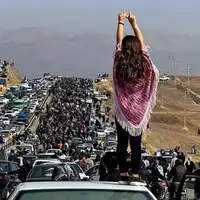
Security forces deploy as shops in western Iran strike on Mahsa Amini anniversary

4
ANALYSIS

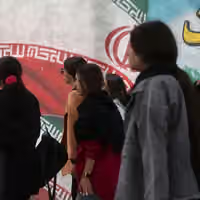
A generation shaped by Woman, Life, Freedom refuses to go back

5

US officials met Iran-aligned Houthis in Oman - Reuters

Banner

Spotlight

  • From Halkbank to Golden Global: Iran sanctions and Turkey’s banking ties

    From Halkbank to Golden Global: Iran sanctions and Turkey’s banking ties

  • A generation shaped by Woman, Life, Freedom refuses to go back
    ANALYSIS

    A generation shaped by Woman, Life, Freedom refuses to go back

  • Mahsa Amini and the century-long struggle of Iranian women
    INSIGHT

    Mahsa Amini and the century-long struggle of Iranian women

  • ‘This is the cost you must pay’: Iran accused of denying food to death-row twin

    ‘This is the cost you must pay’: Iran accused of denying food to death-row twin

  • January's unfinished love stories: Lives severed by Iran protest killings

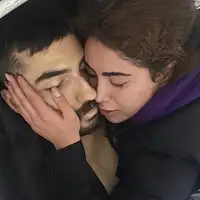
    January's unfinished love stories: Lives severed by Iran protest killings

  • After Muscat collapse, Tehran argues over what comes next
    ANALYSIS

    After Muscat collapse, Tehran argues over what comes next

Banner
Banner
•
•
•

More Stories

UN says Iran crackdown amounted to crimes against humanity

Sep 17, 2026, 10:05 GMT+1
100%
A masked protester raises both hands in victory signs as crowds gather on a smoke-filled road during protests in Mashhad, Iran, on January 9, 2026.

Iranian security forces committed crimes against humanity in their crackdown on nationwide protests, a UN fact-finding mission said on Thursday, citing mass killings, torture and arbitrary detention.

The Independent International Fact-Finding Mission on Iran said its report examined the 2025-2026 protests and found that killings by state security forces took place across all 31 provinces. It described the repression as an unprecedented escalation from previous crackdowns.

At least 221 children were reported killed, some as young as two, while tens of thousands of people were detained, according to the report submitted to the UN Human Rights Council.

Security forces fired at crowds

The mission said security forces positioned themselves on rooftops and other elevated locations and fired assault rifles into crowds.

In Karaj, forces used tear gas to trap demonstrators in narrow alleys before shooting at them, the report said. Protesters suffered severe injuries to the head, chest and eyes from metal shotgun pellets, with some left permanently blind.

  • Iran used state machinery to crush 2022 uprising, Amnesty says

    Iran used state machinery to crush 2022 uprising, Amnesty says

Security forces also attacked healthcare facilities, beating and arresting wounded protesters and detaining some healthcare workers, according to the mission. It said the actions deterred injured people from seeking treatment.

Five-month internet shutdown

Iranian authorities imposed a nationwide internet and communications blackout on January 8, at the height of the violence, the mission said.

The shutdown lasted more than five months, which the mission described as the longest nationwide communications shutdown on record, restricting access to information and emergency coordination.

The report said tens of thousands of people were arbitrarily detained and that some faced torture, solitary confinement and denial of access to lawyers. Families were in some cases left without information about detainees' whereabouts, raising concerns of enforced disappearances.

Authorities also delayed or refused to return bodies to some families, demanded payments and pressured relatives to sign statements falsely describing victims as state agents, the mission said.

  • Amnesty says Iran drove global surge in executions in 2025

    Amnesty says Iran drove global surge in executions in 2025

Executions linked to protests

The mission said Iran also intensified its use of the death penalty against people linked to the protests.

At least 29 men were executed between March and August 2026 following expedited trials, including five who were executed publicly.

More than 70 people, including five women and three boys, remained at imminent risk of execution, it said.

The mission concluded that violations including murder, imprisonment, torture and other inhumane acts amounted to crimes against humanity because they formed part of a widespread and systematic attack against civilians.

US strikes also examined

The report separately found reasonable grounds to believe the United States committed war crimes in two strikes during the conflict with Iran.

It said US Tomahawk missiles struck the Shajareh Tayyebeh Primary School in Minab, killing more than 150 people, including about 120 children.

A separate US strike in Lamerd dispersed tungsten pellets over a sports complex and nearby residential area, killing 22 civilians, the mission said.

The mission said the attacks amounted to indiscriminate strikes resulting in civilian deaths and damage to civilian objects.

Calls to quit NPT grow in Iran as critics warn of strategic trap

Sep 17, 2026, 00:30 GMT+1
•
Maryam Sinaiee
100%
Demonstrators hold Iranian flags and a banner reading “Zero enrichment we do not have a deal” during a rally outside the Atomic Energy Organization of Iran in Tehran, May 2025

Calls for Iran to withdraw from the Nuclear Non-Proliferation Treaty are gaining ground among hardliners after the IAEA referred the country to the UN Security Council and its nuclear chief was barred from attending the agency’s annual conference in Vienna.

The growing debate has exposed a divide within Iran’s political establishment between those who see NPT membership as offering little protection and others who warn that withdrawal would surrender one of Tehran’s remaining diplomatic and legal advantages.

Mohsen Rezaei, secretary of Iran’s Supreme National Security Council, appeared to threaten withdrawal from the treaty on Sunday, saying that “political and destructive actions” by the International Atomic Energy Agency would “push countries toward leaving the Nuclear Non-Proliferation Treaty.”

But President Masoud Pezeshkian reiterated the same day, during a visit to India, that Iran was not seeking nuclear weapons. “If we were seeking nuclear weapons, we would not have become a member of the NPT,” he said.

The debate intensified after Mohammad Eslami, head of Iran’s Atomic Energy Organization, was prevented from attending the IAEA General Conference in Vienna.

Austria had sought an exemption from a UN travel ban to allow Eslami to attend, but the sanctions committee did not approve it after a US objection.

Calls for immediate withdrawal

Supporters of immediate withdrawal say NPT membership has failed to protect Iran from international pressure or attacks on its nuclear facilities.

Continued membership, they argue, only makes sense if members’ nuclear rights are given equal weight alongside their obligations.

Sepehr Khalaji, who headed the Government Information Council under former President Ebrahim Raisi, questioned why Iran remained in the treaty.

“They bombed the nuclear facilities, martyred the scientists, sanctioned nuclear technology and say they will strike the remaining nuclear facilities. They referred Iran’s case to the Security Council, and they do not allow the head of the Atomic Energy Organization to enter the IAEA. So why are we still in the IAEA? Why don’t we withdraw from the NPT?” he wrote on X.

Parliamentary push

The debate has also reached parliament, where lawmakers are preparing a proposal for Iran to withdraw from the NPT.

Hassan-Ali Akhlaghi, a member of parliament, told the Fars news agency on Wednesday that lawmakers had prepared a triple-urgency bill that would be put to a vote if approved by the parliamentary leadership.

Given what he called the IAEA’s “entirely hostile and illogical” resolution, Akhlaghi said Iran should leave the treaty as soon as possible.

The proposal, however, has not yet formally reached parliament’s National Security and Foreign Policy Committee and is not currently on the parliamentary agenda.

Warnings of a trap

The conservative Khorasan newspaper on Wednesday warned that leaving the treaty could increase political and diplomatic pressure on Iran without producing significant security gains.

“On the surface, these positions may appear to be a revolutionary and deterrent response to the enemy; but when the pieces of the situation are put together, another worrying picture emerges,” it wrote.

Khorasan argued that the United States and Israel were deliberately trying to push Iran’s political debate toward more radical positions, including testing a nuclear weapon, changing its nuclear doctrine and immediately withdrawing from the NPT.

The newspaper said leaving the treaty before Iran had achieved deterrence could reveal Tehran’s intentions rather than demonstrate strength, potentially giving its opponents an opportunity to act.

“Iran has obtained an important part of the practical outcome without making an official and costly withdrawal: the IAEA no longer has its previous access, while Tehran continues to benefit from the legal protection of NPT membership and the political support of Russia and China,” Khorasan wrote.

“Official withdrawal would destroy this useful grey zone without creating a new strategic advantage.”

Reformist politician Rasoul Montajab-Nia made a similar argument.

“If the agency has not acted impartially toward Iran, we should not resort to disrupting the framework, because this would mean fuelling disputes and war with other countries.”

Montajab-Nia said withdrawal would not benefit Iran and would be “in line with Israel’s objectives.”

The nuclear threshold

At the outer edge of the debate, some advocates of developing nuclear weapons have argued that Iran should remain in the NPT unless it decides to change its nuclear doctrine — and then coordinate withdrawal with a nuclear test.

Foad Izadi, a hardline political commentator, told the Moj news agency that Iran had no need to leave the NPT while its current nuclear doctrine remained in place.

But if Tehran decided to change that doctrine, he said, Iran could withdraw from the treaty after a nuclear test or simultaneously with one.


Mahsa Amini and the century-long struggle of Iranian women

Sep 16, 2026, 20:59 GMT+1
•
Abdollah Fathi-Nejad
100%

In September 2022, the death of 22-year-old Mahsa Amini in the custody of Iran’s morality police ignited a fire that still burns.

Her arrest for “improper hijab” sparked the historic Woman, Life, Freedom movement, drawing women and men into the streets to demand an end to compulsory veiling and gender apartheid.

For many outside Iran, this seemed like a sudden eruption. But it was the continuation of a struggle that began long before 2022—and long before 1979.

Iran’s state-supported march toward women’s equality began in the early 20th century under Reza Shah, who ruled from 1925 to 1941 and believed modernization required women’s active participation in public life.

His 1936 decree compelling women to unveil—though heavy-handed—was a watershed moment, symbolizing women’s entry into civic life after centuries of seclusion.

Under the Pahlavi shahs, especially Mohammad Reza Shah, who ruled from 1941 to 1979, this state-led transformation expanded into education, political participation, family law and the workplace.

Modern schools for girls expanded dramatically, and by the late 1970s women made up a growing share of university students, entering specialized fields from medicine to engineering.

In 1963, Iranian women won the right to vote and run for office. Within a decade, women held seats in parliament, served as cabinet ministers and worked as judges. The Family Protection Laws of 1967, expanded significantly in 1975, curbed polygamy, raised the minimum marriage age and substantially expanded women’s rights in divorce and child custody.

By the late 1970s, women were increasingly visible as doctors, lawyers, executives, pilots and business leaders.

Together, these advances transformed the legal and social position of Iranian women and brought greater equality within reach.

That progressive trajectory ended abruptly in 1979. While Ayatollah Khomeini cloaked his takeover in the language of prosperity and liberation, he delivered a theocratic counter-revolution.

The Family Protection Laws were dismantled, female judges were removed from the bench, the minimum marriage age for girls was lowered, and compulsory veiling was progressively imposed.

Iranian women resisted almost immediately. In March 1979, thousands marched through the streets of Tehran against compulsory veiling. Yet the West, eager to believe Khomeini’s moderate diplomatic promises, looked away as women’s hard-won gains were rapidly erased.

The consequences of that original betrayal continue to shape Iran, though the Islamic Republic’s methods have changed dramatically. In recent years, state security networks have intensified enforcement through measures including the Noor Plan, which stepped up enforcement of compulsory hijab.

Street-level coercion has increasingly been supplemented by technology and punitive restrictions. Authorities have used surveillance cameras, heavy financial penalties and other restrictions against women who defy compulsory veiling.

Yet this expanding apparatus has failed to break the population’s resolve. The civil defiance that followed Mahsa Amini’s death helped lay the groundwork for subsequent protests that again shook the Islamic Republic.

As an immigration consultant in Canada, I speak to many Iranians seeking to leave Iran. Again and again, they tell me the same story: they want a future where their daughters can study freely, choose their own paths and live without fear.

The history of Iranian women’s struggle also carries a lesson for the outside world. In 1979, Western leaders mistook a theocratic revolution for a movement that would deliver greater political freedom. Today, the West risks repeating its mistakes if it prioritizes short-term “stability” or narrow regional de-escalation agreements over fundamental human rights.

Supporting Iranian women is not a matter of international charity. It is also a strategic question. A secular, free Iran could fundamentally reshape the political and security landscape of the Middle East, reducing the forces that have fuelled proxy warfare and threatened vital maritime routes.

Iranian women recall the first time they went out uncovered

Sep 16, 2026, 14:16 GMT+1
•
Saba Heidarkhani
100%
Women are seen at an outdoor market in Iran without the mandatory hijab in September 2026.

Four years after the Woman, Life, Freedom protests, Iran International asked women on Instagram to describe the first time they went out without a headscarf. The answers came back in the same four registers: fear, freedom, grief and solidarity.

“I felt like a human being, that I had the right to choose and that others could no longer decide for me,” one woman wrote.

Most of the responses portrayed removing the headscarf not simply as a change in clothing, but as an emotional experience accompanied for many by anxiety over possible consequences.

Freedom and fear

Words including freedom, relief, lightness and power appeared repeatedly in the responses. Some said going without a headscarf gave them a sense of making their own decisions about their bodies and clothing.

100%

But many described fear alongside that sense of freedom.

Some others said they initially carried a headscarf in their bags, repeatedly looked around while walking or worried about being confronted.

100%

One woman recalled leaving home without carrying a scarf for the first time in November 2022.

“I was wearing a hooded puffer jacket so I could do something if I had to. It was the first time I had left home without taking a scarf with me, and my heart was racing with fear the whole time. But now wearing a headscarf feels unusual to me,” she wrote.

100%

Another respondent said seeing other women without headscarves gradually reduced her anxiety.

“I was extremely afraid, but seeing people like me made me less frightened and gave me more courage,” she wrote.

Public defiance of compulsory hijab expanded after the death of 22-year-old Mahsa Amini in September 2022, three days after her detention by Iran’s morality police, triggering the nationwide Woman, Life, Freedom protests.

‘When the wind touched my hair’

Several focused on physical sensations that had previously been denied to them in public, including feeling wind in their hair or cool air on their face and neck.

100%
Iranian women without the mandatory hijab browse stalls at an outdoor market in August 2026.

One woman said going completely without a scarf and feeling the wind in her hair was so different that she regretted experiencing it at 40 rather than 20.

“The first time I sat behind the wheel wearing a T-shirt, I was about to cry,” another woman wrote. “Why did we have to wear so many clothes and suffocate in the heat? When the air touched me, I felt light.”

100%

Another wrote: “When the wind touched my hair, face and neck, I enjoyed feeling it without having to fix my headscarf afterward or untangle the hair underneath it.”

The accounts come as messages sent to Iran International in recent days described the return of morality patrols and increased pressure on women in cities including Isfahan, Rasht, Fuman, Mashhad and Neyshabur.

100%
  • Iran used state machinery to crush 2022 uprising, Amnesty says

    Iran used state machinery to crush 2022 uprising, Amnesty says

  • Weaponizing sexual violence: Iran's systematic abuse to suppress 2022 protests

    Weaponizing sexual violence: Iran's systematic abuse to suppress 2022 protests

Gholam-Ali Haddad-Adel, a member of Iran’s Expediency Council, another the Supreme Leader Mojtaba Khamenei’s father-in-law said on September 9 that the Islamic Republic could not enforce its hijab requirements as extensively as it wanted because of “war conditions,” describing the situation as more difficult than in 1980s.

Grief and solidarity

For some, taking off the headscarf brought the dead with it.

One woman wrote that the experience did not bring a sense of freedom because she remembered the “heavy price” young people had paid. Others recalled crying or experiencing happiness and grief simultaneously.

100%

Solidarity between women also featured prominently.

A middle-aged woman in Pardis, near Tehran, said she was among the first women of her age there to remove her headscarf.

Another recalled girls periodically giving her chocolates with notes thanking her for her courage.

100%

“I will never forget the smile I had at that moment,” she wrote.

Others described smiles and encouragement from women they did not know, while some said simply seeing others without headscarves helped their fear subside.

For some women, there was no defining first time. Years of gradually pushing back against compulsory hijab had blurred that boundary, while others said workplace rules, restrictions on clothing or decades of habit still kept them from abandoning the headscarf altogether.

100%

The responses also showed how the experience stretched across generations. A 70-year-old woman said she had stopped wearing a headscarf completely at 60. Another, born in the 1960s, described removing it as unexpectedly recovering a piece of her youth.

“I couldn’t believe I was feeling like a teenager again,” she wrote.

Shot and left for dead, Iran protester faces 26th surgery

Sep 16, 2026, 12:56 GMT+1
•
Farnoosh Faraji
100%
Protesters gather around a fire during demonstrations in Ardebil, northwestern Iran, on January 8, 2026.

Twenty-five surgeries have failed to end the ordeal of a protester shot during January demonstrations in Iran, with a severe infection still spreading through the wounded leg and a 26th operation now planned, Iran International learned.

The person was shot with a Kalashnikov rifle from about 20 meters away in the central city of Isfahan on the evening of January 9, according to an informed source.

“The infection at the wound site is still continuing, and a problem with the tissue flap means another surgery is necessary,” the source said.

The bullet shattered bone and severed a nerve and tendon in the leg, leaving some of the damage permanent.

What followed the shooting began a medical ordeal that has stretched across months, repeated hospital admissions and operating rooms.

100%
The wounded protester receives hospital treatment after being shot during January demonstrations in Isfahan. The patient has undergone 25 surgeries and continues to suffer from a severe infection.

Iran International is withholding the individual’s identity and the names of the hospitals involved because of security concerns.

Shot, taken away and left in a gutter

Security forces put the badly wounded protester into a vehicle after the shooting. But the patient never reached hospital in that vehicle.

Believing the wounded person had died, the forces left them in a roadside gutter.

“Some time later, someone found the protester and took them to a hospital,” the source said.

The patient was still alive, but in critical condition.

Doctors administered 18 units of blood in an effort to save the protester’s life.

After the condition partially stabilized, the person was transferred to another hospital. There, the medical emergency collided with another problem: the presence of intelligence forces.

  • Iranian protester still unable to walk despite 23 operations for gunshot wound

    Iranian protester still unable to walk despite 23 operations for gunshot wound

Agents at one point prevented orthopedic doctors from entering to perform surgery.

Medical staff nevertheless secretly arranged to transfer the patient to the operating room.

A wound that would not heal

Surviving the shooting was only the beginning. The bullet had extensively shattered the bone in the leg, while exposure of the open wound to contamination contributed to a severe infection.

The patient remained in hospital for about four months.

Doctors used vacuum-assisted therapy to treat the wound and an external fixator to stabilize the severe bone injury. Surgery followed surgery.

Discharge from hospital did not bring the treatment to an end. The protester repeatedly had to return as doctors continued trying to treat the damage and control the infection.

A tissue flap – skin and underlying tissue transferred to reconstruct the damaged area – has since developed complications, making yet another operation necessary.

It will be the 26th.

Months after the shooting, the infection remains uncontrolled and protester’s life continues to move between home, hospital and the operating room.

  • Iranian protester undergoes months of secret treatment to save wounded leg

    Iranian protester undergoes months of secret treatment to save wounded leg

Treatment under security pressure

The physical injuries are only part of the difficulty surrounding the treatment.

The wounded person works in an administrative position at a government institution, and concern that the circumstances of the injury could become known has added to the difficulties surrounding treatment.

100%
Images show the protester’s injured leg during months of treatment following the shooting. The gunshot shattered bone and severed a nerve and tendon, requiring repeated surgeries and extensive wound care.

The account is one of several received by Iran International describing protesters facing prolonged treatment after being wounded during the January demonstrations.

The family of a 34-year-old demonstrator wounded in Qazvin previously told Iran International that the patient underwent more than five operations after being shot in the lower leg with live ammunition and had to pursue parts of the treatment secretly and at considerable expense.