• العربية
  • فارسی
BrandBrand
  • Iran Insight
  • Politics
  • Economy
  • Analysis
  • Special Report
  • Opinion
  • Podcast
  • Live TV
  • Iran Insight
  • Politics
  • Economy
  • Analysis
  • Special Report
  • Opinion
  • Podcast
  • Live TV
  • Theme
  • Language
    • العربية
    • فارسی
  • Iran Insight
  • Politics
  • Economy
  • Analysis
  • Special Report
  • Opinion
  • Podcast
  • Live TV
All rights reserved for Volant Media UK Limited
volant media logo

Pakistan urges Iran to curb Houthi attacks on Saudi Arabia - FT

Sep 18, 2026, 07:36 GMT+1

Pakistan’s army chief Asim Munir has repeatedly urged Iranian officials to work to halt Houthi attacks on Saudi Arabia and its energy infrastructure, the Financial Times reported, citing people familiar with the matter.

Pakistani officials told Tehran that Islamabad could be compelled to act in Saudi Arabia’s defense if Riyadh formally requested assistance under the Mecca defense pact, according to the report.

A diplomat told the newspaper that Saudi efforts to secure support from regional countries appeared to have yielded little. Neither Riyadh nor the Houthis currently appeared willing to negotiate, the diplomat said.

Most Viewed

Iran escalates Starlink threats over fears of losing internet control
1

Iran escalates Starlink threats over fears of losing internet control

2
VOICES FROM IRAN

Iran workers face delayed wages, lost benefits and job fears

3
ANALYSIS

Houthi gains reversed at Bab al-Mandab, but Iran’s leverage runs deeper

4

Saudi Arabia, Turkey and Pakistan activate defense pact over Houthi attacks

5

Netanyahu predicts Iran regime’s fall, Tehran warns war could engulf region

Banner
Banner

Spotlight

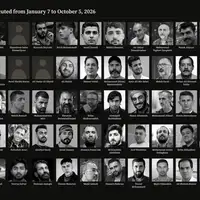
  • Iran executes nearly two people a week since January protests

    Iran executes nearly two people a week since January protests

  • Iran, US back to ‘square one’ as diplomacy stalls
    INSIGHT

    Iran, US back to ‘square one’ as diplomacy stalls

  • Houthi gains reversed at Bab al-Mandab, but Iran’s leverage runs deeper
    ANALYSIS

    Houthi gains reversed at Bab al-Mandab, but Iran’s leverage runs deeper

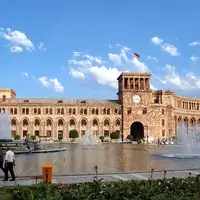
  • Iranians cross into Armenia to earn what they cannot at home

    Iranians cross into Armenia to earn what they cannot at home

  • Clothes, diaries, dolls: Iran forces raid slain protesters’ rooms

    Clothes, diaries, dolls: Iran forces raid slain protesters’ rooms

  • Why Iran’s oil minister quit at a critical moment for exports
    INSIGHT

    Why Iran’s oil minister quit at a critical moment for exports

  • IRGC commander, son helped build new oil-sales network
    EXCLUSIVE

    IRGC commander, son helped build new oil-sales network

Banner
Banner
•
•
•

More Stories

Iran used state machinery to crush 2022 uprising, Amnesty says

Sep 18, 2026, 04:59 GMT+1
100%
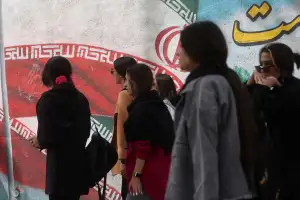
A woman standing on a roof in Tehran (2012)

Iranian state authorities organized a systematic, high-level campaign of murder, torture, and sexual violence to crush the 2022 Woman, Life, Freedom uprising, according to a 1,000-page investigation published by Amnesty International on Wednesday.

The report states that senior officials directed, executed, and subsequently covered up acts that constitute crimes against humanity.

The findings are based on interviews with 270 witnesses, analysis of over 2,000 videos, and leaked official Iranian government documents.

"Amnesty International unequivocally opposes violations of international law by all parties and rejects any attempt to instrumentalize the suffering of victims of human rights violations in Iran to justify unlawful attacks that inflict further civilian harm," said Secretary General Agnès Callamard at the report's press launch, addressing both state repression and broader regional conflict.

  • Amnesty says Iran drove global surge in executions in 2025

    Amnesty says Iran drove global surge in executions in 2025

Calls for international criminal prosecutions

Amnesty International identified 87 Iranian officials, including top IRGC and police commanders, who it said should be investigated for crimes against humanity under superior responsibility principles. Amnesty said that it shared its findings and the list of identified officials with Iran's leadership prior to publication but received no response.

"This investigation exposes the layers of command and coordination behind the Iranian authorities' deadly protest crackdowns," Callamard said. "The agents on the streets operated within a hierarchical and coordinated chain of command linking them to officials who directed, enabled, facilitated and supported crimes committed on a massive scale. It is beyond time to establish an international criminal justice mechanism for Iran before another protest massacre."

The report warned that impunity for the 2022 crackdown directly enabled subsequent mass atrocities, warning that state suppression of demonstrations earlier this year bore the same hallmarks on an even wider and deadlier scale. Amnesty urged the UN General Assembly to establish an independent international criminal justice mechanism to prosecute responsible officials.

  • A generation shaped by Woman, Life, Freedom refuses to go back

    A generation shaped by Woman, Life, Freedom refuses to go back

High-ranking officials named for criminal investigation

Among the top-tier officials listed for criminal investigation under command responsibility principles are Supreme Leader Ali Khamenei, who was killed on February 28, 2026, during military strikes, and former Armed Forces Chief of Staff Mohammad Bagheri, who died on June 13, 2025.

Other key figures identified in the report include Ahmad Vahidi, who served as Minister of Interior during the 2022 crackdown and was subsequently appointed General Commander of the IRGC, Deputy Interior Minister for Security Majid Mir-Ahmadi, Tehran IRGC Commander Hassan Hassanzadeh, and Tehran Deputy Prosecutor Mohammad Shahriari.

  • Security forces deploy as shops in western Iran strike on Mahsa Amini anniversary

    Security forces deploy as shops in western Iran strike on Mahsa Amini anniversary

Leaked documents show early surveillance directives

Minutes from confidential security meetings show that within 48 hours of Mahsa Amini’s death in custody on September 16, 2022, state officials focused on controlling the public narrative and suppressing online protests. Security chiefs discussed strategies to secure public statements from Amini's father to support the official explanation of her death.

A government resolution dated September 18, 2022, assigned the Islamic Revolutionary Guard Corps (IRGC) intelligence unit to monitor athletes and political figures. The same document tasked the Ministry of Intelligence with tracking actors, artists, and opposition movements.

Written orders drove escalation of lethal force

Written instructions issued by the General Staff of the Armed Forces on September 21, 2022, ordered security forces nationwide to deliver a "firm and severe response" to demonstrations. Of the 326 fatalities documented during protest dispersals or in militarized zones, 178 occurred within the first two weeks of the crackdown.

  • Women face forced undressing, breast touching at Iran's Evin Prison

    Women face forced undressing, breast touching at Iran's Evin Prison

Amnesty documented a total of 377 protest-related deaths, including 56 children. State authorities have officially acknowledged only 202 deaths and falsely attributed most fatalities to "rioters" or "armed terrorists" despite overwhelming evidence to the contrary.

Security forces used assault rifles, machine guns, and shotguns loaded with metal pellets at close range, while kinetic impact munitions caused severe long-term physical injuries and loss of vision among survivors.

Disproportionate impact on ethnic minorities

Baluchi and Kurdish protesters and bystanders accounted for 62% of all recorded deaths during protest dispersals, despite representing a much smaller share of Iran's overall population.

Operational guidelines detailed the deployment of Basij militia units and motorcycle patrols of up to 40 vehicles per battalion to maintain street control and prevent anti-government slogans from being written in urban centers.

  • Amnesty says Iran using war to intensify repression

    Amnesty says Iran using war to intensify repression

Systemic detention abuses and judicial cover-ups

The investigation documented widespread torture, beatings, rape, and sexual assault against detained protesters, including minors. Internal judicial communications show that prosecutors classified formal rape complaints against IRGC agents as "completely secret" and instructed staff to close files over time without citing security agencies.

When lower courts delivered murder convictions against security personnel, higher authorities intervened to overturn the verdicts, reclassify the killings as unintentional, or reduce prison sentences. State courts also penalized bereaved families by withholding statutory financial compensation and attempting to coerce false television confessions attributing deaths to opposition groups.

Trump weighs major Iran escalation as China steps up diplomatic push

Sep 18, 2026, 01:03 GMT+1
100%
US Marines train on the flight deck of the USS Portland in the Arabian Sea. (CENTCOM/X)

President Donald Trump said Thursday he was weighing renewed large-scale strikes on Iran as China intensified diplomatic contacts with Washington and Tehran amid mounting pressure to contain the regional conflict.

Trump told Axios he was approaching a major decision on whether to resume broad attacks on Iran, after saying a day earlier that he hoped the war was nearing its end.

“I have a big decision coming up. Do I want to go in and annihilate them [the Iranian regime] or do I not? It's a big decision. Anything could happen with me,” Trump said in an interview published Thursday.

He is expected to meet leaders from Saudi Arabia, the United Arab Emirates, Qatar, Bahrain, Kuwait and Oman on the sidelines of the UN General Assembly next week before deciding on the next phase of the war. Axios reported that Trump wants to hear from regional allies before making his decision.

The consultations come as Washington’s partners and rivals push in different directions over whether the war should be contained or intensified.

China intensifies diplomatic push

China expanded its diplomatic engagement over the conflict Thursday, when Foreign Minister Wang Yi spoke with US Secretary of State Marco Rubio, one day after holding talks with Iranian Foreign Minister Abbas Araghchi in Beijing.

China’s Foreign Ministry said Wang and Rubio discussed preparations for the next stage of high-level exchanges between the two countries and exchanged views on the Middle East.

During Wednesday’s talks with Araghchi, Wang urged Iran and the United States to exercise restraint and resume substantive consultations, while also calling for the Strait of Hormuz to reopen.

Beijing’s diplomacy comes as the conflict threatens shipping routes at both ends of the Arabian Peninsula, increasing the risk of wider disruption to regional energy flows.

China has also privately asked Iran to use its influence to rein in Yemen’s Houthis after Saudi Arabia appealed to China for help, Reuters reported Thursday, citing three Iranian sources familiar with the matter.

The sources said Saudi Arabia sought Beijing’s intervention as Houthi advances around Bab el-Mandeb increased risks to oil exports and commercial shipping. China asked Tehran to help prevent the fighting from spreading further across energy routes important to Beijing.

The intensified diplomacy has not narrowed broader differences between Beijing and Washington over Iran.

Russia and China on Thursday vetoed a US-drafted Security Council resolution extending the mandate of the UN panel monitoring sanctions on Tehran, underscoring the continuing divide over the international sanctions framework.

Israel signals campaign is not over

While China pressed for restraint, Israel signaled that it was not ready for the military campaign to end.

Prime Minister Benjamin Netanyahu said Israel still had work to complete against Iran and its regional allies and said Israel intended to bring down Iran’s regime.

“We have done most of the work, but there is still work to complete, and we will complete it,” Netanyahu said in remarks published Thursday by his official account.

Defense Minister Israel Katz separately said Israel still had “important goals” to achieve against Iran and in other arenas, adding that the broader military campaign was not over.

“We will act with military force and political wisdom to achieve them,” Katz said.

Shipping pressure persists from Hormuz to Aden

The stakes surrounding Trump’s decision were also visible at sea, where commercial traffic remained severely depressed and new security incidents were reported along key regional shipping routes.

Only three commodity vessels transited the Strait of Hormuz Wednesday, down from 12 a day earlier and well below the 10-day average of about 17, Reuters reported Thursday, citing preliminary ship-tracking data.

The figures exclude vessels that may have crossed with their Automatic Identification System transponders switched off.

Fresh maritime security reports added to concerns over the region’s main shipping routes.

UK Maritime Trade Operations said it received a report of a security event in the Strait of Hormuz about 16 nautical miles northeast of Khasab, Oman. The crew was reported safe and no environmental impact had been confirmed while authorities investigated.

Farther west, a westbound tanker in the Gulf of Aden reported being pursued by a skiff that attempted to intercept it about 75 nautical miles east of Aden, according to UKMTO.

Trump has not said when he will decide whether to resume large-scale strikes. His meeting with six Persian Gulf leaders next Tuesday will bring him face to face with governments exposed to the economic and security costs of a wider conflict, as Washington weighs whether to intensify the campaign or pursue another diplomatic opening.

US offers substantial whistleblower rewards for tips on Iran sanction evasion

Sep 17, 2026, 21:40 GMT+1
100%
A general view of the Treasury Building on day two of a partial government shutdown in Washington, D.C., U.S., February 1, 2026.

The US Treasury is offering whistleblowers up to 30% of collected penalties for information leading to enforcement actions over Iran-related sanctions evasion or money laundering, as Washington seeks intelligence on Tehran’s financial networks abroad.

The offer is detailed in a Financial Crimes Enforcement Network bulletin seen by Iran International. FinCEN said it is seeking tips from both US and non-US whistleblowers about individuals or entities suspected of violating American sanctions or the Bank Secrecy Act, including Iranian proxies and facilitators operating outside Iran.

Information that results in a successful Treasury or Justice Department action collecting more than $1 million in penalties can qualify for an award of 10% to 30% of the amount collected, Treasury said. It added that awards may, at its discretion, even go to people working directly or indirectly for the Iranian government or state-owned enterprises.

FinCEN’s whistleblower program predates Operation Economic Outcast, but the latest bulletin specifically solicits information on Iran-related illicit finance. Earlier this year, FinCEN issued a separate whistleblower bulletin on fraud-related anti-money laundering and sanctions violations and proposed rules for administering whistleblower awards.

The Iran bulletin identifies activity involving the United Arab Emirates, Turkey, Iraq and China among potential indicators of sanctions evasion. It also points to suspicious shipping documentation, exchange houses, front companies and digital-asset transactions as areas where people with direct knowledge could provide information.

The initiative comes under Operation Economic Outcast, launched by Treasury Secretary Scott Bessent on August 24. The campaign expanded the scope of secondary sanctions and warned foreign companies and financial institutions that facilitating Iranian sanctions evasion or money laundering could jeopardize their access to the US financial system. Treasury says it is targeting financial channels used by Tehran for oil sales, payments, procurement and other revenue.

Bessent highlighted the whistleblower push in a post on X on Monday, saying people anywhere in the world with actionable information could qualify for an award “no matter where you live or who signs your paycheck.”

“If you see something, say something,” he added.

Increased risks for foreign firms

The whistleblower appeal follows a series of actions against foreign financial channels that Washington says have helped Iran move money internationally.

Treasury sanctioned Turkey’s Golden Global Bank and two subsidiaries on September 4, alleging that the Istanbul-based lender facilitated tens of millions of dollars in transactions for the Revolutionary Guards’ Quds Force and helped move Iranian oil proceeds from China into Turkey. Golden Global denied the allegations and said it complied with applicable banking regulations.

In the UAE, Washington has used a different mechanism. FinCEN proposed on August 28 to bar the UAE operations of Egypt’s Banque Misr from US correspondent banking after identifying them as a “primary money laundering concern.” FinCEN said the branches had processed about $1.8 billion between January 2024 and June 2026 for 103 companies potentially connected to Iranian shadow-banking networks. The proposed measure applies only to Banque Misr’s UAE operations and has not yet become a final rule.

An Iran International investigation earlier this month found that Iran’s shadow banking network extended substantially beyond the institutions targeted by Washington. Leaked Bank Parsian correspondence and transaction records showed one sanctioned Iranian bank directing funds through 15 banks in China and the UAE and 33 beneficiary companies over a seven-month period.

  • US crackdown leaves much of Iran’s shadow banking untouched

    US crackdown leaves much of Iran’s shadow banking untouched

Thirteen of those 15 foreign banks had faced no publicly recorded US enforcement action over their role at the time of the investigation. Iran International found no evidence that the UAE and Chinese banks knowingly facilitated Iran’s efforts to circumvent US sanctions.

Bessent has repeatedly reinforced Treasury’s warnings to foreign institutions. After Golden Global was sanctioned, he wrote on X that financial institutions were “finding out the hard way” that Washington was serious about Economic Outcast, adding: “We know who you are, we know where you are.” Days later, he told Real America’s Voice that Washington would continue the campaign “until everyone stops dealing with this regime,” warning of potentially severe financial consequences for those that continued.

Bessent told lawmakers this week that Washington had held “very good private discussions” with China over Iran’s financial links and pointed to public signals from the UAE about restricting Tehran’s access to financing. He is due to meet Chinese Vice Premier He Lifeng this weekend ahead of talks between Presidents Donald Trump and Xi Jinping.

The FinCEN bulletin adds a financial incentive for insiders to provide evidence that could underpin future cases, potentially giving US authorities information from within the same banking, trading and intermediary networks they are seeking to target.

Iran rapidly rebuilding site tied to past nuclear weapons research - report

Sep 17, 2026, 18:14 GMT+1
100%
Satellite image shows Parchin military complex in Iran after an Israeli attack, October 2024 (Photo: Planet Labs Inc./Handout via REUTERS)

Iran is rapidly reconstructing a heavily fortified facility at the Parchin military complex that was previously linked to nuclear weapons research and has been struck twice since 2024, new satellite imagery analyzed by a Washington-based nuclear watchdog shows.

Vantor Technologies imagery from September 13 shows extensive construction at Taleghan 2 in southeastern Tehran, with Iran erecting a large tarp over the destroyed underground structure that obscures work beneath it from satellites and aerial reconnaissance, the Institute for Science and International Security said in a report published Thursday.

The imagery shows dump trucks, bulldozers, concrete pump trucks, mixers and cranes operating across the site, according to the institute. Iran has also added concrete reinforcement on one side of the facility, while a similar structure identified in July appears to have been completed on the other side, measures the institute said would provide additional blast protection against aerial attack.

Repair work began in June, initially focused on sealing three penetration holes left by bunker-buster weapons used in an attack three months earlier. High-resolution imagery reviewed by the institute in June and July showed the holes being excavated, covered with reinforcing steel and prepared for permanent concrete caps.

The reconstruction marks Iran's second effort to rebuild Taleghan 2 in less than two years.

The original facility was destroyed in an Israeli strike in October 2024. Iran began rebuilding it in May 2025, eventually constructing a reinforced structure encased in concrete and covered with earth. By early 2026, the site had effectively become a hardened bunker, with additional defensive features including concrete barriers and protection against drones.

In November, satellite images of the reconstruction showed a large cylindrical object inside the facility resembling a high-explosive containment chamber. The institute estimated it at about 36 meters long and at least 12 meters wide and said such a chamber could be used for explosive experiments relevant to nuclear weapons development, though imagery alone could not establish its purpose.

The rebuilt facility was struck again in early March 2026. Satellite images afterward showed three large penetration holes over the portion of the buried structure where the suspected cylindrical chamber had been installed. The Institute for Science and International Security assessed that the internal structure and probable chamber were likely destroyed.

The institute said the pace of the latest reconstruction raises questions about why Tehran has repeatedly restored a facility with a history tied to work relevant to nuclear weapons.

Ties to past nuclear weapons research

Taleghan 2's significance predates the recent attacks. The institute says the facility was used during Iran's AMAD Plan, a program that Western governments and nuclear experts have linked to work on a nuclear explosive device in the early 2000s.

According to the institute's reconstruction of material from Iran's nuclear archive, Taleghan 2 once housed a specially designed high-explosive chamber and flash X-ray equipment used to study explosive compression.

It says a scaled-down test of a multipoint initiation system — technology relevant to triggering an implosion-type nuclear weapon — was conducted there in 2003. The institute says the International Atomic Energy Agency (IAEA) never inspected the Taleghan 2 building itself.

The IAEA's own 2015 assessment found that before the end of 2003 Iran had an organizational structure capable of coordinating a range of activities relevant to developing a nuclear explosive device.

Information available to the agency indicated that those activities became concentrated in the early 2000s under projects known as the AMAD Plan and were halted in late 2003.

The IAEA found that some related activities continued afterward but were not part of a coordinated effort. Iran denied both that it had a coordinated nuclear weapons program and that the AMAD Plan existed as such.

The agency revisited Iran's past nuclear work in a comprehensive safeguards assessment last year. It concluded that Lavizan-Shian, Varamin and Marivan, along with potentially related locations, had been part of an undeclared structured nuclear program until the early 2000s and that some activities involved undeclared nuclear material.

At the same time, the IAEA said it had no credible indications of an ongoing undeclared structured program of that kind. Tehran rejected the findings and maintained that it had declared all nuclear material required under its Safeguards obligations.

IAEA not able to monitor Iran’s nuclear program

The renewed work at Taleghan 2 comes as the IAEA says its ability to monitor Iran's current nuclear program has deteriorated sharply.

IAEA Director General Rafael Grossi said this week that the agency had conducted almost no in-field verification in Iran for more than six months, apart from an inspection of the Bushehr nuclear power plant in June.

The agency has also been unable for more than a year to maintain continuity of knowledge over previously declared stocks of enriched uranium at facilities affected by military strikes.

Before losing access, the IAEA estimated that Iran possessed 440.9 kilograms of uranium enriched to as much as 60% purity. The agency has been unable to verify how much remains or its current location and has also said it still cannot establish the status of Iran's fourth declared enrichment facility at Isfahan.

Grossi called the lack of information and access a “serious proliferation concern” requiring urgent action.

Last week, the IAEA Board of Governors also reported Iran to the UN Security Council over safeguards non-compliance, after the agency said Tehran had failed to provide inspectors with information and access necessary to account for nuclear material. Iran called the move politically motivated and has argued that US and Israeli attacks on its facilities have made normal inspections impossible.

The Institute for Science and International Security said the purpose of the new Taleghan 2 facility still cannot be established from satellite imagery alone. But after two attacks and two reconstruction campaigns, it said Iran's continued investment in the site demonstrates its determination to restore the facility despite its sensitive history.

Why Iran’s hardliners keep talking of ousting Pezeshkian

Sep 17, 2026, 17:29 GMT+1
•
Behrouz Turani
100%
Iran's president Masoud Pezeshkian attends an event celebrating pensioners in Tehran, Iran, September 14, 2026

Renewed talk among Iranian hardliners of removing President Masoud Pezeshkian has revived comparisons with Iran’s only presidential impeachment, but there is little evidence so far of a coordinated effort capable of unseating him.

Instead, the latest speculation fits a pattern that has followed Pezeshkian since taking office in 2024: recurring calls for resignation or impeachment that intensify during periods of political, economic or geopolitical pressure.

The latest round was partly triggered by cryptic comments from Qom MP Mojtaba Zarei referring to a possible “coup” or coordinated political move against Pezeshkian.

Rouydad24 examined whether hardline networks, particularly Sharyan—the Persian acronym for the Strategic Network of Islamic Revolution Supporters—and allies of Saeed Jalili, Pezeshkian’s rival in the 2024 presidential election, were seeking early presidential elections.

The outlet presented no formal evidence of such a plan but pointed to repeated calls by radical lawmakers to invoke Article 89 of the Constitution, under which parliament can declare a president politically incompetent.

Mohsen Gharavian, a seminary and university lecturer, described the campaign to portray Pezeshkian as politically incompetent as a “targeted political conspiracy” and a soft “coup.”

Writing for Khabar Online, he argued that ultra-conservatives angered by their 2024 electoral defeat were using political networks and sustained media pressure to weaken the government.

In a separate Khabar Online report, moderate politician Hassan Rasouli criticised proposals to impeach Pezeshkian or transfer executive authority to First Vice President Mohammad Reza Aref.

Rasouli said such moves, particularly amid heightened national security pressures, amounted to “a direct attack on high-level governance cohesion.” He dismissed comparisons with the 1981 removal of Iran’s first president, Abolhassan Banisadr, as political theatre rather than a serious legal pathway.

Threats to use parliament against sitting presidents have a long history in the Islamic Republic.

During Akbar Hashemi Rafsanjani’s second term from 1993 to 1997, conservative opponents mounted sustained pressure on his government, including the impeachment of cabinet ministers.

Hassan Rouhani also faced repeated impeachment threats during his presidency, particularly from opponents of his diplomatic engagement with Washington.

The only successful precedent remains Banisadr in 1981. Parliament declared him politically incompetent during the Iran-Iraq war, after which Ayatollah Ruhollah Khomeini formally dismissed him.

Banisadr’s removal has since become a recurring reference point in disputes over presidential authority. Hardline lawmakers have invoked his case in attacks on Pezeshkian, particularly over diplomacy, economic policy and the conduct of the war.

But invoking Article 89 and successfully removing a president are different things. There is currently no indication that Pezeshkian’s opponents have assembled the parliamentary support required to declare him politically incompetent.

Opposition to Pezeshkian has nevertheless persisted since he took office following Ebrahim Raisi’s death in 2024. Calls for his resignation, comparisons with Banisadr and threats to invoke Article 89 have resurfaced during periods of economic turmoil, currency volatility and war.

The repeated threat of impeachment can serve a political purpose even without enough votes to remove the president: keeping his competence under question and constraining his room for manoeuvre on economic and diplomatic policy.

This week’s talk of a “coup” and renewed debate over presidential competence therefore appears less a new escalation than the latest iteration of a political struggle that has accompanied Pezeshkian for much of his presidency.