• العربية
  • فارسی
Brand
  • Iran Insight
  • Politics
  • Economy
  • Analysis
  • Special Report
  • Opinion
  • Podcast
  • Live TV
  • Iran Insight
  • Politics
  • Economy
  • Analysis
  • Special Report
  • Opinion
  • Podcast
  • Live TV
  • Theme
  • Language
    • العربية
    • فارسی
  • Iran Insight
  • Politics
  • Economy
  • Analysis
  • Special Report
  • Opinion
  • Podcast
  • Live TV
All rights reserved for Volant Media UK Limited
volant media logo

Russia, China veto US bid to extend UN Iran sanctions experts mandate - Al Jazeera

Sep 17, 2026, 15:46 GMT+1

Russia and China vetoed a US-drafted UN Security Council resolution on Thursday seeking to extend the mandate of the Panel of Experts supporting the 1737 Iran Sanctions Committee, Al Jazeera reported.

The panel monitors implementation of UN sanctions on Iran and reports potential violations to the Security Council.

Banner

Most Viewed

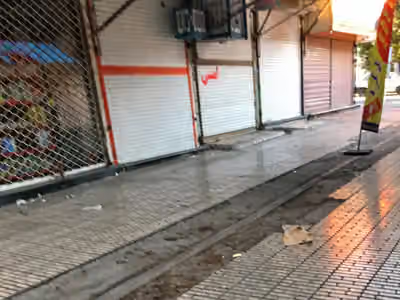
Security forces deploy as shops in western Iran strike on Mahsa Amini anniversary
1

Security forces deploy as shops in western Iran strike on Mahsa Amini anniversary

2

US House passes Iran sanctions as Trump signals war may be nearing end

3
ANALYSIS

A generation shaped by Woman, Life, Freedom refuses to go back

4
VOICES FROM IRAN

Iranian women recall the first time they went out uncovered

5

US officials met Iran-aligned Houthis in Oman - Reuters

Banner

Spotlight

  • Why Iran’s hardliners keep talking of ousting Pezeshkian
    INSIGHT

    Why Iran’s hardliners keep talking of ousting Pezeshkian

  • Woman, Life, Freedom and the Iran that cannot go back
    OPINION

    Woman, Life, Freedom and the Iran that cannot go back

  • Calls to quit NPT grow in Iran as critics warn of strategic trap

    Calls to quit NPT grow in Iran as critics warn of strategic trap

  • From Halkbank to Golden Global: Turkey’s Iran banking ties under US scrutiny

    From Halkbank to Golden Global: Turkey’s Iran banking ties under US scrutiny

  • Iranian women recall the first time they went out uncovered
    VOICES FROM IRAN

    Iranian women recall the first time they went out uncovered

  • ‘This is the cost you must pay’: Iran accused of denying food to death-row twin

    ‘This is the cost you must pay’: Iran accused of denying food to death-row twin

Banner
Banner
•
•
•

More Stories

Video of Iran's police sexually abusing teenager draws fury

Sep 17, 2026, 14:25 GMT+1
•
Hooman Abedi
100%
A police officer restrains a teenager in Iran's nortwestern city of Tabriz in footage showing the teenager being beaten, verbally abused and sexually humiliated by officers. The image has been enhanced using AI for improved quality.

A video showing Iranian police beating and sexually humiliating a teenager while officers laugh, insult him and film the abuse has unleashed fury across Iranian social media, with users asking what may happen beyond public view.

The footage shows several uniformed officers surrounding the teenager as he is struck and subjected to sexual humiliation. At one point, an officer appears to expose or touch the boy's buttocks as other officers watch.

The atmosphere captured by the camera has become almost as central to the outrage as the physical treatment itself. The officers can be heard joking during the encounter.

“We haven't seen his buttocks yet,” one voice says in Iranian Turkish during the recording. Another uses a homophobic slur against the teenager.

East Azarbaijan province police confirmed that the confrontation occurred in Tabriz on June 4 after the person was detained following a street fight, according to the police account carried by state media.

The police said "the officers responsible for the improper treatment" of the teenager are in custody. It said it took "internal disciplinary action against the officers as soon as it learned of the incident, but added that this does not preclude judicial proceedings against them."

Dadban, an Iranian legal rights group, argued that the images should not be reduced to “improper behavior” or an internal disciplinary issue.

The beating and humiliation of a detainee by state officers can carry criminal liability under Iranian law, Dadban said. If the person shown is a minor, the sexual conduct would also fall under legal protections covering children and adolescents and should trigger an immediate, independent criminal investigation, the group said.

‘What happens behind closed doors?’

The images quickly produced a torrent of anger online, much of it centered not simply on the violence but on how openly it appeared to take place.

“If they sexually assault a child in front of a camera, what is happening in detention centers?” one social media user wrote, invoking the death of Mahsa Amini after her detention by morality police in 2022.

“When this happens publicly and with this degree of impunity, there can be no guarantee about people's safety in detention centers and behind closed doors,” another reaction said.

Another user returned to the same fear in starker terms: if this can happen to a teenager in front of a camera, “what is happening in detention centers?”

“If we die from this pain, it would be understandable,” another wrote.

Some demanded that the footage be circulated widely enough for every officer involved to be identified.

Another video fuels the anger

The footage emerged only days after another video from Tabriz circulated widely online, showing a police officer holding two young men's heads close to the loud exhaust of their vehicle.

The apparent purpose was to force them to experience the noise their car had been making.

That video drew significant engagement on social media after appearing online.

Dadban argued that even if the men had committed a traffic offense, police had no authority to invent a roadside punishment. Officers could document an offense, take measures permitted by law and refer suspects to the appropriate judicial authority, the group said.

The two recordings circulation within days of each other has intensified an online argument about police power, humiliation and accountability.

Bonuses sharpen anger

The videos have surfaced just as reports of new bonus payments to members of Iran's armed forces have spread online, adding another source of anger over the treatment of security personnel.

Reports published said a presidential bonus linked to service during the recent war had been deposited for armed forces personnel, with 100 million rials ($43) for staff personnel and 150 million rials ($65) for operational personnel.

Normal military personnel generally earn about 300 million rials ($130) a month, according to figures circulating with reports of the payments.

The timing has drawn a darker interpretation from some government critics on social media. They portrayed the payments as an effort to keep security forces loyal and ready to use greater force should another round of anti-government protests erupt.

That fear comes against a charged backdrop. Security forces were deployed in cities across Iran before a gasoline price increase took effect on September 8, with police, special units and Basij forces reported on streets and around fuel stations in cities including Tabriz, Tehran, Mashhad, Shiraz and Isfahan.

For critics circulating the police videos, the combination is combustible: footage they see as evidence of officers abusing their authority arriving at the same time as reports of authorities rewarding members of the security apparatus.

One reaction to the teenager's treatment went further, questioning why people had previously objected to police stations being destroyed by Israel during the war.

George Floyd comparison resurfaces

One social media response to the teenager's video pointed directly to the contrast with the Iranian leadership's reaction to police violence abroad.

“If American police had committed such a crime, what would the Islamic Republic be doing now?” the user wrote.

It is a comparison with a documented precedent.

After Minneapolis police officer Derek Chauvin killed George Floyd in May 2020, former Supreme Leader Ali Khamenei used Floyd's death to criticize the United States and its treatment of Black Americans.

Khamenei described Floyd's killing as revealing the “nature” of the US system and invoked Floyd's dying words, “I can't breathe,” in arguing that they reflected broader grievances against Washington.

Iranian officials and state media devoted extensive attention to Floyd's killing and the demonstrations that followed.

The comparison adds another layer to the anger surrounding the Tabriz footage: For those sharing the teenager's video, the camera has now turned inward.

And beneath the insults, abuse, laughter and blows, one question has persisted across the reaction: if officers can do this while somebody is filming, what happens when nobody is watching?

US House passes Iran sanctions as Trump signals war may be nearing end

Sep 17, 2026, 13:11 GMT+1
100%
Ukraine's President Volodymyr Zelenskiy welcomes US Senator Lindsey Graham (R-SC) before their meeting in Kyiv on July 10, 2026.

The US House of Representatives passed the Lindsey O. Graham Sanctioning Russia and Iran Act of 2026, clearing the sweeping measure for President Donald Trump’s signature as Washington also signaled that the Iran war could be approaching a diplomatic turning point.

The House approved the sweeping sanctions legislation by a vote of 262-159 on Wednesday, after the Senate passed it 86-11 last month. Fifty-eight Democrats supported the bill, while seven Republicans opposed it.

The legislation would authorize the president to impose tariffs of up to 100% on the largest purchasers of Russian oil and natural gas and sanction senior Russian officials, oligarchs, banks and financial institutions. At Trump’s request, lawmakers also expanded the measure to include sanctions targeting Iran’s energy and weapons sectors.

Republican Representative Joe Wilson welcomed its passage and said lawmakers were looking forward to Trump signing it into law.

The measure could affect major importers of Iranian and Russian energy. India said Thursday that it had noted the bill’s passage while emphasizing that it remained committed to securing energy supplies through diversified sourcing and in response to changing market conditions.

The sanctions push came alongside indications that Washington and Tehran may be exploring a path toward ending the war. Trump said on Wednesday after arriving in North Carolina that he hoped the conflict was nearing its conclusion, adding that Iran was seeking an agreement.

“Well, hopefully we’re toward the end of the war,” Trump told reporters. “Iran is very much wanting to make a deal. We’ll see how that works out.”

Trump is also expected to meet leaders or foreign ministers from the six Persian Gulf states on the sidelines of the UN General Assembly in New York next Tuesday, Axios reported. The meeting is expected to address the next phase of the war and US proposals for a postwar strategy.

Iranian Foreign Minister Abbas Araghchi, meanwhile, said consultations during his visit to China had been successful and endorsed Chinese President Xi Jinping’s proposals for ending the conflict.

China’s Foreign Ministry said Araghchi told Foreign Minister Wang Yi that Iran did not want the hostilities to continue and hoped to return to diplomacy. Wang urged Iran and the United States to revive the negotiating framework established under the Islamabad memorandum, called for the reopening of the Strait of Hormuz and backed dialogue between Iran and Persian Gulf states.

Araghchi also held separate telephone calls from Beijing with Turkish Foreign Minister Hakan Fidan and Pakistan’s army chief, Field Marshal Asim Munir, to discuss regional developments.

A parallel diplomatic channel emerged in Oman, where US officials met senior representatives of Yemen’s Iran-backed Houthis over the weekend, Reuters reported. The Houthis said they had no intention of attacking American vessels and remained committed to their 2025 ceasefire with Washington, according to the report.

Two sources told Reuters that the group promised not to target US ships. A Yemeni source said the Houthis also pledged not to attack Israeli or other commercial vessels, with the exception of Saudi ships.

The discussions took place against a backdrop of continued fighting between the Houthis and Saudi Arabia. Riyadh said it intercepted a Houthi drone near Mecca this week, an allegation the group denied. Saudi Arabia has also sought air-defense assistance from France, Britain, Pakistan and Egypt as its interceptor stocks decline, the Associated Press reported.

Houthi-run media said Saudi strikes in Yemen on Thursday hit telecommunications towers in Taiz and killed one person in Abs. The Houthis also released footage they said showed the downing of a Saudi F-15, a claim that Saudi Arabia had not confirmed.

Maritime traffic through the Strait of Hormuz remained severely constrained despite the diplomatic activity. Only three commodity vessels transited the waterway on Wednesday, down from 12 a day earlier and far below the 10-day average of about 17, Reuters reported, citing preliminary ship-tracking data.

US Central Command maintained that commercial traffic was still moving and that Iran did not control the strait. Its spokesperson said US forces had helped vessels carrying more than 900 million barrels of crude pass through the waterway since early May and had cleared mines from internationally recognized shipping lanes.

The sanctions bill, diplomatic contacts and continuing disruptions at Hormuz and in Yemen left Washington applying further economic pressure while testing whether negotiations could reduce the regional fighting.

Iran cancer patients sell household goods to pay for treatment

Sep 17, 2026, 11:27 GMT+1
100%
A cancer patient receives treatment at a hospital in Iran.

Some cancer patients in Iran are selling essential household goods or abandoning medication as soaring drug prices and gaps in insurance coverage put treatment beyond the reach of low-income families, a charity director said on Thursday.

Families have sold refrigerators and televisions to buy cancer drugs, while some patients have stopped taking medication because they can no longer afford it, Hossein Zehtaban, the head of a cancer support charity in the western province of Kermanshah, told Iran's ILNA news agency.

“We are facing patients who explicitly say they cannot afford their medication, that they are no longer taking it and are waiting to see what happens,” he said.

The warning comes during a sharp rise in pharmaceutical costs across Iran. Producer inflation in the pharmaceutical, chemical and herbal products sector reached 114% year-on-year, according to Iranian economic outlet Zooman.

A recently published price list from Iranian pharmaceutical manufacturer Loghman showed increases of more than 500% for some medicines. Donepezil, used to treat symptoms of Alzheimer's disease, rose 543% for a 10-milligram dose, while the price of clarithromycin increased 308%.

Workers struggle with treatment bills

Zehtaban cited one family with three cancer patients whose main breadwinner is a worker. Medication for each patient can cost 400 million to 500 million rials ($174-$217 at an exchange rate of 2.3 million rials to the dollar) a month, he said.

100%
A healthcare worker tends to a patient in an intensive care unit at a hospital in Iran.

Iran’s minimum base wage for workers is about 166 million rials a month, meaning the medication for just one of the three patients could cost roughly two-and-a-half to three times a minimum-wage worker’s monthly pay.

The charity has about 1,700 cancer patients registered for support, though the charity director said the figure does not represent the total number of cancer patients in Kermanshah province because other organizations also provide assistance.

Insurance problems are adding to the financial pressure, he said. Pharmacies facing unpaid insurance reimbursements have reduced provision of some medicines, forcing cancer patients to search multiple pharmacies for prescribed drugs, he added.

Drug prices surge

The financial strain described by Zehtaban extends beyond cancer treatment.

Loghman's published price changes show increases across dozens of medicines, with 23 products rising by at least 100%. Donepezil rose by 427% for the five-milligram dose and 543% for the 10-milligram dose, while Tadalafil, which is used to treat erectile dysfunction, enlarged prostates and pulmonary arterial hypertension, had the largest increase at about 706%, according to reports citing the company's regulatory disclosure.

100%

Rising medicine costs have combined with food and other household expenses to make supporting cancer patients increasingly difficult, Zehtaban said. Vitamins and nutritional supplements recommended during treatment are also often excluded from insurance coverage.

The charity provides financial assistance as well as weekly psychological and physical rehabilitation sessions, but he said its resources cannot cover the mounting treatment costs.

UN says Iran crackdown amounted to crimes against humanity

Sep 17, 2026, 10:05 GMT+1
100%
A masked protester raises both hands in victory signs as crowds gather on a smoke-filled road during protests in Mashhad, Iran, on January 9, 2026.

Iranian security forces committed crimes against humanity in their crackdown on nationwide protests, a UN fact-finding mission said on Thursday, citing mass killings, torture and arbitrary detention.

The Independent International Fact-Finding Mission on Iran said its report examined the 2025-2026 protests and found that killings by state security forces took place across all 31 provinces. It described the repression as an unprecedented escalation from previous crackdowns.

At least 221 children were reported killed, some as young as two, while tens of thousands of people were detained, according to the report submitted to the UN Human Rights Council.

Security forces fired at crowds

The mission said security forces positioned themselves on rooftops and other elevated locations and fired assault rifles into crowds.

In Karaj, forces used tear gas to trap demonstrators in narrow alleys before shooting at them, the report said. Protesters suffered severe injuries to the head, chest and eyes from metal shotgun pellets, with some left permanently blind.

  • Iran used state machinery to crush 2022 uprising, Amnesty says

    Iran used state machinery to crush 2022 uprising, Amnesty says

Security forces also attacked healthcare facilities, beating and arresting wounded protesters and detaining some healthcare workers, according to the mission. It said the actions deterred injured people from seeking treatment.

Five-month internet shutdown

Iranian authorities imposed a nationwide internet and communications blackout on January 8, at the height of the violence, the mission said.

The shutdown lasted more than five months, which the mission described as the longest nationwide communications shutdown on record, restricting access to information and emergency coordination.

The report said tens of thousands of people were arbitrarily detained and that some faced torture, solitary confinement and denial of access to lawyers. Families were in some cases left without information about detainees' whereabouts, raising concerns of enforced disappearances.

Authorities also delayed or refused to return bodies to some families, demanded payments and pressured relatives to sign statements falsely describing victims as state agents, the mission said.

  • Amnesty says Iran drove global surge in executions in 2025

    Amnesty says Iran drove global surge in executions in 2025

Executions linked to protests

The mission said Iran also intensified its use of the death penalty against people linked to the protests.

At least 29 men were executed between March and August 2026 following expedited trials, including five who were executed publicly.

More than 70 people, including five women and three boys, remained at imminent risk of execution, it said.

The mission concluded that violations including murder, imprisonment, torture and other inhumane acts amounted to crimes against humanity because they formed part of a widespread and systematic attack against civilians.

US strikes also examined

The report separately found reasonable grounds to believe the United States committed war crimes in two strikes during the conflict with Iran.

It said US Tomahawk missiles struck the Shajareh Tayyebeh Primary School in Minab, killing more than 150 people, including about 120 children.

A separate US strike in Lamerd dispersed tungsten pellets over a sports complex and nearby residential area, killing 22 civilians, the mission said.

The mission said the attacks amounted to indiscriminate strikes resulting in civilian deaths and damage to civilian objects.

Calls to quit NPT grow in Iran as critics warn of strategic trap

Sep 17, 2026, 00:30 GMT+1
•
Maryam Sinaiee
100%
Demonstrators hold Iranian flags and a banner reading “Zero enrichment we do not have a deal” during a rally outside the Atomic Energy Organization of Iran in Tehran, May 2025

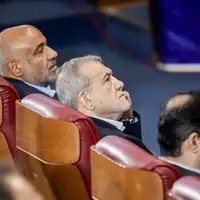
Calls for Iran to withdraw from the Nuclear Non-Proliferation Treaty are gaining ground among hardliners after the IAEA referred the country to the UN Security Council and its nuclear chief was barred from attending the agency’s annual conference in Vienna.

The growing debate has exposed a divide within Iran’s political establishment between those who see NPT membership as offering little protection and others who warn that withdrawal would surrender one of Tehran’s remaining diplomatic and legal advantages.

Mohsen Rezaei, secretary of Iran’s Supreme National Security Council, appeared to threaten withdrawal from the treaty on Sunday, saying that “political and destructive actions” by the International Atomic Energy Agency would “push countries toward leaving the Nuclear Non-Proliferation Treaty.”

But President Masoud Pezeshkian reiterated the same day, during a visit to India, that Iran was not seeking nuclear weapons. “If we were seeking nuclear weapons, we would not have become a member of the NPT,” he said.

The debate intensified after Mohammad Eslami, head of Iran’s Atomic Energy Organization, was prevented from attending the IAEA General Conference in Vienna.

Austria had sought an exemption from a UN travel ban to allow Eslami to attend, but the sanctions committee did not approve it after a US objection.

Calls for immediate withdrawal

Supporters of immediate withdrawal say NPT membership has failed to protect Iran from international pressure or attacks on its nuclear facilities.

Continued membership, they argue, only makes sense if members’ nuclear rights are given equal weight alongside their obligations.

Sepehr Khalaji, who headed the Government Information Council under former President Ebrahim Raisi, questioned why Iran remained in the treaty.

“They bombed the nuclear facilities, martyred the scientists, sanctioned nuclear technology and say they will strike the remaining nuclear facilities. They referred Iran’s case to the Security Council, and they do not allow the head of the Atomic Energy Organization to enter the IAEA. So why are we still in the IAEA? Why don’t we withdraw from the NPT?” he wrote on X.

Parliamentary push

The debate has also reached parliament, where lawmakers are preparing a proposal for Iran to withdraw from the NPT.

Hassan-Ali Akhlaghi, a member of parliament, told the Fars news agency on Wednesday that lawmakers had prepared a triple-urgency bill that would be put to a vote if approved by the parliamentary leadership.

Given what he called the IAEA’s “entirely hostile and illogical” resolution, Akhlaghi said Iran should leave the treaty as soon as possible.

The proposal, however, has not yet formally reached parliament’s National Security and Foreign Policy Committee and is not currently on the parliamentary agenda.

Warnings of a trap

The conservative Khorasan newspaper on Wednesday warned that leaving the treaty could increase political and diplomatic pressure on Iran without producing significant security gains.

“On the surface, these positions may appear to be a revolutionary and deterrent response to the enemy; but when the pieces of the situation are put together, another worrying picture emerges,” it wrote.

Khorasan argued that the United States and Israel were deliberately trying to push Iran’s political debate toward more radical positions, including testing a nuclear weapon, changing its nuclear doctrine and immediately withdrawing from the NPT.

The newspaper said leaving the treaty before Iran had achieved deterrence could reveal Tehran’s intentions rather than demonstrate strength, potentially giving its opponents an opportunity to act.

“Iran has obtained an important part of the practical outcome without making an official and costly withdrawal: the IAEA no longer has its previous access, while Tehran continues to benefit from the legal protection of NPT membership and the political support of Russia and China,” Khorasan wrote.

“Official withdrawal would destroy this useful grey zone without creating a new strategic advantage.”

Reformist politician Rasoul Montajab-Nia made a similar argument.

“If the agency has not acted impartially toward Iran, we should not resort to disrupting the framework, because this would mean fuelling disputes and war with other countries.”

Montajab-Nia said withdrawal would not benefit Iran and would be “in line with Israel’s objectives.”

The nuclear threshold

At the outer edge of the debate, some advocates of developing nuclear weapons have argued that Iran should remain in the NPT unless it decides to change its nuclear doctrine — and then coordinate withdrawal with a nuclear test.

Foad Izadi, a hardline political commentator, told the Moj news agency that Iran had no need to leave the NPT while its current nuclear doctrine remained in place.

But if Tehran decided to change that doctrine, he said, Iran could withdraw from the treaty after a nuclear test or simultaneously with one.