US is targeting Iranian oil tankers, American official tells i24NEWS
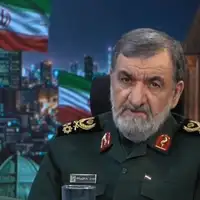
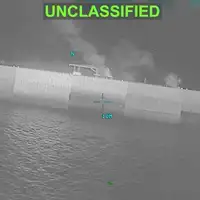
The United States is currently targeting Iranian oil tankers, i24NEWS reported Tuesday, citing a US official, after Iran’s central war command said Washington had issued evacuation orders to three Iranian tankers.
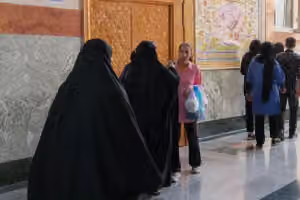
File photo shows a confrontation between Iranian hijab enforcers and a woman not wearing the mandatory head covering.
Iran is preparing to issue a new compulsory hijab directive for universities, a senior official said Tuesday, as hardliners intensify pressure on women over mandatory veiling ahead of the anniversary of Mahsa Amini’s death in morality police custody.
Saeed Karami, deputy for cultural and political affairs at the Office of the Supreme Leader’s Representative in Universities, said the directive had been drafted and would soon be issued by the ministries of Science and Health, which oversee most universities and medical schools.
Karami told the semi-official Mehr news agency that existing regulations on hijab were “very good” and only needed renewed attention.
Asked whether universities would receive a “hijab charter,” Karami said “directive” was a more appropriate term. He did not give details of the measures it would contain or specify when they would take effect.
“We will certainly not witness the bitter incidents that we sometimes see on the streets at universities,” he said, without elaborating.
The planned directive comes amid a renewed push by hardline officials, clerics and government supporters to strengthen enforcement of compulsory hijab, four years after the death of Mahsa Jina Amini in morality police custody triggered the Woman, Life, Freedom uprising.
Women appearing in public without headscarves have since become commonplace in Tehran and other major cities, making rejection of compulsory hijab one of the most visible social changes to survive the 2022 protests.
Pressure has increased in recent weeks as hardliners demand implementation of the stalled Hijab and Chastity Law and criticize President Masoud Pezeshkian’s government for what they describe as a retreat on the issue.
Hardline lawmaker Mohammad-Taghi Naghd-Ali said Tuesday the government had backed down over hijab and accused it of failing to implement the legislation, describing compulsory veiling as one of the “foundations of the revolution.”
The more sweeping Hijab and Chastity Law remains suspended after the Supreme National Security Council instructed parliament not to promulgate it, Parliament Speaker Mohammad-Bagher Ghalibaf disclosed last year. The decision was widely seen as reflecting fears that aggressive enforcement could trigger renewed unrest.
Other signs of renewed pressure have appeared across Iran. The commander of the Revolutionary Guards in North Khorasan said this week that groups tasked with verbally warning women over their clothing were being revived, while pro-government gatherings demanding stricter hijab enforcement have been held in Qom, Birjand and Isfahan.
Iran International found last month that authorities had sealed at least 42 cafés, restaurants, shops, sports clubs and other businesses in 17 cities within three weeks over alleged violations of hijab rules and other Islamic norms.
Authorities have increasingly used business closures, judicial warnings and economic pressure rather than relying solely on the large-scale morality police patrols associated with enforcement before the 2022 uprising. Reports from inside Iran have nevertheless also pointed to renewed street warnings and patrol activity in several cities.
Universities have long been a particular focus of hijab enforcement and political control. Campuses became major centers of protest during the Woman, Life, Freedom uprising, and female students were among those who openly removed their headscarves in defiance of the state.
In April 2023, the Science Ministry said universities would not be required to provide educational, welfare and other services to students who refused to comply with hijab regulations. Female students were subsequently barred from campuses, summoned to disciplinary committees and in some cases suspended or expelled from dormitories.
At the University of Tehran, authorities later deployed women with seminary backgrounds to monitor students’ clothing, while students at several other institutions reported being photographed, having their student IDs recorded or being denied entry over their clothing.
At Tehran’s Amir Kabir University of Technology, students boycotted classes in 2024 after reports that more than 200 students had been barred from campus amid stricter dress-code enforcement. Similar pressure was subsequently reported at Tehran North Islamic Azad University.
Signs of renewed tension have emerged again this year. The Student Basij at Iran University of Science and Technology recently protested the presence of unveiled female students at an event attended by senior officials from the Science Ministry.
Despite successive enforcement campaigns, many Iranian women continue to appear without mandatory hijab in streets, cafés, shopping centers and other public spaces, maintaining a form of civil disobedience that has persisted since the Woman, Life, Freedom protests.
The US Treasury on Tuesday imposed fresh Iran-related sanctions on one individual and 35 entities, including all 27 remaining Iranian airlines, as Washington expanded pressure on Tehran’s aviation sector and networks supporting sanctioned carrier Mahan Air.
The Office of Foreign Assets Control added airlines including Iran Aseman Airlines, Iran Airtour, Kish Air, Qeshm Air, Taban Airlines, Sepehran Airlines, Varesh Airlines, Zagros Airlines, Karun Airlines, Chabahar Airlines and Fly Persia to its Specially Designated Nationals list.
Newer carriers including Air Shiraz, Ava Airlines, Fly Kish, Mehr Airways, Raimon Airways and Soroush Air were also listed.
Saha Airlines, formally listed as the Armed Forces Air Transport Service, was among those targeted. OFAC describes it as providing both passenger and freight air transport. The Iranian airlines were designated under Executive Order 13902 and are subject to secondary sanctions, according to Treasury’s notice.
Treasury Secretary Scott Bessent warned companies against doing business with Iranian airlines in a post on X.
“Let this be a warning to anyone doing business with Iran’s remaining airlines, all of which we sanctioned today: You are at risk of being cut off from the global financial system,” Bessent said.
He said the measures were part of Operation Economic Outcast, Washington’s campaign to cut financial lifelines to the Islamic Republic, adding that the United States had also sanctioned companies continuing to support Mahan Air.
The new sanctions follow an Aug. 24 determination by the Treasury making Iran’s aviation sector, along with its digital asset, gold, shipping and technology sectors, subject to sanctions under Executive Order 13902.
A separate group of designations targeted aviation and logistics companies outside Iran with links to Mahan Air. They included ECT Aviation Support in the United Arab Emirates, ECT Aviation Support Ltd in Britain, Malaysia-based iCargo, Kazakhstan-based Tour Invest and Turkish companies MES Cargo, S Sistem Logistics and Sky Phoenix Airways. Dubai-based Aerobravo Airplane Management and Operation was also sanctioned through its link to ECT Aviation Support.
OFAC also designated Mahran Ibrahim, an Egyptian national based in the UAE, listing him as linked to ECT Aviation Support.
Mahan Air has been under US counterterrorism sanctions since 2011. Washington accuses the carrier of serving as a conduit for the Revolutionary Guards, including by transporting personnel, weapons and military equipment. Treasury has stepped up action against companies providing logistical and commercial support to the airline in recent months.
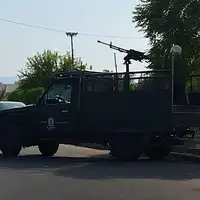
A mounted machine gun deployed in Khorramabad, western Iran, on Monday, September 7, ahead of a fuel price increase.
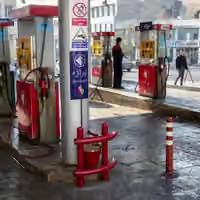
Iranian security forces deployed around fuel stations and on streets across the country as a gasoline price increase took effect, with people warning of further pressure on household budgets and rising prices for other goods and services.
Messages, videos and accounts sent to Iran International described deployments of police, special units and Basij forces in Tehran, Mashhad, Shiraz, Karaj, Isfahan, Tabriz, Birjand, Khorramabad, Khomein, Abadan and Qeshm.
Reports of slower internet connections also emerged from several cities, including Tabriz and Babol.
Petrol prices doubled on Monday for drivers buying fuel outside their monthly subsidised quota, rising from 50,000 to 100,000 rials a litre, about 2.3 to 4.5 US cents. The government announced the increase two days earlier.
Monthly subsidized allocations remain unchanged. Motorists can buy 60 liters at 15,000 rials per liter, about 0.7 cents, and another 50 liters at 30,000 rials, about 1.3 cents.
The dollar figures are negligible. The wages are the point. Average monthly pay in Iran is around 250 million rials, about $113 at Tuesday's rate, and many workers earn closer to 200 million, or roughly $90 a month.
Security forces gather around fuel stations
Several residents of Mashhad told Iran International that security forces appeared around petrol stations on Sunday, hours before the new price took effect.
“On Monday evening, I passed three gas stations. Several police vehicles were stationed outside each one, and at one station there were large numbers of Basij motorcyclists and special unit forces,” one resident said.
Another Mashhad resident described police and special units positioned at fuel stations across the city.
Video sent to Iran International from Khorramabad in western Lorestan province showed security personnel, vehicles and motorcycles deployed around the city, including what appeared to be a mounted machine gun.
Fuel supplies had already faced disruptions over the previous three weeks in areas including Razavi Khorasan, South Khorasan, Tehran and Alborz provinces.
Citizens in early September reported station closures, long lines, restrictions on purchases and waits of about two hours to obtain 10 liters of gasoline.
A Birjand resident said some filling stations had closed and displayed notices blaming “technical problems,” while police were positioned at others.
Similar deployments were described in Shiraz, where a local reported a large security presence around Maali-Abad early Tuesday, and in Karaj, particularly Fardis, Gohardasht and Mehrshahr.
A resident of Khomein in Markazi province also described a long line and numerous police officers at a fuel station on Shohadaye Daneshjoo Street.
Special units deploy in Tehran
Several Tehran residents reported increased security deployments from Monday evening, including in Shahr-e Rey and Salsabil neighborhoods.
“The station was heavily secured. Special units and the Basij were constantly moving around, and the streets were crowded,” a resident who visited a fuel station near Ferdowsi Square in central Tehran around midnight said.
Another who went to a station on Pirouzi Street in the east described long vehicle lines with special units positioned nearby.
People in Isfahan and Abadan also reported armed police at filling stations. In Qeshm, a resident said armed personnel were deployed around major squares on Monday evening and that a confrontation occurred at the entrance to a filling station in Dargahan.
Two messages from Tabriz described a large security presence alongside deteriorating internet service.
“The city of Tabriz is full of special units. The forces are armed, and heavy equipment can also be seen,” one said.
A Babol citizen also reported slower mobile and fixed internet connections, though the reason for the disruption could not be established.
Gasoline prices carry particular political sensitivity in Iran. A sudden increase and rationing in November 2019 triggered demonstrations across dozens of cities that quickly expanded into nationwide anti-government protests.
Security forces killed around 1,500 people during the crackdown, according to a Reuters tally at the time. Thousands were arrested and authorities imposed a nationwide internet shutdown.
Government defends higher gasoline price
First Vice President Mohammad Reza Aref defended the new rate, arguing that even 100,000 rials per liter remains far below the government's cost of importing gasoline.
Imported gasoline costs the government more than 700,000 rials per liter, equivalent to about 30 cents, Aref said. Imported fuel would gradually be sold at prices closer to its cost, he added.
The government's figures for what petrol costs to produce have not held up well to examination. In November 2025, after officials put the cost at 340,000 rials a litre, about 15 cents at current rates, Iran International went through the refineries' own financial statements. They showed operating costs, excluding the value of the crude going in, of around 35,000 rials a litre, roughly 1.6 cents, a tenth of the official figure.
A general view of a gas station in Iran
Economist Mousa Ghaninejad has estimated actual gasoline consumption inside Iran at about 70 million liters a day and argued that much of the remainder recorded as consumption is smuggled out of the country.
Iranians warn of knock-on price increases
Thousands of people responding to an Iran International question about the fuel increase focused on its potential impact beyond filling stations, warning that transportation costs could push up food prices, fares and other everyday expenses.
“100,000 rials for a liter of gasoline may just be a number for some people, but for people it means another step toward making life harder,” one respondent wrote.
Another said petrol was not the problem on its own, and pointed to food. A five-liter container of cooking oil that used to cost 22 million rials, about $9.90, now sells for 40 million, roughly $18.
On a monthly wage of 200 million rials, that is a fifth of a month's pay for one container of oil.
“We buy everything at expensive dollar-linked prices, but our base salary is only $100. Where in the world can you see something like this?” one person wrote.
Another said wages would have to rise alongside prices, since households could not absorb repeated increases on incomes that had barely moved.
For younger respondents the loss was smaller and more particular. "The feeling of going on a trip is gone. Going out for a 10-minute drive is gone. We young people said goodbye to small pleasures a long time ago," one wrote.
A general view of the Houses of Parliament at sunrise, in London, Britain.
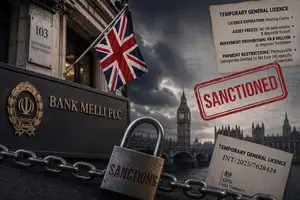
Britain said on Tuesday it was expanding sanctions on Iran, targeting key sectors including energy, metals, banking, insurance and shipping as part of efforts to restrict Tehran's nuclear program and other hostile activity.
Minister of State Stephen Doughty said the government was introducing legislation to tighten financial and trade restrictions, widen powers to sanction ships linked to Iran and bar Iranian aircraft from landing in the UK unless exemptions apply.
“Today we are laying legislation which will tackle Iranian nuclear activity and other hostile Iranian activity,” Doughty said in a written statement to parliament.
Focus on nuclear program
Doughty said Iran had expanded its nuclear program in ways that had no credible civilian justification and pointed to its stockpile of more than 400 kg of uranium enriched to 60%.
“Iran is the only country without nuclear weapons to enrich uranium to this level,” he said.
Britain restored UN sanctions on Iran in October 2025 after the snapback mechanism was triggered and also designated 71 people and entities linked to Iran's nuclear program, including financial institutions and energy companies.
Wider trade and financial restrictions
The new rules expand restrictions on goods, technology and services tied to sectors including energy, software, metals and gold, as well as shipping, insurance and banking.
They also ban exports of additional goods and technology that Britain says could support Iran's conventional weapons and nuclear capabilities.
Doughty said the financial measures would “further reduce the Government of Iran’s ability to access the UK financial system and raise funds in support of its nuclear programme.”
Britain will also gain broader powers to sanction ships that it says enable or facilitate Iran's nuclear program or other destabilizing activity.
Iranian aircraft will be barred from landing in the UK unless exemptions apply, following Britain's termination of bilateral air service arrangements with Iran in 2024.
The legislation includes exemptions to allow continued operations at the Shah Deniz gas field in Azerbaijan, which supplies energy to European countries.
Doughty said Britain remained committed to diplomacy, saying a negotiated outcome was “the only long-term solution” to the dispute over Iran's nuclear program.
Four senior Australian opposition politicians have backed a role for Reza Pahlavi in a political transition in Iran and urged closer engagement with the exiled prince, telling Iran International they have invited him to visit Australia.
The Coalition politicians said they supported peaceful political change in Iran and planned to meet Pahlavi virtually. No date has been announced for the meeting or a possible visit.
“We want to see peaceful political change in Iran. We don't support the current regime,” Senator Dave Sharma, Shadow Assistant Minister for Citizenship and Multicultural Affairs, told Iran International.
“We think it's done immense harm not only to its own people, but to the neighbourhood, the region, and even to the world here in Australia.”
Iran International also spoke to Senator Andrew Bragg, Shadow Minister for Environment; Senator Jessica Collins, Chair of the Senate Foreign Affairs, Defence and Trade References Committee; and Julian Leeser, Shadow Minister for Education.
Coalition seeks engagement with Pahlavi
Engagement with Pahlavi is one of the Coalition's most important foreign policy objectives because of the role it believes he could play during a transition, Bragg said.
Senator Andrew Bragg, Australian Shadow Minister for Environment
“For the coalition, having a meeting with the Crown Prince is one of the most important foreign policy objectives that we have, because we believe that meeting with this key transitional figure is the best way to move the conversation on to a new government for Iran,” Bragg told Iran International.
Bragg described the Islamic Republic as “probably the worst government and the worst regime on the planet” and accused it of crimes against Iranians and sponsoring terrorism abroad, including in Australia.
The senator argued that political change would be difficult without serious international engagement with an alternative.
“This government will never be moved on unless we engage seriously with an alternative, and the alternative that we have as a transitional figure is the Crown Prince,” Bragg said.
Collins also described Pahlavi as “an important symbol of anti-regime and pro-democracy” and said the Coalition would continue engaging with him and hearing about the challenges facing Iranians.
The four lawmakers plan to hold a virtual meeting with Pahlavi ahead of a possible visit to Australia. The Coalition has extended an invitation for the visit, but no date has been announced for either the talks or the trip.
Peaceful political change
Pahlavi is an influential voice in Iranian politics, with many Iranians around the world looking to him for leadership, Sharma said.
The Coalition’s outreach aims to build a clearer picture of events inside Iran and support political forces seeking change, said Sharma, a former Australian ambassador to Israel.
“I think having the Crown Prince visit Australia will help show the Australian people that there are prospects for a brighter political future in Iran,” Sharma said.
“There are many Iranian people who want this to happen, and that he will play an important part in any transition.”
Senator Dave Sharma, Australian Shadow Assistant Minister for Citizenship and Multicultural Affairs
A visit could also renew Australian public attention on Iran following the authorities' deadly suppression of nationwide protests in January, Sharma said.
Leeser said the invitation was intended to give Australian politicians an opportunity to hear Pahlavi's assessment of conditions inside Iran and his vision for the country's future.
“The coalition has decided to invite Reza Pahlavi to Australia at this time because Reza Pahlavi has been advocating for freedom and democracy for the people of Iran, and we want to hear his perspective of what's happening on the ground and his hopes for the future of Iran,” Leeser told Iran International.
Leeser drew parallels between the invitation and Australia’s past engagement with figures in overseas political struggles, including Archbishop Desmond Tutu and Winnie Mandela during South Africa’s anti-apartheid struggle, and Xanana Gusmão and José Ramos-Horta during East Timor’s campaign for independence.
Julian Leeser, Australian MP and Shadow Minister for Education
“Reza Pahlavi would come to Australia in that tradition to provide us with his perspective and to provide us with important information that will help us develop our foreign policy in this area,” Leeser said.
Support for Iranians
All four politicians used the interviews to express support for Iranians seeking political change.
Collins said the Coalition shared what she described as the fundamental values sought by protesters, including “freedom, liberty and security.”
“We stand with you all the way, and I want you to know, I want all the Iranian people in Australia to know, and around the world, that we stand with you,” Collins said.
Chair of the Australian Senate Foreign Affairs, Defence and Trade References Committee
Sharma echoed that view, saying the Coalition’s engagement with Pahlavi reflected its support for Iranians seeking democratic change.
“The message this will send to the people of Iran is that you are not alone, that your fight for freedom and democracy is a fight that we share and that we are equally committed to, and that your success is our success,” Sharma said.