• العربية
  • فارسی
Brand
  • Iran Insight
  • Politics
  • Economy
  • Analysis
  • Special Report
  • Opinion
  • Podcast
  • Live TV
  • Iran Insight
  • Politics
  • Economy
  • Analysis
  • Special Report
  • Opinion
  • Podcast
  • Live TV
  • Theme
  • Language
    • العربية
    • فارسی
  • Iran Insight
  • Politics
  • Economy
  • Analysis
  • Special Report
  • Opinion
  • Podcast
  • Live TV
All rights reserved for Volant Media UK Limited
volant media logo
ANALYSIS

Iran losing leverage in Hormuz as US blockade bites - CNN

Aug 30, 2026, 20:52 GMT+1

Iran is increasingly losing the leverage it gained from disrupting shipping through the Strait of Hormuz as a renewed US blockade and efforts to secure commercial traffic put greater economic pressure on Tehran, former senior US official Brett McGurk wrote in a CNN analysis published Sunday.

McGurk, who served in senior national security roles under four US presidents, argued that the six-month conflict had entered a “fourth act” after renewed Iranian attacks on commercial shipping prompted another round of military exchanges.

Since mid-July, Washington has reimposed a military blockade on Iranian ports and sanctions on Iran’s oil trade while US forces have worked to clear shipping lanes and protect commercial vessels in the strait, McGurk wrote. He cited Bloomberg reporting that oil flows through Hormuz had recovered to about two-thirds of pre-war levels.

“If Iran loses its ability to hold the Strait hostage, its leverage dissipates rapidly,” McGurk wrote, arguing that pressure was now compounding on Tehran rather than Washington.

He cited International Monetary Fund projections showing Iran’s economy contracting by more than 5% this year with inflation approaching 70%, while the rial has fallen sharply and prices of basic goods have risen. An Iranian Labor Ministry official recently estimated that more than one million jobs disappeared during the first three months of the war, he added.

McGurk said Iran could still escalate by again targeting shipping, energy infrastructure in neighboring states or using the Houthis to threaten Red Sea commerce, but argued that such tactics had so far failed to force Washington to back down.

He cautioned, however, that the outcome remained uncertain, writing that while Iran had assumed it could outlast US pressure, “it’s too early to call.”

Most Viewed

Washington’s economic war on Iran starts in Dubai, not Beijing
1
ANALYSIS

Washington’s economic war on Iran starts in Dubai, not Beijing

2
ANALYSIS

Iran’s missing fuel: Can border smuggling explain it all?

3

Iranian banks remain open in UAE as US campaign squeezes Dubai trade - FT

4
INSIGHT

Iran bets on China to blunt Trump’s economic offensive

5
ANALYSIS

What the US-Venezuela oil model could mean for Iran’s energy future

Banner
Banner

Spotlight

  • What the US-Venezuela oil model could mean for Iran’s energy future
    ANALYSIS

    What the US-Venezuela oil model could mean for Iran’s energy future

  • Washington’s economic war on Iran starts in Dubai, not Beijing
    ANALYSIS

    Washington’s economic war on Iran starts in Dubai, not Beijing

  • Iran’s political prisoners are being executed. Why is supporting them controversial?
    PODCAST

    Iran’s political prisoners are being executed. Why is supporting them controversial?

  • Iran’s missing fuel: Can border smuggling explain it all?
    ANALYSIS

    Iran’s missing fuel: Can border smuggling explain it all?

  • Iran bets on China to blunt Trump’s economic offensive
    INSIGHT

    Iran bets on China to blunt Trump’s economic offensive

  • Iran or the dollar? US makes an example of Banque Misr
    ANALYSIS

    Iran or the dollar? US makes an example of Banque Misr

  • War or deal? Rezaei begins to define Iran’s price
    ANALYSIS

    War or deal? Rezaei begins to define Iran’s price

Banner
•
•
•

More Stories

What the US-Venezuela oil model could mean for Iran’s energy future

Aug 30, 2026, 02:05 GMT+1
•
Mehdi Moslehi
100%
Venezuela's interim President Delcy Rodriguez, U.S. Energy Secretary Chris Wright and U.S. Charge d'Affaires for Venezuela Laura Dogu visit oil production facilities at the joint venture between Chevron and state oil company PDVSA in the Orinoco Oil Belt, following an agreement to pursue long-term energy cooperation on Feb. 12, 2026. / Photo by Reuters

The emerging US-Venezuela oil partnership could offer a model for how Iran’s vast but underinvested energy industry might be revived under a future government able to restore ties with the West, while also reshaping oil flows in Europe.

The significance of closer US-Venezuela energy cooperation lies not only in the scale of Venezuela’s oil reserves, but also in the complementary qualities of the two countries’ crude — and in what international capital, technology and access to Western markets could mean for an oil industry weakened by years of isolation.

Most US shale crude is light and sweet, while Venezuela’s Merey 16 is an extra-heavy, high-sulfur grade. A technical estimate suggests that a blend of roughly 60% light US crude and 40% Venezuelan Merey 16 could produce a crude with an API gravity of around 31 to 32 degrees and sulfur content of roughly 1.5%, depending on the specific US grade used.

Those characteristics are close to Russia’s Urals, a medium-sour crude with an API gravity of around 31 degrees and sulfur content of about 1.4%. Before Russia’s full-scale invasion of Ukraine, Urals was one of the main feedstocks for European refineries.

The United States could therefore potentially offer European refiners three options: its own light crude, Venezuelan heavy crude for plants capable of processing it, and tailored blends suited to refineries that previously relied heavily on Russian medium-sour crude. Complex US Gulf Coast refineries could also process Venezuela’s heavy oil and export diesel, jet fuel and other refined products needed by Europe.

The United States is already the European Union’s largest supplier of petroleum oil, accounting for 17.8% of EU petroleum-oil imports in the first quarter of 2026.

It is still too early, however, to speak of US-Venezuelan dominance of the European market. Venezuela currently produces around 1.25 million barrels per day, while rebuilding its electricity network, pipelines, processing facilities, refineries and ports will require tens of billions of dollars in investment and several years.

In the short term, the agreement is therefore more significant as a political and psychological signal to the market. In the medium term, if it results in substantially higher Venezuelan production, it could increase Atlantic Basin oil supplies, further reduce Europe’s dependence on Russian and some Middle Eastern crude, redirect some Venezuelan oil from China toward Western markets, and put additional pressure on OPEC+’s ability to manage the market.

A potential model for Iran

For Iranians, however, Venezuela may carry a broader message. Like Venezuela, Iran possesses enormous oil and gas reserves, but its energy industry faces deep problems after years of sanctions, insufficient investment, aging infrastructure, limited access to advanced technology, declining pressure in some mature fields and the constraints under which many projects were developed during the sanctions era.

If the Islamic Republic were to fall, followed by a stable political transition and the establishment of a government capable of maintaining normal and constructive relations with the United States, Europe and the global economy, Iran’s oil and gas industry could become one of the main engines of the country’s economic reconstruction.

Under such conditions, the entry of major international companies, including US oil producers and oilfield-services firms, could provide the capital, technology and managerial expertise needed to rehabilitate wells, pipelines, processing facilities, refineries, ports and Iran’s export infrastructure.

American companies have extensive experience in advanced drilling, reservoir management, enhanced oil recovery, rehabilitating low-output wells, processing heavy and sour crude and designing crude blends tailored to refinery requirements. The same basic logic that makes light US crude a useful complement to Venezuela’s extra-heavy oil could also be applied to the marketing and optimization of some Iranian crude grades.

Iran, of course, has its own broad range of light, medium and heavy crudes as well as condensates. The main opportunity would therefore not simply be to import US light crude for blending, but to use Western technology, capital and commercial networks to develop competitive export blends and regain access to global markets.

The return of established American and European companies could also create an opportunity for an independent assessment of projects carried out during the sanctions era, including those undertaken by domestic and Chinese contractors, and for facilities and equipment to be upgraded or replaced where necessary.

Such a transformation could increase Iran’s production capacity, reduce energy waste and the flaring of associated gas, improve environmental standards and create substantial direct and indirect employment.

None of this, however, would happen automatically or immediately after a change of government. The lifting of sanctions, legal protection for investors, transparent oil contracts, efforts to combat corruption, an independent judiciary and political stability would all be prerequisites for attracting investment on the required scale.

Oil revenues would also need to be managed through transparent mechanisms and directed toward rebuilding the country, its infrastructure, education, healthcare and public welfare, avoiding a repeat of Iran’s historic overdependence on oil.

The US-Venezuela partnership therefore matters to Iran for more than the possibility that a blend of light American and extra-heavy Venezuelan crude could emerge as a serious competitor to Russian Urals in parts of the European market.

The more important lesson is that vast hydrocarbon reserves can regain economic value when accompanied by investment, technology and access to international markets. Iran’s oil and gas resources could still underpin a new period of economic growth if a stable and transparent government with constructive international relations emerges after the Islamic Republic.

Cooperation with American and other major international companies could then help rebuild Iran’s aging energy industry and restore the country as a significant and reliable player in the global energy market.

Washington’s economic war on Iran starts in Dubai, not Beijing

Aug 29, 2026, 15:40 GMT+1
•
Kerri Bitsoff
100%
The United Arab Emirates flag flies over Dubai, which has long served as a key commercial and financial hub for Iran-linked trade and transactions.

The Treasury Department’s opener for Operation Economic Outcast, launched Monday to cut Iran’s remaining income, suggests Washington sees Dubai, Istanbul and Baghdad — not Beijing — as the critical channels for Tehran’s money.

The regime needs hard currency to defend the rial, pay its military and security forces, and keep salaries, pensions, and subsidies flowing. Reports from across the country already describe wages months in arrears, delayed pension payments, and near-daily protests by workers and retirees.

It also needs imports that can physically arrive in the country. China provides neither, with its overland rail corridor being marginal next to the seaborne trade the blockade cut off.

When the Islamic Republic sells oil to China it is paid in yuan, which it already had more than it could spend before the blockade was in place.

The lifeline that China provides to the Iranian regime has proven to be not as helpful in a crisis. While China buys almost all of Iran’s oil, is the largest supplier of the consumer goods Iran imports, and supplies the components that built the regime’s weapons systems, those transactions are entirely on China’s terms.

The relationship is structured around what China wants: the Islamic Republic isn’t paid in currency it can readily deploy. Its main revenue source is largely stuck in China in yuan and can only be swapped for imports that are blocked by the blockade.

China’s private sector is so connected to the rest of the world that it is susceptible to de-risking under pressure.

While Beijing gives cheap cover by condemning American sanctions and ordering its companies to ignore them, its real support has not escalated with the conflict, with the exception of a deniable shoulder-fired missile deal that may not have made it through.

The bank in Dubai

On Friday morning, Treasury named the bank Secretary Bessent had been promising all week, and as I predicted, it was not Chinese.

The Financial Crimes Enforcement Network proposed a rule to cut the UAE branches of Banque Misr, Egypt’s second-largest bank, off from the international financial system, saying they had processed roughly 1.8 billion dollars for 103 companies tied to Iranian shadow banking networks.

The proposal is subject to a 30-day comment period and, if finalized, would cut Banque Misr’s UAE branches off from US correspondent banking.

The choice of a UAE bank reflects that the Emirates is where the regime gets what it needs most. The hard currency comes back through Dubai, where front companies and brokers deal with the world on Iran’s behalf and exchange houses convert the proceeds into currency the regime can spend at home. Dubai functions for Iran the way Hong Kong functions for China.

The same traders supply the imports Iran cannot buy directly, Western machinery, electronics, and parts, purchased in their own name and re-exported across the Gulf. The Emirates also moved Iranian fuel oil, which it sold into the regional ship-fuel market through Fujairah, one of the world’s largest bunkering hubs, where blending stripped its Iranian identity. The blockade now cuts off the Iranian supply.

Even the oil money parked in China depends on this channel. What the regime manages to repatriate from those accounts moves through the Emirates, which is why a trade halt announced in Abu Dhabi reaches revenue earned in Shandong.

The pressure is landing on a country that has already turned against the Iranian regime. The Islamic Republic has fired missiles at the Emirates, and on August 19th, Abu Dhabi announced that all trade and financial transactions with Iran were halted.

American officials had pressed Abu Dhabi for years over the exchange houses and trading companies serving Iran, but the attacks aligned incentives between the U.S. and UAE as a shared security concern. The halt has no precedent in a country that has served as Iran’s commercial gateway for decades, and its value will be decided by enforcement.

The land border

What is of importance in Turkey is the remaining cross-border trade. Petrochemicals and metals earn less than oil, but the proceeds are in currency the regime can spend. The goods are also easier to sell, since petrochemicals and metals don’t carry the same fingerprint as Iranian crude, and can disappear across the border into Turkish plants to be resold.

Washington has designated small and mid-sized Turkish buyers of these commodities for years without meaningfully slowing the trade. The larger importers that have so far gone untouched are most susceptible to the renewed pressure campaign.

The UAE’s suspension leaves Turkey as one of the few channels the Islamic Republic has left, a major hub it can reach by land. Turkish banks are unlikely to handle displaced Iran business, especially after Halkbank’s decade-long criminal case ended this year with a deal barring Iran business that touches the U.S., after its deputy general manager went to American prison. Turkey’s banks avoid the regime’s business rather than process Iran-linked payments. After United Nations sanctions snapped back, Ankara froze the assets of dozens of Iranian entities, including Bank Sepah.

If the pressure on buyers is effective, what remains of the regime’s business in Turkey is what has always run outside the system, cash collected in Turkey and carried across the border.

Iraq’s oil and dollars

The Iran-Iraq border provides an accessible path through the blockade for the Islamic Republic to get its oil out. Iranian crude and fuel oil are blended with Iraqi cargoes, onshore and in ship-to-ship transfers at sea, and sold as Iraqi product. The smuggling earns the regime and its proxies at least a billion dollars a year. The regime collects its share of earnings from the U.S. dollars in Iraq’s own banking system.

The pressure on Iraq’s dollar system is already built and can tighten. Iraq sells its oil for dollars that are held at the Federal Reserve Bank of New York, and for years its banks drew those dollars through a central bank auction that Iranian networks used to buy hard currency. The Treasury Department and the New York Fed barred roughly two dozen Iraqi banks from that window, and at the end of 2024 the auction was shut and replaced with correspondent channels open only to vetted banks. In April, Washington reportedly blocked a shipment of nearly 500 million dollars in banknotes to Baghdad. Electronic transfers continued, and physical deliveries resumed months later.

Pressure here will take the form of policing the correspondent channel, monitoring the vetted banks and cutting off any that move money for the regime, with continued outreach to Baghdad. Iran-backed militias, which hold seats in parliament and units in Iraq’s security forces, run the oil trade across the border, a problem that has confounded policymakers for years due to the Islamic Republic’s meddling in Iraq.

But if the regime cannot turn the proceeds into dollars, the fact that oil crosses the border is less important and turns into the same problem the regime has in China.

What the Islamic Republic needs from its neighbors is what China cannot give it, money it can spend and imports that can arrive. That is why the campaign started in the Emirates rather than Beijing, and why the pressure everywhere aims at the point where the regime’s earnings become usable.

Stopping the trade at the source is not required. If the proceeds cannot be converted, the oil and goods crossing Iran’s borders earn the regime what its oil sales to China earn — money it cannot readily deploy.

The Islamic Republic has made the work easier, firing missiles at its neighbors’ cities and critical infrastructure and mining and attacking the strait its neighbors’ economies depend on. The countries that carried Iran’s business for years now have their own reasons to end it.
Iran’s missing fuel: Can border smuggling explain it all?

Aug 29, 2026, 05:25 GMT+1
•
Umud Shokri
100%
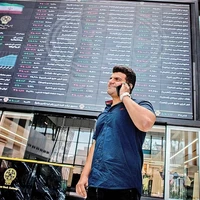
File Photo: Vehicles loaded with fuel containers near Iran’s border, where small-scale cross-border trafficking is the most visible face of a much larger fuel-smuggling economy.

Iran’s large-scale fuel losses appear to go beyond the smuggling cited by officials in Tehran, with evidence pointing to organized diversion within the country’s fuel distribution system.

Iranian officials repeatedly say around 20 million liters of fuel are smuggled out of the country every day, costing Iran between $4 billion and $5.2 billion a year. But the figure is far less precise than it is often presented.

Official statements generally refer to “fuel,” not gasoline alone, and include diesel and other petroleum products. In July 2026, Keramat Veys-Karami, head of the National Iranian Oil Products Distribution Company (NIOPDC), said gasoline was less vulnerable to smuggling than diesel and identified transport allocations as a major source of leakage.

The government has not published the refinery, depot, tanker, customs and station-level data needed to show that 20 million liters physically disappear from the regulated system each day. Without a product-by-product balance, the figure cannot be treated as a measured flow of smuggled gasoline.

Its dollar value is equally uncertain. Twenty million liters a day amounts to 7.3 billion liters a year. Valuing that at $4 billion assumes a loss of about 55 cents per liter; a $5.2 billion estimate puts it at 71 cents. Officials rarely explain whether those figures represent replacement costs, forgone subsidy value, foreign black-market prices or smugglers’ revenue.

What the numbers show

Data released after the war reveal a strained gasoline balance, but do not account for smuggling on the scale claimed.

NIOPDC reported that between March and mid-July 2026, Iranian refineries produced around 109 million liters of gasoline a day, with another 12 million liters supplied through blending. Average consumption stood at 129 million liters.

In late June and early July, daily distribution rose to 134.5 million liters, partly because of increased road travel and Iran’s aging vehicle fleet.

Fuel-card data reveal another problem with interpreting headline numbers. Before the three-tier pricing reform introduced in December 2025, NIOPDC was loading the equivalent of 172 million liters a day in entitlements onto fuel cards belonging to 32 million eligible vehicles, even though actual consumption was around 131 million liters.

The reform reduced those entitlements to about 135 million liters a day and was followed by a six-percent fall in consumption.

But the original gap did not mean that more than 40 million liters of fuel were physically disappearing each day. It was a gap between theoretical entitlements and actual consumption—an important distinction when assessing the scale of diversion.

Establishing how much fuel actually disappears requires comparing refinery dispatches with depot receipts, tanker movements and station-level sales, rather than treating unused or inflated card allocations as physical fuel.

The border-province problem

One argument for the scale of gasoline smuggling focuses on allocations to provinces along or near Iran’s borders. But no published NIOPDC series located for 2025–2026 verifies the claim that Kerman, Hormozgan, Kurdistan and Sistan and Baluchestan together receive 17.5 million liters a day.

Nor can their “normal” demand reliably be put at 14–15 million liters without data on vehicle registrations, fuel-card transactions, agricultural demand and interprovincial traffic.

Available evidence shows why population alone is a poor measure of legitimate demand. Kerman consumed 586 million liters of gasoline during the summer of 2025, equivalent to around six million liters a day, making it one of Iran’s five largest provincial consumers.

In July 2026, the government approved an additional 20-liter third-tier quota for private vehicles in Kerman, Hormozgan and Sistan and Baluchestan, citing long distances and inadequate public transportation.

The provincial figures therefore raise a question rather than provide an explanation. If verified allocations exceed plausible consumption by only a few million liters a day, much of the claimed national leakage must occur elsewhere, or consist of diesel and other fuels rather than gasoline.

An organized supply chain

There is considerably firmer evidence for large-scale organized smuggling and diversion.

Pakistani traders and transporters told RFE/RL in May 2026 that at least six million liters of Iranian gasoline and diesel were entering Pakistan each day. A leaked Pakistani intelligence report identified around 2,000 vehicles and 1,300 boats involved in the trade and described payments moving through hawala networks.

That points to a substantial and organized cross-border economy. But even the six-million-liter estimate accounts for less than one-third of the 20 million liters Iranian officials say are smuggled daily—and it includes both gasoline and diesel.

Evidence from inside Iran points more clearly to the organized networks behind large-scale diversion.

In November and December 2025, judicial officials in Hormozgan said an investigation known as the Toofan case had uncovered 35 interconnected smuggling networks that allegedly moved more than four billion liters of fuel over several years. Authorities opened cases against 753 people described as major participants.

These remain judicial allegations rather than final findings. But the scale and structure described by investigators point to something considerably larger than subsistence smuggling by residents of impoverished border communities.

Where does the fuel disappear?

One of the strongest official clues lies further upstream, in the way fuel allocations are administered.

NIOPDC says around 60 million liters of diesel are allocated to transport operators every day through electronic waybills and acknowledges that inaccurate information about end users creates opportunities for diversion.

The evidence therefore points not to a single route or group of smugglers but to overlapping channels: manipulated fuel entitlements, transport documentation, bulk tanker movements, maritime trafficking and informal payment networks.

That does not establish that Iran’s official estimate of 20 million liters smuggled each day is wrong. It shows that authorities have not published the data necessary to establish what those millions of liters consist of or where they leave the regulated system.

Answering that question would require depot balances, tanker GPS records, station-level sales and provincial allocation data. Until those are published, attributing 20 million liters of daily smuggling chiefly to border communities risks mistaking the visible final carriers for the organized supply system that makes diversion on such a scale possible.

Iran or the dollar? US makes an example of Banque Misr

Aug 28, 2026, 20:50 GMT+1
•
Mohamad Machine-Chian
100%
A customer exchanges U.S. dollars to Egyptian pounds in a foreign exchange office in central Cairo, Egypt December 27, 2016

The US has opened a new front in its economic campaign against Iran by threatening to cut a major third-country bank out of the dollar system over alleged involvement in Tehran’s shadow-banking network.

The US Treasury on Friday labeled Banque Misr’s UAE branches a “financial institution of primary money laundering concern” and proposed cutting them off from the dollar system, marking the first Section 311 action against a third-country bank under Washington’s new Operation Economic Outcast.

The Treasury’s Financial Crimes Enforcement Network (FinCEN) estimates that between January 2024 and June 2026, Banque Misr UAE processed approximately $1.8 billion in transactions for 103 companies it assesses are potentially part of the Islamic Republic’s “shadow banking” network.

The department described the bank as “a critical node for the Iranian regime’s access to US dollars” and said its customers included front companies working for Iran’s Ministry of Defense and Armed Forces Logistics and the Revolutionary Guards, as well as a company described in media reports as a money-laundering conduit for Mojtaba Khamenei.

“We also warned that Iran’s enablers cannot continue to enjoy access to the US dollar and the global financial system,” Treasury Secretary Scott Bessent said. “Banque Misr UAE decided to find out the hard way.”

The move is the first use of Section 311 under Operation Economic Outcast, which Bessent announced on August 24 with the stated aim of cutting off the Iranian government’s revenue streams worldwide.

Unlike conventional sanctions, however, the FinCEN action involves no asset freezes.

Cutting off the dollar

Section 311 of the USA Patriot Act allows the Treasury to designate a foreign financial institution as being of “primary money laundering concern” and impose special measures restricting its access to the US financial system.

In Banque Misr UAE’s case, FinCEN has proposed the most severe option, known as the fifth special measure.

The measure would not only close the bank’s three direct correspondent accounts with US financial institutions. American banks would also be required to prevent Banque Misr UAE from accessing dollars indirectly through intermediary foreign banks.

The proposal is subject to a 30-day public comment period after publication in the Federal Register before it can be finalized.

The measure applies only to Banque Misr’s five UAE branches — two in Dubai and one each in Abu Dhabi, Sharjah and Ras Al Khaimah. The bank’s Cairo-based parent and operations in other countries are excluded.

Iran-linked transactions

FinCEN named three Banque Misr UAE customers as examples of the activity behind its action.

UAE-based Alpa Trading FZCO conducted more than $32 million in transactions and, according to FinCEN, procured goods on behalf of Iran’s defense ministry and the Revolutionary Guards.

Naba Alzaki Raw Materials Trading LLC processed more than $29 million and was identified as a front for the Iran-based Khandan Exchange. Midas Oil Trading DMCC conducted more than $1 million in transactions and has been described in media reports as a money-laundering conduit for Mojtaba Khamenei.

Of the $1.8 billion in potentially Iran-linked transactions identified by FinCEN, roughly $520 million was processed in the 12 months to June 2026, a period covering the war and tightening US sanctions.

FinCEN described the proportion of suspected Iranian activity relative to the size of Banque Misr UAE as “concerningly high.”

The agency has previously said it identified about $9 billion in potential Iranian shadow-banking activity moving through US correspondent accounts in 2024 alone.

The network relies on exchange houses inside Iran and front companies registered in third countries, particularly the UAE and Hong Kong, to turn revenue from sanctioned Iranian exports into usable currency.

A growing bank

Banque Misr UAE’s audited accounts show that its business was expanding during the period in which FinCEN alleges it became a conduit for Iran’s shadow-banking network.

Total assets rose 11% in 2025 to 23.4 billion dirhams ($6.4 billion), customer deposits increased 9% to 19.1 billion dirhams and loans jumped 60% to 8.8 billion dirhams.

The accounts also show the importance of trade finance to its business. Its books carry more than 1.3 billion dirhams in letters of guarantee and 3.6 billion dirhams in undrawn credit commitments.

Losing dollar correspondent access would therefore strike directly at a business heavily involved in cross-border trade finance, even without freezing any of its assets.

The bank appears well capitalized, with a capital adequacy ratio of 24.7%, well above the UAE central bank’s 10.5% minimum. The immediate threat is therefore not insolvency but the viability of parts of a business dependent on international currency settlement and trade finance.

Banque Misr is Egypt’s second-largest bank and is fully owned by the Egyptian state. That makes Washington’s decision to target its UAE operations particularly significant as the US seeks to persuade foreign financial institutions to stop facilitating Iranian trade.

The move nevertheless stops short of targeting larger financial institutions, particularly major Chinese banks involved in financing Iranian trade, a step Washington has so far avoided amid concerns over wider financial disruption and retaliation.

By threatening a state-owned bank belonging to a major Arab partner with exclusion from the dollar system, Washington is setting out the potential cost for third-country institutions that continue handling business it considers part of Iran’s shadow-banking network.

The warning is now explicit: institutions dealing with Tehran may increasingly have to weigh that business against their access to the dollar.

War or deal? Rezaei begins to define Iran’s price

Aug 28, 2026, 18:30 GMT+1
•
Behrouz Turani
100%
Iran's security chief and former IRGC commander Mohsen Rezaei

Mohsen Rezaei on Friday set out four Iranian conditions for an agreement with the United States, another sign that the former IRGC commander who once championed an “offensive doctrine” may be moving from advocating war to contemplating a deal at the right price.

Rezaei named an end to the regional war, lifting the blockade of Iranian ports, compensation and sanctions relief as Iran’s core conditions. He said the demands had been compiled in response to requests from mediators.

Rezaei has served since August 10 as secretary of the Supreme National Security Council and is also the Supreme Leader’s representative on the body, giving his remarks greater institutional weight than those of an individual political or military figure.

Whether the conditions constitute a formally approved negotiating mandate, however, remains unclear. Rezaei’s description suggests an ongoing process of defining Iran’s negotiating position rather than the presentation of final instructions to negotiators.

Since taking over the SNSC, Rezaei has increasingly emerged as one of the principal voices through which Iran’s security establishment frames diplomacy.

The council brings together senior military, intelligence and government officials alongside representatives of the Supreme Leader, who holds ultimate authority over major national security decisions.

Back to MoU

That makes the evolution of Rezaei’s language significant. His movement from advocating an “offensive doctrine” to discussing the terms of a possible agreement has not amounted to an embrace of accommodation with Washington.

But diplomacy is increasingly appearing in his rhetoric as an instrument of Iranian strategy rather than something inherently at odds with it.

Only days ago, Rezaei told Pakistan’s Field Marshal Asim Munir that Washington needed to change its behavior and take practical steps to implement the Islamabad MoU. Iranian media, including Press TV, quoted him as saying the United States should return to the June agreement.

That was notable because the Islamabad MoU provided a framework for de-escalation: ending hostilities, reopening the Strait of Hormuz and moving toward a broader agreement.

President Masoud Pezeshkian has also defended the MoU as the best available path while emphasizing adherence to the Supreme Leader’s policy.

Friday’s demands do not necessarily reverse that position. Rather, they fit an evolving sequence in Rezaei’s public stance: initial rejection of the MoU, movement toward reviving the June framework and now a willingness to discuss negotiations while attaching a higher price to them.

Tactical shift

There is an echo here of Donald Trump’s own approach to the conflict. The US president has moved between military pressure, diplomacy, rejection of the MoU, economic pressure and renewed suggestions that an agreement remains possible.

Both sides appear to be using uncertainty itself as leverage: escalating, reopening the door and then raising the terms for walking through it.

That does not mean Rezaei is consciously emulating Trump. But his recent statements suggest a similarly transactional approach in which apparently contradictory positions can coexist.

Negotiations remain possible, while threats and maximal demands are used to improve the terms on which they might take place.

For Rezaei, this represents a change in tactics rather than ideology. He has not abandoned the hardline worldview that has defined much of his political career, nor do his statements yet signal a broader Iranian pivot toward accommodation with Washington.

More significant may be the evolution of the role he is now playing. The former IRGC commander is no longer simply warning against compromise; he is beginning to define its price.