Rezaei, secretary of Iran’s Supreme National Security Council (SNSC) and the Supreme Leader’s representative on the body, said Sunday that Tehran would consider any country participating in or supporting the US economic campaign against Iran to have committed an act of war.
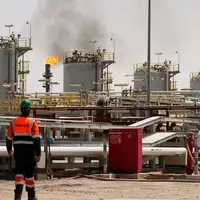
“If the economic war continues, not a single drop of oil will be exported, neither through the Strait of Hormuz nor from anywhere in the Persian Gulf,” he wrote on X.
But the sweeping statements have raised a more fundamental question: Is Rezaei articulating Iran’s security policy, the Supreme Leader’s position or his own?
The question has become particularly significant because Rezaei’s increasingly confrontational rhetoric comes as President Masoud Pezeshkian and Parliament Speaker Mohammad-Bagher Ghalibaf have struck a markedly different tone.
Pezeshkian said Friday it would be better to end the war while Iran remains in a position of “power and dignity,” while Ghalibaf warned that “no matter how much military power we have, we won't survive if people are hungry.”
‘Secretary or president’?
Hardliners have seized on the contrast.
The hardline Hamshahri newspaper praised Rezaei on Monday for offering an alternative to what it called the language of “weakness and surrender” from other officials.
His approach, it said, was “neither a denial of economic pressure nor merely an attempt to neutralize sanctions, but to make the siege costly for its designers and supporters.”
“From this perspective, with Rezaei’s remarks, Iran’s economic doctrine has become militarized,” Hamshahri said.
Reformists, however, have questioned whether the SNSC secretary has the authority to articulate such policies without a formal council decision.
They argue that the secretary administers and communicates the council’s decisions rather than independently determining them, while Pezeshkian serves as president of the SNSC.
Former reformist lawmaker Mahmoud Sadeghi addressed Rezaei directly on X: “The seat you are sitting on is the secretaryship of the Supreme National Security Council, not the presidency.”
The nuclear question
The disagreement is particularly consequential because Rezaei has gone beyond the immediate economic confrontation to raise the possibility of reconsidering Iran’s longstanding rejection of nuclear weapons.
In an interview broadcast on state television, he argued that US attacks had demonstrated that neither membership in the Non-Proliferation Treaty nor cooperation with international nuclear inspectors could protect a country from military attack.
“When America is waging such a war, people naturally ask: Why shouldn’t we pursue nuclear weapons ourselves?” Rezaei said.
He went further, arguing that a nuclear weapon could be “cheaper and more effective than having hundreds of F-35s and spending enormous amounts of money on other military capabilities.”
Rezaei stopped short of saying Iran had decided to pursue a bomb. But some hardliners interpreted his remarks as an invitation to reconsider Iran’s nuclear doctrine.
“I hope this accurate and correct analysis by General Rezaei will be a prelude to Iran’s withdrawal from the NPT and a change in Iran’s nuclear doctrine,” hardline journalist Nezameddin Mousavi wrote.
Hamshahri similarly said Rezaei had raised the question of an atomic bomb without explicitly presenting it as Iran’s official position.
‘Solution out of reach’
Abdollah Ramezanzadeh, spokesman for former reformist President Mohammad Khatami, countered that the responsibilities of the SNSC chairman, secretary, members and Supreme Leader’s representatives are separately defined.
The secretary’s job, he argued, is to prepare meetings and communicate decisions under the chairman’s supervision.
Hardliners reject that interpretation, pointing to Rezaei’s second position as the Supreme Leader’s representative on the council.
Rezaei served as the Leader’s military adviser during the war before being appointed his representative on the SNSC, alongside his appointment as secretary by Pezeshkian.
His supporters argue that the dual role gives his statements greater political weight than those of an ordinary council secretary. Some have gone further, portraying criticism of Rezaei as an attack on the Supreme Leader himself.
Conservative journalist Ehsan Salehi, meanwhile, portrayed Rezaei’s statements as part of a deliberate escalation strategy in which each new stage of US pressure produces a tougher Iranian response.
“Each new stage of pressure and tension makes Iran’s behavior more complicated and tougher and puts a solution further out of reach,” Salehi wrote.
The dispute comes as Iran confronts increasingly severe economic pressure and an unresolved military standoff with the United States—and is no longer simply over tactics.
With Rezaei threatening oil exports across the Persian Gulf and openly questioning the logic of remaining non-nuclear, it has become an argument over who has the authority to signal how far Iran is prepared to go.