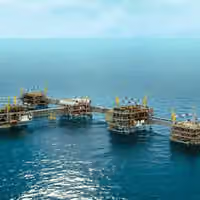
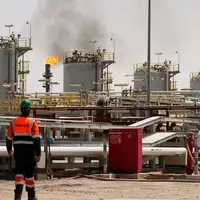
Iran has announced another major gas discovery, but with the world’s second-largest reserves already beneath its soil, Tehran’s problem is not finding gas but finding the money and technology to extract it.
Oil Minister Mohsen Paknejad said the newly discovered field in southern Fars Province contains more than 7.5 trillion cubic feet (Tcf) of gas in place, of which about 5.7 Tcf could be recoverable.
He compared the recoverable volume with roughly 15 years of production from one phase of South Pars.
The gas is also described as “sweet,” meaning its relatively low sulphur content could reduce processing and operating costs.
Yet the discovery adds to an already enormous resource base. Iran held about 1,200 Tcf of proved natural gas reserves at the end of 2023, second only to Russia, and produced about 9.4 Tcf that year.
Most of that gas is consumed domestically, while exports remain largely confined to regional pipeline trade.
Lack of investment
The headline figure also comes with an important caveat: gas in place is not the same as commercially recoverable reserves. Whether the estimated 5.7 Tcf can ultimately be produced economically will depend on reservoir performance, infrastructure, costs and access to investment.
That last constraint may prove particularly difficult.
Sanctions have restricted Iran’s access to international financing, foreign investment and Western energy companies and equipment suppliers, while Tehran is already confronting the costly task of sustaining production from its existing fields.
The scale of the challenge is visible at South Pars, Iran’s largest gas field. In March 2025, the National Iranian Oil Company signed contracts worth about $17 billion for pressure-boosting facilities needed to counter declining reservoir pressure.
Paknejad has also said Iran would require about $19 billion in annual investment to meet its broader gas-production targets over the following four years.
The new Fars field will therefore be competing for capital with the increasingly expensive task of maintaining production from fields Iran already depends on.
Technology gap
Iranian companies have developed considerable capabilities after years of sanctions forced domestic contractors to take over work previously carried out by international firms. But self-reliance has not eliminated dependence on foreign technology.
The South Pars pressure-boosting program, for example, requires 56 high-capacity turbo-compressors across seven hubs.
S&P Global reported that while most equipment was expected to be sourced domestically, foreign assistance and technology transfer would still be required for parts of the project.
South Pars Phase 11 demonstrated that vulnerability. TotalEnergies withdrew after Washington reimposed sanctions, and China National Petroleum Corporation subsequently left the project, forcing Iran to proceed through domestic companies without the advanced foreign technology originally envisaged.
Iranian firms can therefore develop significant parts of new gas projects, but financing constraints and gaps in specialized technology can increase costs and extend timelines, particularly when the same companies are expected to maintain mature fields, repair infrastructure and expand production simultaneously.
Can China fill the gap?
China is the most obvious candidate to provide some of what Iran lacks, but its role has limits.
Chinese independent refiners remain major buyers of sanctioned Iranian crude. Yet buying discounted oil through sanctions-resistant trading networks involves far less long-term exposure than committing billions of dollars to a multi-year gas development.
CNPC’s withdrawal from South Pars Phase 11 showed that major Chinese companies are also sensitive to sanctions, financing difficulties and access to international technology.
Recent US measures targeting Chinese independent refiners, vessels and financial channels involved in Iranian oil trade have increased those risks.
Smaller Chinese companies may continue supplying equipment and services, but they are unlikely by themselves to replace the financing, technology and project-management capabilities once provided by major international energy companies.
The Fars discovery therefore adds another potentially valuable asset to Iran’s extraordinary resource base. Its sweet gas and condensate content may improve the economics, and Iranian companies are more capable of developing such fields than they were a decade ago.
But Iran’s energy paradox remains: it can keep finding enormous quantities of hydrocarbons faster than it can find the investment and technology needed to turn them into reliable supply and export revenue.
Mohsen Rezaei’s threats to halt Iranian oil exports, target countries cooperating with the United States and comments suggesting a possible nuclear shift have triggered a debate in Tehran over his authority to outline such policies as tensions escalate.
Rezaei, secretary of Iran’s Supreme National Security Council (SNSC) and the Supreme Leader’s representative on the body, said Sunday that Tehran would consider any country participating in or supporting the US economic campaign against Iran to have committed an act of war.
“If the economic war continues, not a single drop of oil will be exported, neither through the Strait of Hormuz nor from anywhere in the Persian Gulf,” he wrote on X.
But the sweeping statements have raised a more fundamental question: Is Rezaei articulating Iran’s security policy, the Supreme Leader’s position or his own?
The question has become particularly significant because Rezaei’s increasingly confrontational rhetoric comes as President Masoud Pezeshkian and Parliament Speaker Mohammad-Bagher Ghalibaf have struck a markedly different tone.
Pezeshkian said Friday it would be better to end the war while Iran remains in a position of “power and dignity,” while Ghalibaf warned that “no matter how much military power we have, we won't survive if people are hungry.”
‘Secretary or president’?
Hardliners have seized on the contrast.
The hardline Hamshahri newspaper praised Rezaei on Monday for offering an alternative to what it called the language of “weakness and surrender” from other officials.
His approach, it said, was “neither a denial of economic pressure nor merely an attempt to neutralize sanctions, but to make the siege costly for its designers and supporters.”
“From this perspective, with Rezaei’s remarks, Iran’s economic doctrine has become militarized,” Hamshahri said.
Reformists, however, have questioned whether the SNSC secretary has the authority to articulate such policies without a formal council decision.
They argue that the secretary administers and communicates the council’s decisions rather than independently determining them, while Pezeshkian serves as president of the SNSC.
Former reformist lawmaker Mahmoud Sadeghi addressed Rezaei directly on X: “The seat you are sitting on is the secretaryship of the Supreme National Security Council, not the presidency.”
The nuclear question
The disagreement is particularly consequential because Rezaei has gone beyond the immediate economic confrontation to raise the possibility of reconsidering Iran’s longstanding rejection of nuclear weapons.
In an interview broadcast on state television, he argued that US attacks had demonstrated that neither membership in the Non-Proliferation Treaty nor cooperation with international nuclear inspectors could protect a country from military attack.
“When America is waging such a war, people naturally ask: Why shouldn’t we pursue nuclear weapons ourselves?” Rezaei said.
He went further, arguing that a nuclear weapon could be “cheaper and more effective than having hundreds of F-35s and spending enormous amounts of money on other military capabilities.”
Rezaei stopped short of saying Iran had decided to pursue a bomb. But some hardliners interpreted his remarks as an invitation to reconsider Iran’s nuclear doctrine.
“I hope this accurate and correct analysis by General Rezaei will be a prelude to Iran’s withdrawal from the NPT and a change in Iran’s nuclear doctrine,” hardline journalist Nezameddin Mousavi wrote.
Hamshahri similarly said Rezaei had raised the question of an atomic bomb without explicitly presenting it as Iran’s official position.
‘Solution out of reach’
Abdollah Ramezanzadeh, spokesman for former reformist President Mohammad Khatami, countered that the responsibilities of the SNSC chairman, secretary, members and Supreme Leader’s representatives are separately defined.
The secretary’s job, he argued, is to prepare meetings and communicate decisions under the chairman’s supervision.
Hardliners reject that interpretation, pointing to Rezaei’s second position as the Supreme Leader’s representative on the council.
Rezaei served as the Leader’s military adviser during the war before being appointed his representative on the SNSC, alongside his appointment as secretary by Pezeshkian.
His supporters argue that the dual role gives his statements greater political weight than those of an ordinary council secretary. Some have gone further, portraying criticism of Rezaei as an attack on the Supreme Leader himself.
Conservative journalist Ehsan Salehi, meanwhile, portrayed Rezaei’s statements as part of a deliberate escalation strategy in which each new stage of US pressure produces a tougher Iranian response.
“Each new stage of pressure and tension makes Iran’s behavior more complicated and tougher and puts a solution further out of reach,” Salehi wrote.
The dispute comes as Iran confronts increasingly severe economic pressure and an unresolved military standoff with the United States—and is no longer simply over tactics.
With Rezaei threatening oil exports across the Persian Gulf and openly questioning the logic of remaining non-nuclear, it has become an argument over who has the authority to signal how far Iran is prepared to go.
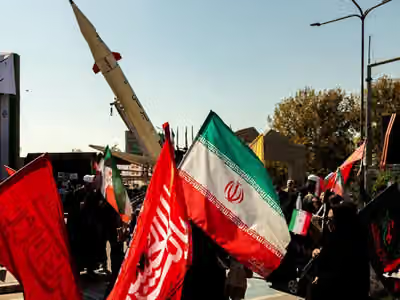
Iranian officials have dismissed Washington’s “Economic D-Day” as another failed attempt to cripple the country, but analysts inside Iran warn that an economy weakened by war may be far less capable of absorbing the latest US pressure campaign.
US Treasury Secretary Scott Bessent has described the campaign as the “endgame,” while Iran’s Central Bank Governor Abdolnasser Hemmati insisted it would have “no impact on Iran.”
Other senior officials have warned regional and European states against helping Washington enforce its measures.
But Abdolrahman Fathollahi, an analyst writing in Shargh, cautioned against assuming that decades of experience circumventing sanctions mean Tehran can simply weather the latest campaign.
Iran, he said, is now more economically fragile after the recent conflicts known as the 12-day and 40-day wars. The new measures are designed not simply to add restrictions but to close Iran’s remaining economic lifelines—and test how far China is prepared to go to keep them open.
That could prove crucial.
Hamed Vafaei, an associate professor of Chinese studies at the University of Tehran, argues that Beijing is likely to maintain enough oil purchases and trade to prevent Iran’s complete economic isolation, but will not sacrifice its own interests to rescue Tehran.
China’s economic relationships with the United States, Western markets and Persian Gulf Arab states dwarf its trade with Iran. Vafaei said Tehran should therefore view Beijing as a pragmatic strategic partner rather than an unconditional ally.
International affairs analyst Esmail Beshari similarly told Shargh that tougher US sanctions would create additional obstacles but were unlikely to sever Iran-China trade altogether.
Some Iranian analysts have urged Tehran to move beyond what they describe as a “North Korea model” of relying on China for basic economic survival toward a “Pakistan model” based on deeper, mutually beneficial trade and investment.
The warnings come as pressure on Iran’s domestic economy is already mounting. Annual inflation reached 66 percent in July and food prices were 128 percent higher than a year earlier, according to official data, while gasoline supplies have also come under strain.
Iranian economic newspapers have cautioned against complacency. Donya-ye Eghtesad warned that relying on methods used to circumvent previous sanctions could prove a mistake, arguing that Tehran must also address its domestic vulnerabilities.
Concern about those vulnerabilities is increasingly visible within the security establishment.
Police chief Ahmadreza Radan said foreign powers were preparing to exploit economic hardship to foment unrest. President Masoud Pezeshkian has said it would be better to end the war while Iran remains in a position of “power and dignity.”
Parliament Speaker Mohammad Bagher Ghalibaf was blunter.
“No matter how much military power we have, we won't survive if people are hungry and we don't have financial turnover, economic growth and national production,” he said.
Such warnings sit uneasily alongside Tehran’s public insistence that Washington’s latest campaign will fail.
Iran has survived decades of sanctions and analysts do not expect the new measures to completely sever its economic links with China. But keeping some trade and oil exports flowing is not the same as insulating an economy already weakened by war from further pressure.
The question for Tehran may therefore be not whether “Economic D-Day” can completely isolate Iran, but how much additional pressure the country can absorb.
Iranian security forces used mosques across Tehran to deploy personnel, monitor protesters and support operations during the January crackdown, evidence obtained by Iran International shows.
Intercepted radio communications, video footage and eyewitness accounts point to security forces operating from several mosques in and around the capital on January 8 and 9, when protests drew large crowds and authorities launched a deadly crackdown.
In one intercepted exchange, security personnel discussed deploying forces and equipment inside Imam Hossein Mosque, which Iran International geolocated to the intersection of Sattari and Mokhbari in western Tehran.
Witnesses described security operations around the mosque as electricity was cut in the area and surveillance drones flew overhead.
Other locations identified through footage and witness accounts included mosques along Andarzgoo Boulevard and Qolhak Grand Mosque.
Witnesses also described security personnel positioned outside some mosques engaging protesters before forces inside emerged to beat and arrest them.
Taken together, the evidence suggests some mosques served not simply as gathering points but as bases from which security forces monitored and confronted protesters.
Shooting from rooftops
Several eyewitnesses described mosque rooftops being used as observation or firing positions.
One witness described several people positioned on the roof of a mosque near Kashani Boulevard in western Tehran on January 8.
“The sound of a stun grenade could be heard,” the witness said. “Once the crowd scattered a little, they started shooting from above.”
In Naziabad in southern Tehran, another witness described protesters coming under fire from elevated positions.
“They were being shot at from the rooftops of mosques and Basij bases,” the witness said.
Witnesses in the area described security forces firing directly at crowds and from elevated positions, with a number of protesters wounded or killed.
Video footage obtained by Iran International also showed surveillance drones flying above crowds during the protests.
Other witnesses described security personnel monitoring protesters with cameras from inside mosques. Some said windows at mosque buildings had been broken to create positions from which weapons could be fired and described seeing weapons fitted with laser sights.
In several areas, witnesses also said security forces pursued protesters who sought refuge in residential buildings or private parking garages, beating some of those sheltering inside and preventing injured protesters from leaving to seek medical treatment.
Iran International was not able to independently verify each of those accounts or determine who was responsible for individual shots seen or heard in footage.
Allegations of fires
Some witnesses alleged that security personnel themselves damaged or set fire to mosques that authorities could subsequently portray as having been attacked by protesters.
One witness also said security forces left gas valves open at a mosque before departing, creating the risk of a fire or explosion.
Iran International could not independently verify those accounts or establish whether any fires at the sites were deliberately started by security forces.
The allegations are significant because Iranian authorities repeatedly portrayed damage to mosques and other religious sites during the January unrest as evidence of violence by protesters.
Civilian sites used in crackdowns
The apparent use of mosques as operational sites in Tehran follows evidence that security forces used other civilian buildings during the January crackdown.
A separate Iran International investigation in neighboring Alborz province found security forces using a public library as an ammunition store and staging point, schools and mosques as gathering places for armed personnel, and the roof of a cinema as a firing position.
There is also precedent for security forces operating from or around religious sites during earlier protests.
Human Rights Watch documented security forces firing on protesters and bystanders from rooftops around Zahedan’s Grand Mosalla prayer hall and Makki Mosque during the September 2022 crackdown known as Bloody Friday.
The United Nations separately documented the use of live ammunition, tear gas and metal pellets against protesters following Friday prayers in Zahedan, with footage analyzed by the UN appearing to show security forces firing from rooftops.
The evidence gathered in Tehran suggests some mosques became part of the security apparatus during the January crackdown: used to assemble personnel and equipment, monitor crowds and, according to multiple eyewitnesses, confront protesters.
Reports of gasoline shortages spread across Tehran on Monday, with filling stations closing after running out of fuel and motorists describing long searches and queues for increasingly scarce supplies.
Images, videos and accounts posted widely on Persian-language social media showed closed stations and lines of cars at others still operating, with shortages reported in several parts of the capital, including central and northern Tehran.
The disruption was also acknowledged by state-affiliated media.
“Some gas stations have closed without a clear explanation, creating considerable concern and questions for people,” SSN wrote, calling on the government to explain whether the closures were part of an attempt to curb fuel consumption and how long they would last.
The shortages bring into the open a problem Iranian officials have been warning about for months: the country is consuming more gasoline than it can produce.
Reza Sepahvand, spokesperson for parliament’s Energy Committee, said this month that Iran was producing about 130 million liters of gasoline a day while consuming around 137 million liters, leaving a daily shortfall of about seven million liters.
Sepahvand also said gasoline imports had stopped under the US naval blockade, removing one of the ways Tehran had previously made up the difference between domestic production and demand.
Other official estimates have put the deficit even higher. Mohammad Jafar Ghaempanah, President Masoud Pezeshkian’s executive deputy, said this month that Iran faced a gasoline imbalance of around 14 million liters a day.
The government is therefore confronting an increasingly difficult choice: finding ways to reduce consumption without sharply raising the price motorists pay at the pump.
Iran has for years sold heavily subsidized gasoline, contributing to high consumption and imposing a growing burden on state finances. Pezeshkian himself has questioned the logic of buying fuel at international prices while selling it domestically at a fraction of the cost.
But attempts to raise gasoline prices carry considerable political risk.
A sudden increase in November 2019 triggered nationwide protests that quickly expanded into broader demonstrations against the Islamic Republic. Security forces responded with a deadly crackdown and a near-total internet shutdown.
The memory of those protests has made gasoline prices one of the most politically sensitive economic issues facing successive Iranian governments.
Officials have instead discussed alternatives including changes to fuel quotas, limiting subsidized gasoline and charging higher prices for consumption above allocated amounts.
But uncertainty over those plans has itself contributed to anxiety among motorists, with long queues reported at filling stations in recent days.
The supply squeeze comes as Iran faces a broader deterioration in economic conditions following months of war and sanctions.
Washington on Monday expanded its campaign of secondary sanctions against Tehran as part of what US Treasury Secretary Scott Bessent has called an “economic D-Day” intended to sever Iran’s remaining economic lifelines.
For motorists in Tehran, however, the consequences are increasingly immediate.
Social media reports on Monday described people visiting several stations before finding gasoline, waiting for hours in the summer heat and arriving at pumps only to find supplies exhausted.
The closures have also fueled speculation that restricting supply may itself be emerging as a way of forcing down consumption without announcing a politically dangerous price increase.
There has been no official announcement that the government has adopted such a policy.