Iranian workers report layoffs, months of unpaid wages
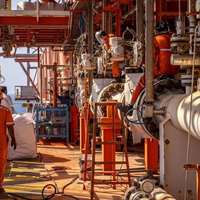
Workers at the Hashuni mine, part of the Kerman Coal Mines Company, in southern Iran.
Workers across Iran’s mining, industrial and municipal sectors say they have gone months without full pay, while some employers have also cut staff, deepening pressure on households already struggling with rising living costs.
Messages sent to Iran International describe wage arrears ranging from several weeks to eight months at mining operations in different parts of the country. Iran International could not independently verify the accounts.
The wife of an employee at the Sanghan iron ore mine in Khaf, northeastern Iran, said her husband, who has worked there for 24 years, had not received a salary for three months despite receiving his work statement through late June.
Workers at the Chah Firouzeh copper mine in Kerman province were still waiting for their June wages, according to another message.
At Gol Gohar in Sirjan, also in Kerman, workers had gone eight months without pay and some employees had been dismissed without receiving wages owed to them, another message said.
Similar complaints have emerged from major industrial companies.
Employees at MAPNA Locomotive in Karaj, west of Tehran, have gone four months without full wages, according to information received by Iran International.
One employee said workers received just 20% of their salary last month and that the payment problems began during the 40-day war and have continued since. Staff are reluctant to protest because they fear layoffs and are already under severe financial pressure, the employee said.
Contract employees at Iran Air have also reported reduced and delayed pay since the war. One employee said salaries had not returned to previous levels even after the company’s revenues recovered, adding that workers who complained risked losing their jobs.
In Sari, a northern city near the Caspian Sea, another source told Iran International that municipal employees and workers had gone three months without pay.
“We really don’t know where to turn,” the source said.
Household pressure
The wage problems come amid broader economic strains acknowledged by senior Iranian officials.
Central Bank Governor Abdolnasser Hemmati said Friday there was “no doubt that Iran’s economy faces serious problems,” adding that war and economic pressure had worsened inflation and unemployment. He rejected, however, suggestions that the economy faced an “imminent collapse.”
Even for workers receiving their wages, earnings increasingly fall short of basic living costs.
The semi-official ILNA news agency reported that many households exhaust their salaries before the middle of the month, forcing them to rely on installment plans and credit for routine expenses.
Majid Rahmati, a member of Tehran’s Coordination Council of Islamic Labor Councils, said in May that the minimum monthly household living basket had risen to around 70 million tomans, while married workers were receiving roughly 24 million tomans a month.
Iran’s statutory base minimum wage is around 16.6 million tomans a month before benefits, according to a Labor Ministry wage directive reported by the Tasnim news agency.
For those waiting months to be paid, the problem is compounded by what workers describe as a lack of effective recourse.
Some employees told Iran International they feared layoffs if they protested over unpaid wages, while others said complaints to labor authorities had failed to produce results.
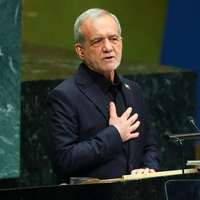
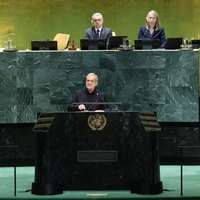
Iran's president speaks at an even in Tehran, Iran, August 9, 2026
Masoud Pezeshkian may have a claim to being Iran’s unluckiest president, with his two years in office dominated by wars that have battered an already ailing economy to the point that keeping households above subsistence would count as an achievement.
Pezeshkian inherited years of accumulated economic problems, many created or left unresolved by previous administrations, before war deepened those structural weaknesses.
Two recent assessments of his record suggest the result is something larger than the difficulties of one presidency: the ambitions of government itself are contracting from development toward survival.
“Pezeshkian thinks the nation should thank him only because there is no famine in Iran yet,” said Nasrallah Pejmanfar, an ultraconservative cleric and lawmaker from Shiraz.
Pejmanfar intended the remark as an attack. But it echoed a more substantive criticism offered by sociologist Hamzeh Nozari in the moderate daily Shargh: that merely preventing extreme deprivation is increasingly becoming a measure of government success.
From development to survival
Nozari focused on the government’s emphasis on protecting “people’s livelihood” through subsidies, electronic coupons and efforts to secure basic goods.
Such policies may prevent extreme poverty, he argued, but they also reveal how far the ambitions of government have narrowed.
“Providing a minimal living and securing a hand-to-mouth existence is the ruling paradigm of the government, while concepts like welfare, progress and development are sidelined,” Nozari wrote.
He contrasted the current approach with previous periods when Iranian governments, however successfully, pursued broader ambitions: economic expansion in the late 1980s, greater political openness in the 1990s and redistribution in the following decade.
The question, he argued, is whether this “livelihood paradigm” is a temporary response to war and economic emergency or a more permanent retreat from development.
The economics of scarcity
Economist Teymour Rahmani, writing in Donya-ye Eghtesad, approached the same crisis from a different direction.
For Rahmani, the central problem is inflation, driven above all by a severe fiscal imbalance as government revenues decline while large and inefficient expenditures continue.
He rejected the common explanation that the falling rial is itself responsible for accelerating inflation. Currency depreciation and rising prices, he argued, are symptoms of the same underlying fiscal problem.
“The fact that inflationary force manifests first through the exchange-rate channel and that exchange-rate increases precede inflation spikes does not mean currency depreciation is the root cause,” he wrote.
The consequences are increasingly visible across the country. Rahmani pointed to point-to-point inflation of 112.4 percent in the western province of Ilam, with other poorer provinces including Lorestan, Kurdistan and Hormozgan also experiencing triple-digit inflation.
He argued that Iran has entered an inflationary environment unlike any in its modern history, while crediting experienced civil servants and residual public confidence in the monetary system with helping prevent a slide into full hyperinflation.
“We must understand that inflation is the primary issue of the Iranian economy,” Rahmani wrote, warning that the underlying fiscal imbalance must be addressed.
Administering scarcity
The two analyses approach Pezeshkian’s predicament from different directions but arrive at closely related conclusions.
Nozari describes the consequence: a government whose conception of success increasingly revolves around maintaining minimum living standards. Rahmani describes the economic machinery pushing it there: fiscal imbalance, declining revenues and inflation severe enough to overwhelm household purchasing power.
Neither problem began with Pezeshkian. He inherited years of accumulated economic weakness, while war and sanctions have sharply worsened the conditions under which his government operates.
But two years into his presidency, the distinction between emergency measures and a longer-term transformation is becoming harder to make.
A government occupied with keeping food affordable, financing subsidies and preventing inflation from becoming still more destructive has increasingly little room to pursue the growth, welfare and development promised in its economic plans.
A man looks at the packaging of red meat at a supermarket in Iran, undated file photo
Soaring food prices are reshaping what Iranian families eat, with new figures showing a steep decline in dairy consumption alongside a longer retreat from red meat as household purchasing power erodes.
Annual dairy consumption has fallen from around 130 kilograms per person in 2010 to just 40 kilograms today, according to Ali Ehsan Zafari, head of Iran's Dairy Cooperatives Union.
According to the latest figures from the Statistical Center of Iran, dairy products in July cost around 147 percent more than a year earlier.
The fall in consumption leaves Iran well below both international and regional levels. Global dairy consumption averages roughly 117–119 kilograms per person annually, according to the UN Food and Agriculture Organization (FAO), while neighboring Turkey consumes more than 250 kilograms per capita.
At 40 kilograms, Iran's consumption is now roughly one-third of the global average.
Meat disappears
The retreat from dairy follows a longer change in Iranian diets as years of inflation and declining purchasing power have pushed households away from more expensive sources of animal protein.
FAO data show Iran's red meat supply fell to approximately 623,000 metric tons last year, around 20 percent lower than in 2024 and nearly 39 percent below its 2010 level.
Over much of that period, poultry offered families a cheaper alternative. Per capita poultry consumption has risen by roughly 40 percent since 2010, suggesting households have increasingly substituted chicken for more expensive beef and lamb.
The comparison with Turkey illustrates how differently consumption has developed across the two neighboring countries.
Poultry consumption in Turkey also rose by about 40 percent over the same period, but red meat consumption increased by 146 percent. FAO estimates put per capita red meat consumption in Turkey at roughly 3.9 times the Iranian level.
The figures do not by themselves explain the reasons for the divergence, but Iran's shift toward cheaper poultry has taken place during a prolonged erosion of household purchasing power and repeated surges in food prices.
Fewer alternatives
That substitution is becoming harder as inflation spreads across virtually every source of animal protein.
Prices of beef, lamb and chicken were all around 149 percent higher in July than a year earlier, according to the Statistical Center of Iran. Dairy prices rose by a similar 147 percent.
The latest increases follow the recent war, which added to existing inflationary pressures and accelerated price rises across basic goods.
For years, households unable to afford beef and lamb could turn to chicken. The sharp increase in poultry prices now threatens that fallback, while the collapse in dairy consumption suggests even relatively basic sources of animal protein are becoming harder for many families to afford.
The consequences are potentially significant, particularly for lower-income households and children whose diets depend on affordable sources of protein and calcium.
But the figures also point to a broader change in Iranian living standards: families are not simply paying more for the same food. They are changing what they eat, and increasingly giving up foods that were once ordinary parts of the household diet.
After years of substituting cheaper foods for more expensive ones, the narrowing range of affordable alternatives raises a more immediate question: what is left to substitute?
AI-generated image: A woman holds her wallet at a pharmacy counter as a pharmacist retrieves medicine, illustrating the growing financial burden of healthcare and medication costs in Iran.
Iranians are struggling to afford medicines and medical care, with some foregoing treatment as prices rise, drug shortages spread and insurance coverage falls short, according to accounts from patients.
Messages sent to Iran International on described medical bills consuming much or all of a typical monthly income, even for people covered by Iran’s Social Security Organization, the country’s main state-run social insurer.
One person undergoing tests for an abdominal and pelvic mass said CT and MRI scans, with and without contrast, cost 210 million rials ($113) despite having Social Security insurance.
“How are we supposed to pay these costs with such meager incomes?” the citizen said.
Many Iranian workers earn around 200 million to 250 million rials ($108-$134) a month, meaning the scans alone can cost roughly a month’s income. The rial trades at around 1.86 million to the dollar on the free market.
Another said an echocardiogram, electrocardiogram and clinic appointment cost 120 million rials ($65), with the medical provider requiring payment upfront rather than accepting Social Security insurance.
The patient was given documents to seek reimbursement from the insurer but said the process involved extensive bureaucracy and could result in only around half the money being returned.
A 33-year-old said the cost of dental treatment had left him without half his teeth.
“I feel like I’m 60,” he said. “The bitter part is that this humiliating way of life has become normal for me.”
A pharmacy in Iran
Another worker earning 10 million rials ($5.40) a day said an appointment with an ear, nose and throat doctor cost 5 million rials ($2.70), followed by 8.6 million rials ($4.60) for medicine.
“We really cannot afford to live anymore,” the worker said.
Lawmaker says shortages could worsen
The accounts echo comments from Salman Es’haghi, spokesman for parliament’s Health and Treatment Committee, who said shortages and rising prices were already causing some patients to stop treatment.
Around 43 medicines are in “critical shortage” and nearly 1,000 pharmaceutical products face some degree of shortage, Es’haghi told the Tabnak news website in an interview published Saturday.
Prices for chemotherapy drugs and medicines used by patients with cancer, hemophilia and thalassemia have risen enough to reduce consumption, with some patients stopping treatment because they cannot afford it, he said.
Es’haghi said patients now pay more than 70% of their healthcare expenses themselves, despite policies intended to leave individuals covering around 30% and the government and insurers paying the remainder.
Some hospitals and pharmacies are also refusing to provide certain services or medicines because insurers have delayed reimbursements or failed to pay them in full, he added.
The difficulties described by Iran International’s audience reflected those problems. One viewer said a packet of Sertraline tablets that previously cost 500,000 rials had risen to 8 million rials, a sixteen-fold increase.
Another said the cost of healthcare had left the family worried about something as routine as a child catching a cold during the winter.
“We’re stressed about where we would get the money for treatment if, God forbid, we or our children even catch a cold,” the audience said.
Drug subsidy faces uncertain future
The pressure could intensify if the government removes preferential foreign currency for medicines and medical equipment from the budget for the Iranian year beginning in March 2027, Es’haghi warned.
Iran has used preferential exchange rates to lower the rial cost of importing medicines, pharmaceutical ingredients and medical supplies. Removing that support can expose producers and importers to much higher exchange rates and ultimately increase prices for patients.
Discussions about eliminating the preferential rate have been under way since late 2025, with the government viewing the change as a possible way to address corruption and preferential access to subsidized foreign currency, Es’haghi said.
“If the currency allocated to medicines and medical equipment is removed from next year’s budget, it could become a ‘year of patient slaughter,’” Es’haghi said.
Iran International reported in April that prices for some domestically produced insulin had risen by as much as 212% compared with before the Persian New Year in March, while some imported varieties had increased by as much as 271%.
Pharmaceutical industry figures have attributed rising production costs to a combination of exchange-rate changes, the rial’s depreciation, more expensive raw materials and packaging, higher wages and financing costs, and disruption to supply chains from war.
Es’haghi said more than 70% of medicines had increased in price and argued that authorities should tackle corruption through closer oversight of the pharmaceutical supply chain rather than eliminating subsidized currency.
For patients confronting medical bills comparable to their monthly earnings, however, the pressure is already being measured in delayed care, abandoned treatment and anxiety over whether they can afford the next illness.
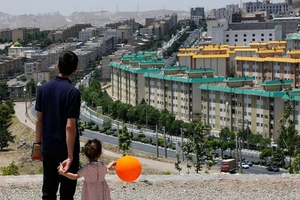
Residential apartment blocks on the outskirts of Tehran.
Average advertised monthly rent in Tehran has climbed above 720 million rials, roughly three times the earnings of many Iranian workers, exposing a widening affordability gap as some tenants face increases of up to 100%, market data showed in late July.
Tindex, an Iran-focused economic data platform tracking housing listings and other market indicators, put average advertised monthly apartment rent in Tehran at about 723 million rials, or roughly $389 at an open-market exchange rate of 1.86 million rials to the dollar, in its late-July data.
The figure is based on advertised properties rather than completed rental agreements, but provides a snapshot of prices confronting tenants searching for homes in the capital.
Monthly salaries for many Iranian workers are commonly put at around 200 million to 250 million rials, equivalent to roughly $108 to $134 at the same exchange rate. That means the average advertised rent can approach three times the upper end of that monthly salary range.
Rent increases reach 100%
The pressure becomes greater when tenants seek to renew their leases.
Rokna News reported on Sunday that rents have risen by 70% to 100% in parts of Tehran, far exceeding the 25% ceiling set for the capital by the Supreme Housing Council.
Prospective tenants look at property listings displayed at a real estate agency in Tehran, Iran.
The findings point to a wide divide between restrictions imposed by authorities and the increases some landlords demand from tenants.
A member of parliament’s construction committee also acknowledged that government rent restrictions are widely disregarded.
“The 25% rent increase is clearly not being observed, and in practice landlords do not implement it,” Alireza Novin said.
Some landlords justify increases of more than 50% by pointing to inflation of around 60%, but rents should not simply rise at the same rate as broader prices, Novin said.
Weak government oversight has left the housing market largely unchecked, according to Novin, who called for stronger enforcement against those who disregard the restrictions.
“If we identify 10 violators and close their places of business, others will also understand that the law must be implemented,” Novin said.
Tenants can file complaints against landlords who breach the ceiling, but pursuing a case can lead to legal proceedings and uncertainty over whether the landlord and tenant can subsequently reach an agreement, according to Novin.
Housing costs reshape how Iranians live
Iran has been grappling with a prolonged housing affordability crisis as property prices and rents have risen faster than wages. Years of high inflation, currency depreciation and rising construction costs have pushed homeownership beyond the reach of many ordinary Iranians while increasing pressure on renters.
The pressure is particularly acute in Tehran, where roughly half of residents are renters.
Buying a home presents an even greater obstacle. Tindex put the average advertised value of a Tehran home at more than 240 billion rials, or about $129,000 at the open-market exchange rate, in late July, placing ownership far beyond the purchasing power of households dependent on ordinary salaries.
The widening gap between incomes and housing costs has also changed how some Iranians live. Tenants have moved from Tehran to cheaper cities or peripheral areas, returned to their parents’ homes or begun sharing smaller apartments with others to divide housing costs.
Housing experts have warned that continued movement toward cheaper areas on the outskirts of major cities could contribute to further expansion of informal settlements.
A view of residential buildings in central Tehran.
The government has sought to ease the burden through rent ceilings, deposit loans and measures intended to protect tenants. But the increases documented in Tehran show how difficult those policies are to enforce when housing costs continue to outrun earnings.
For workers earning around 200 million to 250 million rials a month, an average advertised Tehran rent above 720 million rials amounts to roughly three months of individual pay – before food, transport and other basic household expenses are considered.
A poster for the third season of Iranian reality show Eternal Love
Persian-language reality shows filmed outside Iran are giving young Iranians freedoms that would be impossible on television under the Islamic Republic, while revealing another side of life abroad: uncertainty over work, residency, identity and where ultimately to belong.
A new generation of Persian-language reality television has taken shape beyond the Islamic Republic’s borders, largely in Turkey and on YouTube, where programs built around dating, fashion, relationships and competition can show forms of social life that would be prohibited or heavily censored inside Iran.
The most prominent example is Eternal Love, a Persian-language dating show filmed in Turkey whose format resembles Love Island: young single men and women live together, form relationships and compete for love and prize money.
What looks familiar to international reality-TV audiences carries a different weight in the Iranian context. Contestants flirt, dance and drink, men and women date and touch openly, and women appear without the compulsory dress rules imposed inside Iran — all beyond what broadcasters operating under the Islamic Republic could show.
The popularity of such programs therefore reflects an unusual feature of contemporary Iranian culture: shows that could not legally be made for television at home are produced a short distance away and streamed back to viewers inside the country. Yet behind the relationships, arguments, clothes, tattoos and social-media controversies lies a broader story about migration, changing relations between women and men, economic insecurity, internet celebrity and a generation living somewhere between departure and arrival.
The contestants do not represent all young Iranians. Participation itself requires a degree of selection: the ability to leave Iran, willingness to expose private life, comfort before a camera and the capacity to turn oneself into a media personality. Their significance lies less in statistical representation than in how clearly they display some of the contradictions confronting a section of Iran’s younger generation.
Turkey as destination or waiting room?
For many Iranians, Turkey is not necessarily the final destination of migration but one of its first stops. Geographic proximity, comparatively easy travel and established Iranian communities have turned it into a space between origin and destination, close enough to remain tied culturally and socially to Iran while lying outside the Islamic Republic’s direct restrictions.
At the end of 2025, more than 3.6 million foreign nationals were living in Turkey, according to the International Organization for Migration, including 1,151,969 people with various forms of residence permits. Iranians were also among the main nationalities represented among applicants for and holders of international protection.
The more revealing issue, however, is not simply how many migrants are there but how temporary stays become prolonged lives. Someone who expected to spend months in Turkey may remain for years without knowing whether they will settle there, move to Europe or North America, or eventually return to Iran.
Under those conditions, temporary status becomes more than an immigration category. It shapes decisions about employment, money, relationships and family because long-term planning becomes harder when the country in which someone will live several years from now remains uncertain.
This is one of the central contradictions visible in the reality shows produced abroad. Leaving Iran can bring considerably greater freedom over clothing, dating, appearance and behavior in public, and the contrast is particularly stark in programs such as Eternal Love, where conduct that is ordinary in international reality television would be virtually impossible to broadcast from inside Iran.
A poster for the third season of Iranian reality show Eternal Love
Yet personal freedom does not necessarily bring stability. A migrant may have far greater authority over whom to date or what to wear while holding a temporary residence permit, working irregularly and remaining uncertain about the next country they will be able to call home. Migration therefore becomes more complicated than a simple movement from repression to freedom: someone may gain control over their body and private life while losing certainty over their economic and geographical future.
When attention becomes income
In those circumstances, appearing on a widely watched reality show can have value far beyond entertainment. Visibility itself can become an economic asset, particularly for migrants who may lack secure employment, savings or straightforward access to the labor market.
A contestant who enters a program with a modest following can emerge with thousands of new followers and convert that attention into advertising for clothing stores, beauty services, restaurants and other businesses aimed at Persian-speaking customers. Views and followers acquire monetary value, meaning the competition often continues after filming ends as former contestants try to preserve public attention and convert it into income.
This helps explain the continuing cycle of breakups, disputes, new relationships, accusations and public responses surrounding reality-show participants on social media. It does not mean that every conflict is manufactured, but platforms reward novelty and confrontation, allowing private life itself to become content. Romance, jealousy, friendship and heartbreak can produce views, turning experiences that once belonged largely to private life into part of a person’s professional capital.
The tattoos, piercings, clothing and carefully constructed appearances of many contestants can also be read within this broader context. For someone whose residency, employment and future country may lie partly outside their control, the body remains one of the areas over which they can exercise immediate authority.
For audiences inside Iran, that carries another meaning. The Islamic Republic has spent decades regulating appearance, particularly that of women, through compulsory dress rules and state intervention. A woman appearing freely before a camera without compulsory hijab therefore represents more than a different fashion choice; she also embodies the distance between two systems of living.
At the same time, leaving Iran does not necessarily erase attitudes formed there. Men and women may interact far more freely than Iranian state television permits, yet jealousy, controlling behavior, gender stereotypes and unequal expectations can survive in the new environment. Crossing a political border does not mean every social and cultural boundary has been left behind.
Those seeking fame and those trying to keep it
The sense of suspension extends beyond younger contestants. Some Persian-language programs made abroad are hosted by performers who achieved considerable fame inside Iran before leaving the country, creating a revealing contrast between participants hoping to become public figures and established celebrities trying to preserve or rebuild their careers before an audience they once reached through Iranian cinema or television.
Migration places the two groups in different circumstances but also gives them something in common: uncertainty over what comes next. For a well-known actor living abroad, hosting a YouTube program may offer a lucrative contract, continued access to a large Persian-speaking audience and the beginnings of a new professional life, but it may equally represent a temporary stage or a substitute for a career no longer available in Iran.
The uncertainty becomes clearer when the possibility of return is considered. Migration is not necessarily a one-way journey. Someone may live in Turkey today, try to move to Europe tomorrow and years later return to Iran for family, financial, professional or personal reasons.
There have been cases of Iranians who worked abroad before returning and later distancing themselves in Islamic Republic media from aspects of their previous activities or positions. Such examples cannot be generalized to the diaspora, but they illustrate how fragile the apparent finality of migration can be: someone convinced today that they have left permanently cannot know with certainty where they will live several years from now or what relationship they may then have with the country they left.
Watching possible futures
This may also help explain why reality shows made outside Iran attract such interest among audiences still living inside the country. Viewers are not simply watching young people date, argue or dress differently; they are seeing several possible futures compressed into the same screen — greater personal freedom, migration, unstable work, internet income, fame, failure, onward movement and even return.
That is what makes the shows more revealing than their often superficial plots suggest. They offer a view of a generation that can no longer be divided neatly into those who stayed in Iran and those who left. Some remain closely tied to Iran through language, family, culture and audience while living daily lives that no longer fully belong to the society inside its borders, without yet having put down durable roots elsewhere.
Even the media ecosystem surrounding them reflects that condition. The programs are Iranian in language, audience and cultural reference points but geographically foreign, watched inside Iran while being produced outside the Islamic Republic’s legal and social restrictions. Their participants address an Iranian public while trying to construct careers and identities in another country.
The deeper limbo, then, may not simply be between Iran and Turkey or Iran and Europe, but between a lost certainty and a future that has yet to take shape. Home is no longer only the place that was left behind, while the destination is not necessarily somewhere that has already been reached. The past remains present in language, relationships, fears and habits, while the future may still be too unstable to support a durable new identity.
In that setting, visibility can become more than the pursuit of celebrity. It can offer a way to build status, income and a sense of place when other fixed markers of life — country, profession, community and social position — have become uncertain.
Reality television did not create this condition and cannot explain an entire generation, but by moving Iranian lives into villas and studios outside the country and streaming them back across the border, it has made one part of that experience unusually visible: people who have escaped some of the restrictions of one society without yet acquiring the security of another.
For them, the defining question may no longer be simply whether to leave Iran, remain abroad or return, but where, amid greater freedom and persistent instability, it is possible finally to belong.