Rocket attack hits Iranian Kurdish opposition camp near Erbil - Reuters
A rocket attack hit an Iranian Kurdish opposition camp northeast of Erbil in northern Iraq, Reuters reported on Tuesday, citing security sources who blamed Iran for the assault.
Rising living costs have forced many Iranians to give up cafes and restaurants, turning a once-routine form of leisure into an expense increasingly squeezed out by rent, food and healthcare, messages to Iran International say.
“Cafe and restaurant outings are a form of recreation and something people look forward to, but inflation and rising costs have deprived many people even of that,” one audience member wrote.
Responses to an Iran International question about monthly cafe spending ranged from zero to hundreds of millions of rials. For many respondents, however, “nothing” and “zero” were the recurring answers.
When essentials leave Iranians nothing for a coffee
Several people said they had not visited a cafe or restaurant for months or years because rent, utility bills, medical care, food and debt payments had taken priority.
“How much do we earn in this inflation for anything to be left for recreation? We work from morning until night and can only pay the rent,” one person wrote.
Another said even buying enough food had become difficult.
A cup of coffee sits on a table inside a café in Iran.
“We are trying to be able to provide two meals a day. Going to a cafe has become completely out of reach for us,” the respondent wrote.
Healthcare expenses featured repeatedly in the messages. One person said a root canal on August 10 cost 120 million rials ($65), leaving no money for leisure or cafe visits.
Many Iranian workers earn around 200 million to 250 million rials ($108-$134) a month. The rial trades at around 1.86 million to the dollar on the free market.
Another, a retired education worker, said even one restaurant or cafe visit a year was unaffordable.
“I pay for medicine and doctors in installments,” the retiree wrote.
Others described a gradual erosion of living standards rather than a sudden end to leisure spending. One said the family had gone to cafes or restaurants around three times a month until relatively recently but was now buying basic necessities on credit.
“Expenses such as cafes and restaurants, recreation and travel disappeared a long time ago, and only essential costs such as healthcare, food, rent and installments remain,” another person wrote.
Some said even those essentials were becoming increasingly difficult to afford.
“We have become dependent on money for our daily bread. Where would we find money for cafes or eating out? Buying fruit has become a dream for us,” one person wrote.
Another said the family had been unable to afford recreation or leisure activities for about one or two years and believed much of society was focused primarily on getting by.
A simple cafe order costs millions of rials
Prices listed by cafes on SnappFood application show how quickly even relatively simple orders can add up.
An Americano at cafes reviewed by Iran International started at about 1.1 million rials ($0.59) and reached roughly 3.8 million rials ($2.04) at some establishments. Espresso prices exceeded 3 million rials ($1.61) in some cases.
Breakfast dishes started at around 2 million rials ($1.08) at some cafes, while options including omelets or bread, cheese and herbs could cost more than 4 million rials ($2.15).
One said two drinks and a slice of cake for two people now cost about 12 million rials ($6.45).
Another calculated that buying only a morning espresso every day would cost 60 million to 70 million rials ($32-$38) a month.
Prices vary substantially by city, neighborhood and establishment, but several cafe visits each week can push monthly spending into tens of millions of rials.
Millions spent to preserve a social life
Not everyone has stopped going. Some said they deliberately continued setting aside money for cafes despite rising costs, describing the outings as one of their remaining opportunities for socializing and escaping daily pressures.
Monthly spending among this group commonly ranged from 50 million to 100 million rials ($27-$54), according to figures respondents provided, with some putting their spending at 150 million to 200 million rials ($81-$108) or as much as 300 million rials ($161).
“Every day I buy a shot of coffee and a small bottle of water from a cafe, and maybe a vitamin C drink. I calculated that it comes to around 50 million rials ($27) a month,” one person wrote.
Another said they visited cafes at least 20 times a month.
The spending does not necessarily reflect financial comfort, according to some of the messages. Citizens described paying for cafes as a way to preserve a fragment of ordinary social life despite the squeeze on household budgets.
One person estimated that under current prices, even a relatively frugal young person could face monthly expenses of 150 million to 300 million rials ($81-$161), rising to between 400 million and 700 million rials ($215-$376) with greater spending, whether on cafes or other necessities.
Cafe owners squeezed by debt and closures
Cafe owners and workers who contacted Iran International described the other side of the contraction in discretionary spending: fewer customers alongside rising operating costs and debt.
People gather at a busy café in Tehran, Iran.
One respondent from Khuzestan said debt had forced them out of business.
“I have been unemployed for two months because of debt, I lost my cafe, my bank installments are overdue and there is nothing I can do,” the person wrote.
Businesses also face closures linked to enforcement of Iran's mandatory hijab rules. Another pointed to cafes being sealed in Qazvin over compliance with the dress code.
For many, cafe outings have therefore become another measure of shrinking household choices: eliminated altogether by some families and maintained at considerable cost by others seeking a few hours of social life outside the pressures of everyday expenses.
Germany's embassy in Tehran remains on emergency operations because of the security situation in Iran, with its visa section closed to regular visitors and no regular visa appointments being issued, the German Foreign Office told Iran International on Tuesday.
National visa applications from people who have already appeared at the embassy or its external service provider will continue to be processed within the embassy's available capacity, the ministry said. Visas that are ready to be issued will also be handed out at the embassy in Tehran where capacity allows.
"Due to the current security situation in Iran, the embassy and, in particular, the consular and visa section in Tehran continue to operate in emergency mode," the ministry told Iran International. "The visa section is closed to regular visitors until further notice; no regular visa appointments are being issued."
The ministry said the current crisis had worsened an already difficult situation, as the embassy's visa section had been operating with severe technical and staffing limits since events in Iran in June 2025.
It said it was continuing efforts to expand capacity for accepting visa applications from Iran.
Germany has also created separate arrangements for Iranian nationals living in Iran who are seeking visas for family reunification.
Applicants who previously registered on the German embassy's appointment waiting list and have not canceled their registration are being contacted to submit applications in Istanbul through the International Organization for Migration's Family Assistance Programme, the ministry told Iran International.
Priority is being given to applicants whose previously scheduled appointments at the German embassy in Tehran were canceled because of the military conflict in Iran. Appointments will then be offered in chronological order based on the original registrations.
Visa service provider TLScontact is also issuing new appointments to some applicants with preliminary approval under Germany's fast-track procedure for skilled workers.
This applies to eligible applicants who were on the service provider's waiting list as of Jan. 18 or whose appointments were canceled after the embassy closed from Jan. 16.
Since July 15, applicants in several national visa categories, including students and doctors, who were not previously on a waiting list have also been able to register on new waiting lists. It is not yet clear when appointments will be offered to those applicants.
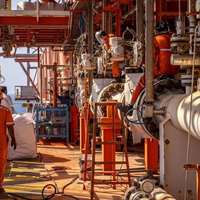
Workers at the Hashuni mine, part of the Kerman Coal Mines Company, in southern Iran.
Workers across Iran’s mining, industrial and municipal sectors say they have gone months without full pay, while some employers have also cut staff, deepening pressure on households already struggling with rising living costs.
Messages sent to Iran International describe wage arrears ranging from several weeks to eight months at mining operations in different parts of the country. Iran International could not independently verify the accounts.
The wife of an employee at the Sanghan iron ore mine in Khaf, northeastern Iran, said her husband, who has worked there for 24 years, had not received a salary for three months despite receiving his work statement through late June.
Workers at the Chah Firouzeh copper mine in Kerman province were still waiting for their June wages, according to another message.
At Gol Gohar in Sirjan, also in Kerman, workers had gone eight months without pay and some employees had been dismissed without receiving wages owed to them, another message said.
Similar complaints have emerged from major industrial companies.
Employees at MAPNA Locomotive in Karaj, west of Tehran, have gone four months without full wages, according to information received by Iran International.
One employee said workers received just 20% of their salary last month and that the payment problems began during the 40-day war and have continued since. Staff are reluctant to protest because they fear layoffs and are already under severe financial pressure, the employee said.
Contract employees at Iran Air have also reported reduced and delayed pay since the war. One employee said salaries had not returned to previous levels even after the company’s revenues recovered, adding that workers who complained risked losing their jobs.
In Sari, a northern city near the Caspian Sea, another source told Iran International that municipal employees and workers had gone three months without pay.
“We really don’t know where to turn,” the source said.
Household pressure
The wage problems come amid broader economic strains acknowledged by senior Iranian officials.
Central Bank Governor Abdolnasser Hemmati said Friday there was “no doubt that Iran’s economy faces serious problems,” adding that war and economic pressure had worsened inflation and unemployment. He rejected, however, suggestions that the economy faced an “imminent collapse.”
Even for workers receiving their wages, earnings increasingly fall short of basic living costs.
The semi-official ILNA news agency reported that many households exhaust their salaries before the middle of the month, forcing them to rely on installment plans and credit for routine expenses.
Majid Rahmati, a member of Tehran’s Coordination Council of Islamic Labor Councils, said in May that the minimum monthly household living basket had risen to around 70 million tomans, while married workers were receiving roughly 24 million tomans a month.
Iran’s statutory base minimum wage is around 16.6 million tomans a month before benefits, according to a Labor Ministry wage directive reported by the Tasnim news agency.
For those waiting months to be paid, the problem is compounded by what workers describe as a lack of effective recourse.
Some employees told Iran International they feared layoffs if they protested over unpaid wages, while others said complaints to labor authorities had failed to produce results.
Iran's president speaks at an even in Tehran, Iran, August 9, 2026
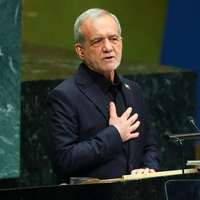
Masoud Pezeshkian may have a claim to being Iran’s unluckiest president, with his two years in office dominated by wars that have battered an already ailing economy to the point that keeping households above subsistence would count as an achievement.
Pezeshkian inherited years of accumulated economic problems, many created or left unresolved by previous administrations, before war deepened those structural weaknesses.
Two recent assessments of his record suggest the result is something larger than the difficulties of one presidency: the ambitions of government itself are contracting from development toward survival.
“Pezeshkian thinks the nation should thank him only because there is no famine in Iran yet,” said Nasrallah Pejmanfar, an ultraconservative cleric and lawmaker from Shiraz.
Pejmanfar intended the remark as an attack. But it echoed a more substantive criticism offered by sociologist Hamzeh Nozari in the moderate daily Shargh: that merely preventing extreme deprivation is increasingly becoming a measure of government success.
From development to survival
Nozari focused on the government’s emphasis on protecting “people’s livelihood” through subsidies, electronic coupons and efforts to secure basic goods.
Such policies may prevent extreme poverty, he argued, but they also reveal how far the ambitions of government have narrowed.
“Providing a minimal living and securing a hand-to-mouth existence is the ruling paradigm of the government, while concepts like welfare, progress and development are sidelined,” Nozari wrote.
He contrasted the current approach with previous periods when Iranian governments, however successfully, pursued broader ambitions: economic expansion in the late 1980s, greater political openness in the 1990s and redistribution in the following decade.
The question, he argued, is whether this “livelihood paradigm” is a temporary response to war and economic emergency or a more permanent retreat from development.
The economics of scarcity
Economist Teymour Rahmani, writing in Donya-ye Eghtesad, approached the same crisis from a different direction.
For Rahmani, the central problem is inflation, driven above all by a severe fiscal imbalance as government revenues decline while large and inefficient expenditures continue.
He rejected the common explanation that the falling rial is itself responsible for accelerating inflation. Currency depreciation and rising prices, he argued, are symptoms of the same underlying fiscal problem.
“The fact that inflationary force manifests first through the exchange-rate channel and that exchange-rate increases precede inflation spikes does not mean currency depreciation is the root cause,” he wrote.
The consequences are increasingly visible across the country. Rahmani pointed to point-to-point inflation of 112.4 percent in the western province of Ilam, with other poorer provinces including Lorestan, Kurdistan and Hormozgan also experiencing triple-digit inflation.
He argued that Iran has entered an inflationary environment unlike any in its modern history, while crediting experienced civil servants and residual public confidence in the monetary system with helping prevent a slide into full hyperinflation.
“We must understand that inflation is the primary issue of the Iranian economy,” Rahmani wrote, warning that the underlying fiscal imbalance must be addressed.
Administering scarcity
The two analyses approach Pezeshkian’s predicament from different directions but arrive at closely related conclusions.
Nozari describes the consequence: a government whose conception of success increasingly revolves around maintaining minimum living standards. Rahmani describes the economic machinery pushing it there: fiscal imbalance, declining revenues and inflation severe enough to overwhelm household purchasing power.
Neither problem began with Pezeshkian. He inherited years of accumulated economic weakness, while war and sanctions have sharply worsened the conditions under which his government operates.
But two years into his presidency, the distinction between emergency measures and a longer-term transformation is becoming harder to make.
A government occupied with keeping food affordable, financing subsidies and preventing inflation from becoming still more destructive has increasingly little room to pursue the growth, welfare and development promised in its economic plans.
Turkish President Tayyip Erdogan, Saudi Crown Prince Mohammed bin Salman, and Pakistan's Prime Minister Shehbaz Sharif pose after signing a joint defence agreement in Mecca, Saudi Arabia, August 7, 2026.
Iranian officials and analysts are publicly playing down the threat posed by a new defense pact between Saudi Arabia, Pakistan and Turkey, even as some commentators warn Tehran against underestimating an emerging regional alignment.
Foreign Ministry spokesman Esmail Baghaei said Monday that Iran had no reason to fear that the so-called Mecca Pact was directed against it, portraying the agreement instead as a response to Israeli ambitions and declining regional confidence in US security guarantees.
Seyed Abdollah Motavalian, a hardline commentator writing in the IRGC-affiliated Javan newspaper, similarly described the pact as having “considerable propaganda potential” but facing serious obstacles to becoming a strategic alliance.
He warned Tehran against making hasty decisions, particularly in negotiations with Washington, “based on fear of an alliance that has not yet taken shape amid propaganda hype.”
“Tehran’s strategic skill would be not to allow a political document, before it is tested against reality, to become an imaginary power in the calculations of decision-makers,” Motavalian wrote. “The first defeat in this arena may come not on the battlefield, but in the mind.”
Other Iranian commentary has emphasized the differing interests of the three countries and questioned whether Pakistan or Turkey would be willing to become directly involved in Saudi Arabia’s conflicts.
Their commitments, one analysis in Javan argued, may ultimately be limited to advisory support, weapons sales and joint exercises.
A retreat from Washington?
Iranian officials and state-affiliated media have also sought to interpret the agreement as evidence of Saudi Arabia’s frustration with Washington, particularly over what they describe as inadequate US protection against recent missile and drone attacks.
Tasnim, which is affiliated with the IRGC, argued that repeated attacks and Washington’s inability to contain the threat had pushed Riyadh to diversify its security relationships and reduce its reliance on the United States.
From Tehran’s perspective, that could carry potential benefits. A security architecture less dependent on Washington could weaken the United States’ traditionally dominant role in the region while creating additional complications for Israel.
The pact could also give Riyadh greater leverage in seeking stronger security guarantees from Washington, Iranian analysts said.
Pakistan or Turkey?
The involvement of Pakistan and Turkey nevertheless raises more complicated questions for Tehran.
Pakistan is a nuclear-armed power on Iran’s eastern border and has played an important role mediating between Tehran and Washington during the recent conflict.
Iranian commentators seeking to minimize the threat point out that Islamabad did not act against Iran during the 40-day Iran-US war despite its existing defense relationship with Saudi Arabia, instead helping mediate between the two sides.
Motavalian described Pakistan’s participation as part of “a multilayered deal and an increase in bargaining power,” rather than evidence of “the formation of a coherent war front.”
Turkey may present a different challenge.
Kamran Karami, a Persian Gulf security analyst writing for Donya-e Eqtesad, argued that Ankara’s participation could ultimately prove more consequential for Iran than Pakistan’s.
“For Iran, this development sends a clear message: Turkey is becoming one of the main poles of the Middle East’s new security architecture,” he wrote. Competition between Tehran and Ankara, he added, could gradually expand beyond economics and politics to “the design of the regional order.”
Others see Pakistan as the greater concern precisely because of its recent role as an intermediary with Washington. Tohid Javadi, a Middle East researcher, argued that turning a mediator into a rival security actor could complicate that relationship.
The possibility that other countries, including Egypt, could eventually join the arrangement has added to speculation that it might develop into a broader regional bloc.
Risks of underestimating pact
Not all Iranian commentary accepts the reassuring interpretation.
Asr-e Iran warned that dismissing the agreement as political theater could prove a mistake if it gradually develops military and security mechanisms capable of changing the regional balance.
Saudi Arabia brings financial resources, Pakistan military strength and nuclear capability, and Turkey one of the region’s most powerful armed forces, alongside considerable military experience and geopolitical reach.
Together, Asr-e Iran argued, they could eventually create a deterrent capable of limiting the room for maneuver of other regional powers, including Iran.
Fararu offered a similar warning, arguing that the significance of the pact is greater because it comes after a major Iran-US war whose underlying disputes remain unresolved.
The immediate purpose of such an alliance, it argued, need not be fighting a war. Its significance lies in changing the calculation before one begins.
“If Tehran, or any other actor, knows that an attack on Saudi Arabia could trigger a response from Turkey and Pakistan as well, the cost-benefit calculation of an attack changes,” the analysis said.
“In simple terms, the pact seeks to create a new equation: an attack on Saudi Arabia is no longer just an attack on Saudi Arabia.”