IRGC says it targeted radar systems in Kuwait
Iran’s Revolutionary Guards said they targeted a tactical radar complex near Kuwait’s Ali Al Salem Air Base and another radar system on Bubiyan Island on Tuesday.
Iran’s Revolutionary Guards said they targeted a tactical radar complex near Kuwait’s Ali Al Salem Air Base and another radar system on Bubiyan Island on Tuesday.








Several tankers carrying Saudi crude oil reversed course on Tuesday after Tehran-backed Houthis declared a blockade on shipping through Bab el-Mandeb, raising fears that the US-Iran war could disrupt a second major energy chokepoint.
Yemen’s Houthis, who control much of northern and western Yemen and its coastline near the southern entrance to the Red Sea, declared a maritime embargo against Saudi Arabia on Monday, potentially opening another front in the widening regional conflict.
The order targets Saudi-linked shipping rather than all vessels passing through Bab el-Mandeb. The strait has not been closed, and a US Navy-led maritime information center said Tuesday that there had been no confirmed attacks on vessels in the Red Sea over the previous 48 hours.
But the announcement was already affecting commercial shipping.
In a letter sent to shipping companies and seen by Reuters, the Houthis warned that vessels loading or discharging oil at Saudi ports could be attacked anywhere within the reach of their forces.
The group described the measure as a “blockade for blockade,” accusing Saudi Arabia of imposing land, sea and air restrictions on Yemen and targeting Houthi-controlled ports and airports, including Sanaa International Airport.
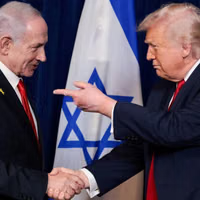
US President Donald Trump said Tuesday that the Houthis had not yet shut Bab el-Mandeb, known as the “Gate of Tears,” but warned that Washington would respond if they did.
“So far it hasn’t happened. Might happen, but we take care of things,” Trump said. “If something like that happens, we take care of it.”
Tankers alter course after Houthi threat
Two tankers that had loaded Saudi crude at the Red Sea port of Yanbu for customers in China and India reversed course Tuesday, heading north toward the Suez Canal rather than south through Bab el-Mandeb into the Indian Ocean.
The vessels, Xin Long Yang and Rodos, had both been sailing south through the Red Sea before turning around. A third tanker, New Prime, which had been heading empty toward Yanbu, also reversed course off Oman.
British maritime risk-management company Vanguard described them as the first confirmed changes to commercial tanker routes following the Houthi announcement and warned of growing disruption to Saudi crude exports and regional shipping.
No evidence has emerged that the vessels were directly threatened, but their diversions showed that shipping companies were already responding to the risk of Houthi attacks.
Saudi Arabia pledges to protect shipping
Riyadh rejected the Houthis’ accusations as false and said it would take all necessary measures to protect its vessels under international law and the 1982 UN Convention on the Law of the Sea.
The Saudi-led coalition in Yemen said threats against ships passing through Bab el-Mandeb would be dealt with firmly and that measures were being implemented to safeguard commercial traffic.
Riyadh accused the Houthis of exploiting the wider regional conflict to pursue their own agenda, worsen the suffering of Yemenis and threaten regional security.
Hormuz disruption raises Red Sea stakes
With traffic through the Strait of Hormuz severely reduced by the US-Iran war, Saudi Arabia has increasingly relied on its East-West Pipeline to transport crude across the kingdom to Yanbu for export through the Red Sea.
Saudi Arabia has shipped an average of more than 4.5 million barrels per day of crude and fuel from Yanbu since April, with about 70% destined for Asia, according to data cited by Reuters.
A successful Houthi effort to close Bab el-Mandeb would remove Saudi Arabia’s main alternative to Hormuz and leave much of its oil exports facing lengthy diversions.
Tankers unable to sail south from the Red Sea would have to travel north toward the Suez Canal and the Mediterranean before circling Africa to reach Asian customers. Analysts said the detour could delay some deliveries by about a month and sharply increase freight and insurance costs.
Oil prices rose more than 2% Tuesday, with Brent crude trading above $91 a barrel and US gasoline prices returning to more than $4 a gallon.
Pakistan and Qatar are pressing ahead with efforts to revive Iran-US diplomacy, but Tehran has yet to publicly endorse the initiative as fighting continues over the Strait of Hormuz and resistance to renewed negotiations grows within sections of the Iranian establishment.
The Pakistan-Qatar initiative remains one of the few active diplomatic channels between Tehran and Washington. But continued military operations and widening divisions within Iran's political establishment have cast doubt on whether the fragile understanding between the two sides can survive.
Iranian Interior Minister Eskandar Momeni traveled to Islamabad on Monday for meetings with Pakistan's civilian and military leadership, including Field Marshal Asim Munir, Prime Minister Shehbaz Sharif and Interior Minister Mohsin Raza Naqvi.
Officially, the visit focused on implementing agreements reached during President Masoud Pezeshkian's visit to Pakistan last month. Pakistani media, however, reported that Islamabad is working to preserve the memorandum of understanding (MoU) and prepare the ground for another round of indirect negotiations.
Following his meeting with Momeni, Sharif expressed concern over rising tensions in the Persian Gulf and said Pakistan would continue "to play the role of an honest mediator and facilitator between Iran and the United States."
Momeni, in turn, thanked Sharif, Foreign Minister Ishaq Dar and Field Marshal Asim Munir for securing what he described as the "Islamabad understanding" between Tehran and Washington, underscoring that the talks extended well beyond routine bilateral relations.
Hardliners resist
The prospect of renewed diplomacy continues to divide Iran's political establishment.
Parliament Speaker Mohammad-Bagher Ghalibaf, who has played a central role in Iran's negotiations with Washington, warned on Sunday that the United States continued to reinforce its military presence while claiming to seek peace.
"They have underestimated our intelligence," he wrote on X. "We have become masters at recognizing these American tricks."
"Actions must confirm their claims, not contradict them."
His remarks were interpreted by some hardline commentators as leaving the door ajar for renewed diplomacy, prompting criticism from conservatives who warned against trusting mediation efforts led by Pakistan and Qatar.
The conservative daily Kayhan argued that the current conflict presented a "golden opportunity" to break what it described as the recurring cycle of war, ceasefire and negotiations, insisting a tougher military posture would serve Iran better than another round of talks.
The IRGC-linked newspaper Javan, however, took a more nuanced position, arguing that Iran should remain prepared for both war and negotiations, provided any talks were aimed at consolidating gains achieved on the battlefield rather than restoring trust in Washington.
War clouds diplomacy
The mediation effort unfolded alongside another day of escalating military exchanges.
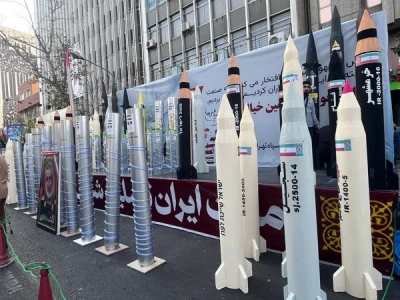
According to Iranian state media, Iranian forces struck US military facilities in Bahrain, Kuwait and Jordan using missiles and one-way attack drones.
The IRGC claimed the attacks destroyed early-warning radars, Patriot air-defense systems and satellite communications equipment, although those claims could not be independently verified.
The IRGC also warned commercial shipping against relying on US military protection in the Strait of Hormuz. A source quoted by the IRGC-affiliated Fars News Agency said traffic through the waterway had effectively stopped and warned it would remain closed as long as US military operations continued.
Meanwhile, US Central Command announced another round of strikes targeting Iranian military infrastructure used to threaten maritime shipping. Iranian media reported attacks on military sites in Bandar Abbas, Bushehr, Chabahar, Qeshm Island and other strategic coastal locations.
Defense analyst Farzin Nadimi told Iran International that despite nine days of intensive US strikes, Washington had so far failed to restore commercial navigation through the Strait of Hormuz, leaving difficult decisions about the next phase of the campaign.
Regional risks grow
The regional risks also continued to widen beyond the Persian Gulf.
Yemen's Houthi movement announced it had begun imposing a naval blockade on Saudi Arabia and barred Saudi oil tankers from transiting the Bab al-Mandab Strait.
Analyst Shahir Shahid-Sales said the move was likely coordinated with Tehran.
"The key question is whether the Houthis can actually enforce this blockade and how serious a conflict with Saudi Arabia may become," he wrote on X. "If they begin striking oil tankers, oil prices are likely to rise even further."
A hardline Iranian lawmaker accused parliament speaker Mohammad Bagher Ghalibaf of backing a US deal that blocks revenge for Ali Khamenei’s killing and could paralyze the state, paving the way for a bloodless coup.
Hamid Rasaei said the memorandum negotiated with Washington was fundamentally incompatible with retaliation, accusing Ghalibaf of trying to disguise that contradiction through religious and ideological rhetoric.
“Revenge is fundamentally incompatible with this memorandum,” Rasaei said in an interview with the YouTube channel Hokmran.
“As you can see, Mr. Ghalibaf is tying himself in knots, scrambling to link revenge to the reappearance of the Imam of the Age, because he has signed something that prevents you from taking revenge.”
Ghalibaf led Iran’s negotiating team in talks with the United States and has emerged as the principal defender of the Islamabad memorandum among the Islamic Republic’s senior officials.
The agreement’s first clause commits Iran and the United States to end military operations, refrain from initiating further attacks and avoid the threat or use of force against each other.
Ghalibaf said last month that just as vengeance for the third Shiite imam would be fulfilled through the reappearance of the Imam of the Age, vengeance for the slain supreme leader would be achieved through the “liberation of Jerusalem.”
He later described the liberation of Jerusalem, or Al-Quds, as the “final step of revenge” and said Iran could support its allies through missiles when military action was needed and through negotiations when political pressure was more effective.
By tying revenge to a distant ideological objective rather than an immediate attack on the United States or Israel, Ghalibaf appeared to be seeking a way to preserve the Islamic Republic’s rhetoric of vengeance while containing the escalation that could derail negotiations.
‘Preparing grounds for coup’
Rasaei rejected that formulation, arguing that abandoning immediate retaliation would allow threats against the new Supreme Leader Mojtaba Khamenei to remain in place and prevent him from appearing publicly.
“Those who want revenge removed from the equation so that it never happens—what are they really after?” he said. “They want this threat to continue hanging over your leader. They want your leader to remain unable to appear in public.”
Rasaei argued that continued threats and the leader’s absence could then be invoked to suspend the country’s governing institutions.
“They want the threat to remain in place,” he said. “As long as it does, you cannot convene parliament. They will say there is no security, so parliament should not meet, the judiciary should not function and the government should not operate—just hand everything over.”
“This would become the prelude to a coup without a single shot being fired,” he added. “This is how the groundwork is laid for a very polished coup. There must be revenge. There absolutely must be.”
The accusation reflects widening divisions among the Islamic Republic’s hardliners over whether diplomacy with Washington can be reconciled with demands to retaliate for Ali Khamenei’s death.
Ghalibaf has argued that negotiations and military power are complementary rather than contradictory, saying diplomacy can preserve gains made on the battlefield when it is backed by the ability to fight. His position resembles Washington’s argument that negotiations are most effective when supported by military pressure.
Mojtaba Khamenei, however, has doubled down on the promise of direct revenge. In a message issued after his father’s burial, he described retaliation as a “national demand” that “will most certainly be carried out.” He also warned that those responsible for the killing would lose any hope of dying peacefully in their beds.
Those remarks strengthened hardline demands for action and sharpened the contradiction between Tehran’s continuing negotiations with Washington and its leadership’s public commitment to punish those behind Khamenei’s killing.
Rasaei also attacked Iranian figures who have urged Mojtaba Khamenei to set aside revenge, referring to Fayyaz Zahed, an adviser to former foreign minister Mohammad Javad Zarif.
Zahed said in a recent interview that Mojtaba Khamenei should “put his personal issues aside” and forgo revenge for his father’s blood, adding that such restraint was the meaning of governance.
“Take that foul-mouthed person who spoke up last week and said Agha Mojtaba should put aside his personal animosity—even though they killed his father,” Rasaei said.
Zahed’s remarks drew a backlash from media affiliated with the Revolutionary Guards. Fars News said he had arrogantly advised Khamenei to abandon revenge and argued that the blood of those regarded by the Islamic Republic as martyrs was “not negotiable.”
Rasaei also criticized former president Mohammad Khatami’s call for an “honorable peace,” saying such proposals ultimately amounted to removing revenge from consideration.
He argued that Iran should respond not only to attacks but also to explicit threats, saying Tehran should strike before its adversaries have an opportunity to carry them out.
“A threat should be treated as an attack,” Rasaei said. “We shouldn’t wait for him to do it before responding. The moment he says it, we should strike.”
He ended by questioning whether Iran could negotiate with the same government it had pledged to punish.
“At times, we act as though revenge can somehow be reconciled with negotiations and an agreement,” he said. “But I ask you: how can you reach an agreement with someone against whom you intend to take revenge?”
France is reviewing whether to reduce staffing at its embassy after two French diplomats were detained, interrogated and allegedly abused by Iranian security forces in Tehran, according to information obtained by Iran International on Tuesday.
French Foreign Minister Jean-Noël Barrot had already confirmed that two members of the French embassy were detained for several hours on Sunday, calling the episode "serious and unacceptable" and warning it "cannot go without consequences."
"One of them was physically abused," Barrot said, describing the detention as an "extremely serious act of intimidation" and a "flagrant violation of diplomatic immunity."
According to a source familiar with the matter who spoke to Iran International, Iranian security forces detained the two diplomats, took them to an undisclosed location and interrogated them. Both were subjected to psychological pressure during their detention and questioning, and that at least one was physically assaulted, the source said.
The episode has heightened concern among staff at the French embassy in Tehran, with several employees asking to return to France before completing their assignments, although their postings have not officially ended, according to the source.
French authorities are now considering whether to end some diplomatic assignments early and reduce the embassy's presence in Tehran, the source added.
Paris seeks answers
Iran International has sent a formal request to the French Foreign Ministry seeking comment on the condition of the two diplomats, Paris' planned response and the possible impact on embassy operations in Tehran.
The ministry had not responded by the time of publication.
Barrot said he had raised the matter directly with Iranian Foreign Minister Abbas Araghchi, telling him the detention represented a serious breach of diplomatic immunity protected under international law.
According to Barrot, the two diplomats were responsible for French programs supporting Iranian civil society, particularly artists and scientists. Both were released and are expected to return to France.
Relations deteriorate
The detention comes as relations between Paris and Tehran continue to worsen over Iran's nuclear program, regional policies and the imprisonment of French nationals.
France has said it opposes lifting sanctions on Iran unless Tehran abandons its nuclear program and changes what Paris describes as destabilizing regional policies. Paris has also called for a broader European role in negotiations over Iran.
The dispute follows years of friction over French nationals held in Iran. Paris has repeatedly called for the release of Cécile Kohler and Jacques Paris, who have been detained since 2022, describing their imprisonment as arbitrary and accusing Iran of using foreign detainees to seek diplomatic concessions.
Earlier this year, France brought a case against Iran before the International Court of Justice over alleged violations of consular rights.
The detention of accredited embassy staff broadens the dispute from French citizens held in Iran to diplomats protected under international law, adding another point of strain in relations between Paris and Tehran.
Iranian authorities had not publicly commented on the case by the time of publication.
Iranian authorities secretly buried teenage protester Erfan Esfandiyari without his family present and have reinstated the death sentence of another young defendant in the same Isfahan case, sources told Iran International.
Esfandiyari, 19, was executed on Sunday. He was among 12 defendants sentenced to death over unrest in Isfahan’s Ali Khani Square during nationwide protests in January.
Another defendant was Alireza Raisi, whose sentence had previously been overturned and reduced to 20 years in prison, but has now been reinstated and upheld by Iran’s Supreme Court, according to a source with knowledge of the matter.
The sources could not be named for fear of retribution by Iranian authorities.
Secret burial after execution
A source close to Esfandiyari’s family said his relatives waited outside Dastgerd Prison in the central Iranian city of Isfahan until 5:30 a.m. after he was transferred to solitary confinement.
After waiting until dawn and returning home, Esfandiyari's father received another call ordering him back to the prison, accompanied by one other man, the source said.
Authorities forced the family to pledge that Esfandiyari’s body would not be buried in Isfahan and that they would not hold a funeral, sources told Iran International.
His body was buried in Buin Miandasht, a city in western Isfahan province, without his family present. His relatives were also barred from holding a memorial ceremony.
Iran’s judiciary-affiliated Mizan news agency reported on Sunday that Esfandiyari had been executed alongside 24-year old Afghan citizen Gol-Mohammad Mohammadi, who was also detained during the January uprising in Isfahan.
Cousin of slain protester faces execution
Another source told Iran International that Raisi, who was born in 2004 and is his family’s only son, had been sentenced to death on the charge of “enmity against God.”
The death sentence was initially overturned on appeal and replaced with a 20-year prison term.
However, Raisi’s family was informed on July 5 that the death sentence had been reinstated and upheld by the Supreme Court, the source said.
He has since been transferred to solitary confinement at Dastgerd Prison and is considered at imminent risk of execution, the source said.
Raisi is the cousin of Ramin Raisi, a 28-year-old protester who disappeared on January 9 during demonstrations in Isfahan’s Baharestan neighborhood.
After searching for nine days, his family found his body at the Bagh-e Rezvan mortuary with four gunshot wounds to the chest.
Intelligence Ministry agents traveling in two vehicles arrested Alireza Raisi outside the entrance to Bagh-e Rezvan cemetery on January 19, one day after Ramin’s burial, people close to the family told Iran International.
Security agencies refused for several days to acknowledge holding him and sent his family between different state institutions before they eventually learned that he was in prison.
The family sought to appoint a lawyer but was told Raisi had no right to choose his own counsel and could only be represented by a court-appointed lawyer.
Sources told Iran International that one piece of evidence used against Raisi was a voice message in which he asked Ramin to take part in the protests.
After tracking Raisi’s mobile phone, agents linked him to the deaths of four law enforcement personnel in Ali Khani Square, an accusation his family denies.
Raisi’s mother has multiple sclerosis, and he has two sisters. His family had planned to hold his engagement celebration at the beginning of the year.
A dozen sent to death row
Iran’s judiciary-affiliated Mizan news agency said indictments were issued against 16 people in the Ali Khani Square case and several defendants were sentenced to death.
Iran International reported on July 8 that 59 people were initially arrested during the January protests and the ensuing crackdown in Ali Khani Square. Of those, 23 were sentenced to prison terms ranging from five to 10 years.
Twelve defendants were sentenced to death: Abolfazl Ebrahimi, Amirhossein Ebrahimi-Analoucheh, Erfan Esfandiyari, Shervin Bagherian, Ghaem Hosseini, Ali Dashti, Alireza Raisi, Abolfazl Sepahi, Alireza Sepahi, Amirhossein Safari, Gol-Mohammad Mohammadi and Amirhossein Maleki.
The Ali Khani Square case forms part of a broader escalation in Iran's use of the death penalty against political prisoners since January's protests, the June war with Israel and the conflict with the United States that began on February 28.
Tehran prosecutor Ali Salehi said on July 14 that cases linked to the protests and the two wars had been handled by special judicial branches, which issued prison and death sentences.
Iran’s judiciary has executed at least 50 political prisoners since March 18 and issued death sentences, lengthy prison terms and asset-confiscation orders against hundreds of others.
The trend has heightened concerns over rushed trials and the swift imposition and execution of severe sentences, drawing condemnation from rights groups and prompting hunger strikes by prisoners.
