• العربية
  • فارسی
BrandBrand
  • Iran Insight
  • Politics
  • Economy
  • Analysis
  • Special Report
  • Opinion
  • Podcast
  • Live TV
  • Iran Insight
  • Politics
  • Economy
  • Analysis
  • Special Report
  • Opinion
  • Podcast
  • Live TV
  • Theme
  • Language
    • العربية
    • فارسی
  • Iran Insight
  • Politics
  • Economy
  • Analysis
  • Special Report
  • Opinion
  • Podcast
  • Live TV
All rights reserved for Volant Media UK Limited
volant media logo

Trump, Netanyahu threaten renewed Iran strikes, Tehran warns of response

Oct 19, 2026, 02:31 GMT+1
FILE PHOTO: U.S. President Donald Trump and Israeli Prime Minister Benjamin Netanyahu at the Knesset on the day of Trump's address, amid a U.S.-brokered prisoner-hostage swap and ceasefire deal between Israel and Hamas, in Jerusalem, October 13, 2025. REUTERS/Evelyn Hockstein/Pool/File Photo

US President Donald Trump and Israeli Prime Minister Benjamin Netanyahu escalated threats against Iran on Sunday, and Tehran warned of retaliation even as diplomatic efforts continued over the Strait of Hormuz and the wider conflict.

Trump warned that the United States could “soon finish the job” against Iran unless Tehran changed course, while giving Netanyahu his “complete and total endorsement” ahead of Israel’s October 27 election.

“They have been systematically destroyed, both militarily and financially, and unless they change their ways, rapidly, we will soon finish the job,” Trump wrote on Truth Social.

Trump suggested Washington could take on the fight itself if Netanyahu failed to remain in power, saying that with the “wrong Leader” in Israel, “America will have to do this work ourselves.”

In a briefing with Israeli journalists on Sunday, Netanyahu said bringing down the Islamic Republic remained a key Israeli objective and that he had directed the country's security agencies to pursue it.

Netanyahu said 90% of the work required to defeat Israel's enemies had been completed, while pointing to Iran's economic crisis and protests as signs of what he described as the government's weakness.

“We must bring this regime down once and for all,” Netanyahu said, adding that Israel was prepared to act independently of Washington if necessary.

Responding later to Trump's endorsement, Netanyahu said: “Together we will complete the mission!”

Tehran answers threats

Iranian officials responded with a series of warnings against renewed US or Israeli military action.

Foreign Minister Abbas Araghchi directly challenged Trump's “finish the job” language, saying Iran had emerged stronger from the previous confrontation.

“Want to try your luck again? Be our guest. But be careful; we have unfinished jobs too,” Araghchi wrote on X.

He also accused Netanyahu of seeking to draw the United States into another war to advance his own political interests.

Iran's parliament also approved Mehrdad Akhlaghi Ketabchi as defense minister on Sunday, putting a veteran of the country's missile and aerospace industries in charge of its defense apparatus.

Akhlaghi warned Trump against another US attack, saying Washington should instead focus on getting its forces out of the region safely.

Other Iranian military officials issued similar warnings. Armed Forces Chief of Staff Ali Abdollahi said another attack would draw a response “different from, and more severe than before,” while an IRGC spokesman threatened a devastating response against Israel if Iran's energy infrastructure were targeted.

Diplomacy remains on table

Despite the escalating rhetoric, Tehran said its proposal for reopening the Strait of Hormuz and restarting negotiations with Washington remained available.

Araghchi said Iran's seven-day proposal, first presented in September, remained on the table as Tehran reviewed Washington's response. Under the plan, the strait would reopen on the sixth day and negotiations would begin on the seventh if Washington accepted Iran's conditions.

Iran's conditions include lifting the US blockade on its ports, removing sanctions on oil exports and ending hostilities across regional fronts.

Washington, meanwhile, wants Iran to agree to significant reductions in uranium enrichment, while Tehran wants initial talks focused on restoring security and oil flows through the strait.

The Gulf Cooperation Council also pushed for a diplomatic solution on Sunday during a meeting of its foreign ministers in Bahrain.

The GCC condemned continued Iranian missile and drone attacks against its member states, demanded an immediate end to the attacks and called for the restoration of maritime security and freedom of navigation through the Strait of Hormuz.

The bloc also called for a return to dialogue and diplomacy, but said any understandings with Tehran should address Iran's nuclear and missile programs, drones and support for proxies, with GCC states involved in negotiations affecting their security.

Tensions persist at sea and across region

Iran's Revolutionary Guards Navy said an oil tanker struck a naval mine south of the Strait of Hormuz on Sunday, causing an explosion and fire in its engine room. The Guards warned that vessels switching off their navigation systems while transiting the waterway would be classified as “hostile vessels.”

Separately, UK Maritime Trade Operations said a southbound tug northeast of Khor Fakkan in the UAE was struck by two unknown projectiles, damaging the vessel and causing one minor casualty. The tug continued on its route.

The regional confrontation also continued around Saudi Arabia. The GCC condemned escalating Houthi attacks and reaffirmed its collective support for Riyadh.

Egypt said it was prepared to provide “all necessary and possible forms of support” to Saudi Arabia. President Abdel Fattah el-Sisi had sought parliamentary authorization on Saturday for the military to help defend the kingdom if Riyadh requested assistance.

Most Viewed

Tehran’s diplomatic paralysis leaves Iran caught between deal and escalation
1

Tehran’s diplomatic paralysis leaves Iran caught between deal and escalation

2

Iran giving Houthis targeting intelligence for Saudi attacks - WSJ

3

Iran's January crackdown: Snipers at Friday prayer leader's office, dorm

4
ANALYSIS

Iran risks losing ground as East-West trade routes expand

5

Architect of Guards' missiles becomes Iran's defense minister

Spotlight

  • Iran risks losing ground as East-West trade routes expand
    ANALYSIS

    Iran risks losing ground as East-West trade routes expand

  • Tehran’s diplomatic paralysis leaves Iran caught between deal and escalation

    Tehran’s diplomatic paralysis leaves Iran caught between deal and escalation

  • Iran's January crackdown: Snipers at Friday prayer leader's office, dorm

    Iran's January crackdown: Snipers at Friday prayer leader's office, dorm

  • Iran cultivated Houthis for years before opening new war front, insider says
    PODCAST

    Iran cultivated Houthis for years before opening new war front, insider says

  • After the killings, Iran turned on the families of the dead

    After the killings, Iran turned on the families of the dead

  • Iran’s rulers face a reckoning with their own people, former US envoy says
    ONE-ON-ONE

    Iran’s rulers face a reckoning with their own people, former US envoy says

Banner
Banner
Banner
Banner
Banner
•
•
•

More Stories

Iran speaker urges Persian Gulf states to stop backing military-linked AI firms

Oct 18, 2026, 19:31 GMT+1
100%
Iran's parliament speaker Mohammad Bagher Ghalibaf

Iran's parliament speaker said a "Persian Gulf Data Authority" was coming and urged regional governments and investors to withhold resources from AI companies involved in military operations, amid threats by Iranian hardliners against digital infrastructure across the region.

"The Persian Gulf Data Authority is coming," Mohammad Bagher Ghalibaf wrote on X Sunday.

"To governments, funds, and firms in the region: you are kindly advised to give no resources to any AI or data company aiding invasions or killing children. No finance, equity, land and energy."

Ghalibaf did not explain how the proposed authority would operate, what powers it would have or how Iran could enforce restrictions on companies operating elsewhere in the region.

His remarks followed a series of warnings by senior Iranian officials and hardliners about targeting digital infrastructure across the Persian Gulf.

Hardliners threaten regional digital infrastructure

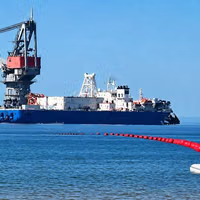
Last week, Mohsen Rezaei, secretary of Iran's Supreme National Security Council, warned that undersea communications cables, data centers and artificial intelligence facilities could become targets if war with the United States and Israel resumed.

"If war breaks out, many cables, data centers and artificial intelligence facilities, valued at $2 trillion, will be within range," Rezaei said, according to Iranian state media.

He said American technology assets in the United Arab Emirates and around the Strait of Hormuz had not yet been included among Iran's targets but could be struck in a renewed conflict.

The following day, Hossein Shariatmadari, editor-in-chief of the hardline Kayhan newspaper and the supreme leader's representative at the publication, endorsed Rezaei's warning.

In an article titled "Well Done, Brother Mohsen!", Shariatmadari called for using undersea fiber-optic cables running through the Persian Gulf and the Strait of Hormuz to pressure Washington and its allies.

He claimed that damaging the cables could disrupt more than 80 percent of commercial, banking, military and AI-related communications, an estimate that has not been independently verified.

The IRGC-affiliated Tasnim News Agency also backed threats against AI infrastructure, arguing in an article titled "Why Is Artificial Intelligence on the Target List?" that attacks on AI centers could undermine US technological competition with China, deter investment and put pressure on American stock markets.

Shariatmadari had previously urged Iran's military and Islamic Revolutionary Guards on September 3 to disrupt or sever international fiber-optic cables beneath the Persian Gulf and the Strait of Hormuz.

In May, Tasnim proposed imposing licensing and annual renewal fees on foreign operators of undersea internet cables passing through the strait.

It also called for major technology companies, including Meta, Amazon and Microsoft, to operate under Iranian law and proposed granting Iranian companies exclusive control over cable maintenance and repairs.

Previous threats against technology companies

Iran's Revolutionary Guards had already threatened major American technology companies operating in the Middle East during the war earlier this year.

On March 31, the IRGC published a list of 18 companies, including Microsoft, Google, Meta, Apple, Oracle, Nvidia and the UAE-based artificial intelligence company G42, warning that their regional operations could be targeted.

The Guards accused American technology and AI companies of assisting US military operations against Iran and warned employees to leave their workplaces.

The threats followed Iranian drone attacks in early March that damaged Amazon Web Services data centers in the United Arab Emirates and Bahrain.

Amazon said two facilities in the UAE were directly struck, while a nearby drone strike caused physical damage to its infrastructure in Bahrain.

The company reported structural damage, power disruptions and cloud service outages affecting customers across the region.

The Persian Gulf has become an important hub for American technology companies expanding their cloud computing and artificial intelligence operations, with the UAE among the countries hosting major investments in data centers.

Undersea fiber-optic cables are also critical to the region's digital infrastructure, carrying international internet traffic and supporting financial transactions, cloud computing and government communications.

Iran giving Houthis targeting intelligence for Saudi attacks - WSJ

Oct 17, 2026, 09:52 GMT+1
100%
A poster bearing an image of late Iranian Supreme Leader Ayatollah Ali Khamenei is seen at a rally with Houthi supporters in Sanaa, Yemen, March 6, 2026.

Iranian support has helped Yemen’s Houthis carry out their most potent and sophisticated attacks yet on Saudi Arabia and its Yemeni allies, the Wall Street Journal reported, citing people briefed on intelligence from Saudi Arabia and Yemen’s anti-Houthi alliance.

The assistance includes help targeting drone and missile attacks, as well as training, intelligence and tactical guidance, according to the report. It has also contributed to rapid Houthi territorial gains in Yemen. The group now controls coastline along its side of the Bab al-Mandeb Strait and has attacked Saudi oil tankers, energy facilities and airports.

People briefed on regional intelligence cited by the WSJ said IRGC officers inside Yemen had helped the Houthis deploy missiles and radars threatening the Red Sea and Bab al-Mandeb.

The report said the Houthis used large numbers of fighters backed by missiles and drones during an offensive launched in early September, seizing the Red Sea port city of Mokha and territory around Bab al-Mandeb after catching Saudi-backed Yemeni forces off guard.

A person with forces opposing the Houthis cited by the WSJ said the group showed greater sophistication than in previous fighting, combining infantry assaults with missile and drone attacks, including first-person-view drones guided by fiber-optic wire.

Another anti-Houthi official cited by the newspaper said IRGC officers were on the front lines helping direct drone and missile attacks.

Danny Citrinowicz, a former head of the Iran branch for Israeli defense intelligence, said the operational relationship between Tehran and the Houthis was “very, very strong.”

“Iran has a major interest in the Houthis’ success,” he said, describing the relationship as strategic cooperation rather than a simple patron-client arrangement.

Senior Houthi official Mohammed al-Bukhaiti rejected allegations of Iranian military involvement, saying such claims exaggerated Tehran’s role and ignored the group’s own development of its capabilities.

“Iran does not interfere in Yemeni affairs,” Iranian Foreign Ministry spokesman Esmail Baghaei said last month, describing the Houthis as “entirely independent actors who make their decisions based on their own interests.”

A UN panel of experts found in 2024 that the Houthis had established joint operations rooms in Lebanon and Iraq to coordinate activities.

Iran cultivated Houthis for years before opening new war front, insider says

Oct 16, 2026, 21:43 GMT+1
•
Negar Mojtahedi
100%
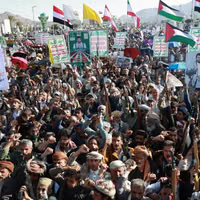
Houthi supporters rally to show support for the movement as fighting intensifies across several Yemeni fronts, in Sanaa, Yemen October 9, 2026.

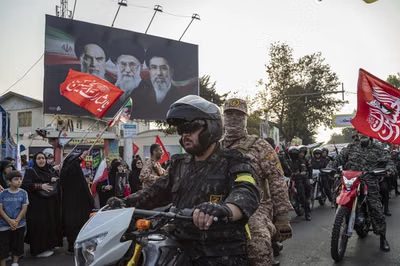
Iran spent years building influence in Yemen through Hezbollah recruiters and Revolutionary Guards officers, a former Yemeni pro-democracy activist told Iran International, and is now using the Houthis to carry the war to Saudi Arabia and its Western allies.

Baraa Shiban, an associate fellow at the Royal United Services Institute (RUSI) in London who took part in Yemen’s 2011 uprising and later negotiated with the Houthis, told Iran International’s Eye for Iran podcast that Tehran’s involvement began long before the group became a major regional force.

His account comes as Houthi missile and drone attacks on Saudi airports and energy infrastructure have opened another front in the wider war, threatening aviation and trade routes already disrupted by the confrontation over the Strait of Hormuz.

“I think we’re entering phase three,” Shiban said, describing what he sees as Tehran’s strategy of extending the economic cost of the war to US allies.

Iran, he argued, had kept the Houthis in reserve as a strategic asset until it needed them. Their attacks now serve Tehran’s interests while advancing the group’s own ambitions inside Yemen.

From democracy conferences to an IRGC handler

Young Yemenis who took part in the 2011 Arab Spring were invited to conferences in Lebanon that were presented as discussions of democratic reform, Shiban said. Those who went found that Hezbollah operatives were behind them.

  • Houthi airport strikes carry echoes of Iran’s aviation threats, experts say

    Houthi airport strikes carry echoes of Iran’s aviation threats, experts say

  • Iran-US diplomacy stalls as Houthi attacks on Saudi Arabia intensify

    Iran-US diplomacy stalls as Houthi attacks on Saudi Arabia intensify

Activists receptive to Iran’s revolutionary ideology were introduced to a Revolutionary Guards officer working in Lebanon under the alias Abu Hadi, he said, and some went on to Tehran.

“We were calling it the Arab Spring. The Iranians called it the Islamic Awakening,” he said. Tehran, he said, wanted to present Yemen’s uprising as an extension of Iran’s 1979 revolution.

Shiban identified the officer as Hassan Irlou, who in 2020 became Iran’s ambassador to the Houthi authorities in Sanaa, a post the United States said was held by a Quds Force official. Irlou died in December 2021.

  • Iran Says Its Envoy, Evacuated From Yemen, Died Of 'COVID-19'

    Iran Says Its Envoy, Evacuated From Yemen, Died Of 'COVID-19'

Hezbollah ran much of the operation at first, Shiban said, before Revolutionary Guards personnel took a more prominent role.

The recruitment reached beyond political activists to women invited to conferences in Iran, some of whom came back converted to the Islamic Republic’s ideology. Shiban said he was shocked by one woman he knew as very liberal, who had protested alongside him and returned from Iran repeating Tehran’s case for crushing the Syrian revolution.

“She has absorbed that propaganda of what the Iranians were saying about the Syrian revolution and why they need to kill all of those protesters until the last one, given this woman herself was protesting with us,” he said.

People drawn into these networks went on to help set up the Houthis’ political bureau in Sanaa, Shiban said. Iran International could not independently verify the full extent of the recruitment he described.

Talks rejected

The account has new weight after Saudi Arabia disclosed on Thursday that the Houthis had rejected an invitation to negotiations in Oman in July.

Riyadh had sought talks to settle outstanding differences before the fighting escalated, Saudi Deputy Foreign Minister Rayed Krimly said.

The Saudi-led coalition said the Houthis had attacked King Khalid International Airport in Riyadh 20 times in October. At least 19 people have been killed in the recent attacks across the kingdom, according to Saudi officials.

Yemen analyst Fatima Alasrar said on X that the Houthis’ refusal reflected Tehran’s timetable rather than an effort to resolve their long-standing demands over airport access, and warned that Iran could keep leverage through the Bab el-Mandeb strait even if it reached a deal with Washington over Hormuz.

The Houthis also have their own aims, among them consolidating control over Yemen and forcing Saudi Arabia to end its support for rival Yemeni forces.

A second strategic chokepoint

The war has put Bab el-Mandeb, the narrow passage between the Red Sea and the Gulf of Aden, at the center of the regional confrontation.

Iran saw the leverage that disrupting Hormuz gave it and wanted the same at a second shipping route, Shiban said. “It saw how valuable and important the Strait of Hormuz was and it wanted to add another choke point.”

The consequences are visible inside Yemen. On Thursday, Houthi missiles struck the presidential palace compound in Aden, killing five people, according to Yemeni authorities. Houthi advances around Taiz have intensified fighting and displacement.

The escalation could prove costly for Tehran, Shiban said, having already antagonized Saudi Arabia and pushed Yemen’s internationally recognized government toward wider war. But Iran’s leaders appear willing to take that risk, he said, on the calculation that Western governments will hesitate to act decisively.

“I think right now they’re counting on the United States is going to be hesitant,” he said.

Even a long confrontation could suit Tehran, he said, if it raises the economic pressure on the Persian Gulf states and strains their ties with Washington.

You can watch Eye for Iran on YouTube or listen on any podcast platform.

Iran hangs Iraqi man on Saudi spying charge he denied

Oct 16, 2026, 17:37 GMT+1
100%

Iran has executed a 28-year-old Iraqi man convicted of spying for Saudi Arabia, a charge he denied, according to the Oslo-based group Iran Human Rights.

Iran has executed a 28-year-old Iraqi man convicted of spying for Saudi Arabia, a charge he denied, according to the Oslo-based group Iran Human Rights.

Ayoub Mohammad Nabil, from Haditha in western Iraq, was hanged on Sunday morning at Lakan Prison in Rasht, the capital of Gilan province on the Caspian coast, the group said. Iranian officials and domestic media had not reported his sentence or his execution by the time it was announced.

Nabil had entered Iran legally on his passport and was working as a caretaker at a private villa when Intelligence Ministry agents arrested him in the nearby town of Fouman on August 26, 2025. He had no prior security record, Iran Human Rights said.

A source told the group he was held for about five months at the Intelligence Ministry’s detention center in Rasht, where he was subjected to severe psychological torture. He denied any link to Saudi Arabia or groups tied to it, and said he had been accused because he was a practicing Sunni Muslim, wore a beard and taught the Quran to local children in his guardhouse.

Despite no evidence of any political activity, the source said, Branch One of Rasht’s Revolutionary Court sentenced him to death for “moharebeh,” or waging war against God, through spying for Saudi-backed proxy groups.

The Kurdish rights group Hengaw, citing its own sources, said Nabil was moved to solitary confinement for execution on October 8, as fighting between Saudi Arabia and Yemen’s Houthis intensified.

He is at least the 17th person executed in Iran on espionage charges this year, and the third Iraqi, according to Iran Human Rights. Thirteen were accused of spying for Israel or the United States; the other two Iraqis were accused of spying for an unnamed Arab country, and an Afghan man for an unnamed state. Fifteen of the 17 were executed after the war began in February.

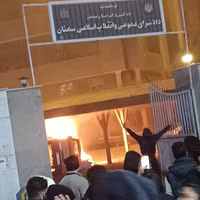
More than 70 political prisoners have been executed in Iran since the January protests, and at least 20 more face execution on political charges, Iran International has found.

UN Secretary-General Antonio Guterres said in a report on Thursday that capital cases in Iran, especially security cases, involve systematic violations of fair-trial rights, including forced confessions, closed trials lasting minutes and restricted access to independent lawyers. He called for an immediate halt to executions.

The rights group HRANA said last week that at least 2,003 people were executed in Iran in the year to October 8, up 29 percent on the previous year.

Iran’s rulers face a reckoning with their own people, former US envoy says

Oct 16, 2026, 16:46 GMT+1
•
Kambiz Tavana
100%
Former US diplomat Joey Hood during an interview at Iran International’s studio in Washington.

Decades of American sanctions strengthened Iran’s Revolutionary Guards by hollowing out the middle class, former US diplomat Joey Hood told Iran International, and once the fighting ends, Tehran will face a reckoning with its own people.

Hood, who retired earlier this year after 27 years in the Foreign Service, served as acting assistant secretary of state for Near Eastern affairs, deputy chief of mission in Iraq and Kuwait, and US ambassador to Tunisia. He spoke in a studio interview.

He called the seizure of the US embassy in Tehran in 1979 and the 444-day hostage crisis that followed “the very definition of evil,” adding that the protection of envoys is an ancient principle recognized in Islamic tradition as well.

What followed, he said, was a pattern. In 1983, a suicide bombing at the US Marine barracks in Beirut killed 241 American service members who had been deployed as peacekeepers; US courts have found Iran responsible for the attack, carried out by militants who went on to form Hezbollah. In 1996, the Khobar Towers housing complex in Saudi Arabia was bombed; US investigators blamed Saudi Hezbollah (Hezbollah Al-Hejaz), acting with Iranian support. In 2011, US prosecutors charged an Iranian-American man with plotting, on behalf of the Revolutionary Guards’ Quds Force, to assassinate the Saudi ambassador in Washington. Argentina’s courts have held Iran responsible for the 1994 bombing of a Jewish center in Buenos Aires, and plots have been traced to Iran in Europe and Asia.

None of it, Hood said, has won the Islamic Republic a single endorsement.

“You haven’t seen any other country come out and say, ‘What the Iranian regime is doing is great,’” he said. “There’s no sovereign government anywhere in the world that has made such a declaration.”

‘Handing the economy over’

Successive US administrations from Carter to Obama tried various forms of engagement, Hood said, but repeatedly underestimated Tehran’s refusal to accept normal relations. Even when presidents saw the risks, they often stopped short of decisive action. Jimmy Carter understood the danger before admitting the exiled Shah to the United States for cancer treatment in October 1979, weeks before the embassy was seized. After the Beirut bombing, Ronald Reagan withdrew the Marines and limited the American response largely to sanctions, a choice Hood said emboldened Tehran.

Analysts warned as early as the Obama years, Hood said, that sanctions were “squeezing out the normal middle-class businessmen and women and handing the economy over to a shadowy black-market economy” run by the Revolutionary Guards. That has come true, he said: the Guards grew stronger and the middle class weaker, and that middle class has periodically taken to the streets.

The Islamic Republic drew its own lesson from the fall of the Shah, whose government collapsed after months of protest, Hood said. It keeps using lethal force until protests stop, as it did in 2009, 2019 and January 2026.

Congress favors sanctions because they appear to cost no American lives, Hood said, “but Iranian lives certainly are at stake, especially for the middle class and the poor.”

Money is also fungible. Relief that came with the 2015 nuclear deal, he said, went to regional militias rather than public welfare, with particularly deadly results in Syria. Hood declined to use the name Hezbollah, which means “Party of God” in Arabic, calling the group “Iran’s militia in Lebanon.” “God does not have a political party here on Earth, and certainly not a militia,” he said.

Coalitions, not bilateral deals

A more effective approach, Hood said, would press on the nuclear program and the militia network at the same time, with allies rather than through bilateral arrangements.

Under Obama, near-unanimous support in Congress for sanctions helped bring even Russia and China along on the nuclear file. Without that kind of coalition, he said, constraints stay limited. The bilateral agreements the current administration has made with Saudi Arabia, Syria and others help partners defend themselves, but isolating Tehran needs broader coordination.

He tied the Houthis’ recent escalation against Saudi Arabia to Tehran’s difficulty moving fuel and running its shadow fleet under US pressure, and said the Yemeni group would pose no comparable threat without Iranian support. With less leverage in the Strait of Hormuz, he said, Tehran and its allies have turned to other targets, among them Saudi Arabia and potentially the Bab el-Mandeb strait or the Suez Canal.

October, ahead of the US midterm elections, is a period of heightened risk, he said, given the Islamic Republic’s record of trying to influence American votes.

‘Answered for in Iran’

The decisive change since the 12-day war in June 2025, Hood said, is that “anything that Iran or its militias do around the world will be answered for in Iran.” Earlier presidents avoided direct confrontation and preferred to fight Tehran’s proxies.

“That’s the big difference now,” he said. “Iranians themselves are having to pay for Iran’s foreign policy for the first time.”

When active military operations end, Hood said, he expects a reckoning between the Islamic Republic and its own people. Without a lasting coalition to constrain it, he said, the confrontation that began in 1979 will go on in new phases, with more attacks on American interests and partners.