• العربية
  • فارسی
Brand
  • Iran Insight
  • Politics
  • Economy
  • Analysis
  • Special Report
  • Opinion
  • Podcast
  • Live TV
  • Iran Insight
  • Politics
  • Economy
  • Analysis
  • Special Report
  • Opinion
  • Podcast
  • Live TV
  • Theme
  • Language
    • العربية
    • فارسی
  • Iran Insight
  • Politics
  • Economy
  • Analysis
  • Special Report
  • Opinion
  • Podcast
  • Live TV
All rights reserved for Volant Media UK Limited
volant media logo

Bahrain says air defences intercept Iranian aerial attacks

Jul 17, 2026, 08:40 GMT+1

Bahrain's military said its air defence systems intercepted and destroyed a number of Iranian aerial attacks on Friday, accusing Iran of continuing attacks targeting civilians in the kingdom.

The Bahrain Defence Force said all its units remained at the highest level of readiness and urged the public to avoid approaching suspicious objects that could be debris from the attacks and report them to the authorities.

It said targeting civilians and private property with missiles and drones would constitute a violation of international humanitarian law.

Most Viewed

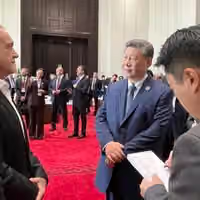
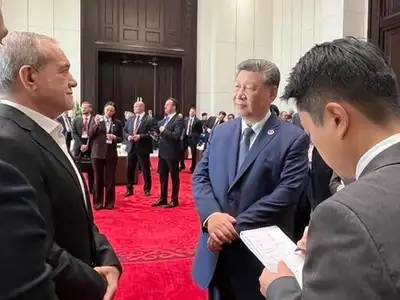
Xi snub reignites Iran’s doubts about China
1
INSIGHT

Xi snub reignites Iran’s doubts about China

2
INSIGHT

Five years ago, Iran’s planners put today’s crisis on paper

3
INSIGHT

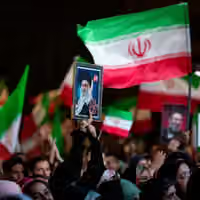
US strikes deepen Tehran debate over compromise or confrontation

4

Iran drug shortages hit 800 medicines as costs could triple

5
ANALYSIS

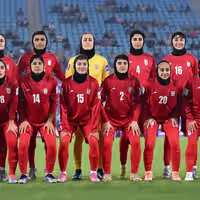
Women footballers came home under pressure. Now Iran wants them on camera

Banner
Banner

Spotlight

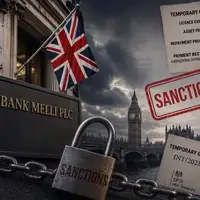
  • If Britain backs US plan, Iran's London bank shuts down on October 22
    ANALYSIS

    If Britain backs US plan, Iran's London bank shuts down on October 22

  • US strikes deepen Tehran debate over compromise or confrontation
    INSIGHT

    US strikes deepen Tehran debate over compromise or confrontation

  • Xi snub reignites Iran’s doubts about China
    INSIGHT

    Xi snub reignites Iran’s doubts about China

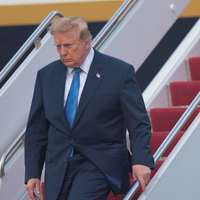
  • Trump’s call for an Iranian uprising runs into a trust problem
    ANALYSIS

    Trump’s call for an Iranian uprising runs into a trust problem

  • Five years ago, Iran’s planners put today’s crisis on paper
    INSIGHT

    Five years ago, Iran’s planners put today’s crisis on paper

  • Women footballers came home under pressure. Now Iran wants them on camera
    ANALYSIS

    Women footballers came home under pressure. Now Iran wants them on camera

Banner
•
•
•

More Stories

Bridges and military sites hit as US-Iran fighting intensifies in southern Iran

Jul 17, 2026, 08:26 GMT+1
100%
US personnel stand aboard the M/T Wen Yao during a verification boarding in the Gulf of Oman on July 16, in an image released by US Central Command.

The sixth day of fighting since the collapse of the Iran-US ceasefire ended with five bridges hit in southern Iran, US forces turning back three commercial vessels near the Strait of Hormuz, and President Donald Trump declaring that Washington was “winning big in Iran.”

The developments unfolded along three parallel fronts: Iranian attacks on US facilities across the Persian Gulf, continued US strikes inside Iran and an intensifying contest over control of the Strait of Hormuz.

Iran said it launched drone attacks on US facilities in Kuwait and Bahrain early Friday, after a sixth consecutive night of American strikes on Iranian military targets.

Iran’s army said it targeted US force deployment and logistics centers in Kuwait, Iran’s IRGC-affiliated Fars news agency reported.

In Bahrain, the army said it struck US helicopters and reconnaissance aircraft at Sakhir Air Base. Sirens sounded in the country for the second time on Friday, according to the Interior Ministry.

In Qatar, several booms were heard after the government sent a second security alert to mobile phones, Reuters reported. The Defense Ministry said Qatar was intercepting several air attacks, while the Interior Ministry said a child was injured by shrapnel from an intercepted missile.

US Central Command has not confirmed the reported attacks in Kuwait or Bahrain.

At the same time, US forces continued striking targets in southern Iran.

CENTCOM said US fighter jets, drones and warships used precision munitions to hit dozens of military targets, including coastal surveillance and air defense sites, logistics infrastructure and maritime capabilities near Bandar Abbas and on Qeshm Island.

Hamshahri, a newspaper owned by Tehran Municipality, reported that five bridges in Hormozgan province were hit in the latest wave of attacks.

The death toll from strikes on bridges in Bandar Khamir rose to seven, Iran’s IRGC-affiliated Tasnim news agency reported. Iranian media also reported damage to a power substation on Kish Island and attacks on transport infrastructure in Bandar Abbas and Bandar Khamir.

The reports could not be independently verified.

Control over Strait of Hormuz

As the two sides exchanged attacks on land, their confrontation also deepened at sea.

CENTCOM said US forces redirected three commercial vessels attempting to breach the naval blockade against Iran, disabled another that failed to comply with orders and boarded the M/T Wen Yao in the Gulf of Oman to verify compliance.

US Defense Secretary Pete Hegseth shared an image from the boarding and wrote that Iran “does not control” the Strait of Hormuz.

CENTCOM said the strait and surrounding waters remained free and open, except for vessels attempting to violate what it called the US “steel wall” blockade.

Iran’s Revolutionary Guards, however, said Tehran remained in full control of the waterway and would prevent oil and gas exports through it for as long as US attacks continued.

Trump cast the military and maritime operations as signs of US momentum.

“You will see the fruits of that labor very, very shortly,” he said after declaring that Washington was “winning big in Iran.”

The possibility of a wider regional conflict emerged more clearly on Friday, when the Revolutionary Guards said they had struck a US special operations command center in Syria’s al-Tanf region, destroying a radar system and several helicopters and killing US personnel.

US Central Command has not confirmed the report.

UK police charge man over Iran-linked foreign intelligence offence

Jul 17, 2026, 08:19 GMT+1
100%
A Metropolitan Police officer stands on duty in Westminster, London, Britain.

British police charged a 39-year-old man on Friday with assisting a foreign intelligence service in a case linked to Iran, following an investigation by Counter Terrorism Policing.

Police said Vahid Aberi, of Liverpool, was charged under Section 3 of the National Security Act 2023 with assisting a foreign intelligence service. They said the foreign state to which the investigation relates is Iran.

Aberi was arrested on Wednesday in the Birmingham area and taken to a West Midlands police station. Officers also carried out searches at addresses in Birmingham and Liverpool.

He was remanded in custody and was due to appear before Westminster Magistrates' Court on Friday.

  •  UK says support for Iran's IRGC outlawed under new state threats law

    UK says support for Iran's IRGC outlawed under new state threats law

Police say no direct threat identified

Commander Helen Flanagan, head of Counter Terrorism Policing London, said the investigation reflected what she described as a sustained increase in national security casework.

"We have seen a significant and sustained increase in the tempo of our work in national security investigations in recent years," she said in a statement.

She said police had "intervened to disrupt suspected activity linked to foreign intelligence services" but declined to comment further on the allegations because criminal proceedings had begun.

Flanagan added that police had not identified any direct threat to the public, nor any threat to a community or individual, in connection with the investigation.

The charges were authorised by the Crown Prosecution Service.

  • Romanian men get combined 20 years over Iran International journalist attack

    Romanian men get combined 20 years over Iran International journalist attack

Scrutiny of alleged Iran-linked activity

The case comes as Britain has intensified efforts to counter what it says is hostile activity linked to Iran.

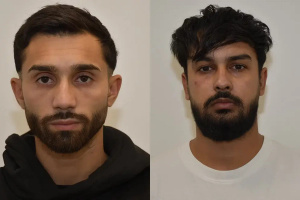
Earlier this month, a London court sentenced two Romanian nationals to a combined 20 years in prison for stabbing Iran International journalist Pouria Zeraati outside his home in Wimbledon in 2024. The judge accepted the prosecution's case that the attack was carried out on behalf of the Iranian state. Iran has previously rejected accusations that it has been involved in attacks or plots in Britain.

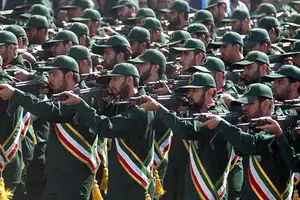
Separately, the British government announced this week that it intends to designate Iran's Revolutionary Guards under new state threats legislation. If approved by parliament, supporting or assisting the group under the new legal framework could carry a prison sentence of up to 14 years.

The government has said the designation is separate from proscription under Britain's terrorism laws and is intended to address foreign state-backed activity, including espionage, interference, sabotage and physical attacks.

British authorities have repeatedly said they have disrupted a number of alleged Iran-linked plots in recent years. Iran has previously dismissed British allegations that it has directed hostile activity in the UK.

Tehran billboard hints Trump is the 'next one' after Graham's death

Jul 17, 2026, 01:49 GMT+1
100%
A billboard in Tehran’s Valiasr Square asks, “Who is the next one?” alongside the hashtag #LindseyGraham, following the US senator’s death.

A new billboard unveiled in central Tehran after the death of US Senator Lindsey Graham appears to allude to US President Donald Trump as the next potential target, extending a campaign of public threats against perceived enemies of the Islamic Republic.

The billboard, most prominent in Tehran, is controlled by the IRGC-linked Owj Arts and Media Organization and is frequently used to project messages aligned with Iran’s hardline establishment.

Its English slogan reads, "Who is D nexT one?", with the unusual capitalization of the letters "D" and "T" appearing to reference Donald Trump.

State-run IRNA said the billboard was installed following Graham’s death, describing him as one of the most anti-Iran politicians in the United States.

Some conservative voices in Iran portrayed Graham’s death as divine punishment for what they see as his persistent pursuit of war against the country.

The billboard claims no responsibility for the senator’s death, but the wording appears to suggest that those pushing for a downfall of the Islamic Republic could have a similar fate.

Graham died on July 11 after what his office described as a brief and sudden illness. US media reported that emergency personnel had responded to a cardiac arrest call at his Capitol Hill home.

In recent months, Graham had become a prominent supporter of Iran’s opposition movement. At a Munich gathering, he called for a “free Iran” and said he chose “the Iranian people over the murderous ayatollah,” as he waved the country’s pre-Islamic Republic flag.

Exiled prince Reza Pahlavi described Graham as a “steadfast friend of the Iranian people,” saying his support for what he called Iran’s Lion and Sun Revolution had earned him the nickname “Uncle Lindsey” among some Iranians.

At the funeral of former Supreme Leader Ali Khamenei, mourners carried placards showing US President Donald Trump, Graham, conservative commentator Ben Shapiro and activist Laura Loomer with red crosshairs over their faces and warnings including: “Sooner or later, your heads will roll.”

Other placards featured Israeli-American billionaire Miriam Adelson, Foundation for Defense of Democracies chief Mark Dubowitz and investor Peter Thiel. Mourners also displayed a $100 million bounty for Trump and chanted calls for his killing.

In a similar message, another Tehran mural depicted Trump and Israeli Prime Minister Benjamin Netanyahu drowning in a red “sea of revenge,” the IRGC-affiliated Tasnim news agency reported Thursday.

“You will drown in the sea of the Iranian nation’s revenge,” the mural read in Persian and English.

Separately, Hassan Rahimpour Azghadi, a member of Iran’s Supreme Council of the Cultural Revolution, called for attacks on US leaders and for treaties to be ignored in retaliation for what he described as “ongoing assassinations and expanding sanctions.”

Since the US killing of IRGC commander Qassem Soleimani in 2020, through the 12-day Iran-Israel war in 2025 and the latest US and Israeli attacks in 2026 that killed 52 senior Iranian military, security and intelligence officials, the Islamic Republic has repeatedly vowed revenge.

Much of that rhetoric, however, has so far taken the form of billboards, murals, funeral displays and public threats.

Vance, Ghalibaf back diplomacy as US, Iran strikes continue

Jul 16, 2026, 21:35 GMT+1
•
Maryam Sinaiee
100%
High level representatives including US Vice President JD Vance and Iran's Foreign Minister Abbas Araghchi took part in Lucerne Summit in Switzerland, June 21-23, 2026

Iran's chief negotiator, Mohammad-Bagher Ghalibaf, and US Vice President JD Vance both defended diplomacy backed by military strength on Wednesday, making strikingly similar arguments as Iranian hardliners intensified demands to scrap Tehran's agreement with Washington.

Both men appeared to be making the same argument to critics within their own political camps: that diplomacy is most effective when backed by credible military force, not pursued instead of it.

The parallel messaging prompted analysts to suggest that, despite rising tensions, both sides may still view diplomacy as preferable to war.

International relations analyst Amir-Ali Abolfath wrote on X that Ghalibaf's statement, Vance's remarks and Iran's release of an Iranian-American prisoner together offered "a glimmer of hope" that both sides could return to managing tensions within the framework of an agreement "whose fate hangs by a thread."

Reform-leaning news website Rouydad24 likewise described the prisoner's release as evidence of "the opening of an important diplomatic channel amid an exchange of fire."

US President Donald Trump also welcomed the move, writing on Truth Social that "the United States appreciates this gesture of goodwill by Iran."

‘Talking is not compromise’

Ghalibaf issued a public statement on Wednesday defending what he described as the course pursued under Supreme Leader Mojtaba Khamenei's guidance, arguing that negotiations with the United States remain compatible with military preparedness and resistance.

Rather than presenting diplomacy and military readiness as opposing choices, he argued they were complementary tools for safeguarding Iran's national interests.

"War and negotiation are two methods of protecting the national interest," he said, insisting that negotiations are "part of safeguarding national interests, not synonymous with compromise."

He warned that treating either military confrontation or diplomacy as the sole solution would amount to "a strategic mistake," adding that officials have a duty to prepare "for war, diplomacy, or both," depending on the course set by the Supreme Leader.

"We must stand firm on the achievements secured through the MoU until the nation's rights are fully realized," he wrote.

Hours later, Vance struck a remarkably similar tone in an interview with podcaster Joe Rogan, rejecting the idea of overthrowing Iran's government through US military force.

He argued that diplomacy, backed by military pressure, remained the preferred way to manage the crisis, and criticized "warmongers" pushing for conflict.

A well-funded covert campaign, Vance claimed, was seeking to derail negotiations and any agreement with Tehran.

Hardliners push back

The renewed defense of diplomacy triggered an immediate backlash from Iran's hardline camp, where many have argued since the recent military confrontation that the Tehran-Washington understanding should be formally declared dead.

Kamran Ghazanfari, a member of parliament, accused President Masoud Pezeshkian and Ghalibaf of lacking the courage to acknowledge that the agreement had collapsed.

"Whether they call it war or not, the third war has effectively begun," he said, arguing that the negotiating team should publicly admit that talks had reached a dead end.

Hardline journalist Davood Modarresian likewise criticized Ghalibaf's statement, saying it contained "no sign of change or apology" and faulting him for continuing to advocate negotiations despite what he described as Washington's abandonment of the agreement.

Hardline political activist Masoud Barati challenged Ghalibaf's description of negotiations as a form of struggle.

"Calling negotiations a form of struggle gives primacy to negotiations," Barati wrote. "If negotiations have failed to secure Iran's achievements, why insist on continuing this approach?"

Conservative rivalry deepens

The latest dispute reflects a long-running rivalry between Ghalibaf and former nuclear negotiator Saeed Jalili, both prominent figures within Iran's conservative establishment.

In recent months, lawmakers aligned with Jalili and members of the ultraconservative Paydari Front have intensified criticism of Ghalibaf, arguing that negotiations with Washington should be abandoned altogether.

Their influence, however, appears to have weakened after losing two key leadership positions on parliament's National Security and Foreign Policy Committee.

Adding to signs of growing pressure on the hardline faction, lawmaker Majid Nasrpour told Khabar Online in comments published Thursday that "some hardline members of parliament have been summoned by the relevant authorities and seriously warned over their remarks."

Rising daycare fees push Iranian families to rely on grandparents

Jul 16, 2026, 14:29 GMT+1
100%
File photo shows caregivers supervise children at a daycare center in Iran.

Rising daycare fees and mounting economic pressure are prompting more Iranian families to forgo kindergarten enrollment and rely on grandparents for childcare, raising concerns among sociologists about the long-term impact on children's social development.

The Hamshahri newspaper reported on Thursday that falling birth rates, coupled with soaring daycare costs, have reduced demand for kindergartens and preschool centers across the country.

Monthly daycare fees vary widely across Tehran, according to the report. In middle-income neighborhoods, tuition ranges from 50 million ($25) to 80 million rials (over $40), while families in wealthier districts pay between 250 million (around $130) and 300 million rials ($160).

The average monthly income in Iran is estimated at $150–$200, depending on fluctuations in the open-market exchange rate. By comparison, the minimum monthly cost of basic living expenses, including food and housing, is estimated at $385–$400, leaving many households unable to meet essential needs.

  • Only three Tehran schools meet basic safety standards, official warns

    Only three Tehran schools meet basic safety standards, official warns

Daycare operators in affluent areas attributed the higher fees to rising rents and staff wages, saying the increased costs have discouraged many parents from enrolling their children.

More than 60% of kindergarten operating costs are spent on personnel under Iran's labor law, Hamidreza Sheikholeslam, head of the National Organization for Early Childhood Education, said in June.

Sheikholeslam said staffing costs, the number of teachers and children, operating hours, rent, facilities and equipment, and other operating expenses all influence tuition fees.

100%
File photo shows an empty daycare playroom in Iran.

Many families, the report said, have responded to rising childcare costs and broader financial pressures by turning to lower-cost alternatives, most commonly asking grandparents to care for young children.

Experts warn of social consequences

Sociologists quoted by Hamshahri said removing daycare from household spending is not only an economic decision but could become a broader social challenge.

They argued that young children benefit from interacting with their peers in educational settings and warned that replacing daycare with care by relatives could undermine their social development.

  • Child labor rises as poverty deepens in Iran

    Child labor rises as poverty deepens in Iran

The concerns follow earlier reports highlighting the growing burden on extended families. In May, the Shargh newspaper reported that prolonged preschool closures following the recent war left many working parents scrambling for childcare, with some relying on grandparents and relatives.

Another report published by Haft-e Sobh daily in February warned that rising daycare costs had effectively turned many grandparents into full-time caregivers, raising concerns about the physical and psychological burden on older adults as well as differences in parenting approaches across generations.