Jordan condemns Iranian attack on UAE tankers in Strait of Hormuz
Jordan condemned an Iranian attack on two UAE oil tankers in the Strait of Hormuz on Tuesday, calling it a dangerous escalation and a violation of international law.
The foreign ministry expressed full solidarity with the United Arab Emirates and backed measures to protect its sovereignty and security.
Jordan also offered condolences to India after one Indian crew member was killed and wished those injured a speedy recovery.
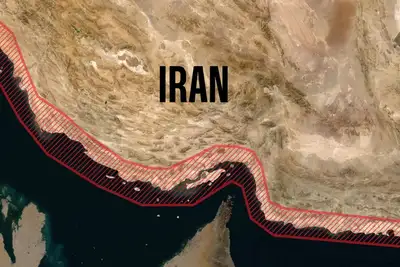
A supertanker carrying about 2 million barrels of Iranian crude oil was attempting to reach the US-declared blockade line before a 20:00 UTC deadline on Tuesday, tanker monitoring service TankerTrackers.com said.
The firm said very large crude carriers typically travel at around 10 knots, suggesting the vessel was trying to make the crossing before the cutoff.
The Iran war has yet to trigger an exodus of entrepreneurs from the Persian Gulf, but falling investment, rising costs and slower funding are beginning to test the region’s heavily financed startup strategy, Bloomberg reported on Tuesday.
Abu Dhabi, Dubai, Riyadh and Doha have spent years trying to build globally competitive technology sectors through sovereign wealth, tax incentives, accelerator programs and direct investment.
Despite attacks in the region and renewed fighting between the United States and Iran, founders have largely remained in the region and government-backed programs continue to attract applicants.
None of the 27 companies selected for the February intake of Hub71, Abu Dhabi’s startup program, withdrew after the conflict began, according to Bloomberg. The program’s latest cohort also received a similar number of applications and was the first made up entirely of companies from outside the United Arab Emirates.
The financial effects, however, may not yet be fully visible. Middle East and North African startups raised $1.35 billion in the first half of 2026, down more than 20% from a year earlier, according to data platform Magnitt. The number of deals fell even more sharply to 214, while second-quarter activity dropped to its lowest level in at least two years.
“I don’t believe that the impact of the war has come into the numbers yet, that will come in Q3 and Q4,” Magnitt chief executive Philip Bahoshy told Bloomberg TV, adding that investors were already shifting their attention from early-stage companies toward more established businesses.
Some startups are also facing higher fuel, shipping and insurance costs, worsening cash flow and longer delays in receiving payments. Bloomberg cited one investor as saying that a sovereign investor withdrew a $1 million commitment from a funding round when the war began.
Regional governments are continuing to spend heavily. Hub71 offers successful applicants $140,000 in investment and incentives, while Qatar expanded its Fund of Funds program from $1 billion to $3 billion before the conflict. Startup Qatar has awarded more than $51 million to 45 companies, including 11 since the fighting began.
The Persian Gulf’s startup markets remain smaller than established centers in the United States, Europe and Asia, with limited late-stage financing, technology listings and specialist talent. But founders and investors told Bloomberg that access to capital, lower costs and government support continued to outweigh the risks for many companies.
Iran's parliament removed two outspoken critics of negotiations with the United States from the leadership of its National Security and Foreign Policy Committee on Tuesday, a day after lawmakers returned to the chamber for the first time in more than four months.
Mahmoud Nabavian lost his position as the committee's first deputy chairman, while Ebrahim Rezaei was replaced as the committee's spokesperson, according to the committee's annual leadership vote.
Ebrahim Azizi was elected committee chairman, Abbas Moghtadaei and Amir Hayat-Moghaddam were chosen as first and second deputy chairmen, Hassan Ghashghavi was elected spokesperson, and Behnam Saeedi and Yaghoub Rezazadeh became the committee's secretaries.
The United Arab Emirates condemned renewed Iranian missile and drone attacks on Bahrain and Jordan on Tuesday, calling them a flagrant violation of both countries’ sovereignty.
The UAE foreign ministry said the attacks threatened regional security and stability and reaffirmed Abu Dhabi’s full solidarity with Bahrain and Jordan.
It also backed measures taken by both countries to protect their security and stability.
Iranian lawmakers attend a parliament session in Tehran on July 13, the first plenary meeting in more than four months, chaired by Deputy Speaker Hamidreza Hajibabaei.
Iran's parliament voted two outspoken critics of negotiations with the United States out of senior posts on its National Security and Foreign Policy Committee on Tuesday, a day after lawmakers returned to the chamber for the first time in more than four months.
Mahmoud Nabavian lost his position as the committee's first deputy chairman, while Ebrahim Rezaei was replaced as the committee's spokesperson, according to the committee's annual leadership vote.
Ebrahim Azizi was elected committee chairman, Abbas Moghtadaei and Amir Hayat-Moghaddam were chosen as first and second deputy chairmen, Hassan Ghashghavi was elected spokesperson, and Behnam Saeedi and Yaghoub Rezazadeh became the committee's secretaries.
Critics of US negotiations
Nabavian and Rezaei had emerged as two of parliament's most vocal opponents of negotiations with Washington during and after the conflict with the United States and Israel.
Nabavian repeatedly argued that any agreement with Washington would amount to an "absolute loss" for Iran and said the country's experience of negotiations had only brought "broken promises, deception and benefits for the enemy."
He also criticized Parliament Speaker Mohammad Bagher Ghalibaf and Foreign Minister Abbas Araghchi.
Earlier this month, Nabavian also vowed to oppose what he described as a "coup," accusing unnamed political rivals of trying to sideline hardline forces.
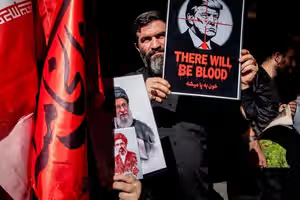
Rezaei also said Iran was not intimidated by what he described as threats from US President Donald Trump and that the country was "ready to fight any evil."
Nabavian also came under scrutiny after reading excerpts on state television from what he described as secret correspondence from Supreme Leader Mojtaba Khamenei on negotiations with the United States. The broadcast was cut off as he continued speaking.
Nabavian said Khamenei had repeatedly objected to the course of the talks and set conditions that were not reflected in the Iran-US memorandum of understanding, including securing compensation from the United States, preserving Iran's uranium enrichment program and maintaining exclusive Iranian control over the Strait of Hormuz. He also said Khamenei wanted Iran to begin charging some ships to transit the waterway.
State broadcaster IRIB later said Nabavian's references to classified correspondence could warrant legal action. Ghalibaf adviser Amir Ebrahim Rasouli subsequently called on authorities to identify the source of what he described as confidential state information provided to Nabavian.
The committee reshuffle came a day after parliament returned to session, with Deputy Speaker Hamidreza Hajibabaei presiding instead of Ghalibaf.
More than 250 lawmakers attended the session, during which legislators chanted slogans calling for revenge for the killing of former supreme leader Ali Khamenei and other senior officials killed in US and Israeli strikes.
Hardline lawmakers affiliated with the Paydari Front had spent months criticizing Ghalibaf for parliament's inactivity, accusing him of preventing lawmakers from meeting in order to avoid parliamentary action against negotiations with the United States. They also repeatedly called for Araghchi's resignation over the talks.
Ghalibaf's office said at the time that the suspension of parliamentary sessions had followed instructions from security authorities.