US strikes, Hormuz clashes push Iran deal to brink

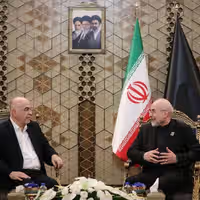
The fragile memorandum between Tehran and Washington is facing its biggest test yet after two days of US strikes on targets along Iran’s southern coast and Iranian attacks on commercial shipping near the Strait of Hormuz raised fears of a return to full-scale war.
Iranian officials have threatened severe retaliation, while analysts warn that disputes over sanctions, maritime routes and the future of the agreement could push both sides into another major confrontation.
Mohsen Jalilvand, a professor of international relations, said the continued US military presence in the region and Tehran's insistence on controlling shipping through the Strait of Hormuz have significantly increased the risk of war.
"When both sides continue to stand by their positions, and there are no signs of retreat, it is only natural that the likelihood of a broader confrontation increases," he told the news website Fararu.
Read the full article here.





The fragile memorandum between Tehran and Washington is facing its biggest test yet after two days of US strikes on targets along Iran’s southern coast and Iranian attacks on commercial shipping near the Strait of Hormuz raised fears of a return to full-scale war.
Iranian officials have threatened severe retaliation, while analysts warn that disputes over sanctions, maritime routes and the future of the agreement could push both sides into another major confrontation.
Mohsen Jalilvand, a professor of international relations, said the continued US military presence in the region and Tehran's insistence on controlling shipping through the Strait of Hormuz have significantly increased the risk of war.
"When both sides continue to stand by their positions, and there are no signs of retreat, it is only natural that the likelihood of a broader confrontation increases," he told the news website Fararu.
"Overall, I see the outlook moving less toward an agreement and more toward escalating tensions and a greater possibility of a major conflict."
‘Abandon MoU’
Senior officials and hardline media reacted angrily after the latest US attacks, which the Iranian Health Ministry said killed 14 people and injured 78 others. Several senior figures demanded tougher retaliation or called for formally abandoning the memorandum with Washington.
Parliament Speaker and Iran's chief negotiator Mohammad-Bagher Ghalibaf wrote on X that "America still has not learned that bullying and breaking its commitments no longer come without a cost."
"Let me be clear: if you strike, you will be struck. Stop struggling in vain—you will only sink deeper. The Strait of Hormuz will be reopened only under Iranian arrangements, not American threats."
Alaeddin Boroujerdi, a member of parliament's National Security and Foreign Policy Committee, told state broadcaster IRIB that Iran's response would be "more severe" and warned that continued confrontation would ultimately harm the United States.
The hardline Kayhan newspaper argued that repeated US attacks, the revocation of Iran's oil export waiver and what it described as violations of the agreed shipping arrangements in Hormuz had rendered the agreement meaningless.
"When Iran's armed forces tighten their grip on the world's energy artery in the Strait of Hormuz and play the Bab al-Mandab card, the West's economic lifeline will be cut, and Trump will beg for a ceasefire more desperately than ever," the newspaper wrote.
Kayhan urged the Foreign Ministry to formally declare the memorandum void so the armed forces could "settle Trump's account once and for all."
Tensions with Oman
The latest escalation followed Iranian attacks on vessels using a route south of the Strait of Hormuz, on the Omani side, while under US naval escort rather than the shipping corridor designated by Tehran.
Deputy Foreign Minister Kazem Gharibabadi accused Washington of pressuring Oman to open an alternative southern shipping lane despite what he said was an agreement that Iran would regulate maritime traffic during the memorandum's 60-day implementation period.
"From our perspective, America's insistence on creating a parallel route disrupted implementation of the memorandum," Gharibabadi said. “The Revolutionary Guards' response was entirely lawful and legitimate."
Iran's Khatam al-Anbiya Central Headquarters warned that any party providing military support for US attacks on Iran would constitute a legitimate target.
“The only safe shipping route through the Strait of Hormuz is the one designated by the Islamic Republic," the statement said.
Oman, however, told the International Maritime Organization on Thursday that it opposed the imposition of transit charges on ships using the strait and reiterated that "the right of transit passage through straits used for international navigation is guaranteed under international law."
Gharibabadi said Iranian officials had informed Omani and Qatari authorities—and indirectly Washington—that the southern route was "completely illegal," violated Clause 5 of the memorandum and "must be closed."
Public exhaustion
Although Tehran and most major Iranian cities have not been targeted since the ceasefire, apart from areas along the southern coastline, the renewed fighting has had an immediate economic impact.
The Iranian rial weakened sharply on Thursday, with the US dollar rising from about 1.6 million rials to more than 1.8 million rials. According to the Central Bank of Iran's latest figures, point-to-point inflation has reached nearly 83 percent.
Despite growing fears of renewed conflict, many Iranians appear more subdued than during previous crises after experiencing two wars within a year. Online discussions suggest widespread exhaustion and emotional numbness rather than panic.
"Is it just my algorithm, or does nobody actually care that the war has started again?" one X user wrote.
Another user, Sina, wrote: "Do we really have to hear fighter jets and explosions over Tehran before we believe the war has resumed?"
A third user commented: "Iranian cities were bombed last night. That means we're officially at war. But our minds are so exhausted, and we've suffered so much, that we're collectively choosing denial."
A reader commenting on Khabar Online wrote: "I just came to say we're exhausted. By God, we're exhausted. How much more tension and pressure can we take? Are you really going to bring another war down on our heads?”
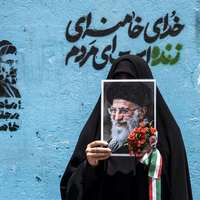
The Islamic Republic sought to turn Ali Khamenei’s funeral ceremonies in Iraq into a regional show of loyalty, using processions in Najaf and Karbala to suggest that his authority reached beyond Iran even as Tehran’s allied network faces growing pressure.
After funeral processions in Tehran and Qom, the coffins of Khamenei and several members of his family, who were killed in the February 28 US-Israeli attack, were taken on Tuesday to Najaf, home to the shrine of Imam Ali, one of the holiest sites in Shiite Islam.
They were transferred on Wednesday to Karbala, home to the shrine of Imam Hussein. Both cities carry deep religious symbolism for Shiites, especially in narratives of martyrdom, sacrifice and political defiance.
Political analyst Iman Aghayari told Iran International that the Islamic Republic was using the ceremonies to present Khamenei’s influence as extending beyond Iran’s borders.
He said Tehran also wanted to signal to Western governments that its influence in countries hosting allied armed groups “is not confined to those proxy forces, but is rooted among the people of those countries as well.”
A funeral staged across Shiite centers
A number of current and former Iraqi officials, including Prime Minister Ali al-Zaidi, along with Shiite and Sunni political, military and religious figures, welcomed the funeral delegation at Najaf airport.
The delegation was led by Khamenei’s eldest son, Mostafa Khamenei, and accompanied by President Masoud Pezeshkian, who cut short his visit and returned to Tehran early Wednesday following renewed US military strikes.
The Iraqi government declared Wednesday a public holiday to facilitate attendance and organized transportation for mourners traveling to Najaf and Karbala.
Iranian state media, citing Iraqi officials and the Popular Mobilization Forces, said more than two million people attended the ceremony in Najaf, while participation in Karbala was reported to be more than double that number.
The figures could not be independently verified.
A claimed display of strength
Supporters of the Islamic Republic portrayed the ceremonies as proof of regional solidarity behind the so-called Axis of Resistance, Tehran’s network of allied governments, militias and political movements across the Middle East.
Esmail Qaani, commander of the IRGC’s Quds Force, said the funeral procession in Iraq would “make the red line of vengeance more prominent” and “further strengthen the united resolve of the Iraqi and Iranian peoples against American conspiracies.”
Defa Press, a news agency affiliated with Iran’s armed forces, described the ceremonies as “a transnational display of the Axis of Resistance’s power and confidence,” saying they showed political unity between Iran and Iraq.
Writing for the IRGC-affiliated Fars News Agency, political commentator Aghil Emami argued that the funeral proved the two nations’ loyalty to “shared ideals and the transnational leadership of the Islamic Revolution.”
Religious symbolism and political messaging
Holding funeral ceremonies in Iraq – home to one of the world’s largest Shiite populations after Iran – carried both religious and political value for the Islamic Republic.
Iranian state media and some Iraqi Shiite politicians and outlets framed the processions through the language of Imam Hussein’s martyrdom, presenting Shiites as a unified political community confronting what they called “American arrogance” across the region.
For Tehran, the symbolism was especially important after Khamenei’s death and amid uncertainty over the future of its regional network.
The ceremonies allowed Iranian officials and supporters to link Khamenei’s legacy to the shrines of Najaf and Karbala, while also trying to reinforce the religious legitimacy of the Islamic Republic and of his successor.
The hardline X account Rah-e Deylami argued that Iraq, once Iran’s wartime enemy in the 1980s, had become “one of the pillars of the Axis of Resistance thanks to the blood of the martyred leader” and his policies.
It also pointed to mourners carrying photographs of Mojtaba Khamenei, saying the funeral had become “a ceremony of allegiance to his worthy successor” and that “Khamenei’s Iraqi followers have come to declare that they will continue this path.”
Such claims are difficult to measure against actual public sentiment in Iraq, where attitudes toward Iran and Iran-backed groups have long been mixed and politically contested.
Iran’s attacks on vessels near the Strait of Hormuz and subsequent strikes on US bases in the region have exposed a widening battle inside Tehran between those trying to preserve diplomacy with Washington and those pushing for confrontation.
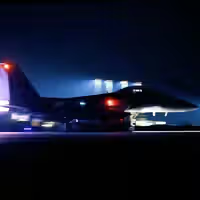
The escalation began Monday night with attacks on commercial navigation near Hormuz, continued Tuesday, and was followed Wednesday morning by strikes on US positions after CENTCOM forces hit more than 80 targets in southern Iran.
Tehran claimed it had struck 85 targets, all of them US interests.
Inside Iran, hardline media quickly framed the confrontation as proof that the June MoU with Washington had failed—or that it had only served to expose US intentions.
The Tehran municipal daily Hamshahri argued that the MoU was not a concession but proof Washington had recognized Iran’s missile capabilities and regional leverage.
It said the latest maritime confrontation showed any attempt by the US or its allies to impose terms during the 60-day implementation period would risk disruption of global energy routes.
Other hardline outlets, including Kayhan, went further.
Writing with vindicated fury, editor Hossein Shariatmadari declared that the “60-day diplomatic mirage” had vanished exactly as he predicted, calling the US strikes proof of “Washington’s innate treachery and structural inability to honor any MoU.”
More than a military confrontation, the attacks appear to reflect a growing divide among Iranian decision-makers: those seeking to advance an agreement with Washington and those who argue that only direct revenge against US President Donald Trump and Israeli Prime Minister Benjamin Netanyahu would be sufficient.
Over the past month, radical hardliners in Tehran—who portrayed their own survival and the system’s survival as victory over the United States—have sharply criticized President Massoud Pezeshkian for signing the MoU with Washington.
They argued that before the agreement, Trump was under pressure from politicians and markets, and that Iran could have extracted better terms.
While the anger surrounding Khamenei’s funeral cannot be dismissed, the divide between Tehran’s hardliners and pragmatists appears to be a major factor behind the renewed confrontation that followed Trump’s conciliatory comments about allowing a peaceful funeral for the man he had ordered killed.
Whatever the precise trigger, the escalation has strengthened the hand of hardliners.
Social-media videos from the funeral in Tehran showed radicals throwing stones at Foreign Minister Abbas Araghchi and chanting slogans against Pezeshkian.
On Wednesday, ultraconservative MP Hamid Rasai called for a missile strike on Trump’s residence during his visit to Ankara for a NATO meeting, while fellow hardliner Mahmoud Nabavian said Muslims worldwide were expected to attack Trump the way Salman Rushdie was attacked.
Trump said he had always known he was a target for “nasty Iranians,” adding that if they had nuclear weapons, they would certainly use them.
On Wednesday, Hamshahri went further, arguing that strikes on US assets in Kuwait and Bahrain demonstrated that the cost of confrontation would not remain limited to Iranian territory.
The paper said Washington’s move to revoke Iran’s oil-export waivers amounted to total economic warfare and justified an equivalent response: closing the Strait of Hormuz.
“If Iran cannot openly sell its crude, no state in the region will be permitted to export energy,” it warned.
Kayhan urged the Pezeshkian administration to abandon the June framework, restrict maritime access and shift to what it called an unrestricted defensive doctrine under the guidance of the new Supreme Leader, Mojtaba Khamenei.
Meanwhile, figures including parliamentary National Security Committee spokesman Ebrahim Rezai and Mojtaba Khamenei’s military adviser Mohsen Rezai declared Iran’s readiness for combat.
Chief of staff of the armed forces Habibollah Sayyari also warned against any ground operation.
“If the enemy deploys forces to the Iranian shores, their troops will enter a hell that has no exit,” Sayyari said—a remark widely circulated online, with critics joking that it unintentionally described conditions inside the Islamic Republic itself.
The weeklong funeral ceremonies for Iran’s slain Supreme Leader Ali Khamenei have been mired in chaotic planning, last-minute changes and political controversy.
Even state-aligned media hinted at organizational problems during one of the Islamic Republic’s most significant public ceremonies in decades, while social media reflected sharp divisions over the scale and meaning of the events.
The problems began almost immediately. Although state media had repeatedly announced that ceremonies would begin on Saturday, July 4, organizers abruptly moved the start forward by one day after realizing that foreign dignitaries had already arrived in Tehran on July 3 because of confusion over invitations.
A major disruption involved the movement of the coffins.
IRGC commander Hassan Hassanzadeh, who oversaw parts of the ceremony, initially announced that designated trucks would carry them from the east toward the west of Tehran, where they would be airlifted to Qom and later transferred to Iraq.
Hours after the scheduled start, state television reported that the plan had been reversed and the coffins would instead move from west to east.
Hassanzadeh later apologized to people who had gathered in eastern Tehran, according to IRGC-linked Fars News, explaining that the change was necessary because the “very large and early presence of people” and the closure of roads made the original route impossible.
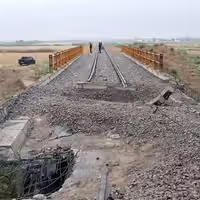
Earlier reports also cited concerns that some bridges along the route might not withstand the weight of the crowds, potentially causing a catastrophe.
Hundreds of users on X and Telegram complained that they had arrived in eastern Tehran as early as 5 a.m. on organized tours, unaware of the change.
Critics noted that such logistical issues could have been assessed before the ceremony.
Questions were also raised about official crowd estimates, with social-media users comparing images of gatherings at Tehran’s Grand Mosalla with historic mass events such as the 72,000-person Freddie Mercury concert at Wembley Stadium in 1985.
Some questioned official claims that “millions” had attended the funeral.
Online narratives on X and Telegram were sharply divided.
Pro-government accounts and some Western commentators amplified footage showing a “festival-like” atmosphere outside the Grand Mosalla, with electronic religious music and free drinks.
Others inside Iran expressed frustration over state-mandated disruptions to daily life, rising economic concerns and heavy security measures during a period of national uncertainty.
Reports also emerged of pressure to mobilize participation.
Tehran residents described receiving orders from trade and real-estate unions requiring businesses including gyms, offices and parts of the Grand Bazaar to remain closed.
Basij members reportedly warned some shopkeepers that failing to comply could result in their stores being sealed.
In provinces such as Hamedan, charitable organizations were allegedly pressured to contribute funds, while restaurants in industrial towns near Tehran were reportedly ordered to prepare thousands of free meals for mourners or face closure.
Despite these pressures, videos circulated online appearing to show government officials—including Tehran’s mayor—being served expensive meals from well-known restaurants, while many participants received simple lunches such as egg sandwiches.
Media outlets also noted that the 12-hour procession through Tehran to Mehrabad Airport—and the subsequent transfer of the body to Qom, Najaf, Karbala and finally Mashhad for burial—created immense logistical challenges.
Analysts have compared the extreme caution surrounding Khamenei’s burial to memories of Ayatollah Khomeini’s chaotic 1989 funeral, when crowds overwhelmed security, tore the burial shroud and forced officials to remove the body by helicopter.
But for many observers, the most striking aspect of the ceremonies has been the political messaging.
Aggressive slogans, posters targeting US officials and widespread displays of red flags symbolizing revenge have dominated parts of the funeral.
Critics said the tone appeared at odds with Tehran’s diplomatic calendar, with Iranian officials expected to meet US counterparts next week for talks aimed at reaching a broader agreement and easing Iran’s economic crisis.
Gholamhossein Mohseni Ejei was recently reappointed as judiciary chief for another five-year term, reinforcing the Islamic Republic’s security-focused judicial system and offering an early indication of how Supreme Leader Mojtaba Khamenei intends to manage power.
The appointment, issued under Article 157 of Iran’s constitution, leaves one of the Islamic Republic’s longest-serving judicial and intelligence figures at the head of an institution that has played a central role in prosecuting dissent, overseeing political cases and implementing the state’s domestic security policies.
Mohseni Ejei, 69, has spent more than four decades moving between the Revolutionary Courts, the Intelligence Ministry and the judiciary, making him one of the few senior officials with experience across all three pillars of Iran’s security establishment.