• العربية
  • فارسی
Brand
  • Iran Insight
  • Politics
  • Economy
  • Analysis
  • Special Report
  • Opinion
  • Podcast
  • Iran Insight
  • Politics
  • Economy
  • Analysis
  • Special Report
  • Opinion
  • Podcast
  • Theme
  • Language
    • العربية
    • فارسی
  • Iran Insight
  • Politics
  • Economy
  • Analysis
  • Special Report
  • Opinion
  • Podcast
All rights reserved for Volant Media UK Limited
volant media logo

US avoids oil targets due to dollar link and Strait of Hormuz risk, Iran MP says

Jul 3, 2026, 22:34 GMT+1

Iranian lawmaker Malek Shariati said the United States avoids targeting oil infrastructure due to the link between the US dollar and oil, and because of the strategic importance of the Strait of Hormuz, according to an interview published on Friday by Khat Energy.

Shariati, a member of parliament’s energy committee, said the US economy is based on the dollar and added that oil underpins its value, that is why Strait of Hormuz is the key leverage for Iran.

"The United States struck Iranian industrial facilities in the past, including petrochemical and steel sites, but avoided targeting oil infrastructure due to the risk of disrupting global energy markets and triggering reciprocal escalation," he said.

Most Viewed

IRGC deploys special forces to track ships on Oman-side Hormuz route
1
EXCLUSIVE

IRGC deploys special forces to track ships on Oman-side Hormuz route

2
VOICES FROM IRAN

Khamenei funeral preparations draw complaints of forced attendance

3
VOICES FROM IRAN

Funeral expenses deepen anger over Ali Khamenei's week-long burial

4
INSIGHT

Iran hardliners warn Hormuz authority slipping to US-backed Omani route

5

Iran re-arrests environmental activists from 2018 espionage case, lawyer says

Banner
Banner
Banner

Spotlight

  • Behind the funeral: Khamenei’s coffin becomes stage for Iran’s wounded power
    ANALYSIS

    Behind the funeral: Khamenei’s coffin becomes stage for Iran’s wounded power

  • Iran hardliners warn Hormuz authority slipping to US-backed Omani route
    INSIGHT

    Iran hardliners warn Hormuz authority slipping to US-backed Omani route

  • Funeral expenses deepen anger over Ali Khamenei's week-long burial
    VOICES FROM IRAN

    Funeral expenses deepen anger over Ali Khamenei's week-long burial

  • In Iran’s Zagros, villagers fight oak forest fires the state cannot contain

    In Iran’s Zagros, villagers fight oak forest fires the state cannot contain

  • Pezeshkian's aide draws fire for saying institutions review Khamenei’s views

    Pezeshkian's aide draws fire for saying institutions review Khamenei’s views

  • Mojtaba Khamenei’s key word for Iran’s future: a people given a mission
    ANALYSIS

    Mojtaba Khamenei’s key word for Iran’s future: a people given a mission

  • Iran parliament cries censorship after Ghalibaf interview cut short

    Iran parliament cries censorship after Ghalibaf interview cut short

•
•
•

More Stories

Iran’s invitation to Taliban and opponents outrages Kabul loyalists

Jul 3, 2026, 22:22 GMT+1
Iran’s invitation to Taliban and opponents outrages Kabul loyalists
100%

Taliban supporters on social media accused Iran of double standards for inviting both Taliban officials and anti-Taliban Afghan figures to Ali Khamenei’s funeral in Tehran on July 3, 2026.

Taliban Deputy Prime Minister for Economic Affairs Mullah Abdul Ghani Baradar and Foreign Minister Amir Khan Muttaqi attended the ceremony, Afghanistan International reported.

Ahmad Massoud, leader of the National Resistance Front, and Mohammad Mohaqiq, head of the Islamic Unity Party of Afghanistan, were also present.

Several Taliban supporters on X criticized Tehran over the invitation to Massoud and Mohaqiq, while others urged the Taliban government to summon Iran’s ambassador or respond by inviting to Kabul members of the Sunni insurgent group Jaish al-Adl, which Iran considers a terrorist group.

Iran hardliners warn Hormuz authority slipping to US-backed Omani route

Jul 3, 2026, 22:13 GMT+1
•
Maryam Sinaiee
Iran hardliners warn Hormuz authority slipping to US-backed Omani route
100%
An IRGC speedboat sailing in Iran's southern waters

Iranian hardliners have accused the country's negotiators of compromising Tehran’s authority over the Strait of Hormuz, claiming a recent understanding with the United States has pushed international shipping toward what they call a US-backed Omani route.

Opponents of the Iran-US understanding have launched a fierce campaign against Parliament Speaker Mohammad-Bagher Ghalibaf, described as the agreement's chief negotiator, and President Masoud Pezeshkian, accusing them of surrendering Iran's authority over the Strait of Hormuz, thereby allowing the establishment of an Oman-American shipping corridor.

The criticism intensified after a televised interview with Ghalibaf aired on Tuesday, during which he appeared to reject calls by hardliners to close the strategic waterway.

"We must not turn the Strait against itself. The Strait is valuable only if traffic through it increases day by day, not decreases," he said.

His remarks were interpreted by conservative critics as a signal that Tehran has accepted Washington’s preferred arrangements governing maritime traffic through the Strait.

Focus shifts to Omani route

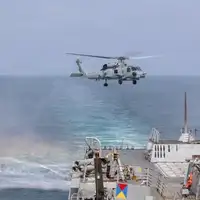
The controversy was fueled by satellite-based vessel tracking videos recently published by Kpler, which appeared to show that many non-Iranian commercial vessels have recently transited the Omani side of the Strait apparently accompanied by US naval vessels, while only a limited number of Iranian vessels were using the Iranian side. Hardliners argue that this reflects a de facto shift away from Iran's jurisdiction.

Ehsan Hosseini, editor-in-chief of the conservative economic website Khat-e Energy, claimed in a video posted online that both "the naval blockade and the Omani corridor are products of negotiations with the United States."

"At this very moment, groups of ships are passing through this corridor under US military escort. Your grave mistake is unforgivable."

In a separate social media post, Hosseini wrote that Iran's diplomats had "not only failed to collect any fees, but also created the conditions for establishing an Omani corridor through the Strait." He questioned whether Iran lacked the military capability to prevent the arrangement or whether "someone has tied the hands of the armed forces."

Military issues warning

Amid the growing debate, the Khatam al-Anbiya Central Headquarters issued a strongly worded statement on Thursday amid hardliner pressure, without explicitly referring to the alleged Omani corridor.

The military command said all commercial and oil tankers were required to navigate through routes designated by Iran and warned that any vessel departing from those routes or disregarding “Iranian navigation protocols” in the Strait would face "an immediate and decisive response by the armed forces," placing the security of non-compliant ships at risk.

Several Friday prayer leaders also addressed the issue.

Hassan Ameli, Friday prayer leader of Ardabil, claimed the United States had violated the agreement by establishing "a new waterway alongside Oman."

Mohammad-Nabi Mousavifard, the Friday prayer leader of Ahvaz, issued an even stronger warning.

"If any ship passes through this waterway without permission and without observing the laws of the Islamic Republic, it will be sunk in the depths of the Persian Gulf."

Dispute over Strait management fees

According to The Wall Street Journal, US officials proposed during talks in Doha earlier this week that Iran abandon its demand to collect transit charges from ships crossing the Strait in exchange for access to frozen Iranian assets abroad. Tehran reportedly continues to insist on charging vessels for passage.

Hardliners argue that revenue generated from shipping fees could rival Iran's oil income.

They also accuse Ghalibaf of keeping parliament inactive to allow the agreement with Washington to proceed without interference from lawmakers affiliated with the ultra-hardliner Paydari (Steadfastness) Party, who are reportedly preparing draft legislation on a new legal framework for administering the Strait.

Iranian officials have maintained that the payments would be "management fees" rather than transit tolls, which could raise legal objections under international maritime law.

In his interview, Ghalibaf said ships would be allowed to pass without charge for only 60 days under the signed understanding, although he did not specify the type or amount of the fees that would eventually be imposed.

Social media backlash

Hardliner social media users also directed their criticism at Ghalibaf and the Pezeshkian administration.

One X user, Reza Valizadeh, referred to the Kpler tracking footage and wrote: “This is the doing of Ghalibaf and Pezeshkian. Nobody is passing through the Iranian section of the Strait of Hormuz."

Another user, Mohammad-Hossein Chavoshi, claimed that "part of the Strait of Hormuz has effectively slipped out of Iran's control" because international vessels were using a route designated by Oman.

He argued that the sovereign rights over the Strait emphasized by Supreme Leader Mojtaba Khamenei had effectively been abandoned and warned that "no one knows what will happen in two months if this continues."

UK top diplomat says jail terms for Zeraati attackers send message to Iran

Jul 3, 2026, 21:40 GMT+1

British Foreign Secretary Yvette Cooper said prison sentences handed to two Romanian men over the stabbing of Iran International journalist Pouria Zeraati sent a warning to Iran and those acting on its behalf.

“For anyone to act on behalf of Iran and to plan and carry out an attack on a journalist, on British soil, is deplorable,” Cooper said in a post on X.

George Stana, 25, was sentenced to 12 years in prison and Nandito Badea, 21, to eight years at the Old Bailey on Friday over the March 2024 attack in Wimbledon, south London.

The judge agreed with prosecutors that the attack was carried out in the interests of and on behalf of the Iranian state.

Read more

100%

GCC chief backs Bahrain's UN briefing on Iranian attack

Jul 3, 2026, 21:31 GMT+1

Gulf Cooperation Council (GCC) Secretary-General Jassim Mohammed Al-Budaiwi said on Friday that Bahrain's presentation to the UN Security Council on what it described as Iranian attacks reflected the kingdom's commitment to international law and diplomacy, while reaffirming the bloc's full support for Manama.

The GCC chief also urged the international community, particularly the UN Security Council, to take a firm stance against the attacks and fulfill its responsibility to maintain international peace and security.

Some in Iran's leadership wanted Trump to claim victory, MP says

Jul 3, 2026, 21:16 GMT+1

Iranian lawmaker Meysam Zohourian said on Friday that some within Iran's leadership argued Tehran should let US President Donald Trump portray the recent war as a victory and strike a deal he could sell politically in the United States, in an interview with SNN.

Zohourian called the idea "profound ignorance and compounded foolishness," adding that such an approach would only strengthen Trump's hand and make it easier for him to take military action against Iran after the November US congressional elections.

"What worries me even more is this same profound ignorance and compounded foolishness surrounding the broader implications of the agreement. We have 14 clauses, but in my view the most important is the 15th: the precedent we have from the United States' past conduct in implementing agreements, which deserves serious attention," Zohourian said.