Iran's Supreme Leader authorized talks with US, IRGC official says


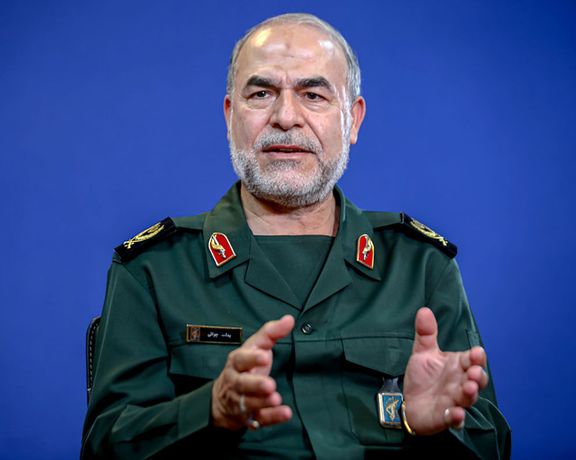
Iran's Supreme Leader Mojtaba Khamenei gave permission for negotiations with the United States, the Islamic Revolutionary Guards political deputy said on Monday.
Yadollah Javani said Iran continued fighting despite what he described as an early US request for a ceasefire, but the Supreme Leader later authorized talks with Washington “from a position of dignity" after Iran’s desired conditions had been set.


Sellers of Iranian crude to China have cut prices after Iran began shipping millions of barrels out of Hormuz following an interim peace deal with the United States, Bloomberg reported on Monday.
Spot cargoes of Iranian Light crude for July arrival were being offered at discounts of $2.50 to $5 a barrel to Brent benchmark prices, the report said, citing people directly involved in the trade.
That compared with a discount of about $1 a barrel before the deal.
Iran has increased the amount of crude it openly sends through the Strait of Hormuz to the highest level since the war began, as regional shipping activity picked up while Tehran and Washington worked toward a lasting peace deal, Bloomberg said in a separate report.
Sellers of Iranian crude to China have cut prices after Iran began shipping millions of barrels out of Hormuz following an interim peace deal with the United States, Bloomberg reported on Monday.
Spot cargoes of Iranian Light crude for July arrival were being offered at discounts of $2.50 to $5 a barrel to Brent benchmark prices, the report said, citing people directly involved in the trade.
That compared with a discount of about $1 a barrel before the deal.
Iran has increased the amount of crude it openly sends through the Strait of Hormuz to the highest level since the war began, as regional shipping activity picked up while Tehran and Washington worked toward a lasting peace deal, Bloomberg said in a separate report.
Around six million barrels of Iranian crude were aboard three US-sanctioned supertankers - Elva, Virgo and Vigor - that entered the chokepoint early Monday, it said, citing ship-tracking data.
The vessels were signaling destinations in waters off Singapore, where Iranian crude is known to be transferred to ships that often deliver the oil to refineries in China, it added.
Iran’s First Vice President Mohammad Reza Aref said on Monday that the Islamic Republic is the “big brother” of countries in the region and would continue to support its smaller neighbors despite what he described as hostile actions by some states.
“Iran is the big brother of the countries in the region, although some of them attacked us and treated us unfairly,” Aref said during the opening ceremony of the Tehran Stock Exchange.
Referring to Iran’s warnings to neighboring countries during recent hostilities, Aref said Tehran had made clear that any facilities used by the United States against Iran could become targets.
“We officially told neighboring countries that if the slightest mistake by the United States originates from locations belonging to you, those locations will be our legitimate targets for defense,” Aref said.
Iran’s vice president also said that Iran’s adversaries had failed to bring people into the streets against the Islamic Republic during the two most recent wars.
“The enemy failed to exploit social capital and bring people into the streets against the system in either the 12-day war or the third war,” Mohammadreza Aref added.
An explosion and fire at Qatar’s Ras Laffan Industrial City injured 54 people and left 18 missing on Sunday during efforts to restart operations that had been halted after Iran bombed the site during the war.
Qatar’s Interior Ministry said rescue teams were searching for the missing and described the explosion as a “technical accident,” adding that there was no threat to public safety.
QatarEnergy said the incident occurred during the start-up of operations at the Barzan local gas supply facility. Emergency response teams were deployed and the fire was brought under control, the company said.
Ras Laffan is one of Qatar’s most important energy hubs and a core site for the country’s liquefied natural gas industry.
China’s oil imports may not fully recover from the Iran war, with analysts saying the conflict accelerated a longer-term shift away from transportation fuels such as gasoline and diesel, Bloomberg reported on Monday.
Rystad Energy estimated that 200,000 to 600,000 barrels per day of transport demand lost during the conflict may not return this year, while Energy Aspects put the permanent loss at about 300,000 barrels per day, the report said.
China’s crude imports are expected to fall by 3.3 million barrels per day this quarter from a year earlier, according to FGE NexantECA, as supply disruptions coincide with a halt in stockpiling, refinery run cuts and a ban on fuel exports, according to the report.