• العربية
  • فارسی
Brand
  • Iran Insight
  • Politics
  • Economy
  • Analysis
  • Special Report
  • Opinion
  • Podcast
  • Iran Insight
  • Politics
  • Economy
  • Analysis
  • Special Report
  • Opinion
  • Podcast
  • Theme
  • Language
    • العربية
    • فارسی
  • Iran Insight
  • Politics
  • Economy
  • Analysis
  • Special Report
  • Opinion
  • Podcast
All rights reserved for Volant Media UK Limited
volant media logo

China oil demand losses may outlast Iran war - Bloomberg

Jun 22, 2026, 05:26 GMT+1

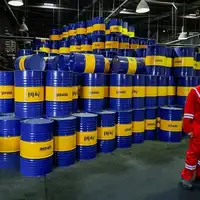
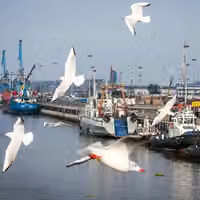
China’s oil imports may not fully recover from the Iran war, with analysts saying the conflict accelerated a longer-term shift away from transportation fuels such as gasoline and diesel, Bloomberg reported on Monday.

Rystad Energy estimated that 200,000 to 600,000 barrels per day of transport demand lost during the conflict may not return this year, while Energy Aspects put the permanent loss at about 300,000 barrels per day, the report said.

China’s crude imports are expected to fall by 3.3 million barrels per day this quarter from a year earlier, according to FGE NexantECA, as supply disruptions coincide with a halt in stockpiling, refinery run cuts and a ban on fuel exports, according to the report.

•
•
•

More Stories

Lebanon 'deconfliction cell' emerges after intense Switzerland talks

Jun 22, 2026, 04:52 GMT+1
Lebanon 'deconfliction cell' emerges after intense Switzerland talks
100%
A child stands next to the rubble of a building damaged in an Israeli strike in Qennarit, southern Lebanon, June 20, 2026.

US-Iran talks in Switzerland produced a roadmap toward a final agreement within 60 days, but only after negotiators spent much of the first day grappling with the issue that nearly derailed the process: Lebanon.

A joint statement issued by mediators Qatar and Pakistan after nearly 18 hours of talks said the parties had agreed to establish a High Level Committee to oversee negotiations, launch technical working groups and begin work toward a final deal.

But one of the most notable provisions was the creation of a deconfliction cell involving the United States, Iran and Lebanon, facilitated by the two mediators, to ensure adherence to the cessation of military operations in Lebanon under the memorandum of understanding signed last week.

The prominence of the Lebanon mechanism in both the joint statement and subsequent comments by Iranian officials underscored how central the issue had become to the talks.

Vice President JD Vance met Iranian officials on Sunday at the Swiss resort of Buergenstock in the first round of negotiations aimed at implementing the memorandum between Tehran and Washington.

The talks quickly ran into difficulties.

Iranian media reported that Tehran refused to return to four-way talks after a break, citing public threats from President Donald Trump and arguing that substantive negotiations could not proceed while fighting continued in Lebanon.

US officials disputed that account.

"The Iranians never left and are still here meeting and negotiating deep into the night," a US diplomat involved in the talks said, adding that discussions covered Lebanon, the Strait of Hormuz, nuclear issues and implementation of the memorandum.

Iran argues that Washington has failed to uphold its commitment to help secure a halt to hostilities in Lebanon and has repeatedly linked progress in negotiations to developments on the Lebanese front.

The issue resurfaced throughout the talks and appears to have become one of the central subjects of mediation by Qatar and Pakistan.

Foreign Minister Abbas Araghchi highlighted the new Lebanon mechanism after the talks concluded, calling it the "first real test" of the understandings reached in Switzerland.

According to the joint statement, chief negotiators will report regularly to the High Level Committee and lead working groups focused on nuclear issues, sanctions, and a monitoring and dispute-resolution mechanism designed to ensure implementation of the memorandum.

The committee has also approved a roadmap toward reaching a final agreement within 60 days and authorized the immediate start of further technical negotiations.

In addition, the parties agreed to establish a communication channel aimed at preventing incidents and misunderstandings and ensuring the safe passage of commercial vessels through the Strait of Hormuz.

Despite public disagreements and repeated threats from Trump that the United States could resume military action if Iran failed to restrain its regional allies, both sides emerged from the talks with new negotiating structures and a timetable for future discussions.

For now, however, the success of the diplomatic process may depend less on nuclear issues than on whether the newly created Lebanon deconfliction mechanism can prevent another flare-up from derailing negotiations altogether.

Iran's postwar rallies become flashpoint in diplomacy debate

Jun 22, 2026, 04:49 GMT+1
Iran's postwar rallies become flashpoint in diplomacy debate
100%

Iranian hardliners have sharply criticized a government-linked report that warned prolonged nightly pro-state gatherings could obstruct diplomacy, exposing a growing dispute over the role of street mobilization in postwar Iran.

The controversy highlights tensions within Iran's political establishment over whether the rallies represent a source of national unity or an increasingly disruptive force in debates over diplomacy and relations with the United States.

The backlash was triggered by a document published by the presidential Strategic Affairs Office (SAO) following a conference titled "The Street Movement for Protecting Iran: Nature, Opportunities and Ways to Enhance It."

The report examined the nightly gatherings that have spread across Iranian cities since the war and argued that their continued presence could complicate decision-making and undermine diplomatic efforts.

Read the full article here.

Hormuz ship traffic dropped on Sunday after Iran announced 'closure'

Jun 22, 2026, 04:06 GMT+1

The number of ships passing through the Strait of Hormuz fell sharply on Sunday after Iran announced it had again restricted passage through the strategic waterway, citing what it described as Israeli and US violations of the interim peace agreement.

Shipping analytics firm Kpler recorded just five vessels transiting the strait on Sunday, down from 26 vessels the previous day, according to shipping data.

The vessels included three Very Large Crude Carriers, each carrying around two million barrels of Saudi crude oil or fuel oil. One of the tankers was reportedly bound for Japan. The figures may understate actual traffic, as some vessels switch off transponders while operating in the Gulf.

The Revolutionary Guards announced new restrictions on Saturday, arguing that continued Israeli military operations in Lebanon amounted to a violation of the understandings underpinning the diplomatic process.

MoU's forgotten casualty is the Iranian people

Jun 22, 2026, 03:41 GMT+1
MoU's forgotten casualty is the Iranian people
100%

The Memorandum of Understanding between Iran and the United States may strengthen the Revolutionary Guards, weaken Persian Gulf security and deepen China's access to Iranian energy. Above all, however, it leaves Iranians to face the Islamic Republic on their own.

Paragraph 2 of the MOU effectively enshrines the abandonment of the Iranian people by committing both sides to "refrain from interfering in each other's internal affairs."

This clause stands in direct contrast to many of President Trump's previous statements regarding the Iranian people and his repeated condemnations of the regime's brutality.

In 2017, Trump described Iranians as "a proud people" forced to submit to extremist rule. In 2018, he tweeted: "Such respect for the people of Iran as t

hey try to take back their corrupt government. You will see great support from the United States at the appropriate time!"

Read the full article here.

Iran's postwar rallies become flashpoint in diplomacy debate

Jun 22, 2026, 03:27 GMT+1
•
Maryam Sinaiee
Iran's postwar rallies become flashpoint in diplomacy debate
100%
A participant records a nightly state-sponsored rally in Tehran as supporters wave Iranian and Hezbollah flags, June 9, 2026

Iranian hardliners have sharply criticized a government-linked report that warned prolonged nightly pro-state gatherings could obstruct diplomacy, exposing a growing dispute over the role of street mobilization in postwar Iran.

The controversy highlights tensions within Iran's political establishment over whether the rallies represent a source of national unity or an increasingly disruptive force in debates over diplomacy and relations with the United States.

The backlash was triggered by a document published by the presidential Strategic Affairs Office (SAO) following a conference titled "The Street Movement for Protecting Iran: Nature, Opportunities and Ways to Enhance It."

The report examined the nightly gatherings that have spread across Iranian cities since the war and argued that their continued presence could complicate decision-making and undermine diplomatic efforts.

Many of the nightly gatherings—known in Iran's political discourse simply as "the street"—began as public mourning ceremonies for Khamenei before evolving into organized political events.

It warned that the "continuation of gatherings would constitute a serious obstacle to adopting strategic and expedient decisions at sensitive moments." Left unchecked, the report said, the gatherings could "lead to obstruction in the path of diplomacy."

The report drew an immediate backlash from hardline media and politicians.

The website Jahan News criticized what it described as the report's "inappropriate and offensive" language, particularly its characterization of the gatherings as "emotional" rituals.

"This terminology is used despite the fact that the Supreme Leader repeatedly praised the nightly gatherings and even explicitly stated that people's chants in public squares influence the course of negotiations."

Initially encouraged by senior officials as demonstrations of national solidarity during wartime, the rallies attracted large crowds. Witnesses say attendance has since declined as the rhetoric has become more radical, with many gatherings now drawing between 100 and 200 participants.

Ali Khezriyan, a member of parliament's National Security and Foreign Policy Committee, criticized the Strategic Affairs Office for portraying the gatherings as an obstacle to diplomacy.

"While we speak about the role of the people, the SAO has described the people's gatherings as causing obstruction in diplomacy, whereas the Supreme Leader considers the people to be overseers," he told IRGC-linked Fars News.

"These same people brought themselves and their loved ones into the streets under enemy bombardment," he added.

The SAO report appeared to recommend gradually winding down the gatherings after the first ten days of Muharram or following the funeral of former Supreme Leader Ali Khamenei, scheduled for July 4-5.

Hardline political groups have increasingly used the events as platforms for speeches and mobilization. Speakers have addressed contentious issues including ceasefire terms and negotiations with the United States.

Some have targeted prominent political figures, particularly Parliament Speaker Mohammad Bagher Ghalibaf, who heads Iran's negotiating team, with crowds encouraged to chant slogans against him.

Fars News Agency, which is linked to the Revolutionary Guards (IRGC), published a photograph of a participant holding a banner that read: "Instead of deciding how to empty the streets, the government should think about the emptying of people's dinner tables."

One commenter wrote: "We did not gather on the orders of officials so that we would leave the streets based on their decisions."

Another wrote: "Why do you think you have the right to talk about these gatherings? People did not come into the streets with your permission for you to disperse them. Keep your mouth shut before we open ours."

Most Viewed

Hardliners accuse negotiating team of ignoring Supreme Leader's objections
1

Hardliners accuse negotiating team of ignoring Supreme Leader's objections

2

Hardliner reveals ‘top-secret’ Khamenei objections to US talks on state TV

3

Israel reveals Iranian-designed Hezbollah ‘terror tunnel’ with large drone cache

4

Iran’s legal drug market is being hollowed out as shortages feed illicit channels

5

Illegal adoptions expose Iran’s hidden baby-selling market, child advocate warns

Banner
Banner
Banner

Spotlight

  • Iran's postwar rallies become flashpoint in diplomacy debate
    INSIGHT

    Iran's postwar rallies become flashpoint in diplomacy debate

  • MoU's forgotten casualty is the Iranian people
    OPINION

    MoU's forgotten casualty is the Iranian people

  • Iran may get a lifeline, but major obstacles remain
    ANALYSIS

    Iran may get a lifeline, but major obstacles remain

  • Can Iran rebuild ties with Arab neighbours without a US deal?
    INSIGHT

    Can Iran rebuild ties with Arab neighbours without a US deal?

  • Trump says Iran is 'finished', experts say Tehran won big
    PODCAST

    Trump says Iran is 'finished', experts say Tehran won big

  • A US-Iran deal alone won't rescue Iran's oil economy
    ANALYSIS

    A US-Iran deal alone won't rescue Iran's oil economy