• العربية
  • فارسی
Brand
  • Iran Insight
  • Politics
  • Economy
  • Analysis
  • Special Report
  • Opinion
  • Podcast
  • Iran Insight
  • Politics
  • Economy
  • Analysis
  • Special Report
  • Opinion
  • Podcast
  • Theme
  • Language
    • العربية
    • فارسی
  • Iran Insight
  • Politics
  • Economy
  • Analysis
  • Special Report
  • Opinion
  • Podcast
All rights reserved for Volant Media UK Limited
volant media logo
ANALYSIS

Iran may get a lifeline, but major obstacles remain

Dalga Khatinoglu
Dalga Khatinoglu

Oil, gas and Iran economic analyst

Jun 20, 2026, 09:37 GMT+1
Children and families enjoy the return of water to the Zayandeh Roud in Isfahan, where the river's revival drew crowds to its banks after years of recurring drought and shortages, June 16, 2026

The agreement between Tehran and Washington holds out the prospect of sanctions relief and potentially unprecedented foreign investment, but many of its economic promises remain uncertain and some may prove difficult to deliver even if negotiations succeed.

The relative strengthening of the Iranian rial suggests the agreement has already had a positive psychological impact.

The US dollar, which traded above 1.8 million rials during the recent conflict, has fallen to around 1.57 million. Even so, it remains roughly 18 percent higher than six months ago.

According to estimates by Kpler, Iran was exporting about 1.5 million barrels per day of crude oil and condensates before the recent conflict. Without sanctions, exports could eventually return to around 2.5 million barrels per day.

Iran would also no longer be forced to sell much of its crude to Chinese buyers at steep discounts.

Revenue boost

According to OPEC estimates, Iran earned $46.7 billion from exports of crude oil and petroleum products last year. If sanctions are lifted and oil prices remain relatively elevated, that figure could rise substantially.

A rapid recovery, however, should not be expected.

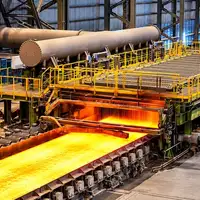
Iran's petrochemical and steel industries, which together generate roughly $17 billion in annual export revenue, have suffered extensive damage during the conflict.

As a result, Iran could temporarily become a net importer of some products it has traditionally exported.

Persian Gulf Holding, which accounts for 38 percent of Iran's petrochemical production, recently reported that output at six heavily damaged complexes fell to just 13 percent of levels recorded during the same period last year. Overall production across the holding's petrochemical subsidiaries declined by 75 percent.

According to Iran's Central Bank, oil, gas, steel and petrochemicals account for 73 percent of the country's total exports, underscoring the importance of rebuilding damaged industrial capacity.

Release of frozen assets

Iran is estimated to hold approximately $24 billion in frozen assets abroad, about half of which could be released within two months.

The Wall Street Journal reported on June 19 that, contingent upon what it described as appropriate Iranian behavior and the transfer of enriched uranium, Tehran could gain access to $6 billion in frozen funds currently held in Qatari banks for the purchase of humanitarian and agricultural goods from the United States.

The arrangement could benefit both countries. Iran imports approximately $17 billion worth of grain annually, while the United States remains the world's largest grain exporter.

Trade between the two countries has collapsed since the 1979 revolution. According to official US statistics, bilateral trade totaled $6.6 billion in 1978 but amounted to only $60 million last year, almost entirely consisting of US exports to Iran.

The reconstruction fund

One of the most ambitious — and least defined — elements of the agreement is a proposed $300 billion reconstruction fund involving foreign companies, including firms from Arab states, to support Iran's reconstruction.

Unlike historical reconstruction programs financed by governments, the proposed fund is expected to rely largely on private investment. That raises significant questions about how such a large sum could be mobilized and whether foreign companies would be willing to commit substantial capital to Iran after years of sanctions, regional tensions and political uncertainty.

Beyond political considerations, investors would also have to weigh sanctions risks, regulatory uncertainty and the long-term stability of the investment environment before committing significant capital.

Given Tehran's strained relations with many Arab states in recent years, enthusiasm among regional investors may remain limited, although countries such as Qatar and Oman could encourage some level of participation.

For now, the creation of a fund on the scale envisioned by the agreement appears unlikely in the medium term. More modest investment flows may be possible if Tehran complies with future commitments and continues improving ties with its neighbors.

The need for investment is undeniable. Iran's oil and gas sector alone is estimated to require at least $300 billion in capital to modernize infrastructure and expand production after decades of underinvestment.

Ultimately, the economic benefits outlined in the agreement depend not only on sanctions relief but also on Tehran's ability to reassure investors, rebuild damaged industries and maintain stable relations with regional and international partners.

For now, the agreement has boosted expectations. Whether it can deliver a lasting economic recovery remains an open question.

Most Viewed

Tehran's familiar battle lines return over deal with US
1
INSIGHT

Tehran's familiar battle lines return over deal with US

2

Khamenei shifts responsibility for MoU as Iran, US implement Hormuz terms

3

US says Iran deal will end enrichment, destroy uranium stocks, cap missiles

4
ANALYSIS

Why some think a weakened Iran could emerge stronger

5
PODCAST

Trump says Iran is 'finished', experts say Tehran won big

Banner
Banner
Banner

Spotlight

  • Iran may get a lifeline, but major obstacles remain
    ANALYSIS

    Iran may get a lifeline, but major obstacles remain

  • Can Iran rebuild ties with Arab neighbours without a US deal?
    INSIGHT

    Can Iran rebuild ties with Arab neighbours without a US deal?

  • Tehran divided over what Khamenei MoU message really meant
    INSIGHT

    Tehran divided over what Khamenei MoU message really meant

  • Trump says Iran is 'finished', experts say Tehran won big
    PODCAST

    Trump says Iran is 'finished', experts say Tehran won big

  • A US-Iran deal alone won't rescue Iran's oil economy
    ANALYSIS

    A US-Iran deal alone won't rescue Iran's oil economy

  • A fragile compact: ambiguities that could undermine US-Iran MoU
    ANALYSIS

    A fragile compact: ambiguities that could undermine US-Iran MoU

•
•
•

More Stories

Tehran divided over what Khamenei MoU message really meant

Jun 20, 2026, 01:09 GMT+1
•
Maryam Sinaiee
Tehran divided over what Khamenei MoU message really meant
100%
Women attend a Muharram mourning ceremony while holding a portrait of Iran's Supreme Leader Mojtaba Khamenei, Tehran, June 16, 2026

A message attributed to Iran’s Supreme Leader suggesting he had reservations about the agreement with the United States has sparked a fierce debate in Tehran, with hardliners and moderates offering sharply different interpretations of its meaning and implications.

According to the message, Mojtaba Khamenei had "a different view in principle" regarding the memorandum but approved it after receiving assurances from the Supreme National Security Council (SNSC) and its chairman, President Masoud Pezeshkian, that Iran’s rights and the interests of the "Axis of Resistance" would be safeguarded.

The statement quickly produced competing narratives. Supporters of the government presented it as a roadmap for the next phase of diplomacy, while critics argued it showed the leader’s preferred approach had been sidelined during negotiations.

Pezeshkian said the message had "clarified the responsibility of all influential components in the upcoming negotiation process."

Parliament Speaker and lead negotiator Mohammad Bagher Ghalibaf said it strengthened Tehran’s hand in holding Washington to its commitments under the memorandum.

Leader ‘ignored’

Hardline media outlets and political figures offered a starkly different reading, arguing that the message showed the leader’s views had not been fully reflected in the negotiation process.

The conservative website Raja News described Pezeshkian’s response as disrespectful, writing: "Mr. Pezeshkian, your duty is obedience and compliance, not merely consideration."

The outlet also criticized Ghalibaf’s comments, arguing that he appeared to treat the leader’s conditions as negotiating leverage rather than binding red lines.

"It seems he has forgotten that the leader’s red lines are not bargaining tools in negotiations but mandatory boundaries by which his future performance will be judged," the website wrote.

Mohsen Maghsoudi, writing for Fars News Agency, argued that opponents of negotiations had effectively been vindicated because their position had been aligned with that of the leader.

He claimed that "the compromise camp" had made decisions on behalf of both society and officials and that "the principled view of the Guardian Jurist was not followed."

Kian Abdollahi, editor-in-chief of IRGC-linked Tasnim News Agency, wrote that if officials advanced the memorandum despite knowing the leader held a different view, they bore responsibility for the consequences.

Competing narratives

Analysts offered sharply different interpretations of the political significance of the message.

Political analyst Ruhollah Rahimpour argued that Khamenei was seeking to reassure hardliners that he had not abandoned his previous positions and had accepted the agreement only because of state interests and the guarantees he received.

"But this manner of expression unintentionally reveals a reality," he wrote.

"The agreement is so costly and controversial for part of the power structure that the leader of the Islamic Republic felt compelled to clear himself of blame before defending it."

Political analyst Shahir Shahid Saless argued that the statement implicitly acknowledged direct negotiations with Washington, noting that the reference to "future face-to-face talks" amounted to recognition of direct engagement with the United States.

Historian and commentator Abdollah Shahbazi argued that the message would increase pressure on Ghalibaf, Pezeshkian and Foreign Minister Abbas Araghchi from opponents of the memorandum.

He also compared the statement to former leader Ali Khamenei’s habit of maintaining distance from controversial decisions while allowing them to proceed.

The 'poisoned chalice'

The debate quickly spread to social media, where some users compared the statement to Ayatollah Ruhollah Khomeini’s acceptance of the ceasefire that ended the Iran-Iraq War.

But while Khomeini openly accepted responsibility for the decision, famously describing it as "drinking a chalice of poison," critics argued Mojtaba Khamenei’s message emphasized his reservations before endorsing the agreement.

Moderate commentators rejected suggestions that the leader was attempting to distance himself from the memorandum.

Ahmad Zeidabadi argued that relations between the president and the leader remained "close and based on mutual trust."

He said the emphasis on the role of the president and the SNSC amounted to an expression of confidence in Pezeshkian and a reminder of the presidency’s importance as the second-highest office in the political system.

Seraj Mirdamadi similarly argued that the statement reflected trust in an elected official rather than an attempt to shift responsibility, describing it as "democratic and encouraging."

The dispute is ultimately about more than the wording of a single statement. It reflects an emerging struggle over ownership of the memorandum itself.

With talks set to enter a new phase, that battle over credit and blame may prove almost as consequential as the negotiations themselves.

A US-Iran deal alone won't rescue Iran's oil economy

Jun 19, 2026, 20:13 GMT+1
•
Mehdi Moslehi
A US-Iran deal alone won't rescue Iran's oil economy
100%
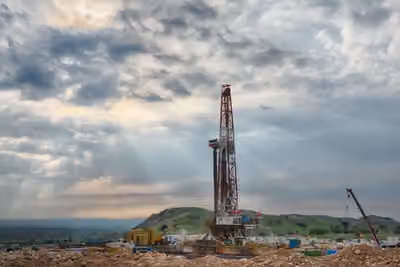
A drilling rig operated by Iran’s Exploration Operations Company is seen at an energy site in Iran.

The memorandum of understanding signed on Thursday has prompted fresh hopes of an economic revival in Iran. But even a successful US-Iran agreement may do far less for the country's oil industry than many supporters expect.

Tehran’s challenge is no longer simply one of sanctions. Iran's oil and gas sector faces a combination of structural, technical, financial and geopolitical obstacles that cannot be quickly resolved, even if the agreement ultimately leads to a broader settlement with the United States.

The reality is that Iran's energy sector is no longer constrained primarily by its ability to sell oil. Its greater challenges lie in sustaining production, attracting investment, accessing advanced technology and reconnecting to the global financial system.

Aging infrastructure, declining capacity

Much of Iran's oil and gas infrastructure has reached the latter half of its operational life. Years of underinvestment, limited access to modern technology and the departure of major international energy companies have left many fields grappling with increasingly complex technical problems.

The challenge extends far beyond the natural decline of mature fields. Veteran figures within Iran's energy industry have repeatedly warned about reservoir degradation, declining pressure, scaling, well damage and the growing difficulty of maintaining stable production.

Former oil executives and industry specialists say a significant share of the sector's efforts is now devoted to managing technical problems that require equipment and expertise not readily available inside the country.

Nowhere is this more evident than in South Pars, the giant gas field that underpins Iran's energy security. Natural pressure decline began years ago, and reversing it will require tens of billions of dollars in investment, advanced offshore infrastructure and the participation of companies that are predominantly based in the West.

Even if political barriers disappeared tomorrow, the planning, engineering and construction required for such projects would take years—time an economy struggling with inflation, budget deficits and capital shortages can ill afford.

World not waiting for Iranian Oil

Many discussions about Iran's future still view today's energy market through the lens of a decade ago.

Before sanctions tightened, a significant portion of the global market relied on Iranian crude. The world of 2026 looks very different.

The United States has become one of the world's largest energy producers and exporters. Canada, Brazil and Guyana have expanded output dramatically.

Qatar and the United States have transformed the global LNG market, while major consumers have spent years diversifying supply chains and reducing dependence on any single producer.

Many customers that found alternative suppliers during years of sanctions are unlikely to return simply because restrictions are eased. Re-entering global markets requires not only competitive pricing but confidence in Iran's long-term reliability as a supplier.

The banking problem

Even if Washington permits the return of major energy companies to Iran, another obstacle remains: the international financial system.

The experience of the 2015 nuclear deal demonstrated that political agreements do not automatically translate into investment flows. Despite official support from Western governments, many major banks remained unwilling to accept the risks associated with doing business in Iran.

Crucially, the Islamic Republic is currently on the FATF blacklist, and the process of exiting this list entails a time-consuming verification period. Iran's failure to meet FATF standards, concerns over financial transparency, money-laundering risks and the extensive role of military-linked institutions in the economy continue to discourage foreign investors.

For many global financial institutions, both credit risk and reputational risk associated with Iran remain exceptionally high.

Russia is not a substitute

In the absence of Western companies, Tehran has repeatedly looked to Russia as an alternative partner.

Yet the experience of the past two decades suggests Moscow has shown limited interest in helping Iran re-emerge as a major competitor in global energy markets.

Even Russian firms with significant technical capabilities have, at various points, slowed, suspended or withdrawn from Iranian projects.

Russia's interests do not necessarily align with a full-scale revival of Iran's energy sector.

As a major energy exporter itself, Moscow has strong incentives to preserve its own position in global markets rather than facilitate the rise of another competitor.

Regional stability

There is another actor in this equation that often receives less attention than it deserves: the Persian Gulf states.

Iran’s Arab neighbors are undertaking some of the largest investment programs in their history. Infrastructure, artificial intelligence, logistics, technology and tourism have become central pillars of their economic strategies.

From their perspective, the overriding concern is not ideology but stability.

Rising geopolitical tensions have already increased insurance costs, raised financing expenses and complicated long-term investment planning across the region.

As a result, many in the region have concluded that even a successful Tehran-Washington agreement may not, by itself, provide the level of certainty required for the massive investments envisioned under their long-term development plans.

Taken all that together, one can argue that Iran’s oil economy faces far more than a sanctions problem.

Even if the newly signed memorandum evolves into a broader deal, rebuilding Iran's lost energy capacity will require years of work, tens of billions of dollars in investment and the restoration of confidence among international investors and financial institutions.

The agreement signed this week may ease some short-term pressures and improve economic sentiment. But on its own, it is unlikely to reverse the long-term erosion confronting Iran's oil and gas sector.

UN experts warn Iran-US MoU leaves Iranian people behind

Jun 19, 2026, 19:10 GMT+1
UN experts warn Iran-US MoU leaves Iranian people behind
100%
Members of the Iranian police attend a pro-government rally in Tehran, Iran, January 12, 2026. Stringer/WANA (West Asia News Agency) via REUTERS

UN experts on Friday welcomed the signing of a 14-point memorandum of understanding between the United States and Iran but warned that any final agreement that fails to address human rights in Iran would be “fundamentally incomplete.”

In a statement, the experts said the MoU focuses mainly on military withdrawal, reopening the Strait of Hormuz, nuclear commitments, sanctions relief and a $300 billion reconstruction fund, while the Iranian people are “barely visible” in the framework.

“A deal that serves geopolitical interests while leaving the Iranian people behind is not a peace agreement worthy of the name,” they said.

The groups of experts which includes the UN Special Rapporteur for Iran's human rights situation Mai Sato, accused Iranian authorities of using the war to intensify repression, saying thousands had been detained since late February, with many reportedly tortured, forcibly disappeared, subjected to mock executions or forced to confess on camera.

They said at least 156 people had been executed since the start of the war, including at least 42 on espionage and national security-related charges, many after proceedings in which confessions were reportedly obtained under torture or defendants were denied access to lawyers.

They also cited the seizure of assets belonging to at least 1,500 citizens, including hundreds of Iranians abroad, calling it a tool of punishment and transnational repression.

In recent days, many Iranians opposed to the Islamic Republic have voiced frustration over the signing of the US-Iran memorandum, fearing that Washington and Tehran are moving toward an agreement that would preserve the ruling system after months of war, repression, blackouts and sanctions.

After the January crackdown, in which security forces killed thousands of protesters and detained many more, both Donald Trump and Benjamin Netanyahu promised to support Iranians seeking to bring down the regime.

But the agreement has deepened concern among many anti-government Iranians that ordinary people paid the heaviest price while Tehran’s more hardline leadership survived and may now gain breathing space through diplomacy.

In their Friday statement, the UN experts urged all states involved in or mediating the next 60 days of negotiations to press for accountability, reparations, a moratorium on executions, the release of arbitrarily detained people, disclosure of the fate of the forcibly disappeared, restoration of open internet access and protection of civic space.

“The end of hostilities must not be mistaken for the restoration of rights,” they warned. “For the Iranian people, that work is yet to begin.”

Iran's Qatar power link exposes a deeper energy dilemma

Jun 19, 2026, 11:46 GMT+1
•
Umud Shokri
Iran's Qatar power link exposes a deeper energy dilemma
100%
A technician works on high-voltage transmission equipment at an electricity substation in Iran.

Iran's plan to connect its electricity grid to Qatar highlights a growing paradox at the heart of the country's energy strategy: even as Tehran seeks a larger regional role through cross-border energy diplomacy, it faces one of the worst domestic power shortages in decades.

On June 16, Energy Minister Abbas Aliabadi announced that studies for a power-grid connection between Iran and Qatar were nearing completion and that implementation was beginning.

The project revives a 2022 memorandum of understanding signed during President Ebrahim Raisi's visit to Doha, which envisaged electricity exchanges of up to 1,000 megawatts through a subsea link.

The announcement comes as Iran grapples with a deepening electricity crisis, sanctions pressure and vulnerabilities exposed by recent conflict involving Iran, Israel and the United States.

Energy diplomacy under pressure

The proposed interconnection is more than a technical project.

If completed, it could allow electricity to flow in either direction during periods of peak demand or disruption. Qatar's gas-fired generation could help support Iran during shortages, while Tehran could seek to export power when domestic demand is lower.

More broadly, the project reflects Iran's effort to deepen economic ties with Gulf neighbours and reduce its regional isolation. Qatar has long maintained relations with Iran, the United States and other Gulf states while playing a recurring mediating role in regional diplomacy.

For Tehran, electricity trade offers revenue, political leverage and a way to project itself as a regional energy actor despite sanctions and mounting domestic constraints.

The project could also serve as a modest step toward wider Gulf electricity integration. Linking Iran to the GCC Interconnection Authority network would remain politically and technically difficult, but the Qatar connection would mark one of the few tangible efforts in recent years to expand energy cooperation across a region long divided by geopolitical rivalries.

Yet Iran's own power shortages raise questions about how realistic those ambitions are.

A worsening power crisis

Iran's electricity system faces mounting strain from years of underinvestment, aging infrastructure, sanctions, inefficient consumption, fuel constraints and drought-related pressure on hydropower generation.

Although installed generation capacity appears substantial on paper, actual available supply is often significantly lower because of plant outages, fuel shortages, declining efficiency and transmission losses.

The situation becomes especially acute during the summer, when air conditioning, industrial demand and urban consumption push the grid beyond available capacity.

Iran's parliamentary research center has warned that the country could face a summer electricity deficit of around 13,640 megawatts, equivalent to roughly 17% of projected peak demand.

Blackouts, industrial shutdowns and disruptions to public services have become increasingly common.

This context helps explain why the Qatar project matters. While Iranian officials often present such initiatives as evidence of the country's emergence as a regional energy hub, the interconnection may be just as important as a potential source of imported electricity during periods of domestic stress.

Without major investment in generation, transmission and fuel supply, the project could ultimately expose Iran's dependence on its neighbours rather than demonstrate export strength.

Iran has relatively few options for addressing the crisis quickly. Sanctions continue to restrict access to modern turbines, grid equipment, financing and foreign expertise, while meaningful electricity-price reforms remain politically sensitive. Expanding renewable energy would help, but doing so requires investment, storage capacity and transmission upgrades that cannot be deployed overnight.

Regional electricity trade is therefore one of the few tools available to Tehran in the short term.

The shadow of war

Recent conflict has further highlighted Iran's energy vulnerabilities.

Strikes on infrastructure linked to South Pars, the giant gas field that underpins much of Iran's electricity generation, underscored how disruptions to gas production can quickly affect power supplies.

The conflict also exposed broader risks facing Gulf energy systems. Iranian attacks on facilities linked to Qatar's energy sector demonstrated how regional infrastructure could become vulnerable during periods of military escalation.

As a result, the proposed interconnection carries both economic and strategic significance. It could strengthen resilience and create incentives for cooperation, but it would also add another piece of critical infrastructure exposed to future crises.

Opportunities and limits

An Iran-Qatar electricity link could provide benefits for both countries.

Cross-border interconnections can improve grid stability, reduce reserve requirements and provide emergency support during disruptions. Over time, they may also help integrate renewable energy by balancing supply across larger networks.

The technical challenges are significant but manageable. A subsea high-voltage connection would require substantial investment, converter stations, cybersecurity protections and close operational coordination.

The larger obstacles may be political and financial.

US sanctions could deter banks, insurers and international engineering firms from participating in Iran-linked infrastructure projects. Broader Gulf integration would face additional political hurdles after years of regional tension.

Outlook

The Qatar interconnection ultimately reveals as much about Iran's domestic weaknesses as its regional ambitions.

Faced with sanctions, underinvestment and a worsening electricity crisis, Tehran has increasingly turned to energy diplomacy, regional trade and cross-border infrastructure as tools for managing pressure at home.

The project could strengthen Iran-Qatar ties, improve energy resilience and create a modest opening toward wider regional cooperation.

But its significance lies less in the electricity it may eventually carry than in what it reveals about Iran's broader predicament: a country seeking regional influence through energy diplomacy while increasingly dependent on external partnerships to manage mounting pressures at home.

Who in Tehran is opposing a deal with Washington?

Jun 19, 2026, 08:14 GMT+1
•
Behrouz Turani
Who in Tehran is opposing a deal with Washington?
100%
Hossein Shariatmadari (centre), editor of hardline daily Kayhan, and one of the most prominent anti-US voices in Iran, attends an event to commemorate slain IRGC commander Hossein Salami, June 18, 2026

A message attributed to Iran's Supreme Leader Mojtaba Khamenei and the swift reactions from President Masoud Pezeshkian and chief negotiator Mohammad Bagher Ghalibaf highlighted the uneasy coalition behind the agreement with the United States and the lingering doubts about it.

The intervention comes after weeks of criticism from hardline media outlets, clerics and political factions that viewed the agreement as a dangerous concession to Washington.

While the ultraconservative Paydari Party is often portrayed as the main opponent of rapprochement with the United States, recent debate in Iran has highlighted a broader network of political, media and ideological actors resisting a Tehran-Washington understanding.

In a message issued after the signing of the memorandum, Mojtaba Khamenei warned that actions creating “pessimism among the people” effectively serve the enemy, language widely interpreted as a rebuke to hardline critics of the agreement.

Both Pezeshkian and Ghalibaf quickly issued statements pledging to follow the leader's guidance and defend the negotiating process.

The apparent effort to impose discipline on the debate has coincided with growing scrutiny of those opposing diplomacy.

'Negotiation is haram'

One of the most detailed assessments came from Khabar Online, which argued that resistance to the ongoing negotiations should not be viewed as ordinary criticism but as an organized campaign to undermine diplomacy, attack key officials and deepen national divisions.

The report identified state television, IRIB, as the leading institutional opponent of an agreement. It cited remarks by hardline clerics who used the broadcaster's platforms to denounce negotiations with the United States.

Among them was cleric Gholamreza Ghassemian, who declared on state television that “negotiation is haram,” while arguing that those pursuing talks were acting contrary to divine principles. Another cleric, Sheikh Esmail Ramezani, insisted that relations with Washington were impossible.

Khabar Online accused IRIB of functioning as the mouthpiece of a single political faction rather than a national broadcaster and even alleged that portions of the leader's recent warnings against discord were downplayed to preserve a hardline narrative.

The report also pointed to figures associated with the late president Ebrahim Raisi's administration, arguing that some remained more focused on domestic political rivalries than on supporting diplomacy endorsed by the state's highest institutions.

Messianic detractors

The Paydari Party appeared third on the list. The article described it as a rigidly ideological parliamentary bloc that has used its network of lawmakers and media outlets to challenge the negotiating team and question the merits of engagement with Washington.

Yet even Paydari represents only part of the opposition.

In a separate interview with Rouydad24, former lawmaker and security official Mansoor Haghighatpour argued that resistance to a Tehran-Washington agreement also reflects the influence of the messianic Hojatiyeh association, whose legacy remains the subject of recurring debate in Iran.

The article did not mention several familiar hardline voices who have also opposed diplomacy. Among them are Kayhan editor Hossein Shariatmadari, a longtime critic of engagement with the United States, and MP Esmail Kowsari, who continued issuing threats against Washington and regional states during the war and subsequent ceasefire.

'Harsh response'

The divisions echo debates surrounding the 2015 nuclear agreement, when hardline factions accused negotiators of capitulation while supporters argued diplomacy was necessary to ease pressure on the country.

Ghalibaf was more explicit in defending the current process, warning that those acting against the leader's guidance “under the guise of obeying the Leadership” would face a “harsh response from the nation.”

For now, however, public criticism appears to have subsided. The day after the memorandum was signed, Iranian media largely fell silent on opposition to a possible agreement.

Whether that reflects a direct effort by the leadership to quiet dissent, or merely a temporary pause as political factions adjust to the new reality, may become clearer in the days ahead.

What is already apparent is that resistance to a deal with Washington extends well beyond any single party or faction—and that the leadership has signaled it expects those disputes to remain contained.