• العربية
  • فارسی
Brand
  • Iran Insight
  • Politics
  • Economy
  • Analysis
  • Special Report
  • Opinion
  • Podcast
  • Iran Insight
  • Politics
  • Economy
  • Analysis
  • Special Report
  • Opinion
  • Podcast
  • Theme
  • Language
    • العربية
    • فارسی
  • Iran Insight
  • Politics
  • Economy
  • Analysis
  • Special Report
  • Opinion
  • Podcast
All rights reserved for Volant Media UK Limited
volant media logo

Any US-Iran deal would be 'limited' amid distrust, contradictory signals

Jun 6, 2026, 23:33 GMT+1

Fada-Hossein Maleki, A member of Iran’s parliamentary National Security and Foreign Policy Commission, said on Saturday even if a deal is reached between Iran and the United States, it would initially be “limited” due to current conditions and what he described as contradictory US behavior, according to official media.

"Washington’s approach-combining calls for negotiations with military actions-has complicated the diplomatic environment," he said. "While the negotiating table remains open, Iran shows limited willingness to advance talks due to a lack of trust in the United States."

Most Viewed

Delayed burial, absent successor: Questions over post-Khamenei Iran
1

Delayed burial, absent successor: Questions over post-Khamenei Iran

2

Student protests over university entrance exam rules continue across Iran

3
INSIGHT

Iran turns to LA-based singer for state-backed religious event

4
INSIGHT

What Israel hit at Iran's Karoon Petrochemical and why it matters

5

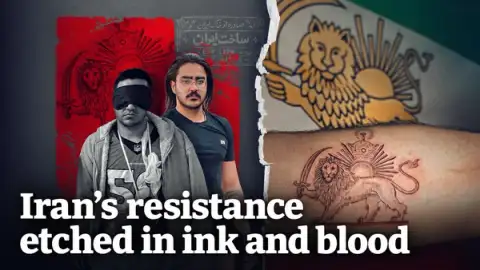
New tool helps Iranian fans display Lion and Sun flag at World Cup

Banner
Banner

Spotlight

  • Tehran seeks to draw a line around Lebanon
    INSIGHT

    Tehran seeks to draw a line around Lebanon

  • 'Nothing is over':  Iran-Israel conflict enters a new phase
    ANALYSIS

    'Nothing is over': Iran-Israel conflict enters a new phase

  • Delayed burial, absent successor: Questions over post-Khamenei Iran

    Delayed burial, absent successor: Questions over post-Khamenei Iran

  • From banks to blockchains: US opens new front in Iran sanctions
    ANALYSIS

    From banks to blockchains: US opens new front in Iran sanctions

  • Can Trump crack Iran's negotiating playbook?
    PODCAST

    Can Trump crack Iran's negotiating playbook?

  • Explained: Iran's frozen assets around the world

    Explained: Iran's frozen assets around the world

•
•
•

More Stories

Palestinian Foreign Ministry condemns Iran attacks on Kuwait and Bahrain

Jun 6, 2026, 23:03 GMT+1

The Palestinian Foreign Ministry on Saturday "strongly condemned" what it described as Iranian attacks targeting Kuwait and Bahrain, according to Kuwait’s state news agency KUNA.

These actions constitute a flagrant violation of the sovereignty of both countries and a departure from the UN Charter, international law, and established international norms, it added.

Iran team departs for Mexico ahead of World Cup amid US visa issues

Jun 6, 2026, 22:20 GMT+1

Iran's national soccer team departed from Turkey for its training base in Mexico on Saturday ahead of the 2026 World Cup, while several federation officials and support staff were reportedly still awaiting US visas, according to the Associated Press.

Iranian state television said 14 backroom staff and officials, including Iranian Football Federation Secretary-General Hedayat Mombeini and Vice President Mehdi Mohammad Nabi, had not received visas ahead of Iran's group-stage matches in Los Angeles and Seattle later this month.

AP reported that visa processing issues had previously prompted Iran to move its training base from Tucson, Arizona, to Tijuana, Mexico, near the US border, amid complications stemming from the ongoing conflict involving Iran.

US intelligence raised concerns over alleged Israeli spying on Iran talks - NYT

Jun 6, 2026, 18:56 GMT+1

Recent US intelligence reports raised concerns that Israeli spy agencies were allegedly eavesdropping on American officials involved in negotiations with Iran, The New York Times reported, citing US officials familiar with the assessments.

The report said Israel had allegedly intensified efforts to gather information on US positions in the talks, including by targeting senior officials such as President Donald Trump's top negotiator Steve Witkoff, the Pentagon's top policy official Elbridge Colby, and deputy assistant secretary Michael DiMino.

The report said a Defense Intelligence Agency assessment increased the counterintelligence threat level posed by Israel from "high" to "critical" in recent weeks, citing concerns over alleged efforts to spy on US military personnel and government officials. The report said American defense personnel in Israel had detected software installed on their phones that could intercept communications.

A White House official disputed the account and said it was false, while a spokesperson for the Israeli embassy in Washington denied that Israel spies on American officials or entities, the newspaper said.

Iran political prisoner thanks exiled princess for rights advocacy

Jun 6, 2026, 18:15 GMT+1
Iran political prisoner thanks exiled princess for rights advocacy
100%

Reza Mohammadhosseini, a monarchist political prisoner held in Ghezel Hesar Prison in Iran’s Alborz province, thanked exiled Iranian princess Noor Pahlavi for her human rights advocacy and for carrying Iranians’ voices to the world.

“From behind the cold, high walls of Ghezel Hesar Prison — where for years I have watched the sky through the bars — the words of Princess Noor Pahlavi reached me from thousands of kilometers away; yet they were so bound to the pain, the suffering, and the aspirations of the people of Iran that it was as if they had risen from these very cells,” Mohammadhosseini wrote, according to the statement by exiled Prince Reza Pahlavi’s office.

Mohammadhosseini cited Noor Pahlavi’s speech in Oslo as a reminder that “the voice of the people of Iran is still being heard” and said the struggle for freedom, justice and human rights had no borders.

He called for the release of political prisoners and said many people in Iran were held “solely for the crime of thinking, writing, protesting, and demanding their human rights.”

"Today, more than ever, Iran needs global solidarity in defense of human dignity,” he wrote.

Inside Rasht's bloody crackdown: witnesses detail secret removals of bodies

Jun 6, 2026, 17:16 GMT+1
•
Farnoosh Faraji
Inside Rasht's bloody crackdown: witnesses detail secret removals of bodies
100%

Security forces opened fire on protesters, blocked medical aid and secretly removed bodies as they crushed demonstrations in Rasht, northern Iran, during January’s nationwide uprising, eyewitness accounts and documents sent to Iran International show.

Witnesses described security forces shooting at protesters, blocking aid to the wounded, demanding money from families before returning bodies, and pressuring relatives to hold secret burials and avoid public ceremonies.

The new accounts add to an Iran International public documentation campaign that has gathered testimony saying protesters in Rasht were driven into narrow market passages, trapped as fire spread and fired upon by security forces during January’s unrest.

The morning of Jan 9: a city in smoke, blood and fire

One eyewitness told Iran International that around 5 a.m. on January 9, heavy smoke and fire were still rising in the municipality area of Rasht.

The witness said streets leading to the municipality, including Namjoo Street, Imam Street, Shahrdari Street and the route from the bazaar toward Saqlan Square, were badly damaged and parts of the city had burned.

“On the morning of January 9, the city smelled of smoke. Traces of blood were clearly visible on Shahrdari and Saadi streets. The bloody handprints of protesters were on the city walls. Basijis in Sabzeh Meydan Square were busy erasing slogans with spray paint, and large parts of the bazaar had completely burned,” the witness said.

Bodies moved in pickup trucks and garbage trucks

An eyewitness told Iran International that on the morning of January 9, several municipal pickup trucks left Shahrdari Street, and the bodies of some of those killed were in the back of one vehicle, covered with cloth.

Iran International has also received multiple reports indicating that the bodies of some of those killed in Rasht were collected with garbage trucks and secretly transferred.

Witnesses said some wounded people were also among the bodies transferred to Bagh-e Rezvan cemetery in Rasht.

A source said one wounded person who had been transferred to Bagh-e Rezvan along with the bodies managed to escape and hid for a while in a nearby forest.

Transfer of bodies to an unmarked warehouse

New information received by Iran International shows that on January 8 and 9, the bodies of some of those killed in Rasht were transferred to a warehouse on Tehran Road, between Bagh-e Rezvan and Saravan.

The warehouse was painted red, white and green and had no specific sign or official marking.

The bodies were kept there temporarily before burial or transfer to other locations.

Witnesses describe DShK machine gun fire on protesters

Witnesses told Iran International that security forces used heavy weapons including DShK machine guns against people who had entered parts of the city’s military areas.

According to the accounts, the area around the Rasht governor’s office was one of the main sites where protesters were killed on January 8 and 9.

One eyewitness said Basij and Revolutionary Guards forces directed the crowd toward the governor’s office, placing protesters on a route where their ability to leave or retreat was limited.

The witnesses said armed forces shot at people after the gates of the governor’s office were opened.

The accounts indicated that the crackdown in Rasht was not limited to streets around the municipality, the bazaar, Namjoo Street and Sajjad Clinic, and that the area around the governor’s office was also a key site of shootings and killings.

Families told to pay for slain protesters’ bodies

Sources told Iran International that slain protesters' families faced severe security pressure.

Some families were asked to pay money to receive the bodies of their children, with the amount depending on the family’s financial situation, according to the accounts.

Some families were asked for several billion rials, equivalent to several thousand dollars, and in some cases more than 10 billion rials, or over $5,700 at the open-market rate, the sources said.

An eyewitness said one family was told to bring a box of sweets along with the payment before they could receive their loved one’s body.

The witness said the request was part of a humiliating process of dealing with the survivors.

Families forced into secret night burials

Witnesses told Iran International that the families of some slain protesters were not allowed to wash their loved ones’ bodies, a standard Islamic burial rite performed before burial.

One eyewitness said security agents told a family the victims were “ritually impure” and had to be buried as they were, bloodied and still in their clothes.

According to witness accounts, burials were often carried out late at night or near dawn, with a limited number of family members present and under pressure from security forces.

The burial place of many of the victims is in the far sections of Bagh-e Rezvan in Rasht.

Families said they were repeatedly humiliated and threatened while receiving and burying the bodies.