• العربية
  • فارسی
Brand
  • Iran Insight
  • Politics
  • Economy
  • Analysis
  • Special Report
  • Opinion
  • Podcast
  • Iran Insight
  • Politics
  • Economy
  • Analysis
  • Special Report
  • Opinion
  • Podcast
  • Theme
  • Language
    • العربية
    • فارسی
  • Iran Insight
  • Politics
  • Economy
  • Analysis
  • Special Report
  • Opinion
  • Podcast
All rights reserved for Volant Media UK Limited
volant media logo
INSIGHT

As US talks stall, Iran moderates warn of renewed unrest

Behrouz Turani
Behrouz Turani

Iran International

Jun 5, 2026, 03:59 GMT+1
Residents gather along the Zayandeh Roud in Isfahan to celebrate the return of water to the river, June 3, 2026

As indirect contacts between Tehran and Washington continue and regional actors push to keep negotiations alive, competing signals continue to emerge from Iran's political establishment.

On Thursday, the Revolutionary Guards said no lasting calm would be achieved in the region unless Israel withdrew from Lebanese territory and halted attacks, while senior adviser Mohsen Rezaei insisted Iran would not give a “green light” to negotiations until all of its demands were met.

Against that backdrop, two political insiders from different camps have issued unusually direct warnings about Iran's domestic vulnerabilities, arguing that economic hardship and the widening gap between the state and society could fuel renewed unrest.

In a June 1 interview with the moderate daily Etemad, prominent centrist politician Hossein Marashi described a deep structural and cultural disconnect between the state and society.

He warned that unless the political system adapts by addressing economic inefficiencies, acknowledging cultural differences and creating channels for dissent, unrest will continue to recur.

The leadership in Tehran, Marashi argued, remains at odds with a large segment of the population over cultural and political issues and should align governance with the expectations of at least 70% of society.

According to him, the divide between state and society has become so entrenched that many Iranians now separate their attachment to the country from their view of the government.

Marashi also said one of the Islamic Republic's fundamental failures has been its inability to build a strong economy and a trusted judiciary. Protests, he argued, should not be viewed as isolated incidents but as repeated expressions of accumulated public frustration.

A similar theme emerged this week in an op-ed by reformist commentator Nasser Zakeri in Sharq newspaper.

Reviewing Iran's recent military and geopolitical challenges, Zakeri contrasted what he described as the resilience of Iran's defense sector with decades of economic underperformance marked by unemployment, chronic inflation and weak productivity.

He argued that policymakers should use the experience of the past year to identify which institutions proved resilient under pressure and which did not.

Zakeri also challenged those who portray revision as a betrayal of the Islamic Republic's core principles, arguing that even policies once considered successful must be reassessed when circumstances change.

Such arguments remain politically sensitive in a system where calls for reform or revision are often portrayed by hardliners as attempts to weaken the ideological foundations of the state.

Although Marashi and Zakeri approached the issue from different angles—one focusing on public dissatisfaction and the other on institutional performance—both arrived at a similar conclusion: military strength and crisis management alone cannot guarantee long-term stability unless the political system addresses deeper economic, social and political grievances.

Late on Thursday, reports emerged that Pakistan's Interior Minister Mohsin Naqvi would return to Tehran as part of efforts to keep the Iran-US negotiating track alive.

The diplomatic process remains uncertain. But the warnings from Marashi and Zakeri suggest that, for some voices inside the establishment, the more pressing question may be whether the state can address the domestic challenges that persist regardless of whether negotiations succeed.

Most Viewed

Calls for diplomacy grow in Tehran amid fresh escalation
1
INSIGHT

Calls for diplomacy grow in Tehran amid fresh escalation

2
INSIGHT

Lebanon emerges as new obstacle to Iran-US talks

3
VOICES FROM IRAN

Iranians say wages vanish under rent, food and medical costs

4
EXCLUSIVE

Iran sidelines ultra-hardliners from pro-government nightly rallies

5
VOICES FROM IRAN

Citizens report growing use of children in Iran security activities

Banner
Banner

Spotlight

  • As US talks stall, Iran moderates warn of renewed unrest
    INSIGHT

    As US talks stall, Iran moderates warn of renewed unrest

  • Iran's services imports surge as goods trade slumps
    ANALYSIS

    Iran's services imports surge as goods trade slumps

  • Tehran hardliners demand escalation as Trump says talks are progressing
    INSIGHT

    Tehran hardliners demand escalation as Trump says talks are progressing

  • Citizens report growing use of children in Iran security activities
    VOICES FROM IRAN

    Citizens report growing use of children in Iran security activities

  • Will Israel's new Mossad chief carry on the push for regime change in Iran?
    INSIGHT

    Will Israel's new Mossad chief carry on the push for regime change in Iran?

•
•
•

More Stories

Tehran hardliners demand escalation as Trump says talks are progressing

Jun 5, 2026, 01:07 GMT+1
Tehran hardliners demand escalation as Trump says talks are progressing
100%

Iranian officials and hardline media are signaling a tougher stance toward Washington after the most serious US-Iran military exchange in weeks, even as President Donald Trump says negotiations are progressing and an Iran deal may still be within reach.

The latest escalation began early Wednesday, when the United States struck an Iranian telecommunications tower on Qeshm Island. Iran responded by announcing attacks on US military facilities in Kuwait and Bahrain.

Kuwaiti authorities said an Iranian drone struck Kuwait International Airport, killing one person and injuring dozens of others. The IRGC, however, denied targeting the airport.

The confrontation has put new pressure on the 56-day ceasefire between Washington and Tehran, with President Trump seeking to preserve the truce while Iranian hardliners argue that recent military action has strengthened Tehran’s position.

Read the full article here.

Iran's services imports surge as goods trade slumps

Jun 5, 2026, 01:02 GMT+1
•
Dalga Khatinoglu
Iran's services imports surge as goods trade slumps
100%
A worker walks past stacks of newly printed books at a printing facility in Iran, May 28, 2026

Iran's imports of services surged to a record $25.5 billion in 2025 while merchandise imports fell sharply, according to newly released data from the Central Bank of Iran, highlighting a significant shift in the country's trade structure.

Services imports accounted for roughly one-quarter of Iran's total imports during the year, an unusually high share for an economy traditionally dominated by trade in physical goods.

At the same time, Iran's exports of services declined, pushing the country's services trade deficit to a record $17 billion. The deficit was 52% higher than in 2024 and roughly three times larger than in 2020.

Separate central bank data on foreign trade in goods point to an equally dramatic contraction in merchandise trade.

Iran imported approximately $49 billion worth of goods during the fiscal year ending March 21, a decline of 32% compared with the previous year. Non-oil exports also weakened considerably, falling 22% year-on-year to about $45 billion.

The figures suggest Iran's trade structure is undergoing a significant transformation, with services playing an increasingly prominent role while merchandise trade contracts.

The reasons behind the rapid rise in services imports remain unclear.

Iran's services imports primarily include transportation and logistics services, insurance related to foreign trade, financial transaction services, engineering and construction projects, technology purchases and other professional services.

One possible explanation emerged in a Wall Street Journal report published last October, which suggested that part of Iran's oil exports to China were being exchanged for services rather than cash payments or traditional oil-for-goods arrangements.

China is effectively the sole buyer of Iranian crude oil. According to estimates by the Organization of the Petroleum Exporting Countries (OPEC), Iran's crude oil exports were worth approximately $44 billion last year before accounting for sanctions-related discounts and the costs of circumventing US restrictions.

While the central bank data do not reveal the source of the imported services, the figures are consistent with the possibility that a growing share of Iran's oil revenues is being settled through services rather than conventional financial transfers or merchandise imports.

Another factor attracting attention is the role of the Islamic Revolutionary Guard Corps (IRGC) in both oil exports and major infrastructure projects.

Under Iran's previous budget law, the IRGC was tasked with exporting 700,000 barrels of crude oil per day, roughly half of the country's actual crude exports. The organization is also one of Iran's largest contractors in infrastructure and construction.

However, the central bank data provide no direct evidence regarding the destination of oil revenues or the beneficiaries of imported services.

The outlook for the current fiscal year is even more uncertain amid the conflict involving the United States and Israel.

Trade flows with the United Arab Emirates, Iran's largest supplier of goods, have reportedly been disrupted over the past three months.

Meanwhile, Chinese customs data show Iran and China recorded only about $400 million in bilateral non-oil trade during March and April combined, roughly one-fifth of the level recorded during the same period a year earlier.

Whether the shift toward services reflects changes in sanctions-evasion mechanisms, evolving arrangements with China, or broader economic weakness remains an open question. What is clear from the latest data is that Iran's trade profile is changing in ways not seen in recent years.

Tehran hardliners demand escalation as Trump says talks are progressing

Jun 4, 2026, 22:37 GMT+1
•
Maryam Sinaiee
Tehran hardliners demand escalation as Trump says talks are progressing
100%
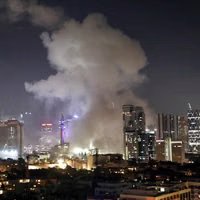
CCTV footage shows fire and smoke rising following a strike on Kuwait International Airport, in Kuwait City, Kuwait June 3, 2026, in this screengrab from a video.

Iranian officials and hardline media are signaling a tougher stance toward Washington after the most serious US-Iran military exchange in weeks, even as President Donald Trump says negotiations are progressing and an Iran deal may still be within reach.

The latest escalation began early Wednesday, when the United States struck an Iranian telecommunications tower on Qeshm Island. Iran responded by announcing attacks on US military facilities in Kuwait and Bahrain.

Kuwaiti authorities said an Iranian drone struck Kuwait International Airport, killing one person and injuring dozens of others. The IRGC, however, denied targeting the airport.

The confrontation has put new pressure on the 56-day ceasefire between Washington and Tehran, with President Trump seeking to preserve the truce while Iranian hardliners argue that recent military action has strengthened Tehran’s position.

Trump keeps talks alive

Despite the latest confrontation, Trump has publicly remained optimistic about diplomacy, saying talks are progressing well and suggesting that an agreement could be reached by the end of the week.

He has described the latest American strike as severe but framed Iran’s response as retaliatory, a distinction that appears intended to leave space for diplomacy.

According to the Wall Street Journal, Trump privately told advisers that he wants to preserve the current ceasefire and would only consider resuming large-scale military operations if American service members are killed.

The message has left Washington in a delicate position: seeking to deter further Iranian attacks while avoiding steps that could collapse the ceasefire and end the negotiations altogether.

Iran’s rhetoric hardens

In Tehran, however, the public messaging has moved in the opposite direction.

Iran’s English-language Press TV argued that the country’s period of restraint had ended and described recent military action as part of a doctrine of “qualitative asymmetry,” under which Iranian responses would not necessarily remain proportional to the original attack.

The article said any hostile action by the United States, regardless of scale, could trigger a significantly broader Iranian response.

Hardline political figures have echoed that argument.

Kamran Ghazanfari, a former hardline lawmaker, accused officials of limiting the armed forces because of what he described as fruitless negotiations. He said Iran should respond to attacks with significantly greater force rather than seek compromise.

“Under no circumstances should we back down before the enemy, and if they hit one of our ships, we must hit three or four of theirs,” he said.

Such statements reflect growing pressure from hardliners who believe recent military action has strengthened Tehran’s position and that negotiations should not be allowed to restrain Iran’s military options.

Araghchi warns regional states

Foreign Minister Abbas Araghchi also adopted a sharper tone Thursday, saying Iran had previously warned regional countries about allowing the United States to use military bases on their soil.

His comments followed Iranian attacks on US military facilities in Kuwait and Bahrain, which Tehran announced after the United States struck an Iranian telecommunications tower on Qeshm Island in the early hours of Wednesday.

The exchange marked the most serious confrontation between Washington and Tehran since the ceasefire came into effect and immediately raised questions about its durability.

Kuwaiti authorities said an Iranian drone struck Kuwait International Airport, killing one person and injuring dozens of others. The IRGC denied targeting the airport.

A spokesperson for the force claimed that damage to the passenger terminal was caused by a malfunction involving a US-supplied Patriot missile system, arguing that interceptor missiles had fallen on the facility after failing to stop incoming Iranian projectiles.

Washington denied that Iranian missiles successfully struck American military installations. Iranian media outlets, however, published satellite images they said showed damage to a shelter used for drones and aircraft at Kuwait’s Ali Al Salem Air Base.

Iranian state media and IRGC-affiliated outlets have also dismissed photographs that purportedly show damage to Kuwait Airport, describing them as fabricated images intended to support what they called a false narrative.

Regional alarm grows

The attacks have deepened concern among regional governments that the ceasefire could unravel.

Pakistan’s Foreign Ministry condemned the Iranian missile and drone attacks on Kuwait and Bahrain, warning that escalating hostilities could derail efforts to resolve the conflict through peaceful means.

Islamabad called on both sides to exercise maximum restraint and noted that formal negotiations between Tehran and Washington, which Iran suspended after recent US military actions, have not yet resumed.

The Pakistani statement underscored the widening regional stakes of the confrontation. While Trump has continued to emphasize the possibility of a deal, Iran’s suspension of direct message exchanges through mediators has left the diplomatic track vulnerable to further military escalation.

Lebanon adds pressure

Developments in Lebanon have added another layer of uncertainty.

Iran has linked continued negotiations with Washington to ceasefires across all regional fronts. But despite an earlier truce arrangement, Israel launched new attacks in southern Lebanon on Thursday.

Hezbollah Secretary-General Naim Qassem criticized agreements reached by the Lebanese government and said the group remains committed only to a complete cessation of Israeli attacks, a formal ceasefire and a full Israeli withdrawal from Lebanese territory.

The IRGC reinforced that position, saying a comprehensive ceasefire, including in Lebanon, remains a prerequisite for ending the broader regional conflict.

Some Iranian media outlets, including Iran View 24, have argued that Israeli military activity in Lebanon is intended not only to violate ceasefire arrangements but also to test Iran’s deterrence and the resilience of allied groups across the region.

Risk of unraveling

The longer talks remain unresolved, the greater the risk that military incidents and hardline pressure could overtake diplomacy.

Canada-based analyst Shahir Shahid Saless argued in a post on X that as negotiations drag on and Iranian leaders gain confidence from recent attacks on US positions in Kuwait and Bahrain, Trump may eventually reconsider his commitment to the ceasefire.

His assessment points to the central danger facing both sides: Trump is still signaling that he wants a deal, but Tehran’s public posture is becoming less conciliatory, and the ceasefire now depends not only on the US-Iran track but also on events in Kuwait, Bahrain and Lebanon.

For now, both governments continue to leave room for diplomacy. But the latest exchange has narrowed that room, giving hardliners in Tehran more space to argue that military pressure, not negotiation, is what has shifted the balance.

Iran sidelines ultra-hardliners from pro-government nightly rallies

Jun 4, 2026, 12:27 GMT+1
Iran sidelines ultra-hardliners from pro-government nightly rallies
100%
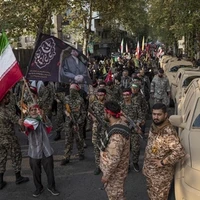
A scene of nightly state-organized rallies in Tehran

Supporters of the ultra-hardline Paydari Front were removed earlier this week from nightly state-organized rallies backing the Islamic Republic, in an apparent effort to contain hardline pressure as talks with the United States continue, Iran International has learned.

According to the information obtained by Iran International, the order to keep Paydari supporters away from the gatherings was issued after requests by President Masoud Pezeshkian and Parliament Speaker Mohammad Bagher Ghalibaf, who also heads Tehran’s negotiating team.

  • The Paydari Party: Iran’s ultra-hardliner powerhouse explained

    The Paydari Party: Iran’s ultra-hardliner powerhouse explained

Protesters carrying placards opposing concessions on the nuclear issue have also been removed from the state-backed rallies, according to the same information.

The move points to an effort by senior figures in the Islamic Republic to contain ultra-hardline pressure at a sensitive moment, as Tehran and Washington continue talks over a possible understanding involving the ceasefire, the Strait of Hormuz, frozen Iranian assets and nuclear-related terms.

  • Iran’s president offers resignation, citing total takeover by IRGC commanders

    Iran’s president offers resignation, citing total takeover by IRGC commanders

The Paydari Front and its allies have been among the most vocal opponents of negotiations with the United States. In recent days, figures close to the camp have criticized Ghalibaf and the negotiating team, warning against concessions and arguing that talks with Washington amount to a mistake.

The reported removals came as the Islamic Republic held the first anniversary ceremony for Ruhollah Khomeini since the killing of Ali Khamenei, without the former supreme leader’s presence.

  • Hardline MP draws backlash over post seen as swipe at Mojtaba Khamenei

    Hardline MP draws backlash over post seen as swipe at Mojtaba Khamenei

During the ceremony on Thursday, Mojtaba Khamenei issued a message warning against what he called doubt, despair, fear and suspicion.

The message, read by Mohammad-Javad Haj-Ali-Akbari, Tehran’s interim Friday prayer leader, said any action that causes public pessimism or disillusionment amounts to helping the enemy.

Lebanon emerges as new obstacle to Iran-US talks

Jun 3, 2026, 17:55 GMT+1
•
Maryam Sinaiee
Lebanon emerges as new obstacle to Iran-US talks
100%
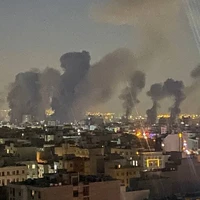
Smoke billows from southern Lebanon, following Israeli strikes, as seen from Nabatieh, Lebanon, June 2, 2026.

Lebanon has emerged as a key obstacle to negotiations between Tehran and Washington, as Israel says it will continue striking Hezbollah and Iran insists that any ceasefire must apply across the region.

The dispute intensified after Tehran suspended talks with Washington on Monday, arguing that Israeli military operations in Lebanon violated the broader ceasefire framework established after the recent US-Iran conflict.

While US President Donald Trump described the interruption as a temporary “little glitch,” Iranian officials have since made clear that a halt to Israeli military operations in Lebanon remains a prerequisite for renewed diplomatic engagement.

On Tuesday, Fars News Agency, which is affiliated with the Revolutionary Guards (IRGC), cited an informed source as rejecting Trump's claims about ongoing, high-speed negotiations.

According to the source, exchanges of messages between Tehran and Washington had stopped “at least for a few days,” while Iran's latest communication to the United States was described as “a clear warning regarding Lebanon.”

Mohammad Bagher Ghalibaf, speaker of parliament and head of Iran's negotiating team, accused the United States of failing to uphold ceasefire commitments, saying on X that enforcement of a naval blockade and Israel's attacks on Lebanon were “clear evidence of US non-commitment to the ceasefire.”

“Every choice has a price, and the bill comes due,” he added.

Ghalibaf later said he had informed Lebanese Parliament Speaker Nabih Berri that Iran would not only suspend negotiations but would also be “in direct confrontation with the enemy” if Israeli attacks on Lebanon continued.

Foreign Minister Abbas Araghchi echoed that position, writing on X that a “ceasefire between Iran and the US is unequivocally a ceasefire on all fronts, including in Lebanon.” He added that any violation on one front “shall be considered a violation across all fronts.”

Tehran sees leverage in talks

With Tehran linking progress in negotiations to developments in Lebanon, the fate of any future agreement increasingly appears tied to the trajectory of the Israel-Hezbollah confrontation.

Some Iranian lawmakers believe Washington will ultimately seek to restrain Israel to prevent a broader crisis.

Ahmad Bakhshayesh, a member of parliament's National Security and Foreign Policy Committee, told Tabnak that the United States would likely increase pressure on Netanyahu's government to avoid further escalation.

Tabnak itself argued that Tehran could use the negotiations as leverage.

“Given that Hezbollah—Iran's most powerful regional ally—entered the conflict immediately following the attacks on Iran, Tehran could leverage the threat of walking away from ongoing negotiations to pressure the United States into restraining Israel,” the outlet wrote.

Growing doubts about a deal

Despite such expectations, several analysts expressed pessimism about the prospects for a final agreement between Tehran and Washington.

Hassan Hanizadeh, a senior analyst on Middle Eastern affairs, told Fararu that Israel's intensified military campaign in Lebanon was “directly designed to pressure Iran and can pose a major risk to the formation of any understanding between Tehran and Washington.”

He argued that Tehran views the attacks as part of broader Western pressure tactics and added: “Evidence shows that Trump has no desire for a comprehensive agreement in the current atmosphere.”

Amir-Ali Abolfath, an expert on US affairs, also questioned the likelihood of a breakthrough.

Speaking to Fararu, he said Israel's confrontation with both Iran and Hezbollah had made negotiations significantly more complicated than in previous rounds.

“The Americans are negotiating to not reach an agreement,” he said. “America proposes conditions that make it seem as though they are shouting: ‘We do not want to reach an agreement with the Islamic Republic,’ because their conditions are unfeasible.”

Other commentators voiced similar doubts. Reza Ghobeishawi, writing in Asr-e Iran, argued that Trump has concluded a deal with Tehran is unattainable and is instead using discussions over reopening the Strait of Hormuz to buy time.