• العربية
  • فارسی
BrandBrand
  • Iran Insight
  • Politics
  • Economy
  • Analysis
  • Special Report
  • Opinion
  • Podcast
  • Live TV
  • Iran Insight
  • Politics
  • Economy
  • Analysis
  • Special Report
  • Opinion
  • Podcast
  • Live TV
  • Theme
  • Language
    • العربية
    • فارسی
  • Iran Insight
  • Politics
  • Economy
  • Analysis
  • Special Report
  • Opinion
  • Podcast
  • Live TV
All rights reserved for Volant Media UK Limited
volant media logo

Hegseth says US ready to resume military action if Iran talks fail

May 27, 2026, 18:11 GMT+1Updated: 21:37 GMT+1

US War Secretary Pete Hegseth said Washington is prepared to return to military action if negotiations fail to ensure the Islamic Republic never obtains a nuclear weapon.

Speaking at a White House Cabinet meeting, Hegseth said President Donald Trump had created the conditions to protect Americans and the wider world from what he called a generational threat from Iran.

“There’s only one man over the course of both presidencies who has stood up and said they will never get a nuclear weapon,” Hegseth said, referring to Trump.

He cited Trump’s killing of Qasem Soleimani, withdrawal from the Obama-era nuclear deal, the 12-day war and subsequent US military operations against Iran as part of a broader pressure campaign aimed at stopping Tehran from acquiring a nuclear weapon.

Hegseth said the United States had avoided what he described as the old approach of the Iraq and Afghanistan wars.

“Instead, you said, we’re going to do this smart. We’re going to do it overwhelming. We’re going to use maximum lethality. And we’re going to bring them to their knees,” Hegseth said.

He said Iran’s navy was “at the bottom of the Persian Gulf” and that its air force, air defenses and defense industrial base had been heavily damaged.

“They may have missiles, but they can’t build more right now. And they can’t build more drones right now. And they can’t build more ships,” he said.

Hegseth said those losses helped bring Tehran to talks with US envoys, including Steve Witkoff, Jared Kushner and Vice President JD Vance.

He also said the United States had imposed a “world-class blockade” on Iranian ports, preventing goods from entering or leaving and badly hurting Iran’s economy.

“We know from the intel that their economy is hurting big time because that is their lifeblood,” he said.

Hegseth added that Washington had expanded pressure on Iran’s shadow tanker fleet.

“No Iranian tanker around the globe is safe,” he said, pointing to seizures he said had further choked off Tehran’s economic lifeline.

He said the goal remained to ensure Iran never obtains a nuclear weapon, either through negotiations or, if necessary, by returning to military action.

Most Viewed

Iran gains from Netanyahu’s exit even without a policy shift - Ghalibaf-linked daily
1

Iran gains from Netanyahu’s exit even without a policy shift - Ghalibaf-linked daily

2

Iran imports at least $2 billion in military supplies despite US blockade - Reuters

3

Vance offers to meet Iran's Rezaei for peace talks as Qatar renews mediation efforts

4

New Baha'i memoir recounts life inside Iran's prisons

5

Somali piracy surges as Iran war diverts US naval attention - CNN

Spotlight

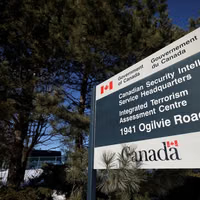
  • CSIS warns Iran-related activities targeting Canada likely to continue in 2026
    EXCLUSIVE

    CSIS warns Iran-related activities targeting Canada likely to continue in 2026

  • Talks or resistance? Iran's factions differ over path out of crisis
    INSIGHT

    Talks or resistance? Iran's factions differ over path out of crisis

  • Tehran refuses to budge as diplomacy races against war

    Tehran refuses to budge as diplomacy races against war

  • Growing old alone: The parents Iran’s emigrants left behind
    VOICES FROM IRAN

    Growing old alone: The parents Iran’s emigrants left behind

  • Behind Khamenei's call for peace, Tehran's unchanged demands
    OPINION

    Behind Khamenei's call for peace, Tehran's unchanged demands

  • Iran's Great Depression? Economists weigh Bessent's dire forecast
    ANALYSIS

    Iran's Great Depression? Economists weigh Bessent's dire forecast

Banner
Banner
Banner
Banner
Banner
•
•
•

More Stories

Tehran’s 'Kneel Before Iran' statue rekindles debate over nationalist turn

Nov 9, 2025, 22:00 GMT+0
•
Maryam Sinaiee
100%
An illustration showing an ancient Iranian soldier and a Revolutionary Guard member holding a weapon together, displayed during a November 7 ceremony in Tehran where a statue of pre-Islamic Persian King Shapur I was unveiled.

Tehran’s unveiling of a towering statue depicting the Roman Emperor Valerian kneeling before pre-Islamic Persian King Shapur I has renewed criticism of the Islamic Republic’s appeal to nationalist sentiment following the June war with Israel.

For over forty years, the theocracy purged ancient Persian history from schoolbooks, replacing it with post-Islamic narratives. But after the 12-day conflict with Israel, officials have turned to the distant pre-Islamic past to rally a divided society.

From murals of ancient kings and soldiers to patriotic songs added to Shi’ite mourning ceremonies performed before Supreme Leader Ali Khamenei, Tehran now embraces imagery once deemed heretical by its own revolutionary ethos.

100%
The statue unveiled in Tehran's Revolution Square

'Kneel before Iran' campaign

Tehran’s Revolution (Enghelab) Square was the scene of an unusual spectacle on Friday as officials unveiled a massive bronze statue depicting Roman Emperor Valerian kneeling in submission before Sassanid King Shapur I, commemorating Iran’s victory at the Battle of Edessa (260 AD).

The event was held under the slogan “Kneel before Iran,” part of what authorities describe as a campaign to project “national unity and historical pride” following the June war with Israel.

Tehran Mayor Alireza Zakani, a staunch ultraconservative, said on X: “Enmity with Great Iran can only end in kneeling before this historic nation.”

Municipal official Davood Goodarzi said the installation would be accompanied by visual displays depicting “other victories of Iranians over foreign aggressors,” including the defeat of British forces by local commander Rais-Ali Delvari, Mirza Kuchak Khan’s resistance against Russian troops, and Surena’s triumph over Rome at the Battle of Carrhae in 53 BCE.

The goal, Goodarzi said, is “strengthening concepts such as national dignity, social unity, and Iranian identity.”

The statue, he said, would remain temporarily at Revolution Square before being moved to a city gateway “where it will stand as the first emblem of Iran before diplomats and foreign visitors.”

Unveiled women were allowed to attend the unveiling ceremony—an uncommon scene at events organized by Tehran’s ultra-hardline municipality.

The turn to the pre-Islamic past

The sharp reversal also recalls remarks once made by Khamenei. In a 2011 speech, he asserted that “all the great military victories of this nation came after Islam,” dismissing pre-Islamic accounts as “things that are not documented.”

In 1987, he had said that prophets triumphed over kings such as Cyrus and that “nothing remains of these monarchs in history but names remembered with derision.”

Nevertheless, pro-government social media accounts have now gone so far as to circulate posters equating Khamenei himself with Shapur, showing him standing with a staff as Benjamin Netanyahu and Donald Trump kneel before him. The caption reads: “You will kneel before Iran.”

100%
Image circulating by hardliners on social media

'Hypocrisy'

Pro-government figures have hailed the move as a patriotic success. Conservative political reporter Hossein Saremi posted: “Today’s grand Iranian gathering showed that people and the state share one essence: Iran itself. Nothing can take our homeland away.”

Others, however, called the spectacle “hypocrisy.” Journalist Gholamhossein Pashaei wrote on X: “Every year you close Pasargadae to stop people from celebrating Cyrus Day, yet you unveil Shapur’s statue in Enghelab Square with drums and fireworks during Fatimiyya (mourning period)!”

Dissident commentator Hamid Asafi called the ceremony “a perfect snapshot of the Islamic Republic’s contradictions.”

On Telegram he wrote: “A week ago they closed Cyrus’s tomb out of fear of the crowds, and now they glorify Shapur in the same breath. The Islamic Republic fears living history but poses for selfies with its corpse.”

He added: “They know people no longer respond to rosaries and sermons. That’s why they’ve brought history back to the stage—in a controlled costume. If they can’t erase the past, they’ll try to own it.”

The irony deepened as UNESCO formally recognized Cyrus’s Charter as one of the earliest human-rights documents.

President Masoud Pezeshkian wrote on X: “Iran, the cradle of dialogue, justice, and coexistence, can still inspire peace today.”

Users swiftly replied, questioning how such pride could coexist with a government that blocks access to Cyrus’s tomb each year to those wishing to visit it on his birthday.