• العربية
  • فارسی
Brand
  • Iran Insight
  • Politics
  • Economy
  • Analysis
  • Special Report
  • Opinion
  • Podcast
  • Iran Insight
  • Politics
  • Economy
  • Analysis
  • Special Report
  • Opinion
  • Podcast
  • Theme
  • Language
    • العربية
    • فارسی
  • Iran Insight
  • Politics
  • Economy
  • Analysis
  • Special Report
  • Opinion
  • Podcast
All rights reserved for Volant Media UK Limited
volant media logo
EXCLUSIVE

Family forced into nighttime burial after student killed in protests

Farnoosh Faraji
Farnoosh Faraji

Iran International

May 25, 2026, 10:19 GMT+1
Slain protester Rauf Derakhshani-Mehr

Rauf Derakhshani-Mehr, a 19-year-old university student killed during January protests in the southern city of Dezful, was buried at night under pressure from security forces after his family located his body in a morgue, according to information obtained by Iran International.
Derakhshani-Mehr, a law student at Islamic Azad University, was shot dead during protests on January 9, a source familiar with the case said.

He was struck by a live bullet in the side and had also suffered metal pellet wounds to the left side of his body before the fatal shooting, the source said.

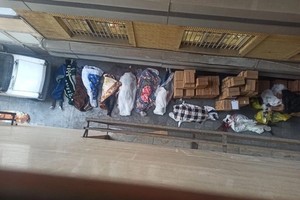
After he was transferred to Ganjavian hospital, his body was left alongside those of several other young protesters in the hospital grounds, according to witnesses and hospital staff cited by the source.

Witnesses said wounded protesters were denied treatment and that several people died because they did not receive medical care. Blood covered parts of the hospital grounds because of the severity of the injuries, they added.

Family searched hospitals and morgues

Derakhshani-Mehr’s family spent hours searching for him and went to the hospital, where officials initially denied he was there despite the family checking different wards.

Emergency personnel later told the family his body was being held in the hospital morgue, but security forces sealed the facility and prevented relatives from seeing him, the source added.

Family members were also given conflicting information by different authorities and were at one point told that he was still alive.

His body was eventually identified at the forensic medicine office in Ahvaz after being transferred there as an unidentified person, according to the account received by Iran International.

Before handing over the body, authorities forced the family to agree that the burial would take place at night and attended only by a small number of people. Derakhshani-Mehr was buried in Shahidabad cemetery in Dezful.

Night burials reported in earlier crackdowns

Security forces in Iran have previously buried slain protesters at night or without notifying their families.

In one case previously reported by Iran International, a 16-year-old boy named Reza who was killed during protests in Karaj was secretly buried by members of the Islamic Revolutionary Guards Corps without his family’s knowledge.

Witnesses said Reza was shot by a sniper around 9 p.m. on January 8 in the Shahin Vila neighborhood of Karaj. He later died after being moved to a residential parking area and then taken to a clinic.

People familiar with the case said the teenager’s family was informed the following day that members of the Revolutionary Guards had buried him overnight and disclosed the location of the grave afterward.

Most Viewed

Iran demands access to $12B in Qatar funds as precondition for US MoU
1
EXCLUSIVE

Iran demands access to $12B in Qatar funds as precondition for US MoU

2

Iran executes another political prisoner, bringing tally to 37 since March

3

Iran, US edge toward deal to end war and reopen Hormuz

4
VOICES FROM IRAN

Citizens voice anger, distrust over possible US-Iran deal

5
ANALYSIS

Iran is turning the internet into a privilege

Banner
Banner

Spotlight

  • Trump vs Tehran: how not signing became the deal
    OPINION

    Trump vs Tehran: how not signing became the deal

  • Iran is turning the internet into a privilege
    ANALYSIS

    Iran is turning the internet into a privilege

  • Trump’s strongest leverage over Tehran may run through Beijing
    PODCAST

    Trump’s strongest leverage over Tehran may run through Beijing

  • Pakistan continues quiet push to stop another Iran war
    ANALYSIS

    Pakistan continues quiet push to stop another Iran war

  • Iran scrambles for Omani back channel around the Hormuz blockade
    INSIGHT

    Iran scrambles for Omani back channel around the Hormuz blockade

  • How one Tehran hospital became a window into Iran’s January massacre

    How one Tehran hospital became a window into Iran’s January massacre

•
•
•

More Stories

Iran executes another detainee arrested during January protests

May 25, 2026, 10:01 GMT+1

The Islamic Republic executed Abbas Akbari Feyzabadi, a detainee arrested during January protests in Isfahan province, after the Supreme Court upheld his death sentence, the judiciary said on Monday.

Akbari Feyzabadi had been convicted on charges including moharebeh, or waging war against God, “deliberate destruction of public property, disrupting public order and collusion against national security,” Judiciary news outlet Mizan said.

The court cited what it described as the defendant’s confessions about carrying a handgun, appearing in the streets and opening fire during the unrest in Naein county, the report said.

The Supreme Court, judiciary said, upheld the ruling after reviewing the case file and found no flaws in the verdict, which it said was based on evidence, documentation and the defendant’s statements.

Cases involving espionage and national security accusations in the Islamic Republic have long drawn scrutiny from rights groups and lawyers over allegations of forced confessions, torture, restricted access to independent lawyers and denial of fair trial guarantees.

With Akbari Feyzabadi’s execution, at least 38 prisoners convicted on political or security-related charges have been executed in Iran since March 18, according to a tally based on publicly reported cases.

  • Iran executes another political prisoner, bringing tally to 37 since March

    Iran executes another political prisoner, bringing tally to 37 since March

Rights group HRANA had previously said at least 52 prisoners facing political or security-related charges were executed during the past Iranian year.

Lawmakers back executions

On May 4, 63 members of parliament issued a statement thanking the judiciary for carrying out death sentences against January protest detainees and urged Judiciary Chief Gholamhossein Mohseni Ejei to take what they called decisive and public action against the “main elements” behind the protests.

The judiciary’s media outlet reported Sunday that another political prisoner, Mojtaba Kian, was executed after being convicted in Alborz province of sending information about defense industry sites to networks linked to the United States and Israel during attacks on Iran.

Iranian security forces have arrested thousands of people across the country on political and security-related accusations since the start of US and Israeli attacks on Feb. 28.

Iran is turning the internet into a privilege

May 25, 2026, 01:54 GMT+1
•
Nima Akbarpour

The internet was once seen in Iran as a gateway to the outside world, but it is increasingly being reshaped into something narrower and more conditional: a privilege that can be restricted, filtered or priced at will.

After two months offline, Morteza finally managed to reconnect for a few minutes and send a message to a group of old friends.

“Hi guys, do you know any VPN that actually works?” he wrote. “I’m locked out of my hearing-aid account. I can’t update it.”

The message captured something many Iranians have been trying to explain for months: the country’s internet crisis is no longer just about Instagram, Telegram or access to foreign news websites. The internet has become woven into nearly every aspect of daily life: from work and banking to transportation, education and healthcare.

Iran’s latest shutdown, which began on February 28 and continues in various forms, has become one of the longest nationwide internet disruptions in the world.

Even global tech companies have begun to feel its effects. Meta, the owner of WhatsApp, Facebook and Instagram, recently reported that the average daily users of its apps fell from 3.58 billion to 3.56 billion in the first quarter of the year, partly because of internet disruptions in Iran.

The decline was small by Meta standards but striking nonetheless: Iran’s blackout had become large enough to leave visible marks on the usage charts of some of the world’s biggest technology platforms.

The whitelist

During wars, outages caused by attacks on infrastructure are not unusual. But in Iran’s case, the authorities themselves ordered and implemented the restrictions while simultaneously insisting that no real “internet shutdown” had occurred.

Officials instead describe the measures as restrictions on “foreign platforms” imposed because of wartime conditions.

Rasool Jalili, a member of Iran’s Supreme Council of Cyberspace, argued that when foreign media speak about an internet shutdown, they really mean access to Instagram and Telegram. He went further, placing those platforms in the same category as American fighter jets and missiles.

The comparison reflects a broader shift in how parts of the Iranian establishment increasingly view the internet: not as infrastructure, but as a threat to governance and security.

The same argument is often echoed abroad by commentators close to the government. Mohammad Marandi, for example, argued in response to an Al Jazeera report that because some domestic applications and services remained functional, describing the situation as an “internet blackout” was misleading.

Technically, internet filtering usually means blocking specific websites or services from a global network—a system based on blacklists.

But what Iran is now moving toward goes further than blocking Instagram, X or Telegram. Increasingly, access itself is being reorganized around approved users and approved services through a system marketed as “Internet Pro.”

Internet as privilege

The idea emerged publicly after the ceasefire alongside official talk of domestic governance of foreign platforms. 

The government presented the plan—reportedly approved by Iran’s Supreme National Security Council—as a temporary measure designed to reduce pressure on businesses during wartime.

In practice, it creates different layers of internet access based on profession, identity and official approval.

A doctor’s package may allow access to YouTube while keeping Instagram blocked. A businessman’s package may permit Instagram but not other services. The result is a more formalized version of what critics inside Iran have long described as “class-based internet.”

The prolonged restrictions have inflicted severe damage on businesses already weakened by inflation and war. But they have also created new economic opportunities.

Pursuit of workarounds

VPNs sold in Iran vary widely. Some are commercial products, others are homemade “configurations” that function only through specific servers and routes, while some reportedly rely indirectly on systems such as Starlink.

For users, however, they all mean the same thing: paying increasingly large sums for fragments of connection to the outside world.

Reports suggest VPN prices have multiplied several times since the beginning of the war, though free anti-censorship tools developed by independent developers occasionally disrupt the market and drive prices down.

But here is the contradiction: if unrestricted internet access is truly considered a security threat, why does that same access become available to approved groups through money, permits or connections?

Independent investigative journalist Yashar Soltani has argued that the “Internet Pro” system is tied partly to the financial interests of major telecom operators and networks linked to powerful state institutions.

Whether or not all aspects of those claims withstand scrutiny, one reality is already visible inside Iran: alongside the shutdown itself, a market has emerged for selling different levels of digital access.

The result is a growing divide between those who remain connected and those effectively cut off from the outside world.

At the same time as restricting access to the global internet, the Islamic Republic has increasingly redefined connectivity not as a public right but as a controlled privilege—one that can be priced, restricted and distributed according to political and economic priorities.

In Iran today, internet access is becoming not just a tool of communication, but a commodity and an instrument of control.

Death sentences handed down in Iran’s Ekbatan protest case

May 24, 2026, 22:44 GMT+1

Iran’s judiciary said several defendants in the high-profile Ekbatan case have been sentenced to death over charges linked to the killing of a Basij member during the country’s 2022 protests, despite courts acknowledging they could not determine who caused the fatal injury.

In a detailed statement published Sunday, the judiciary said some defendants were convicted of “corruption on earth,” a capital offense often used in politically sensitive security cases, while others received prison terms and additional punishments.

The statement did not specify how many people received death sentences or identify them, but IRGC-linked Tasnim News cited Tehran's Revolutionary Court as saying four of the nine defendants had been sentenced to death.

The case stems from the death of Arman Aliverdi, a 21-year-old Basij member and seminary student who was fatally injured during clashes in Tehran’s Ekbatan neighborhood in October 2022, at the height of the nationwide protests triggered by the death of Mahsa Amini in morality police custody.

The Ekbatan proceedings became one of the most closely watched legal cases arising from the 2022 protests, which evolved into the Islamic Republic’s biggest challenge in years and spread across dozens of cities under the slogan “Woman, Life, Freedom.”

The judiciary said forensic examinations, medical reviews, video evidence and investigative findings established that Aliverdi died from severe head trauma caused by a hard object, but investigators were unable to determine which individual inflicted the fatal injury because of what officials described as chaotic conditions and the large number of people present at the scene.

A criminal court consequently refrained from issuing qisas, or retributive execution sentences, ruling that while some defendants had participated in assaulting Aliverdi, responsibility for the fatal strike could not be conclusively assigned.

Three defendants were sentenced to prison and ordered to pay financial compensation, while three others were acquitted of direct involvement in the killing.

Separate proceedings in a Revolutionary Court addressed broader security-related accusations including acting against national security, propaganda against the state and “corruption on earth.”

It was in that branch of the case that death sentences were issued, according to the judiciary.

Rights groups and lawyers have repeatedly raised concerns about due process in protest-related prosecutions, including allegations of coerced confessions and heavy reliance on national security charges.

Iran has sharply increased executions over the past year, according to rights organizations, with activists warning that authorities are increasingly using capital punishment not only in criminal cases but also as a tool of deterrence.

The judiciary said all verdicts in the Ekbatan case remain subject to review by Iran’s Supreme Court.

Iran demands access to $12B in Qatar funds as precondition for US MoU

May 24, 2026, 18:07 GMT+1

Iranian negotiators are demanding the immediate release of $12 billion in frozen assets held in Qatar as a precondition for advancing talks with the United States, an informed source with direct knowledge of the negotiations told Iran International.

Click here to read the full article.

  • Iran demands access to $12B in Qatar funds as precondition for US MoU

    Iran demands access to $12B in Qatar funds as precondition for US MoU

Iran demands access to $12B in Qatar funds as precondition for US MoU

May 24, 2026, 18:00 GMT+1

Iranian negotiators are demanding the immediate release of $12 billion in frozen assets held in Qatar as a precondition for advancing talks with the United States, an informed source with direct knowledge of the negotiations told Iran International.

According to the source, the release of these specific funds in Qatar is a strict precondition for the initial Memorandum of Understanding (MoU) stage.

Tehran has insisted that actual, guaranteed access to this $12 billion must be granted during this first phase before any preliminary diplomatic understanding can move forward, the source said.

The source emphasized that this $12 billion represents only the immediate tranche required to initiate the diplomatic roadmap, and is not the only capital Iran is claiming.

Tehran's broader negotiating position is that all of its frozen assets globally must be unfrozen and fully released as part of any eventual comprehensive agreement, according to the source.

Earlier in the day, IRGC-linked Tasnim News reported that differences between Iran and the United States over one or two clauses of a possible memorandum of understanding remained unresolved.

Tasnim also reported on Sunday that Iran has insisted any initial memorandum of understanding with the United States should include the release of at least part of its frozen assets in the first step.

The report said Tehran had stressed that the released funds must be accessible to Iran.

It added that Washington had sought in recent weeks to link the release of the assets to a possible final nuclear agreement.

Iran wants part of the funds released at the start of any MOU and a mechanism set for releasing the rest during negotiations, according to the report.

Later in the day, Tasnim said US obstruction of some clauses in a potential agreement with Iran, including the release of Tehran’s blocked assets, was still continuing.

Accordingly, there is still a possibility that the agreement could be canceled, Tasnim's report added.

In April, Reuters reported that Washington had agreed to release $6 billion in frozen Iranian assets held in Qatar and other banks.
The funds, linked to Iranian oil sales to South Korea, were moved to Qatari accounts under a 2023 prisoner swap but remained restricted to humanitarian use under US oversight, according to the report.